
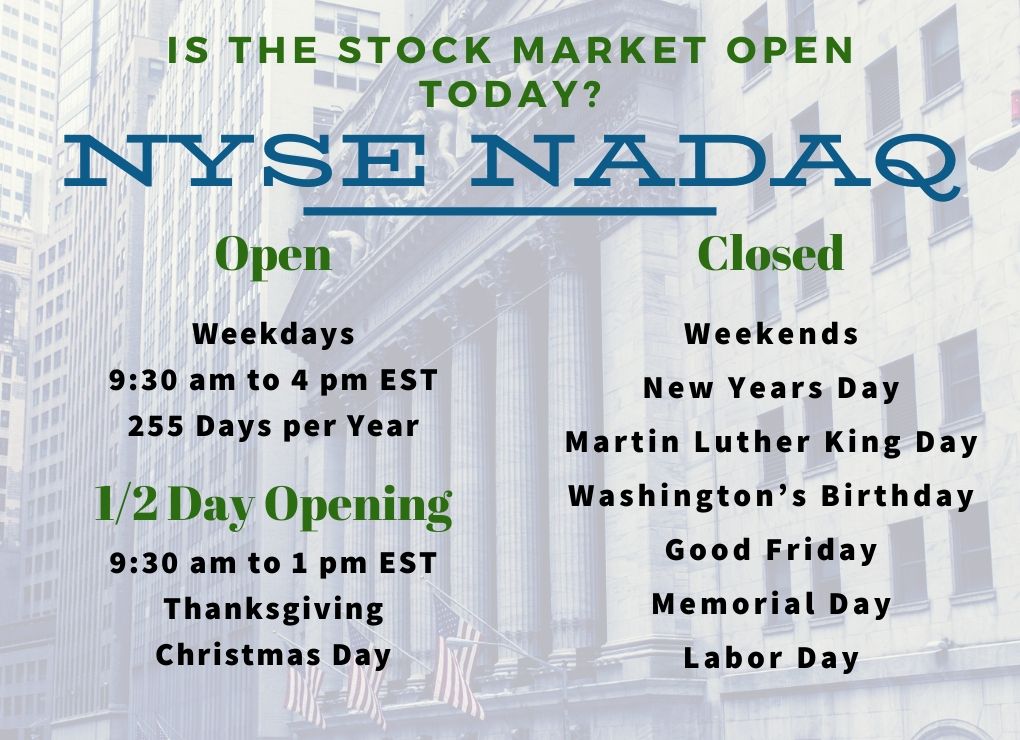
The New York Stock Exchange (NYSE) and Nasdaq Stock Market, the twin titans of American financial trading, operate on a carefully synchronized schedule that governs billions of dollars in transactions daily. For investors, traders, and financial professionals worldwide, understanding the precise operating hours of these markets is fundamental. The standard trading session for both the NYSE and Nasdaq begins at 9:30 AM Eastern Time (ET) and concludes at 4:00 PM ET, Monday through Friday, barring market holidays. This six-and-a-half-hour window is where the bulk of price discovery, liquidity, and trading activity occurs, defining the financial heartbeat of the global economy.

The Standard Trading Session: A Pillar of Global Finance
The core hours of the New York stock market are not arbitrary; they are the product of decades of evolution, balancing the need for sufficient trading time with operational efficiency and the availability of market participants. These hours are meticulously adhered to, establishing a predictable rhythm for investors across different time zones and investment strategies.
NYSE and NASDAQ: Identical Core Hours
Despite their distinct histories, listing requirements, and trading mechanisms, both the New York Stock Exchange (NYSE) and the Nasdaq Stock Market share identical standard trading hours. The NYSE, founded in 1792, is an auction market where specialists facilitate trading. Nasdaq, established in 1971, is a dealer’s market, primarily electronic and known for listing technology and growth companies. While their operational mechanics differ, their synchronized opening and closing bells ensure a consistent environment for market participants trading U.S.-listed equities, preventing arbitrage opportunities solely based on differing market hours. This uniformity is crucial for market integrity and investor confidence, allowing for a consolidated view of U.S. market activity during the most liquid period.
Understanding Eastern Time (ET)
The critical reference point for the New York stock market’s operating hours is Eastern Time (ET), which can be either Eastern Standard Time (EST) or Eastern Daylight Time (EDT) depending on the time of year. During standard time, EST is UTC-5, while during daylight saving time, EDT is UTC-4. For international investors, it is imperative to accurately convert 9:30 AM ET and 4:00 PM ET to their local time zones. For instance, an investor in London (GMT/BST) would see the market open at 2:30 PM GMT/BST and close at 9:00 PM GMT/BST, adjusting for daylight saving changes. Miscalculating this time difference can lead to missed opportunities or unintended exposure to market movements outside of desired trading windows. Financial news outlets, trading platforms, and economic calendars universally refer to market hours in ET, reinforcing its status as the benchmark.
Why These Hours Matter to Investors
The standard trading session is characterized by high liquidity and tighter bid-ask spreads, making it the preferred time for most retail and institutional investors to execute trades. Liquidity refers to the ease with which an asset can be converted into cash without affecting its market price. When many buyers and sellers are active, as they are during core hours, trades can be executed quickly and efficiently. Tighter bid-ask spreads mean the difference between the highest price a buyer is willing to pay (bid) and the lowest price a seller is willing to accept (ask) is smaller, resulting in lower transaction costs for investors. Outside these hours, while trading is possible, liquidity tends to be thinner, and spreads can widen, increasing the risk and potential cost of trades. Furthermore, major economic data releases, corporate earnings announcements, and significant news events are often strategically timed to coincide with, or just before/after, these core hours to maximize market impact and information dissemination.
Beyond the Bell: Pre-Market and After-Hours Trading
While 9:30 AM to 4:00 PM ET marks the official trading session, the stock market’s engines actually begin humming much earlier and continue well into the evening. Extended-hours trading sessions—specifically pre-market and after-hours trading—allow participants to react to news, earnings reports, or global events outside the conventional timeframe. These sessions offer flexibility but also present unique challenges and risks.
The Rationale Behind Extended Hours
Extended trading hours primarily serve institutional investors, high-frequency traders, and sophisticated retail investors who need to react swiftly to developments occurring when the main market is closed. For example, a company might release its quarterly earnings report at 4:05 PM ET, immediately after the market closes. After-hours trading allows investors to digest and act upon this information without waiting until the next morning’s opening bell. Similarly, pre-market trading, starting as early as 4:00 AM ET for some platforms, enables participants to position themselves based on overnight news from international markets or pre-market corporate announcements. This extended access also accommodates global investors who may find it challenging to trade within the traditional U.S. market hours due to significant time zone differences.
How Extended Hours Trading Works
Extended-hours trading operates differently from the standard session. It primarily occurs on electronic communication networks (ECNs) rather than through traditional exchange floors or direct market access systems. These ECNs match buy and sell orders electronically. The pre-market session typically runs from 4:00 AM ET to 9:30 AM ET, while after-hours trading usually extends from 4:00 PM ET to 8:00 PM ET. Not all brokers offer access to the full range of extended hours; some might only allow trading from 7:00 AM ET to 8:00 PM ET, for instance. It’s crucial for investors to check with their brokerage firm regarding specific availability and execution rules. Trades executed during these periods often settle on the same schedule as standard market trades, typically T+2 (trade date plus two business days).
Risks and Opportunities in Non-Standard Sessions
Trading during extended hours comes with a distinct set of risks and opportunities. Opportunities include the ability to react quickly to breaking news, potentially capitalizing on early price movements before the wider market reacts. It also offers flexibility for investors with scheduling constraints during regular hours. However, the risks are significant. The most prominent risk is reduced liquidity. Fewer participants mean fewer orders, which can lead to wider bid-ask spreads and greater price volatility. A small trade can have a disproportionately large impact on a stock’s price during these times. Limited order types are another factor; many extended-hours platforms primarily support limit orders, preventing the execution of market orders at potentially unfavorable prices. Furthermore, information asymmetry can be an issue, as not all news may be widely disseminated during off-hours, potentially favoring those with proprietary information feeds. Investors considering extended-hours trading must be well-informed, employ robust risk management strategies, and understand that price movements during these times may not reflect the opening price of the next standard session.
Market Holidays and Unexpected Closures
The New York stock market, while operating five days a week, observes several federal holidays, during which it remains closed. Additionally, unforeseen circumstances, though rare, can lead to unscheduled closures or abbreviated trading sessions, impacting investors’ ability to transact.
Recognizing Official Market Holidays
Both the NYSE and Nasdaq adhere to the same schedule of official market holidays. These typically include New Year’s Day, Martin Luther King, Jr. Day, Presidents’ Day, Good Friday, Memorial Day, Juneteenth National Independence Day, Independence Day, Labor Day, Thanksgiving Day, and Christmas Day. When a holiday falls on a weekend, the market typically observes it on the closest weekday (e.g., if Christmas Day is on a Saturday, the market will be closed on the preceding Friday; if on a Sunday, it will be closed on the following Monday). It is imperative for investors to consult the official holiday schedules published annually by the exchanges to avoid attempting to trade on a closed day. Trading platforms and financial news sites usually provide these calendars well in advance.
Half-Day Sessions and Early Closures
In addition to full-day holidays, the New York stock market sometimes operates on a half-day schedule, typically closing early at 1:00 PM ET. These shortened sessions often occur on days preceding or following certain holidays, such as the day after Thanksgiving (Black Friday) or Christmas Eve. While these are not full closures, the reduced trading time means lower liquidity and potentially increased volatility during the abbreviated session. Investors should be particularly mindful of these shorter hours, as they can affect the execution of orders and the timing of financial news releases. Corporations might choose not to release significant news on these days, or they might time it immediately after the 1:00 PM ET close, impacting after-hours trading dynamics.
Contingency Plans for Unforeseen Events
While rare, extraordinary circumstances can lead to unexpected market closures or trading halts. Historical examples include closures due to severe weather events (e.g., hurricanes impacting New York City), national emergencies (such as the September 11, 2001, attacks), or significant technical failures. In such cases, the exchanges, in coordination with regulatory bodies like the Securities and Exchange Commission (SEC), will issue official announcements regarding closures, delayed openings, or early closings. Trading platforms will typically relay this information to their clients. Investors should stay informed through reliable financial news sources during periods of high uncertainty or crisis, understanding that market operations can be temporarily suspended to maintain market integrity and safety.
The Dynamics of the Opening Bell
The opening bell at 9:30 AM ET is more than just a ceremonial event; it signals the commencement of intense activity that sets the tone for the day’s trading. The first few minutes, often referred to as the “opening print,” are characterized by unique market dynamics that astute traders often try to leverage.
Price Discovery and Volatility
The period leading up to the opening bell accumulates a significant backlog of orders—both buys and sells—from pre-market trading and overnight news reactions. When the market officially opens, these orders are matched, leading to a concentrated surge in trading volume. This initial rush is critical for price discovery, as it helps establish the day’s initial consensus on asset valuations. Consequently, the opening minutes are often marked by heightened volatility. Prices can swing dramatically as the market absorbs all the accumulated information and a clear direction begins to emerge. This volatility presents opportunities for day traders seeking quick profits but also carries elevated risks for less experienced investors.
Order Matching and Liquidity at Open
At the precise moment of opening, sophisticated electronic systems and human specialists (on the NYSE floor) work to match the deluge of incoming orders. The aim is to create an orderly market and establish opening prices for each security. This massive matching process contributes to the exceptional liquidity seen at the market open. Institutions and large funds often place significant orders during this time to establish or adjust their positions, adding to the volume. The presence of numerous buyers and sellers ensures that large blocks of shares can be traded with minimal impact on price, relative to other periods of the day.
Strategic Trading Around Opening Times
Experienced traders often employ specific strategies around the market open. Some focus on “gap plays,” where a stock opens significantly higher or lower than its previous close due to overnight news, looking to profit from either a continuation or a reversal of that initial move. Others might use the initial volatility to enter or exit positions quickly. However, due to the rapid price movements and high liquidity, it is also a period where less sophisticated traders can easily be caught on the wrong side of a trade. Understanding the dynamics of the open—the initial surge in volume, the battle between buyers and sellers to set the day’s trend, and the potential for immediate reversals—is crucial for anyone looking to actively participate in the market at this pivotal time.
Global Impact and Time Zone Considerations for Investors
The New York stock market’s opening time has a ripple effect across global financial markets. Its immense size and influence mean that its schedule is a crucial reference point for investors and economies worldwide, necessitating careful consideration of time zones and interconnectedness.
International Traders and the NYSE Open
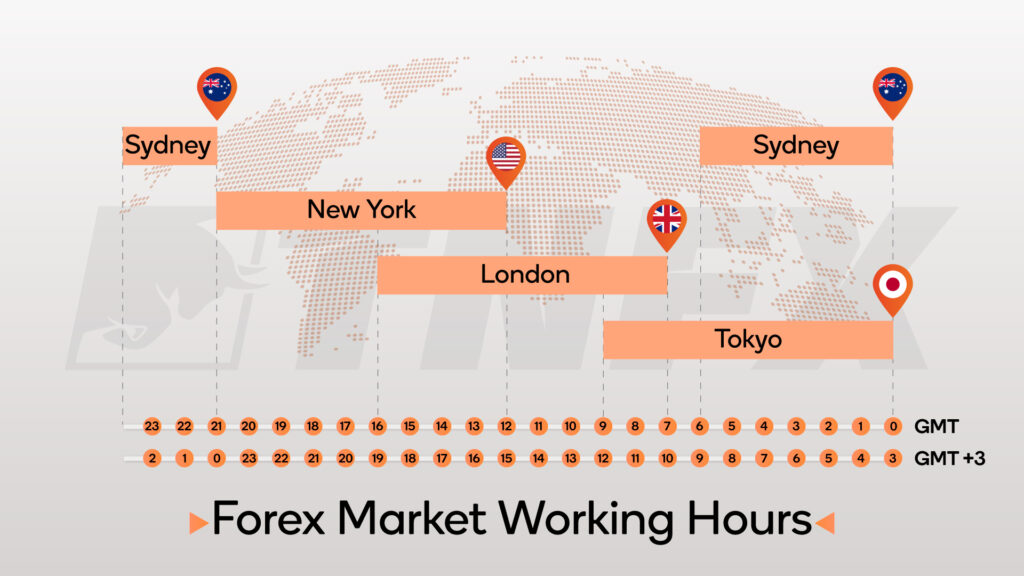
For investors and financial institutions located outside of the Eastern Time zone, especially in Europe, Asia, and Oceania, the New York market’s opening dictates specific adjustments to their trading day. European markets are typically open for several hours before New York opens, often reacting to pre-market futures trading in the U.S. and anticipating the NYSE’s formal opening. As New York comes online, trading volume in European markets might shift, with some participants moving their focus to U.S.-listed assets. For Asian investors, the New York opening occurs late in their local day or overnight, requiring them to monitor after-hours activity or adjust their schedules to participate in the most liquid U.S. trading window. This global coordination underscores the NYSE’s role as a central pillar of the international financial system.
Market Interconnectedness
The concept of market interconnectedness implies that what happens in one major financial market can quickly influence others. Economic data released in Europe, geopolitical events in Asia, or central bank decisions in London can all impact how the New York market opens and performs. Conversely, the opening action of the NYSE can set the tone for the remainder of the trading day in other global markets, especially as their own trading sessions come to an end or begin. This continuous global trading cycle means that there is rarely a moment when financial assets are not being priced somewhere in the world, even if the NYSE itself is closed. The U.S. market, however, often serves as the anchor, providing a key directional signal.
Leveraging Technology for Real-Time Access
In an increasingly digitized world, technology plays a pivotal role in bridging geographical and temporal gaps for investors. Advanced trading platforms, real-time data feeds, and sophisticated financial news services provide instant access to market information regardless of location. International investors can set alerts for the New York market open, monitor pre-market activity, and execute trades through online brokers with near-instantaneous execution. Many platforms automatically adjust times to the user’s local zone, simplifying the process. This technological integration ensures that while the physical opening bell rings in New York, its financial reverberations are felt—and acted upon—globally, enabling a truly interconnected investment landscape for those who understand how to navigate its intricate timing.
aViewFromTheCave is a participant in the Amazon Services LLC Associates Program, an affiliate advertising program designed to provide a means for sites to earn advertising fees by advertising and linking to Amazon.com. Amazon, the Amazon logo, AmazonSupply, and the AmazonSupply logo are trademarks of Amazon.com, Inc. or its affiliates. As an Amazon Associate we earn affiliate commissions from qualifying purchases.