
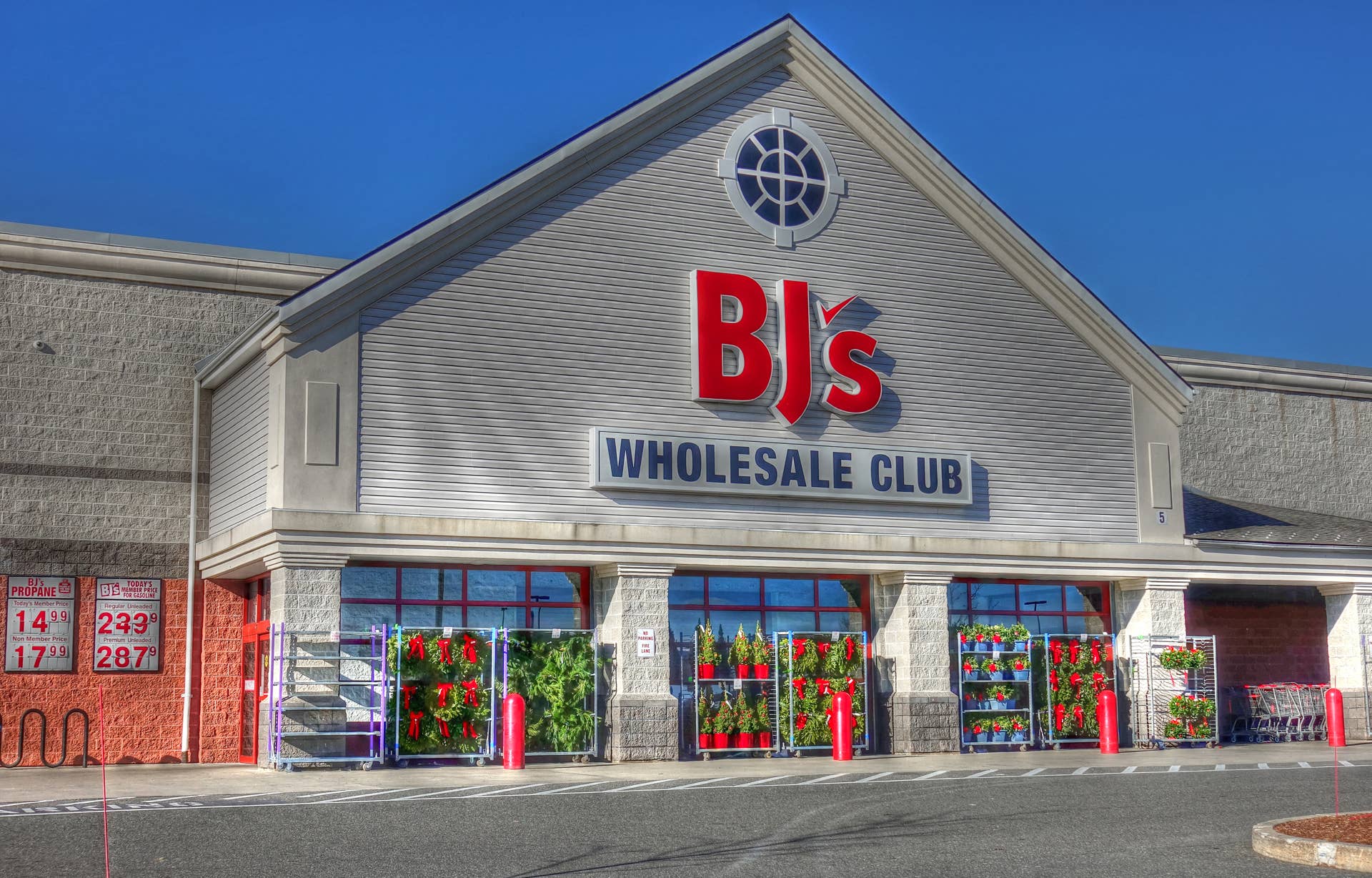
For the savvy consumer, the question of what time BJ’s Wholesale Club opens on a Sunday is rarely about mere curiosity; it is a matter of strategic financial planning. In the realm of personal finance and household budgeting, timing is often as critical as the price tag itself. Most BJ’s Wholesale Club locations typically open their doors at 9:00 AM on Sundays, though some select high-volume locations may welcome members as early as 8:00 AM.
Understanding these operational windows is the first step in a broader strategy to optimize your “Money” niche—leveraging bulk procurement to combat inflation, reduce per-unit costs, and streamline the logistical expenses of running a modern household. In this deep dive, we explore how a Sunday morning trip to BJ’s fits into a sophisticated personal finance framework.
The Economics of the Warehouse Club Membership
The financial utility of a BJ’s membership is predicated on the concept of “Volume Arbitrage.” By paying an annual membership fee, the consumer gains access to price points that are systematically lower than traditional grocery retailers. However, the true Return on Investment (ROI) of this fee is only realized through disciplined, strategic shopping.
Calculating Your Membership ROI
To determine if a BJ’s membership is a sound financial tool, one must look past the $55 to $110 annual fee and calculate the “break-even point.” If the average savings per trip is 25% compared to a standard supermarket, a household spending $400 a month on groceries and essentials would save $1,200 annually. After subtracting the membership fee, the net gain remains substantial. Sunday morning shopping, specifically right when the doors open, allows for a more focused execution of this strategy, ensuring that high-demand, high-savings items are in stock before the afternoon rush.
The Role of Private Labels in Wealth Building
One of the most potent financial tools within BJ’s is the Wellsley Farms and Berkley Jensen private labels. From a business finance perspective, these brands offer the same quality as national brands but at a significantly lower margin for the retailer. For the member, switching to these labels represents an immediate 20-30% reduction in specific line-item expenses without a lifestyle downgrade. This is a classic “invisible” side hustle—saving money is functionally identical to earning it, with the added benefit of being tax-free.
Strategic Sunday Shopping: Time as a Financial Asset
In personal finance, we often discuss the “Time Value of Money,” but we rarely discuss the “Money Value of Time.” Sunday mornings at BJ’s represent a unique window where operational efficiency meets financial opportunity.
Beating the Peak-Hour Opportunity Cost
By arriving at 9:00 AM on a Sunday, shoppers avoid the peak-hour congestion that typically begins after 11:30 AM. From a productivity standpoint, reducing a two-hour shopping trip to forty-five minutes reclaims over an hour of your weekend. For entrepreneurs, freelancers, or those with side hustles, this hour can be reinvested into income-generating activities. If your hourly rate is $50, spending an extra hour in a checkout line is effectively a $50 “congestion tax” on your groceries.
Inventory Management and “First-Pick” Advantage
Sunday is frequently a transition day for retail inventory and promotional cycles. By entering the club at opening time, members have first access to “WOW” deals and cleared-out inventory from the previous week’s promotional flyer. In the world of business finance, this is akin to securing an early-stage investment. You are acquiring the highest quality perishable goods and the most significant “treasure hunt” discounts before the supply is depleted by the mid-day crowd.
BJ’s Business Model and the Savvy Investor’s Perspective
Beyond personal grocery savings, understanding the operational hours and business structure of BJ’s provides insight into it as a corporate entity (NYSE: BJ). For those interested in business finance and equity investing, the Sunday operational model reflects the company’s lean cost structure.

High Inventory Turnover and Cash Flow
Warehouse clubs operate on a high-volume, low-margin model. Unlike traditional retailers that might see a product sit on a shelf for weeks, BJ’s aims for an inventory turnover ratio that often exceeds 12 times per year. This means the goods on the shelf are often sold before BJ’s even has to pay its suppliers. As a member-shopper, your Sunday morning visit feeds into this efficient cash flow cycle. By understanding this, you can better appreciate the “no-frills” environment; every dollar saved on floor decor and fancy lighting is a dollar passed down to the consumer in the form of lower prices.
The Ancillary Revenue Streams: Gas and Pharmacy
A Sunday trip to BJ’s is rarely just about the warehouse. The BJ’s Gas stations often open earlier than the main club—sometimes as early as 6:30 AM or 7:00 AM on Sundays. Utilizing the BJ’s fuel program is a cornerstone of a modern “Money” strategy. When combined with the BJ’s One Mastercard, the per-gallon discount can reach significant levels, sometimes saving a commuter $300 to $500 annually. This integration of services creates a “sticky” ecosystem that benefits both the company’s bottom line and the member’s wallet.
Leveraging Digital Tools for Financial Optimization
In the modern “Tech and Money” landscape, the BJ’s app is an essential tool for Sunday morning success. To maximize the financial benefit of your visit, the preparation should begin before the doors open at 9:00 AM.
Digital Coupon Stacking
Unlike many of its competitors, BJ’s allows for the “stacking” of coupons. This includes BJ’s digital coupons (clipped in the app), BJ’s paper coupons (found in the “Journal” at the entrance), and manufacturer’s coupons. For a disciplined budgeter, this triple-threat can lead to “extreme couponing” results where items are acquired for pennies on the dollar. Doing this digital “clipping” on Sunday morning before leaving the house ensures that your shopping list is aligned with the maximum possible savings.
The “ExpressPay” Advantage
Financial efficiency is also about transaction speed. BJ’s ExpressPay allows members to scan items as they place them in their cart and pay via the app, bypassing the traditional checkout lines entirely. On a busy Sunday, this is a massive tactical advantage. It allows you to monitor your total spend in real-time, preventing “cart creep” (the phenomenon of adding unplanned items that bloat your budget). Seeing a running total on your smartphone screen provides a psychological barrier against impulse spending, a key tenet of personal finance.
Inflation Hedging Through Bulk Procurement
In an era of fluctuating Consumer Price Index (CPI) numbers, the ability to buy in bulk is a legitimate hedge against inflation. If you anticipate that the price of non-perishable goods—such as paper products, detergents, or shelf-stable proteins—will rise by 5-10% over the next six months, buying a half-year supply today at BJ’s is a better “investment” than leaving that money in a low-interest savings account.
The “Pantry Principle” of Personal Finance
The “Pantry Principle” suggests that your home inventory should be treated as a localized commodity market. By stocking up when prices are low (especially during Sunday promotional cycles), you insulate your monthly cash flow from market volatility. When a specific item goes on a “Clipless Roadshow” sale at BJ’s, the savvy member buys the maximum allowed limit. This practice reduces the “Cost of Goods Sold” for your household, freeing up capital for other investments like Roth IRAs or brokerage accounts.
Quality over Quantity: The Bulk Paradox
A common mistake in the “Money” niche is equating “cheap” with “value.” BJ’s provides a financial advantage by offering high-tier products in larger quantities, which lowers the price per unit. Investing in a 30-pack of high-quality toilet paper or a large container of organic olive oil is a superior financial move compared to buying inferior products at a “dollar store.” The Sunday morning shopper has the time and focus to check unit prices (the small numbers on the corner of the price tag) to ensure they are truly getting the best deal.

Conclusion: The Sunday Strategy
While the answer to “what time does BJ’s open on Sunday” is a simple operational fact, the implementation of that knowledge is a sophisticated financial maneuver. By arriving early, utilizing digital tools for coupon stacking, focusing on private labels, and treating bulk purchases as an inflation hedge, you transform a routine chore into a wealth-building activity.
In the world of personal finance, it is the accumulation of these small, disciplined decisions—opening your app at 8:45 AM, arriving at the lot at 9:00 AM, and scanning your own items—that builds a robust financial foundation. Your Sunday morning at BJ’s is not just about groceries; it is about the mastery of your own micro-economy.
aViewFromTheCave is a participant in the Amazon Services LLC Associates Program, an affiliate advertising program designed to provide a means for sites to earn advertising fees by advertising and linking to Amazon.com. Amazon, the Amazon logo, AmazonSupply, and the AmazonSupply logo are trademarks of Amazon.com, Inc. or its affiliates. As an Amazon Associate we earn affiliate commissions from qualifying purchases.