
For the modern investor, timing is often just as critical as the assets themselves. Whether you are a day trader looking to capitalize on late-day volatility or a long-term investor checking your portfolio’s closing value, the question “what time do the markets close today?” is a fundamental part of the financial routine. However, the answer is rarely a simple one-line response.
In a globalized economy, the sun never truly sets on the financial markets. While the New York Stock Exchange may close at a specific hour, markets in Tokyo, London, and Hong Kong are operating on different cycles, and electronic “after-hours” trading keeps the gears turning long after the physical trading floors have gone dark. This guide provides a deep dive into market schedules, the mechanics of the closing bell, and how global timing affects your personal finance strategy.
Understanding Standard Market Hours in the United States
The heartbeat of American finance resides in New York City. For the vast majority of retail investors in the United States, “market hours” refers to the operating schedule of the two largest exchanges in the world: the New York Stock Exchange (NYSE) and the NASDAQ.
The New York Stock Exchange (NYSE) and NASDAQ
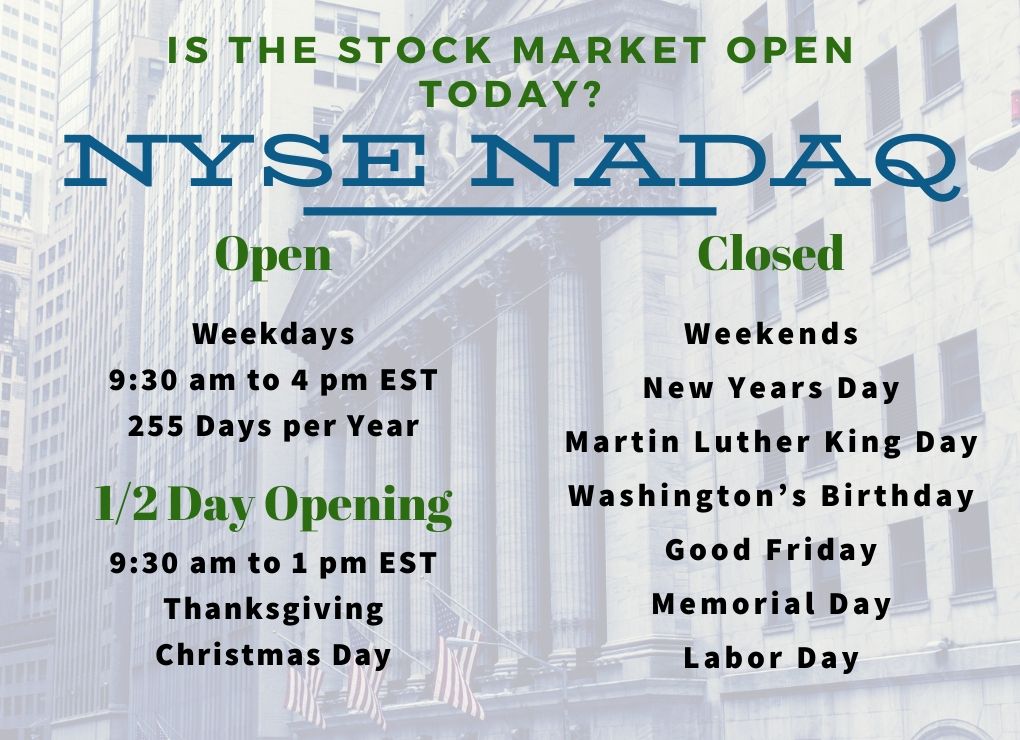
Both the NYSE and the NASDAQ operate on a standardized schedule. Regular trading hours begin at 9:30 AM Eastern Time (ET) and conclude at 4:00 PM ET. This window is often referred to as “the core session.” During these six and a half hours, liquidity is at its peak, bid-ask spreads are generally at their narrowest, and the highest volume of shares changes hands.
Unlike some international markets, major U.S. exchanges do not take a lunch break. Trading continues uninterrupted from the opening bell to the closing bell. For investors, this means that the “close” at 4:00 PM ET is the definitive mark for daily performance, used by mutual funds to calculate Net Asset Value (NAV) and by media outlets to report the day’s gains or losses.
The Significance of the Closing Bell
The closing bell is more than just a ceremonial tradition. The final minutes of the trading day—often called the “closing auction”—are some of the most critical moments in the financial world. During this period, the exchange’s computers process a massive influx of “Market-on-Close” (MOC) orders.
These orders are designed to execute as close to the final price as possible. Institutional investors, such as pension funds and ETFs that track specific indices like the S&P 500, use this time to rebalance their holdings. Because the closing price is the official benchmark for the day, the 3:55 PM to 4:00 PM ET window frequently sees a surge in volume and price movement, making it a high-stakes period for professional traders.
Beyond the Bell: After-Hours and Pre-Market Trading
While the “official” close is 4:00 PM ET, the digital age has extended the trading day significantly. Through Electronic Communication Networks (ECNs), investors can trade stocks outside of the traditional 9:30 AM to 4:00 PM window.
How Extended Hours Work
Extended-hours trading is divided into two segments: pre-market and after-hours.
- Pre-Market Trading: In the U.S., pre-market trading can begin as early as 4:00 AM ET, though the bulk of the volume typically occurs between 8:00 AM and 9:30 AM ET.
- After-Hours Trading: This session begins immediately after the closing bell at 4:00 PM ET and can run until 8:00 PM ET.
These sessions allow investors to react to news that breaks outside of regular hours, such as quarterly earnings reports, geopolitical events, or unexpected economic data. If a major tech company releases a disappointing earnings report at 4:15 PM, the stock price will likely plummet in the after-hours market before the “regular” market even opens the next day.
Risks and Rewards of Late-Day Trading
While the ability to trade until 8:00 PM provides flexibility, it comes with significant risks that retail investors must understand.
- Lower Liquidity: There are far fewer participants in the after-hours market. This means it can be harder to buy or sell shares at your desired price.
- Wide Bid-Ask Spreads: Because there is less volume, the difference between the buying price and the selling price (the spread) can be much wider, leading to higher costs.
- Volatility: With fewer shares being traded, a single large order can cause a massive swing in a stock’s price, creating a “fake out” where the price moves dramatically in the evening only to stabilize when the regular market opens the following morning.
Global Market Schedules: Timing Your International Investments
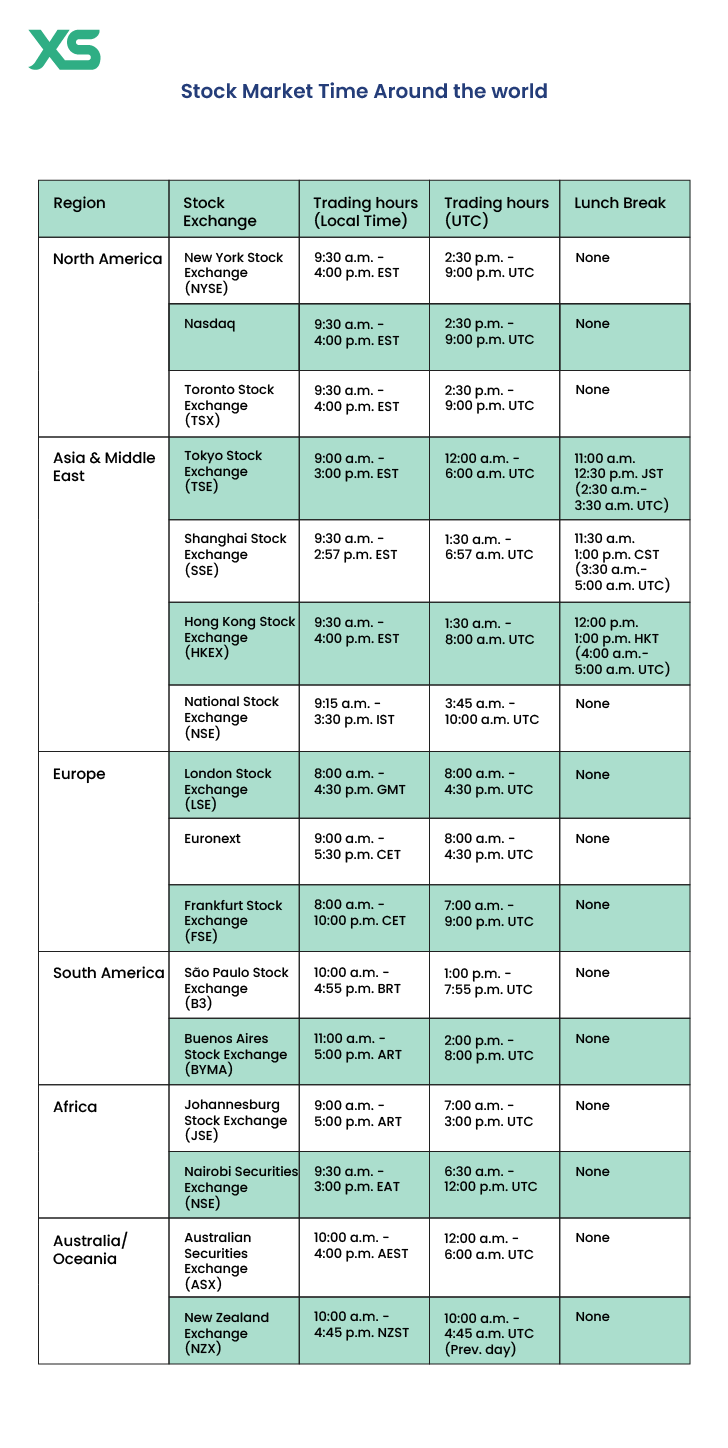
If you are diversifying your portfolio with international stocks or ADRs (American Depositary Receipts), you must account for the time zone differences of global financial hubs. The “closing time” depends entirely on where the primary exchange is located.
European Markets (LSE, Euronext)
The European markets typically open just as the Asian markets are closing and overlap with the start of the U.S. session.
- London Stock Exchange (LSE): Operates from 8:00 AM to 4:30 PM local time (GMT). For an investor in New York, the London market closes at 11:30 AM ET.
- Euronext (Paris, Amsterdam): Generally follows a similar schedule, closing at 5:30 PM Central European Time (CET).
The “overlap” period—between 9:30 AM ET and 11:30 AM ET—is often characterized by high global liquidity, as both European and American traders are active simultaneously.
Asian Markets (Tokyo, Hong Kong, Shanghai)
The Asian markets are the first to open the global trading day.
- Tokyo Stock Exchange (TSE): Operates from 9:00 AM to 3:00 PM local time. Notably, many Asian exchanges, including Tokyo, observe a lunch break (typically from 11:30 AM to 12:30 PM).
- Hong Kong Stock Exchange (HKEX): Closes at 4:00 PM local time.
For U.S.-based investors, these markets operate during the late evening and early morning hours. Monitoring the close of the Nikkei or the Hang Seng can often provide a “preview” of how the U.S. markets might open a few hours later.
Holiday Schedules and Early Closures
One of the most common reasons investors find themselves asking about market closing times is the presence of public holidays. The stock market does not follow the same schedule as the post office or the local bank.
Major US Market Holidays to Watch
The NYSE and NASDAQ close for several federal holidays, including New Year’s Day, Martin Luther King Jr. Day, Presidents’ Day, Good Friday, Memorial Day, Juneteenth, Independence Day, Labor Day, Thanksgiving, and Christmas.
However, investors should be particularly aware of “Early Close” days. Traditionally, the day after Thanksgiving (Black Friday) and Christmas Eve (if it falls on a weekday) see the markets close early at 1:00 PM ET. These shortened sessions often have very low volume, which can lead to erratic price movements as institutional traders take the day off.
Bond Market vs. Stock Market Closures
It is a common mistake to assume the bond market and stock market share the exact same schedule. The bond market (overseen by SIFMA) often observes additional holidays, such as Columbus Day and Veterans Day, even when the stock market remains open. Furthermore, the bond market frequently closes at 2:00 PM ET on days preceding major holidays. If your investment strategy involves Treasury bonds or fixed-income ETFs, you must track the SIFMA holiday recommendations separately from the NYSE schedule.
Strategies for Managing the Market Close
Understanding what time the markets close is only half the battle; knowing how to act during those final minutes is what separates successful investors from the rest. The “closing cross” is a period of intense price discovery that requires a disciplined approach.
Dealing with End-of-Day Volatility
Professional traders often refer to the final hour of trading (3:00 PM to 4:00 PM ET) as “Power Hour.” This is when volatility tends to spike as day traders close out their positions to avoid “overnight risk”—the danger of a stock price changing drastically while the market is closed.
For the average personal investor, it is often wise to avoid placing “Market Orders” during the final ten minutes of the day. Because prices can fluctuate rapidly, a market order might execute at a price significantly different from what you saw on your screen seconds earlier. Using “Limit Orders”—which specify the maximum price you are willing to pay or the minimum you are willing to accept—is a safer way to navigate the closing volatility.

Tools for Real-Time Market Monitoring
To stay on top of market timing, investors should utilize modern financial tools.
- Economic Calendars: Websites like Bloomberg or Investing.com provide daily calendars that highlight early closures and holiday schedules.
- Direct Access Platforms: If you are serious about after-hours trading, ensure your brokerage (such as Fidelity, Charles Schwab, or Interactive Brokers) provides “Extended Hours” access, as some basic apps may limit you to standard hours.
- World Clocks: For international traders, keeping a “market clock” dashboard that displays London, New York, and Tokyo times simultaneously is essential for understanding global capital flows.
In conclusion, while the standard answer for “what time do the markets close” is 4:00 PM ET for U.S. investors, the reality is a complex web of extended hours, international time zones, and holiday exceptions. By mastering the clock, you can better protect your capital, minimize the impact of volatility, and ensure that your trades are executed in the most liquid and favorable conditions possible. Timing may not be everything in investing, but in the world of finance, it is certainly the foundation upon which everything else is built.
aViewFromTheCave is a participant in the Amazon Services LLC Associates Program, an affiliate advertising program designed to provide a means for sites to earn advertising fees by advertising and linking to Amazon.com. Amazon, the Amazon logo, AmazonSupply, and the AmazonSupply logo are trademarks of Amazon.com, Inc. or its affiliates. As an Amazon Associate we earn affiliate commissions from qualifying purchases.