
For investors, traders, and anyone with a keen interest in the world of finance, understanding when stock markets open and close is more than just a matter of trivial information—it’s a critical component of strategic decision-making, risk management, and capitalizing on market opportunities. The global stock market operates almost continuously across different time zones, creating a dynamic environment where fortunes can shift in moments. Pinpointing the exact opening times for specific exchanges, especially today, requires a nuanced understanding of their local schedules, holiday calendars, and the intricate web of global financial interconnectedness. This article delves into the precise mechanics of market hours, offering an insightful guide to the major global exchanges and the strategic implications for participants.
Understanding Global Market Hours and Their Significance
The concept of fixed trading hours for stock markets dates back centuries, designed to facilitate orderly trading, price discovery, and to allow participants time to digest information, execute orders, and settle transactions. While modern technology enables near-instantaneous global communication and trading, the traditional structure of market opening and closing remains a cornerstone of financial operations.
The Rationale Behind Fixed Trading Hours
Fixed market hours provide several crucial benefits. Firstly, they concentrate liquidity, meaning that a larger volume of buyers and sellers are active simultaneously, leading to tighter spreads and more efficient price discovery. This concentration helps ensure that the price of a stock at any given moment reflects the collective opinion of a broad base of market participants. Secondly, defined hours offer a period of rest and reflection, allowing market professionals and individual investors to analyze market movements, company news, and economic data without the pressure of continuous trading. This break is essential for mitigating emotional trading and fostering more rational decision-making. Lastly, standardized hours simplify regulatory oversight and compliance, making it easier for authorities to monitor market activity and enforce rules.
The Interconnectedness of Global Markets
The world’s financial markets are not isolated silos; they are deeply interconnected, forming a continuous chain of trading that spans the globe. When one major market closes, another is often opening, creating an almost perpetual cycle of activity. For instance, as Asian markets conclude their trading day, European markets are typically in full swing, and as European markets wind down, North American markets are commencing. This interconnectedness means that significant news or economic events in one region can have immediate ripple effects across markets that are currently open, influencing sentiment, volatility, and asset prices. Understanding these overlaps is vital for investors with diversified portfolios or those trading international securities.
Why Knowing Market Hours is Crucial for Investors
For an investor, knowing the precise opening and closing times of relevant stock exchanges is paramount for several reasons. It dictates when orders can be placed and executed at standard market prices. It also influences the impact of news; a company announcement released after market close might not fully impact share prices until the next trading session begins. Furthermore, different markets often have distinct characteristics; some are more volatile at the open or close, while others exhibit different trading patterns mid-day. Awareness of these timings allows investors to:
- Strategize trades: Planning entry and exit points, especially for day traders.
- Manage risk: Avoiding unexpected movements when markets are closed.
- Respond to news: Quickly reacting to geopolitical events, economic data releases, or company-specific news.
- Optimize liquidity: Trading when volume is highest to ensure efficient execution.
Key International Stock Exchanges: A Detailed Look at Operating Times
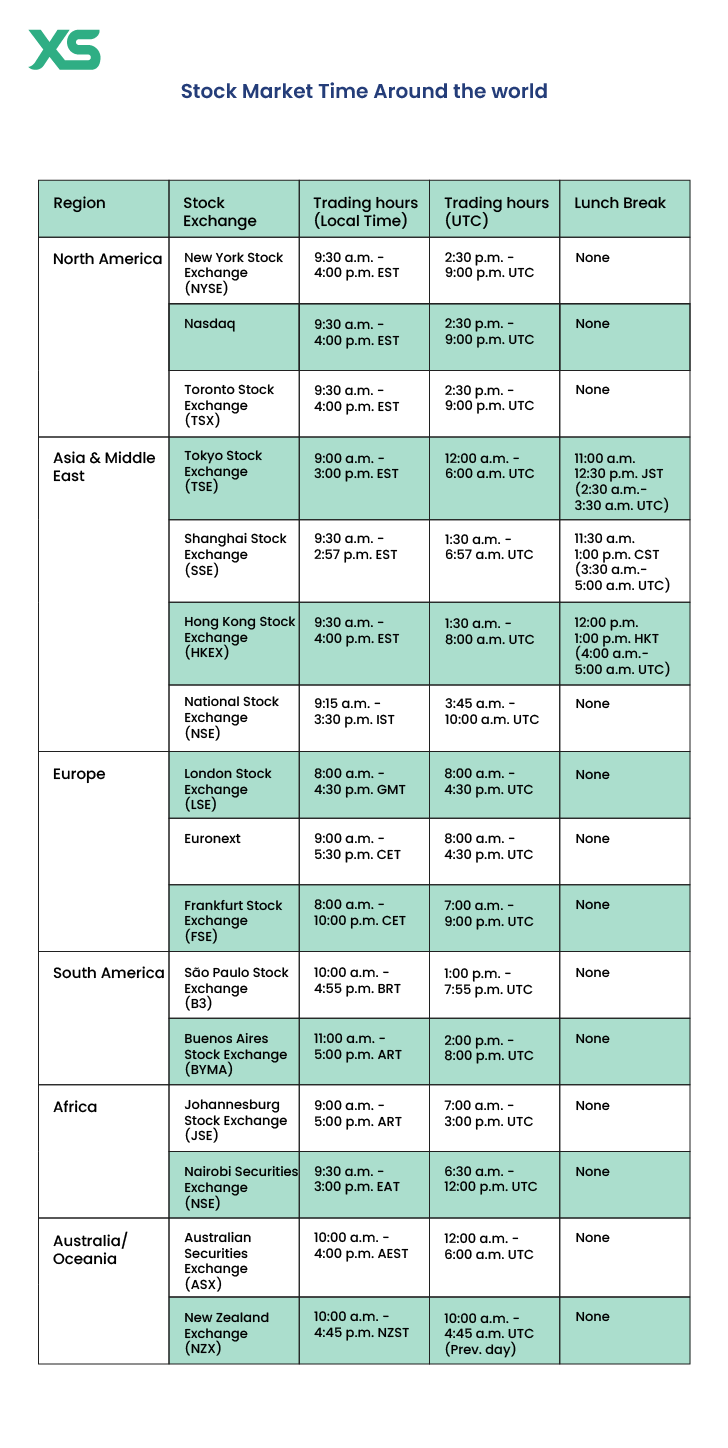
While there are numerous stock exchanges worldwide, a handful dominate global trading volume and influence. Their operating hours set the rhythm for the financial world. It’s important to remember that these are standard trading hours for their respective local times, and investors must account for time zone differences.
North American Powerhouses: NYSE and NASDAQ
The New York Stock Exchange (NYSE) and the NASDAQ Stock Market are arguably the two most influential stock exchanges globally, dictating much of the daily financial news cycle.
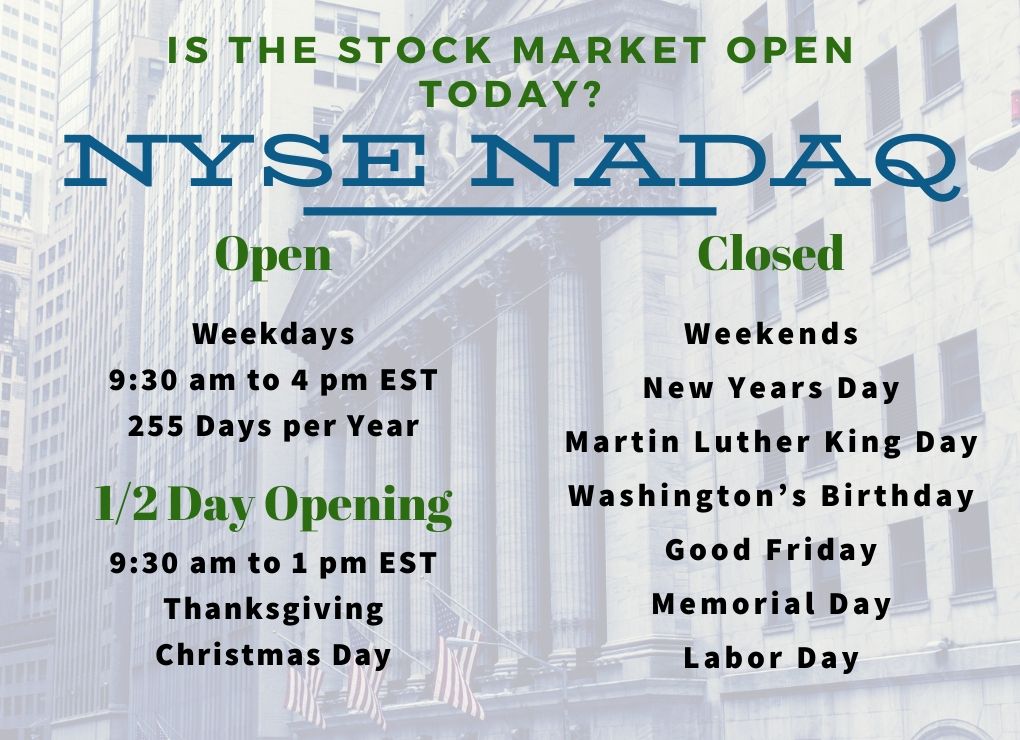
- New York Stock Exchange (NYSE): Located in New York City, the NYSE is renowned for its large-cap stocks and traditional auction-market trading. Its standard trading hours are 9:30 AM to 4:00 PM Eastern Time (ET), Monday through Friday.
- NASDAQ Stock Market: Also based in New York City, NASDAQ is known for its technology and growth stocks, operating as an electronic exchange. Its standard trading hours mirror the NYSE: 9:30 AM to 4:00 PM Eastern Time (ET), Monday through Friday.
Both exchanges observe U.S. federal holidays, on which they remain closed.
European Giants: LSE, Euronext, and Deutsche Börse
Europe hosts several critical exchanges that serve as linchpins for the continent’s economy and offer a gateway to international markets.
- London Stock Exchange (LSE): A global hub for international listings, the LSE’s main market operates from 8:00 AM to 4:30 PM Greenwich Mean Time (GMT), Monday through Friday. The LSE observes UK public holidays.
- Euronext: A pan-European exchange group operating markets in Amsterdam, Brussels, Dublin, Lisbon, Milan, Oslo, and Paris. While its individual markets may have slight variations, a common trading window for equities is 9:00 AM to 5:30 PM Central European Time (CET), Monday through Friday.
- Deutsche Börse (Frankfurt Stock Exchange): Germany’s largest exchange, the Frankfurt Stock Exchange (FSE) is a key player in the Eurozone. Its Xetra trading system for equities typically operates from 9:00 AM to 5:30 PM Central European Time (CET), Monday through Friday.
Asia-Pacific Dynamics: TSE, SSE, and ASX
The Asia-Pacific region is characterized by rapid economic growth and boasts several influential exchanges that often kick off the global trading day.
- Tokyo Stock Exchange (TSE): Japan’s primary exchange, the TSE has a unique split trading session. The morning session runs from 9:00 AM to 11:30 AM Japan Standard Time (JST), followed by a lunch break, and then the afternoon session from 12:30 PM to 3:00 PM JST, Monday through Friday.
- Shanghai Stock Exchange (SSE): One of mainland China’s two major exchanges, the SSE also operates with a split session: 9:30 AM to 11:30 AM China Standard Time (CST) for the morning session, and 1:00 PM to 3:00 PM CST for the afternoon session, Monday through Friday.
- Australian Securities Exchange (ASX): Australia’s main exchange operates from 10:00 AM to 4:00 PM Australian Eastern Standard Time (AEST), Monday through Friday.
All these exchanges observe their respective national public holidays.
Understanding Time Zone Differences
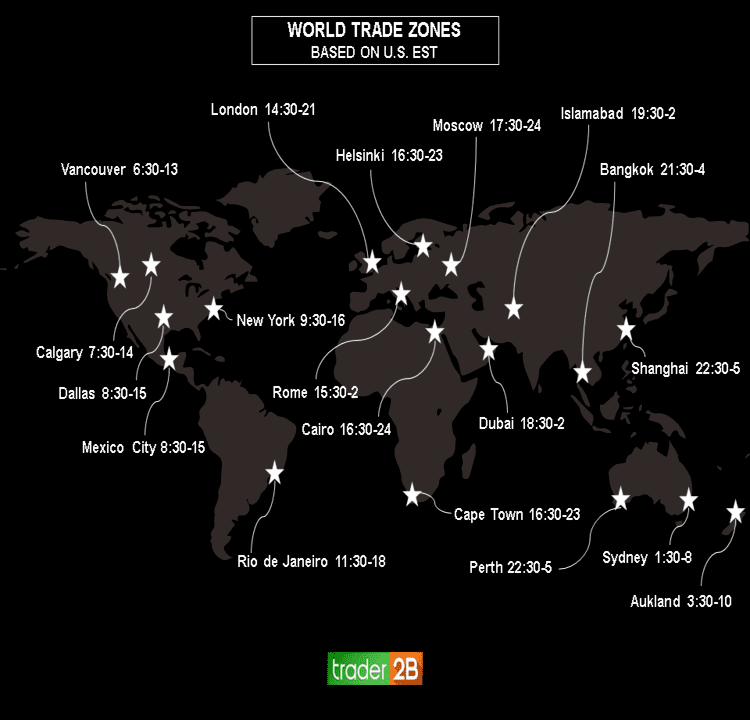
The critical takeaway for investors monitoring global markets is the necessity of accounting for time zone differences. A market opening at 9:00 AM local time could be 3:00 AM or 10:00 PM in an investor’s own time zone, depending on their location. Online financial platforms and trading software often automatically adjust times to the user’s local zone, but it’s always prudent to double-check and be aware of the original local market hours. Furthermore, daylight saving adjustments in various countries can complicate matters, shifting opening and closing times relative to universal coordinated time (UTC).
Beyond Standard Hours: Pre-Market, After-Hours, and Holiday Trading
While standard market hours define the core trading day, the financial landscape extends beyond these conventional windows, offering opportunities and presenting unique challenges.
Navigating Pre-Market and After-Hours Sessions
Most major exchanges facilitate trading outside regular market hours through “pre-market” and “after-hours” sessions.
- Pre-Market Trading: Typically begins several hours before the standard opening (e.g., 4:00 AM ET for NYSE/NASDAQ). This period allows investors to react to news released overnight or early in the morning, influencing initial price discovery for the official open.
- After-Hours Trading: Commences immediately after the market close and can extend for several hours (e.g., until 8:00 PM ET for NYSE/NASDAQ). This session allows investors to react to earnings reports or major announcements made after the market closes.
While these extended hours offer flexibility, they come with caveats. Liquidity is generally much lower during pre-market and after-hours sessions, leading to wider bid-ask spreads and potentially greater price volatility. Trades executed during these times may not reflect the broader market sentiment that develops during regular hours. It is primarily utilized by institutional investors, high-frequency traders, and sophisticated individual investors comfortable with the increased risks.
Impact of Public Holidays and Market Closures
Stock exchanges adhere to their respective national public holidays, during which they remain closed. These closures are typically announced well in advance, allowing investors to plan. However, unexpected closures due to extreme weather, technical glitches, or national emergencies, though rare, can also occur. The impact of holidays extends beyond the day of closure; a market that reopens after a long weekend might experience increased volatility as pent-up demand and supply, coupled with news accumulated during the closure, drive prices.
Implications for Liquidity and Volatility
The reduced trading volume during pre-market, after-hours, and holiday-affected sessions directly translates to lower liquidity. This means there are fewer buyers and sellers, making it harder to execute large orders without significantly impacting the price. Consequently, even small orders can cause substantial price swings, leading to increased volatility. Investors participating in these extended sessions must be acutely aware of these dynamics and adjust their trading strategies and risk tolerance accordingly.
Strategic Implications of Market Timing for Investors
Understanding market timing is not merely about knowing when to trade; it’s about developing a comprehensive strategy that leverages this knowledge to enhance decision-making and manage risk.
Informing Trading Decisions and Risk Management
For day traders and short-term investors, the opening and closing hours are critical. The first few minutes after market open can be highly volatile, offering opportunities but also carrying elevated risks. Many traders adopt strategies specific to the “opening bell” or the “closing rally.” Long-term investors, while less focused on minute-by-minute fluctuations, still benefit from understanding market hours, especially when significant company news or economic data is expected. Knowing when the market is closed can also inform portfolio rebalancing decisions, ensuring orders are placed when optimal liquidity is available.
Capitalizing on Global News and Events
The staggered opening and closing of global markets allow for a continuous flow of information and subsequent reactions. A major economic report from Asia during U.S. nighttime hours can influence European markets as they open, which then sets the tone for the U.S. market opening. Savvy investors monitor global news feeds and understand how events in one region can create cascading effects. This global perspective is crucial for identifying emerging trends, anticipating market shifts, and making informed decisions about international investments. For example, a positive earnings report for a major tech company listed on NASDAQ, released after U.S. market close, might see its ADRs (American Depositary Receipts) on a European exchange react during European trading hours before the U.S. market reopens.
The Psychology of Market Opening and Closing
Market openings and closings are often characterized by distinct psychological patterns. The opening bell can bring a surge of optimism or panic as investors react to overnight news, creating initial volatility. Similarly, the closing hours can see a scramble to finalize positions or take profits, leading to predictable surges or declines. Understanding these psychological tendencies can help investors avoid impulsive decisions and instead leverage them for strategic advantage. For instance, some traders might intentionally avoid the first 15-30 minutes of trading due to the heightened unpredictability, while others might specialize in trading this specific window.
Leveraging Technology and Resources to Stay Informed
In today’s fast-paced financial world, staying updated on market hours and real-time data is easier than ever, thanks to a plethora of technological tools and resources.
Real-Time Data Platforms and Financial News
Modern investors have access to sophisticated financial platforms that provide real-time stock quotes, news feeds, and charting tools. Services like Bloomberg Terminal, Refinitiv Eikon, FactSet, and even popular consumer-focused platforms like Yahoo Finance, Google Finance, and Investing.com, offer comprehensive coverage. These platforms typically display market hours for various exchanges, often adjusted to the user’s local time zone, and provide countdown timers to the next market open or close. Subscribing to reputable financial news outlets (e.g., Wall Street Journal, Financial Times, Reuters, Bloomberg News) ensures access to timely information that can impact trading decisions.
Mobile Apps and Alert Systems
The proliferation of mobile technology has put financial information at investors’ fingertips. Numerous mobile apps from brokers, financial news providers, and independent developers offer market data, portfolio tracking, and customizable alerts. Investors can set up notifications for market openings and closings, significant price movements for specific stocks, or breaking news related to their holdings. These alerts are invaluable for staying informed without needing to constantly monitor screens, especially for those tracking markets in different time zones.
The Role of Brokers and Financial Advisors
While technology empowers self-directed investors, financial brokers and advisors remain crucial resources. Reputable brokerage firms provide access to trading platforms that clearly indicate market hours, support pre-market and after-hours trading, and offer research tools. For complex global investment strategies, a qualified financial advisor can provide personalized guidance, helping navigate the intricacies of international market hours, regulatory differences, and specific investment vehicles. They can also offer insights into how holiday schedules or unique market events might impact a client’s portfolio.
In conclusion, knowing “what time do stock markets open today” is far more than a simple query; it’s the gateway to informed participation in the global financial arena. By understanding the standard operating hours of major exchanges, the dynamics of extended trading sessions, and the strategic implications of market timing, investors can refine their approaches, manage risks more effectively, and ultimately enhance their potential for success in the ever-evolving world of money and finance.
aViewFromTheCave is a participant in the Amazon Services LLC Associates Program, an affiliate advertising program designed to provide a means for sites to earn advertising fees by advertising and linking to Amazon.com. Amazon, the Amazon logo, AmazonSupply, and the AmazonSupply logo are trademarks of Amazon.com, Inc. or its affiliates. As an Amazon Associate we earn affiliate commissions from qualifying purchases.