
For the modern investor, the question of when the markets open is more than a simple matter of checking a clock. While the digital age has made financial markets accessible 24/7 through various instruments, the traditional “opening bell” remains the most critical pivot point for liquidity, volatility, and price discovery. Understanding the specific operating hours of global exchanges is fundamental to executing a successful trading strategy, managing risk, and capitalizing on the cyclical nature of global capital flows.
To navigate the financial landscape effectively, one must look beyond a single time zone. The global economy operates in a relay race, where the baton is passed from Asia to Europe and finally to the Americas. This guide breaks down the essential trading windows and explores why the timing of your trades can be just as important as the assets you choose to hold.
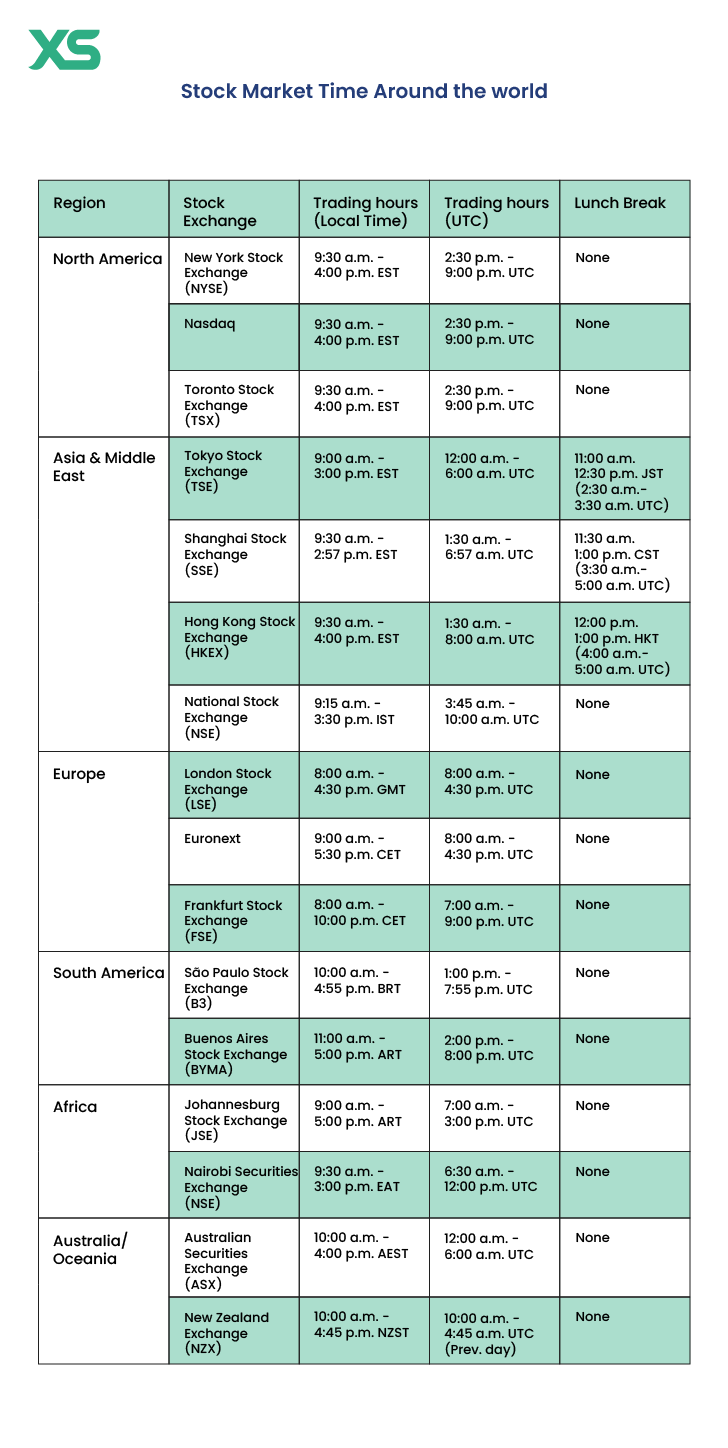
The Standard Trading Hours of Major Global Exchanges
The heartbeat of the financial world is measured by the operating hours of the major stock exchanges. For most retail investors, the North American markets are the primary focus, but the interconnectivity of global finance means that what happens in London or Tokyo often sets the stage for the New York open.
North American Markets: The Gold Standard
The New York Stock Exchange (NYSE) and the Nasdaq are the two largest exchanges in the world. Their standard operating hours are consistent:
- Monday through Friday: 9:30 AM to 4:00 PM Eastern Time (ET).
These markets do not close for lunch, unlike some international counterparts. However, the first and last hours of the session are typically the most active. For investors based in different time zones—such as Pacific Time (6:30 AM to 1:00 PM)—the early start requires a disciplined routine to ensure they are prepared for the initial burst of volatility.
The European Circuit
The European markets bridge the gap between the Asian close and the American open. The London Stock Exchange (LSE), one of the oldest and most influential, operates from:
- 8:00 AM to 4:30 PM GMT/BST.
Other major European hubs, such as the Euronext Paris and the Frankfurt Stock Exchange (DAX), typically follow a similar schedule, usually opening at 9:00 AM Central European Time (CET). The “overlap” period—when both European and American markets are open (roughly 9:30 AM to 11:30 AM ET)—is often the most liquid period of the day for global equities and currency pairs.
Asian-Pacific Powerhouses
The trading day begins in the East. The Tokyo Stock Exchange (TSE) and the Hong Kong Stock Exchange (HKEX) are the primary movers in this region.
-
Tokyo Stock Exchange: 9:00 AM to 3:00 PM JST (with a lunch break from 11:30 AM to 12:30 PM).
-
Hong Kong Stock Exchange: 9:30 AM to 4:00 PM HKT (with a lunch break from 12:00 PM to 1:00 PM).
The presence of a midday break in many Asian markets is a distinct difference from Western markets. This pause allows traders to digest morning news and recalibrate for the afternoon session, often leading to a “second opening” of volatility when the markets resume.
The Critical Phases of the Trading Day
Knowing when the doors open is only the first step. Professional traders categorize the day into distinct phases, each with its own personality and risk profile. Understanding these phases helps investors decide when to execute orders and when to step back.
Pre-Market Trading: The Early Indicators
Most major exchanges offer pre-market sessions. For the NYSE and Nasdaq, this can begin as early as 4:00 AM ET, though the bulk of activity occurs after 8:00 AM ET. Pre-market trading is characterized by lower liquidity and wider “bid-ask spreads.”
This period is primarily used by institutional investors and news-driven traders to react to overnight developments, such as international geopolitical events or early-morning corporate earnings reports. For the average retail investor, trading during this window is risky because price movements can be erratic and may not reflect the true direction the market will take once the official bell rings.
The Opening Bell: The First Hour
The first 30 to 60 minutes of the regular session (9:30 AM to 10:30 AM ET) are often the most volatile. This is the period of “price discovery,” where the market reconciles all the news, limit orders, and sentiment that accumulated overnight.
High-volume trading during this window creates opportunities for day traders but can be treacherous for long-term investors. Many seasoned professionals recommend waiting until the “morning wash” is over—around 10:00 AM or 10:30 AM—to see where the actual trend for the day is establishing itself.
The Midday Lull
From approximately 12:00 PM to 2:00 PM ET, trading volume tends to decrease as floor traders and institutional desks in New York take lunch breaks. During this time, the European markets are also closing. This period is often characterized by “sideways” movement. Unless there is a sudden breaking news event or a scheduled Federal Reserve announcement, prices may drift without a clear direction.
The “Power Hour” and the Closing Cross
The final hour of trading, from 3:00 PM to 4:00 PM ET, is known as the “Power Hour.” Volume surges again as institutional investors rebalance their portfolios and day traders close out their positions.

The “Closing Cross” is a specific process used by the Nasdaq and NYSE to determine the official closing price of a security. This is a critical moment for mutual funds and ETFs, which must value their holdings based on these final prices. The last few minutes of trading often see massive blocks of shares changing hands, leading to significant price swings.
Why Market Timing Matters for Your Portfolio Strategy
For a passive, long-term investor, the specific minute of the day might seem irrelevant. However, the timing of market entry and exit can significantly impact the “cost” of your investment and your overall return profile.
Liquidity and Execution Quality
Liquidity refers to how easily an asset can be bought or sold without affecting its price. Liquidity is at its highest when the most participants are active—typically during the market open and close, and during the US-Europe overlap.
Trading during high-liquidity periods ensures that you get the best possible execution on your orders. If you attempt to buy a less-liquid stock during the midday lull or in the after-hours market, you might pay a “liquidity premium,” where the gap between what a buyer is willing to pay and what a seller is willing to accept is unnecessarily wide.
Economic Data and “The Calendar”
Market timing isn’t just about the clock; it’s about the calendar. Most major economic indicators in the United States—such as the Consumer Price Index (CPI), Non-Farm Payrolls (NFP), and GDP growth—are released at 8:30 AM ET, exactly one hour before the market opens.
These releases can cause massive swings in futures contracts before the opening bell. An investor who is unaware of the economic calendar might find their stop-loss orders triggered by a sudden spike in volatility before they even have a chance to log into their brokerage account.
The Impact of After-Hours Trading
After the 4:00 PM ET close, the “after-hours” session begins, typically lasting until 8:00 PM ET. This is the prime time for corporate earnings announcements. When a major company like Apple or Microsoft reports earnings at 4:05 PM, the stock price can move 5% or 10% in a matter of minutes.
While retail investors can participate in after-hours trading through most modern brokerages, the same risks of the pre-market apply: low liquidity and high volatility. Often, a stock that “pops” in the after-hours session will “fade” by the time the market opens the next morning as more participants enter the fray and provide a more balanced valuation.
Navigating Holiday Schedules and Special Sessions
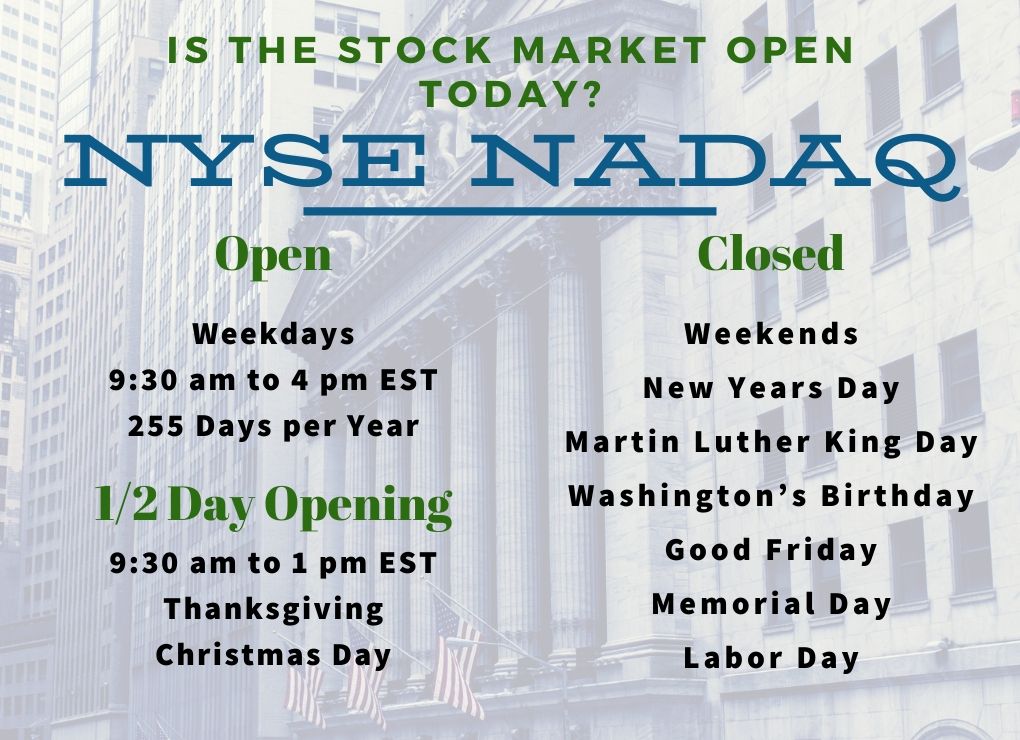
The market does not follow a standard 365-day calendar. Being aware of bank holidays and early closures is essential for managing cash flow and settlement dates.
Federal and Exchange Holidays
In the United States, the markets are closed on several major holidays, including:
-
New Year’s Day
-
Martin Luther King Jr. Day
-
Presidents’ Day
-
Good Friday
-
Memorial Day
-
Juneteenth
-
Independence Day
-
Labor Day
-
Thanksgiving Day
-
Christmas Day
When a holiday falls on a weekend, the market usually closes on the preceding Friday or the following Monday.
Early Closures
There are specific days when the market closes early, typically at 1:00 PM ET. This often occurs on the day after Thanksgiving (Black Friday) and sometimes on Christmas Eve. Trading volume on these days is notoriously thin, and many institutional desks are minimally staffed. For most investors, these are days to observe rather than participate, as the lack of volume can lead to exaggerated price movements.
Tools for Staying Synchronized with Global Markets
In a world where finance is global, staying synchronized requires more than just a watch.
Real-Time Market Calendars
Investors should utilize digital tools that provide countdowns to market opens and closes across various time zones. Many brokerage platforms offer built-in calendars that highlight upcoming economic releases and holiday schedules.
The Role of Futures
If you want to know what the market will do before it opens, look at the “Futures” market. S&P 500, Dow, and Nasdaq futures trade nearly 24 hours a day during the work week. They provide a continuous indication of market sentiment. If futures are “green” (up) by 1% at 7:00 AM ET, there is a high probability that the stock market will open higher at 9:30 AM.
Mobile Alerts and Automation
Setting alerts for specific times of the day—such as the London close or the New York open—can help you manage your time. Furthermore, using “limit orders” rather than “market orders” is a best practice, especially during the volatile opening and closing windows. A limit order ensures that you only buy or sell at a specific price, protecting you from the “slippage” that occurs when prices move faster than your execution.
Understanding market hours is a foundational skill in the world of finance. By recognizing the rhythm of the trading day—from the frantic energy of the opening bell to the calculated rebalancing of the closing cross—you can move from being a reactive participant to a proactive strategist. Whether you are managing a personal retirement account or seeking short-term gains, timing your interaction with the global markets is a powerful tool in your financial arsenal.
aViewFromTheCave is a participant in the Amazon Services LLC Associates Program, an affiliate advertising program designed to provide a means for sites to earn advertising fees by advertising and linking to Amazon.com. Amazon, the Amazon logo, AmazonSupply, and the AmazonSupply logo are trademarks of Amazon.com, Inc. or its affiliates. As an Amazon Associate we earn affiliate commissions from qualifying purchases.