
The financial world operates on a precise clock, with the opening and closing bells of markets globally signaling periods of intense activity, strategic planning, and critical information exchange. For anyone involved in investing, trading, or even just observing economic trends, understanding market hours is not merely a matter of trivia; it’s fundamental to navigating the complex landscape of stocks, bonds, commodities, and currencies. Unlike a conventional 9-to-5 job, the concept of market hours varies significantly depending on the asset class, the geographic location of the exchange, and even special circumstances like holidays or extended trading sessions. Delving into these timings reveals a fascinating interplay of global economics, technological advancements, and human behavior that collectively shapes the rhythm of the financial universe. From the bustling trading floors of New York and London to the always-on digital realm of cryptocurrencies, market hours dictate liquidity, volatility, and ultimately, investment opportunities and risks. This comprehensive guide will explore the nuances of when markets open and close, why these timings matter, and how they impact financial decisions in an increasingly interconnected world.
The Significance of Market Hours for Investors
Understanding when financial markets open and close is paramount for a multitude of reasons, directly influencing an investor’s strategy, risk exposure, and access to information. It’s not simply about knowing when you can place an order; it’s about comprehending the dynamics that define those operational windows.
Operational Efficiency and Liquidity
Market open hours are meticulously set to ensure optimal operational efficiency and sufficient liquidity. During these designated times, exchanges consolidate buy and sell orders, facilitating price discovery and fair trade execution. High liquidity, meaning a large volume of active buyers and sellers, typically prevails during standard market hours. This ensures that investors can execute trades quickly and at prices close to their expectations, minimizing slippage. Outside these hours, liquidity often dries up, making it harder to buy or sell without significantly impacting the price, thereby increasing transaction costs and market risk. For major equity markets, the specific window from open to close represents the period when the vast majority of trading activity occurs, supported by market makers and institutional participants who provide depth to the order book.
Impact on Trading Strategies
The timing of market operations critically shapes various trading strategies. Day traders, for instance, rely heavily on the volatility and high liquidity often observed at the market open and close, seeking to profit from rapid price movements within a single trading day. Long-term investors, while less focused on minute-by-minute fluctuations, still need to be aware of market hours for executing large orders or rebalancing portfolios, especially to ensure optimal pricing. Furthermore, different parts of the trading day exhibit unique characteristics. The opening hour is typically characterized by high volatility as accumulated orders from the pre-market session are processed and initial reactions to overnight news play out. Mid-day often sees reduced volatility and volume, while the closing hour can again become volatile as traders square positions or react to late-breaking news.
Risk Management and Market Events
Market hours also play a crucial role in risk management and how information is absorbed. Significant financial news, such as economic reports, central bank announcements, or corporate earnings releases, are often strategically timed to coincide with market open, close, or after-hours to allow investors time to process and react. Trading outside these periods, such as in pre-market or after-hours sessions, exposes investors to increased risks due to lower liquidity and higher volatility, potentially leading to wider bid-ask spreads and significant price gaps. Knowing when markets are open allows investors to align their trading decisions with the release of pertinent information, ensuring they are not caught off-guard by events that unfold when their access to the market is limited or market conditions are less favorable.
Unpacking Global Market Timings
The global financial landscape is a patchwork of exchanges, each with its own set of operating hours, time zones, and holiday schedules. Navigating this international mosaic is essential for investors with global portfolios or an interest in diverse asset classes.
Major Stock Exchanges
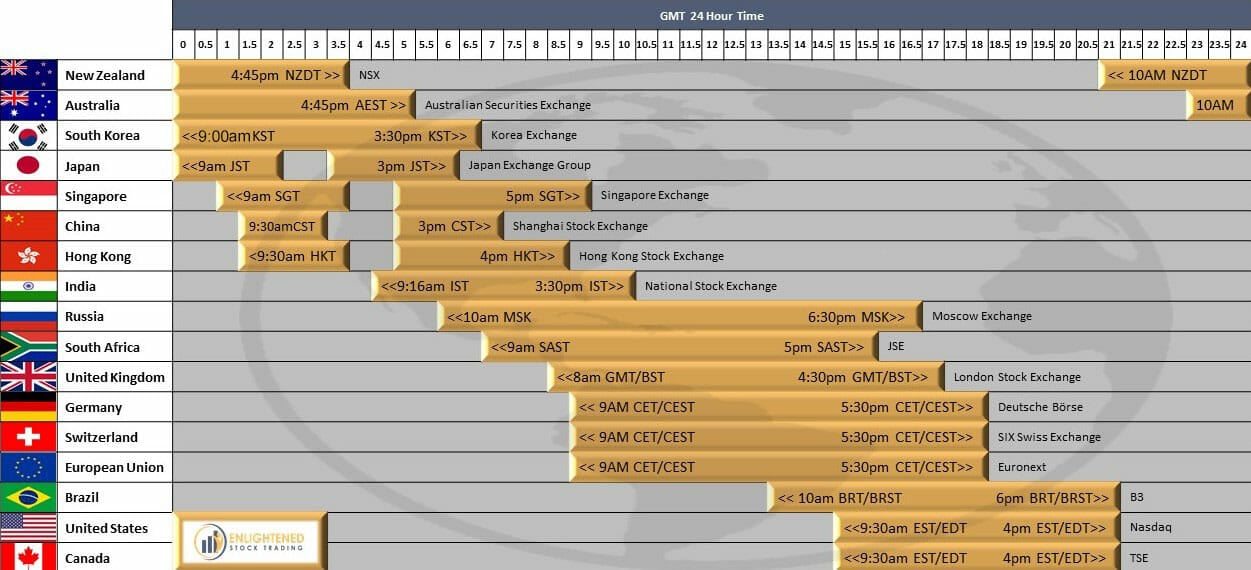
Stock markets around the world follow distinct schedules. In the United States, the New York Stock Exchange (NYSE) and NASDAQ are generally open from 9:30 AM to 4:00 PM Eastern Time (ET), Monday through Friday. Similarly, the London Stock Exchange (LSE) operates from 8:00 AM to 4:30 PM Greenwich Mean Time (GMT). European markets like Euronext (covering exchanges in Amsterdam, Brussels, Lisbon, Oslo, Dublin, and Paris) also typically follow similar patterns, often from 9:00 AM to 5:30 PM Central European Time (CET). Asian markets, such as the Tokyo Stock Exchange (TSE) and the Shanghai Stock Exchange (SSE), have split trading sessions, often with a lunch break. For example, the TSE runs from 9:00 AM to 11:30 AM JST and 12:30 PM to 3:00 PM JST. These fixed hours allow for concentrated trading and settlement processes within specific regions.
Foreign Exchange (Forex) Markets
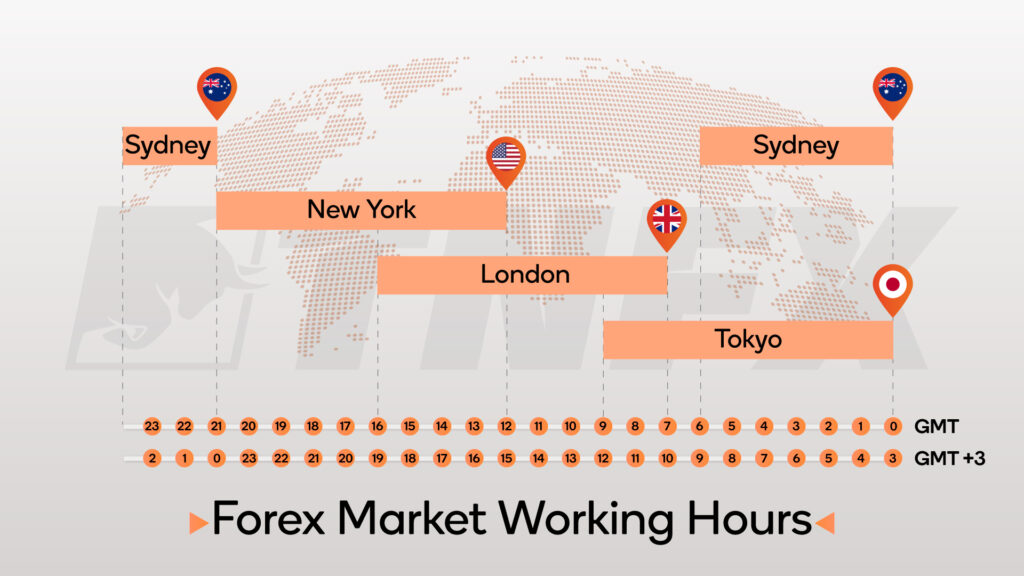
Unlike stock markets, the foreign exchange (forex) market operates on a nearly 24-hour basis, five days a week, opening on Sunday evening ET and closing on Friday afternoon ET. This continuous operation is due to its decentralized nature and the succession of major financial centers opening and closing throughout the global day. As one major financial hub closes, another opens, ensuring a constant flow of trading. The primary forex market sessions are often identified by the major financial cities: Sydney, Tokyo, London, and New York. There are periods of high liquidity when these sessions overlap, particularly the London-New York overlap (8:00 AM to 12:00 PM ET), which is generally considered the busiest and most liquid time for forex trading due to the concentration of financial institutions and trading volume.
Cryptocurrency Markets
Cryptocurrency markets stand apart from traditional financial markets by operating 24 hours a day, seven days a week, 365 days a year. This continuous operation reflects the decentralized and global nature of blockchain technology. There are no official opening or closing bells, no weekends off, and no public holidays that halt trading. This perpetual availability offers both advantages and disadvantages. It provides constant accessibility for traders worldwide, allowing immediate reactions to news or market shifts at any time. However, it also means there’s no “downtime” for investors to step away from the market, and significant price movements can occur during traditional sleeping hours, posing unique challenges for risk management and mental well-being.
Other Markets (Commodities, Bonds, Futures)
Beyond stocks, forex, and crypto, other asset classes also have specific trading hours. Commodity markets, which trade raw materials like oil, gold, and agricultural products, often have extended hours or operate through electronic trading systems for a significant portion of the day. For example, futures contracts for many commodities trade electronically for almost 24 hours, five days a week, with brief breaks. Bond markets, particularly government bonds, also have defined trading hours, though these can vary. Often, bond trading might cease earlier than equity markets on certain days or have slightly different holiday schedules. Understanding these specific timings is crucial for traders specializing in these particular instruments, as their liquidity and volatility profiles are closely tied to their operational hours.
Beyond Standard Hours: Pre-Market, After-Hours, and Holidays
While standard market hours define the bulk of trading activity, the financial world doesn’t completely shut down when the closing bell rings. Pre-market and after-hours trading, alongside market holidays, introduce additional layers of complexity and opportunity for investors.
Pre-Market Trading
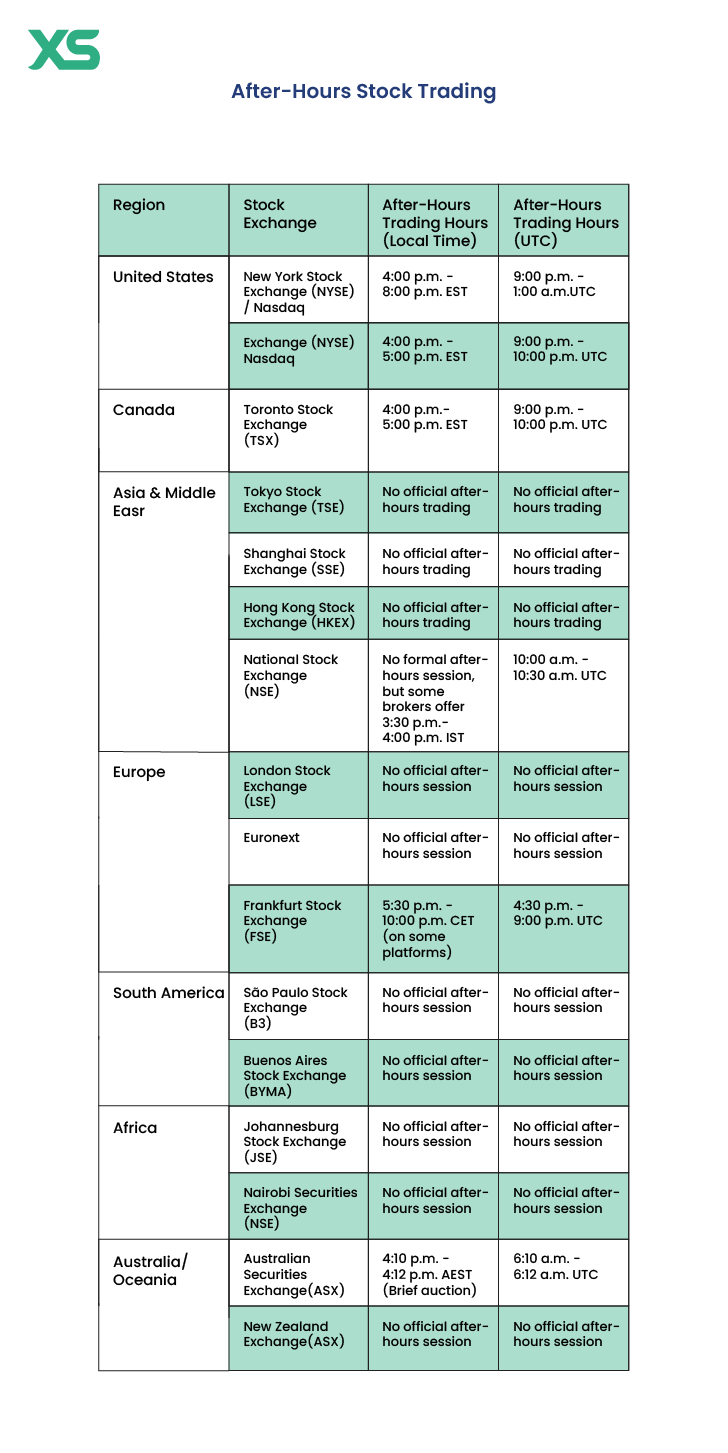
Pre-market trading refers to the period before the official market open. In the U.S., for instance, pre-market sessions typically begin around 4:00 AM ET and run until 9:30 AM ET. This window allows investors to react to news, earnings reports, or economic data released overnight or early in the morning, before the main market opens. However, pre-market trading is characterized by significantly lower liquidity and higher volatility compared to regular trading hours. Fewer participants mean wider bid-ask spreads and potentially larger price swings on relatively small trade volumes. For retail investors, access to pre-market trading varies by broker, and it often comes with increased risk due to these market conditions.
After-Hours Trading
After-hours trading occurs after the official market close, typically from 4:00 PM ET until 8:00 PM ET for U.S. exchanges. Similar to pre-market, this session is often driven by corporate earnings announcements or major news releases that occur post-market close. It provides an immediate opportunity for investors to react to these developments without waiting for the next trading day. Like pre-market trading, after-hours sessions suffer from reduced liquidity and increased volatility, making it challenging to get favorable execution prices. Both pre-market and after-hours trading primarily occur on electronic communication networks (ECNs) rather than the main exchange floors.
Market Holidays and Early Closures
Financial markets globally observe various national and religious holidays, during which they remain closed. In the U.S., for example, markets are typically closed on days like New Year’s Day, Martin Luther King, Jr. Day, Presidents’ Day, Good Friday, Memorial Day, Juneteenth National Independence Day, Independence Day, Labor Day, Thanksgiving Day, and Christmas Day. Additionally, markets may have early closures on days preceding a holiday or on specific dates like the day after Thanksgiving. These closures mean that trading activity halts entirely, and no transactions can be executed on those days. Investors need to be aware of these dates to plan their trading and investment activities accordingly, as positions held over holidays can be exposed to overnight news without an immediate opportunity to react.
Implications for Retail Investors
For retail investors, engaging in pre-market and after-hours trading requires careful consideration. While it offers flexibility and an opportunity to react quickly to news, the reduced liquidity, wider spreads, and increased volatility can lead to less predictable price movements and potentially unfavorable trade executions. It’s often recommended that less experienced investors stick to regular market hours where liquidity is highest and price discovery is more efficient. Moreover, not all brokerage platforms offer extensive access to extended hours trading, and those that do often come with specific disclaimers about the heightened risks involved. Awareness of market holidays is also critical for planning, ensuring funds are accessible or trades are executed before a closure, especially for short-term strategies.
Strategic Implications of Trading Hours
The temporal structure of market operations profoundly influences trading strategies, price dynamics, and the flow of information, offering distinct opportunities and challenges depending on the time of day or night.
Volatility and Price Discovery
Market open and close are typically periods of heightened volatility and rapid price discovery. At the opening bell, orders accumulated overnight are processed, and investors react to a deluge of news, often leading to significant price swings. The closing bell similarly sees increased activity as traders rush to square positions, institutional investors rebalance, or late-breaking news triggers reactions. The mid-day session, conversely, often experiences lower volatility and trading volume, becoming a period of consolidation where prices tend to stabilize or drift directionlessly. Understanding these intraday patterns allows traders to tailor their strategies, perhaps focusing on breakout trades at the open, range-bound strategies mid-day, or anticipating reversals at the close. The interplay between these periods helps in the efficient determination of asset prices over the full trading cycle.
Information Flow and News Catalysts
The timing of market hours dictates when news catalysts are most impactful. Major economic reports, corporate earnings, and geopolitical announcements are often strategically released outside of standard trading hours or just before market open/close. This timing allows market participants to digest the information and formulate trading strategies without the immediate pressure of an open market, yet still providing an immediate avenue for reaction once trading resumes. The impact of such news can often be seen dramatically in pre-market or after-hours trading, and its full effect is usually observed at the subsequent market open. For investors, monitoring news feeds and understanding release schedules relative to market hours is a critical component of informed decision-making and risk management, allowing them to anticipate potential market movements.
Time Zone Arbitrage and Global Strategies
For sophisticated investors and institutional traders, the overlapping hours of global markets present opportunities for “time zone arbitrage” or the execution of complex global strategies. For example, a significant event occurring during Asian trading hours might create a price discrepancy that can be exploited when European or American markets open. The 24/5 nature of the forex market is a prime example of continuous information flow and interconnectedness, where events in one region can instantly ripple through currencies globally. Professional traders often employ algorithms and follow a “follow-the-sun” strategy, passing trading books from one regional office to another as markets open and close across different time zones, ensuring continuous monitoring and trading presence.
Behavioral Finance Aspects
Trading hours also tap into aspects of behavioral finance. The rush at the market open, the quiet lull of mid-day, and the scramble at the close can all influence trader psychology. Fear of missing out (FOMO) can be pronounced during volatile opening periods, while uncertainty can lead to indecision during slower hours. The end of the trading day can bring about a sense of urgency, impacting decision-making. These behavioral biases, combined with the structural characteristics of trading hours, contribute to observable patterns in market behavior, such as higher retail participation at the open and close, or institutional consolidation during less volatile periods. Recognizing these patterns can provide an edge, allowing investors to either capitalize on predictable behaviors or protect themselves from irrational exuberance or panic.
Navigating Market Hours with Modern Financial Tools
In today’s digital age, navigating the complex world of market hours is significantly aided by an array of modern financial tools and platforms. These technologies enhance accessibility, provide real-time information, and enable more sophisticated trading strategies across different time zones.
Brokerage Platforms and Alerts
Online brokerage platforms have revolutionized how retail investors interact with financial markets. Most modern platforms clearly display market hours for specific assets and exchanges, often adapting to the user’s local time zone. Beyond basic information, many brokers offer customizable alerts that notify users of market openings and closings, significant price movements, or news releases during extended hours. This functionality is invaluable for investors tracking multiple markets or instruments, ensuring they don’t miss critical trading windows or developments. The ability to place various order types, including limit orders that only execute at a specified price, also helps manage risks associated with volatile market open/close periods or illiquid extended hours.
Financial News Services and Data Feeds
Real-time financial news services and data feeds are indispensable for staying abreast of market movements and news releases that often dictate market activity around specific hours. Services like Bloomberg Terminal, Reuters Eikon, and even consumer-focused platforms like Yahoo Finance or Google Finance provide up-to-the-minute information on market status, including open/close times, holiday schedules, and breaking news. Many offer advanced charting tools that show pre-market and after-hours price action, allowing investors to visualize the impact of overnight or post-close events. These robust data streams ensure that investors, regardless of their location, have access to the same critical information that influences trading decisions across different time zones.
Automated Trading and Algorithms
Automated trading systems and algorithmic strategies are particularly adept at handling the complexities of varying market hours. These systems can be programmed to execute trades at precise moments, such as exactly at market open or close, or to react to specific conditions during pre-market or after-hours sessions. For instance, an algorithm might be set to buy a stock if it opens below a certain price after an earnings announcement, or to sell if it hits a stop-loss during extended trading hours. This allows for systematic, emotionless execution that can capitalize on time-sensitive opportunities or manage risk effectively, even when the human trader is not actively monitoring the market. The rise of high-frequency trading also relies heavily on algorithms optimized for specific market windows and micro-second reactions.
Global Access and Digitalization
The ongoing digitalization of financial markets has democratized global access, making it easier than ever for investors to participate in markets across different time zones. With just a few clicks, an investor in Asia can trade on the NYSE, or one in Europe can engage with Asian markets. This global reach, facilitated by online platforms, means that market hours become less of a geographical barrier and more of a strategic consideration. While the underlying physics of time zones remain, the digital infrastructure allows for continuous monitoring and potential participation, blurring the traditional lines of regional trading hours and emphasizing the need for a comprehensive understanding of how different global markets interact within a 24-hour cycle.
Conclusion
The question “what time do markets open and close” is far more profound than a simple inquiry about operating hours. It delves into the very fabric of financial markets, revealing the intricate mechanisms that govern liquidity, volatility, information flow, and strategic decision-making. From the structured open and close of major stock exchanges to the perpetual activity of forex and cryptocurrency markets, each timing regime presents unique opportunities and challenges. Understanding these hours is not just for professional traders; it is an essential component of financial literacy for every investor. It empowers individuals to make informed decisions, manage risk effectively, and leverage the dynamics of market cycles. In an increasingly interconnected and digital world, where markets can be accessed globally and at nearly any time, a firm grasp of when and why markets operate as they do remains an indispensable tool for navigating the complex and ever-evolving landscape of money.
aViewFromTheCave is a participant in the Amazon Services LLC Associates Program, an affiliate advertising program designed to provide a means for sites to earn advertising fees by advertising and linking to Amazon.com. Amazon, the Amazon logo, AmazonSupply, and the AmazonSupply logo are trademarks of Amazon.com, Inc. or its affiliates. As an Amazon Associate we earn affiliate commissions from qualifying purchases.