
In the world of modern finance, the concept of a “closing bell” is increasingly becoming a relic of the past. For those involved in the futures markets, the financial landscape is a nearly continuous, 24-hour-a-day engine that spans time zones from Chicago to Tokyo. Understanding exactly what time futures markets open is not merely a matter of administrative curiosity; it is a fundamental requirement for risk management, liquidity assessment, and strategic execution.
Unlike the traditional equity markets, which typically operate on a strict 9:30 AM to 4:00 PM Eastern Time (ET) schedule, futures markets are designed to accommodate global participants. This expanded access allows hedgers and speculators to react to geopolitical events, economic data releases, and corporate news as they happen, rather than waiting for a centralized exchange to open the following morning.

The Global Standard: CME Group and the 23-Hour Cycle
The most significant player in the global futures landscape is the CME Group (which includes the CME, CBOT, NYMEX, and COMEX). For the vast majority of electronic futures contracts, the trading week begins on Sunday evening and runs through Friday afternoon.
The Sunday Open
For most traders, the week truly begins at 6:00 PM ET on Sunday. This is when the CME Globex platform—the electronic trading system—opens for business. This Sunday open is a critical moment for the global economy. It is the first opportunity for the market to price in news that occurred over the weekend, such as diplomatic shifts, emergency central bank announcements, or major political developments. Because liquidity is often thinner during the first few hours of the Sunday session, prices can be volatile, sometimes resulting in “gaps” where the opening price is significantly different from Friday’s closing price.
Daily Maintenance Breaks
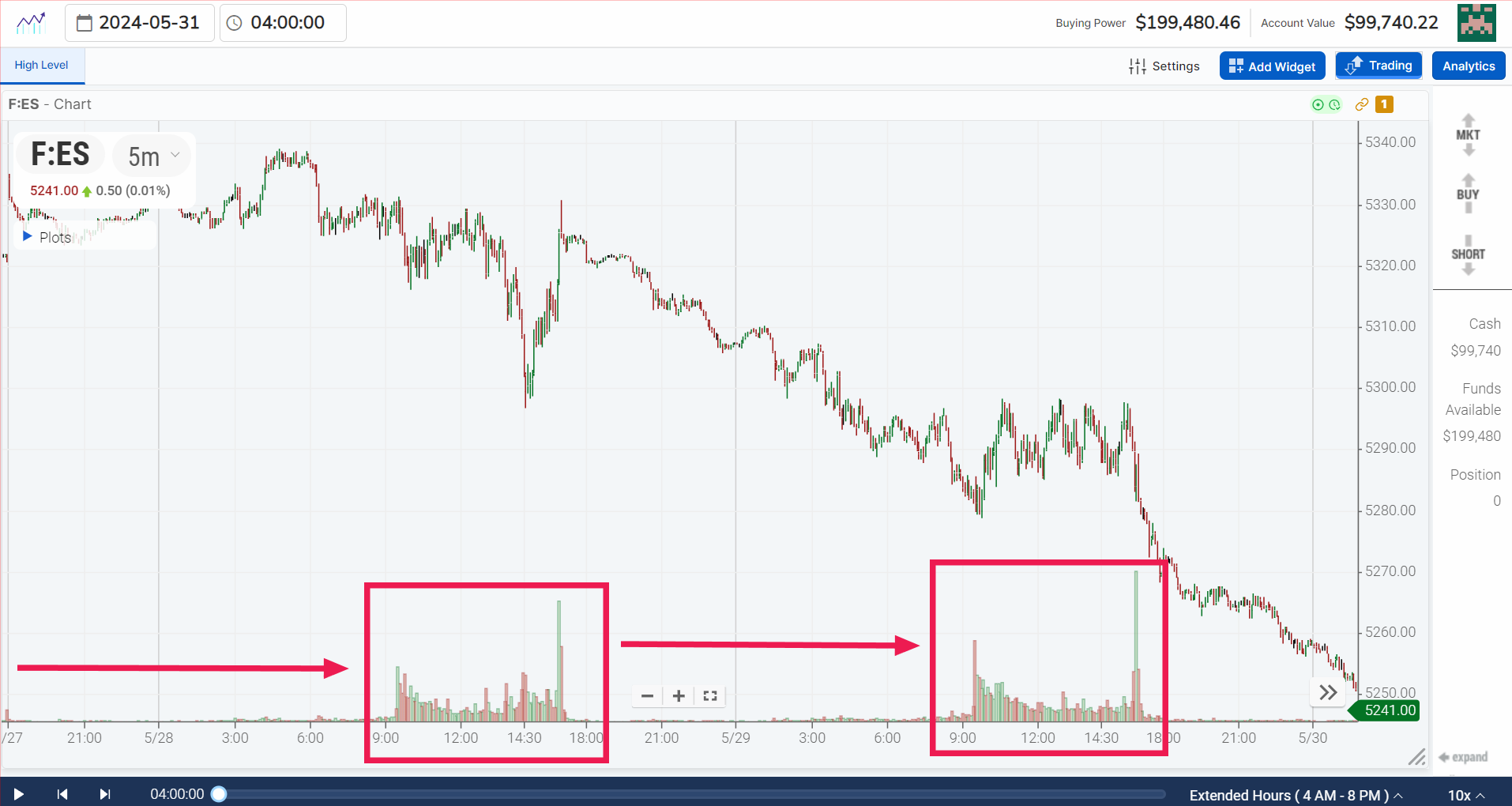
While futures trade nearly 24 hours a day, they do not trade 24/7. Most contracts observe a daily maintenance period. For instance, equity index futures, such as the E-mini S&P 500 (ES), trade from 6:00 PM ET until 5:00 PM ET the following day. At 5:00 PM ET, the market enters a one-hour halt for daily clearing and system maintenance before reopening at 6:00 PM ET to start the next session. This cycle repeats from Sunday through Friday. On Friday evening, the markets close at 5:00 PM ET for the weekend.
Differences Across Asset Classes
While the 6:00 PM to 5:00 PM cycle is a helpful rule of thumb, it is not universal across all commodities and financial instruments.
-
Energy and Metals: NYMEX Crude Oil and COMEX Gold futures generally follow the standard CME Globex hours.
-
Agricultural Products: Grains like corn, wheat, and soybeans often have more segmented hours. They typically open at 8:00 PM ET, trade through the night, pause in the morning, and resume during the “floor” hours of the US day session.
-
Interest Rates: Treasury futures follow the broad electronic hours but see their highest volume during the US Treasury cash market hours.
Navigating the Three Pillars: Pre-Market, Regular, and After-Hours
To trade futures effectively, one must distinguish between the technical opening of the exchange and the periods of high-volume participation. Market professionals often divide the day into three distinct phases based on the activity level and the participants involved.
The Asian and European Sessions (Overnight)
From the Sunday open until roughly 3:00 AM ET, the market is dominated by Asian financial centers, including Tokyo, Hong Kong, and Singapore. While volume is generally lower than the US day session, this is a vital time for currency futures and metals.
At 3:00 AM ET, the “London Open” occurs. As the major European financial hubs come online, liquidity in the futures markets—particularly in equity indices and energy—spikes significantly. For US-based traders, the hours between 3:00 AM and 9:30 AM ET are often referred to as the “overnight” or “pre-market” session. During this time, global macro trends are established that often dictate the direction of the US opening.
The Regular Trading Hours (RTH)
For US equity index futures, the “Regular Trading Hours” coincide with the NYSE and NASDAQ stock market hours: 9:30 AM to 4:00 PM ET. This is the period of maximum liquidity. Institutional investors, high-frequency trading algorithms, and mutual fund managers are most active during these six and a half hours.

Traders must be aware that while they can trade at 2:00 AM, the bid-ask spreads (the cost of entering and exiting a trade) are typically tighter during RTH. Furthermore, the volatility during the RTH session is driven by US-specific economic catalysts, such as Federal Reserve meetings or employment reports.
The After-Hours and Settlement
Between 4:00 PM and 5:00 PM ET, the market enters the “after-hours” phase. During this window, the “settlement price” is determined. The settlement price is a statistical average of trades executed just before the daily close and is used to calculate the daily profit or loss for every open position in the market. Understanding the timing of settlement is crucial for margin management, as this is the price at which your broker will determine if you have sufficient collateral to keep your positions open.
The Impact of Time Zones and Daylight Savings
One of the most frequent points of confusion for new futures traders is the transition between Standard Time and Daylight Savings Time. Because futures are global, a change in time in the United States does not always coincide with changes in London, Frankfurt, or Tokyo.
The “Broken” Overlap
Twice a year, the time difference between the US and Europe shifts by one hour for a period of two to three weeks. During these windows, the London open might occur at 2:00 AM ET or 4:00 AM ET instead of the usual 3:00 AM ET. For a futures trader, this shift can be disruptive if they are relying on specific historical volatility patterns. Failure to account for these shifts can lead to missing the most liquid hours of the morning or being caught off-guard by a sudden surge in volume.
Global Accessibility
The beauty of the futures market’s opening times is that they democratize access to financial opportunity. A trader in Sydney can trade the S&P 500 during their Tuesday afternoon, while a trader in New York is watching the same market on Monday night. This constant availability ensures that risk can be managed in real-time. If a major geopolitical event occurs at midnight in Washington D.C., a trader does not have to wait until 9:30 AM to hedge their portfolio; they can access the liquid futures market immediately.
Strategic Considerations: Why “When” You Trade Matters
Knowing the opening times is only the first step; the second step is understanding the psychological and mechanical nuances of those times. Market behavior varies wildly depending on which “clock” the market is currently following.
Liquidity Gaps and Slippage
Outside of the 9:30 AM to 4:00 PM ET window, the market is considered “thin.” This means there are fewer buy and sell orders resting on the exchange’s books. In a thin market, a large order can move the price more significantly than it would during the day. This phenomenon, known as slippage, can increase the cost of trading. Short-term scalpers often avoid the very late-night sessions or the hour immediately following the Sunday open because the risk-to-reward ratio is skewed by these wider spreads.
The “Opening Range” Strategy
Many professional traders focus exclusively on the first 30 to 60 minutes after the 9:30 AM ET open. This is known as the “opening range.” Because this time marks the convergence of overnight participants and fresh US-based capital, the volume is immense, and the price action often sets the tone for the remainder of the day. For those trading futures like the E-mini Nasdaq (NQ), the volatility at the open provides the necessary “fuel” for large price swings that can be capitalized upon.
Managing News Risk
Economic reports, such as the Consumer Price Index (CPI) or Non-Farm Payrolls (NFP), are typically released at 8:30 AM ET. At this time, the futures markets are already open, but the stock market is not. This makes futures the primary instrument for “price discovery” following major data. If you are holding a position at 8:29 AM, you must be prepared for the extreme volatility that occurs exactly at the moment the data is released. The ability to trade through these releases is a primary reason why institutional investors prefer futures over ETFs or individual stocks for hedging purposes.
Conclusion: Mastering the Clock
In the sophisticated world of finance, time is as much a variable as price itself. The futures markets offer unparalleled flexibility, operating on a schedule that reflects the interconnected nature of the modern global economy. By understanding that the market “opens” at 6:00 PM ET on Sunday and utilizes a 23-hour daily cycle, traders can better position themselves to handle volatility and find liquidity.
Success in futures trading requires more than just a directional bias on the market; it requires a disciplined adherence to the clock. Whether you are navigating the thin liquidity of the Sunday open, the frantic energy of the 8:30 AM news releases, or the institutional heavy-lifting of the regular US session, knowing the schedule is your first line of defense. In a marketplace that rarely sleeps, those who master the timing of the markets are the ones best equipped to protect their capital and seize opportunities.
aViewFromTheCave is a participant in the Amazon Services LLC Associates Program, an affiliate advertising program designed to provide a means for sites to earn advertising fees by advertising and linking to Amazon.com. Amazon, the Amazon logo, AmazonSupply, and the AmazonSupply logo are trademarks of Amazon.com, Inc. or its affiliates. As an Amazon Associate we earn affiliate commissions from qualifying purchases.