
For the modern investor, the question “what time did the market close today” is often more than a simple query about the clock. It is the starting point for evaluating daily performance, adjusting portfolios, and preparing for the next trading session. While the short answer for most U.S. investors is 4:00 PM Eastern Time, the mechanics of market timing are far more complex and significant than a single bell-ringing ceremony suggests.
Understanding market hours is a fundamental pillar of personal finance and investing. Whether you are a day trader looking for peak liquidity or a long-term investor checking your 401(k) balance, the timing of the market dictates price discovery, volatility, and the execution of your financial strategy.
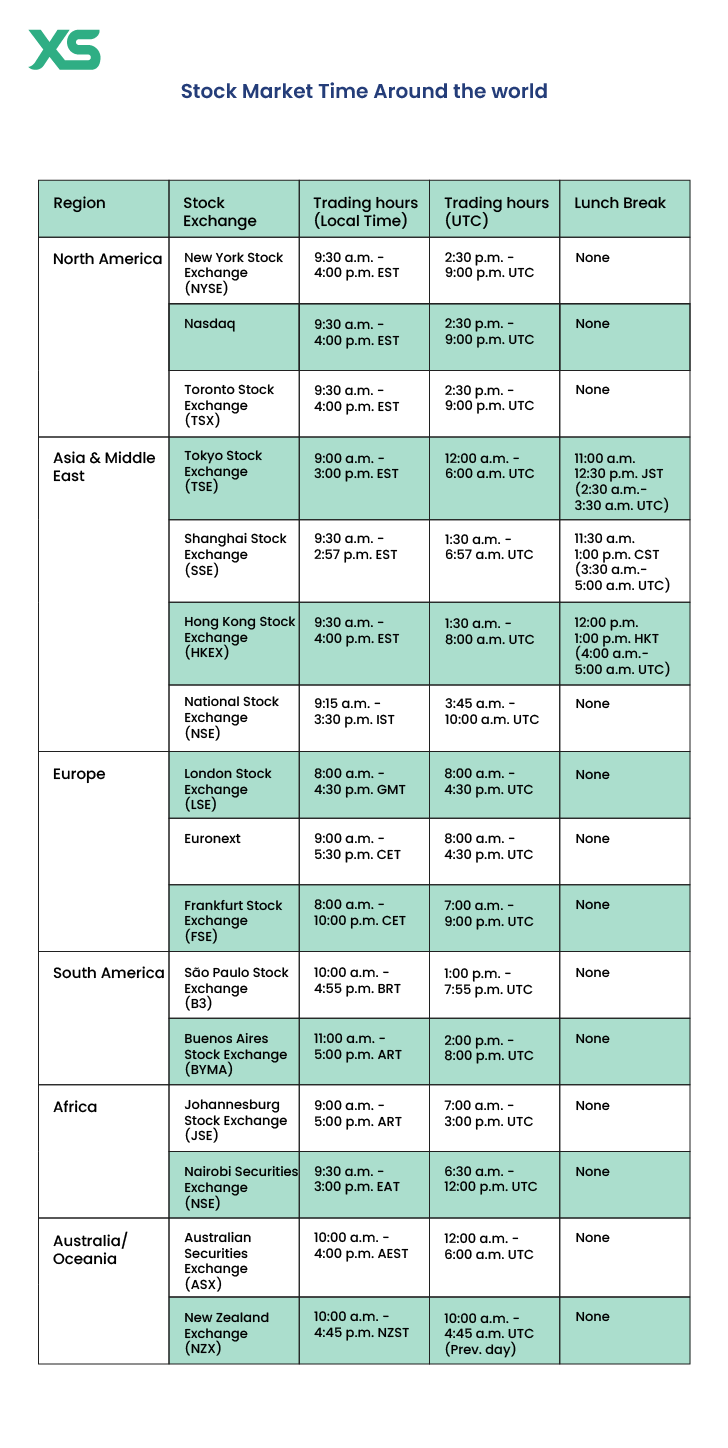
Understanding Standard Operating Hours for Major Exchanges
The backbone of the global financial system is built upon the operating hours of major stock exchanges. In the United States, the primary theaters of trade are the New York Stock Exchange (NYSE) and the NASDAQ.
The New York Stock Exchange (NYSE) and NASDAQ
Both the NYSE and the NASDAQ operate on a standardized schedule. For the vast majority of the year, the “opening bell” rings at 9:30 AM ET, and the “closing bell” rings at 4:00 PM ET. This six-and-a-half-hour window is known as “regular trading hours.” During this time, liquidity is at its highest, meaning there are enough buyers and sellers to ensure that trades are executed quickly and at prices close to the quoted market rate. For the retail investor, this is the safest and most efficient time to interact with the market.
Global Markets: London, Tokyo, and Hong Kong
Investing is increasingly a 24-hour global endeavor. If you are holding international ETFs or ADRs (American Depositary Receipts), “what time the market closed” depends on the geography of the asset. The London Stock Exchange (LSE) typically closes at 4:30 PM GMT. In Asia, the Tokyo Stock Exchange closes at 3:00 PM JST, often featuring a mid-day lunch break—a practice that U.S. markets do not follow. Understanding these overlaps is crucial for “macro” investors who realize that a closing price in London can act as a leading indicator for the opening price in New York.
Why 4:00 PM ET is the “Magic Hour”
The 4:00 PM close is not just an arbitrary cutoff. It is the moment when the “closing auction” occurs. This is a highly specialized process where the exchange gathers all buy and sell interests to determine a single closing price for every stock. This price is used as the official benchmark for mutual funds to calculate their Net Asset Value (NAV) and for index providers to track performance. If you hold a mutual fund, the price you see at the end of the day is determined precisely by the activity occurring at this 4:00 PM threshold.
Beyond the Bell: After-Hours and Pre-Market Trading
While the physical floor of the NYSE might go quiet after 4:00 PM, the digital market never truly sleeps. The rise of Electronic Communication Networks (ECNs) has allowed for extended-hours trading, which significantly stretches the definition of “closing time.”
How Extended-Hours Trading Works
Most major brokerages allow investors to trade in the “after-hours” session, which typically runs from 4:00 PM to 8:00 PM ET. There is also a “pre-market” session that can start as early as 4:00 AM ET, though it usually gains significant volume around 8:00 AM. In these sessions, trades are matched electronically. If you are asking what time the market closed because you saw a price move at 6:00 PM, you are witnessing the after-hours market reacting to news that broke after the official bell.
Risks and Rewards of Trading After the Close
The primary reason investors use after-hours trading is to react to earnings reports or major economic news that occurs outside of regular hours. However, this comes with significant risks. Liquidity is much lower, meaning there are fewer participants. This leads to wider “bid-ask spreads”—the difference between what a buyer will pay and what a seller will accept. A stock might appear to be “crashing” after-hours on low volume, only to stabilize by the next morning’s 9:30 AM open. For most individual investors, after-hours trading is a realm where caution is paramount.
The Role of ECNs (Electronic Communication Networks)
ECNs are the digital systems that make after-hours trading possible. Unlike the traditional exchange model that requires a specialist or market maker to facilitate trades, ECNs automatically match buy and sell orders. This technology has democratized access to the markets, allowing a retail investor in California to trade at 5:00 PM PT (8:00 PM ET) just as easily as a professional at a hedge fund.
Market Holidays and Early Closures
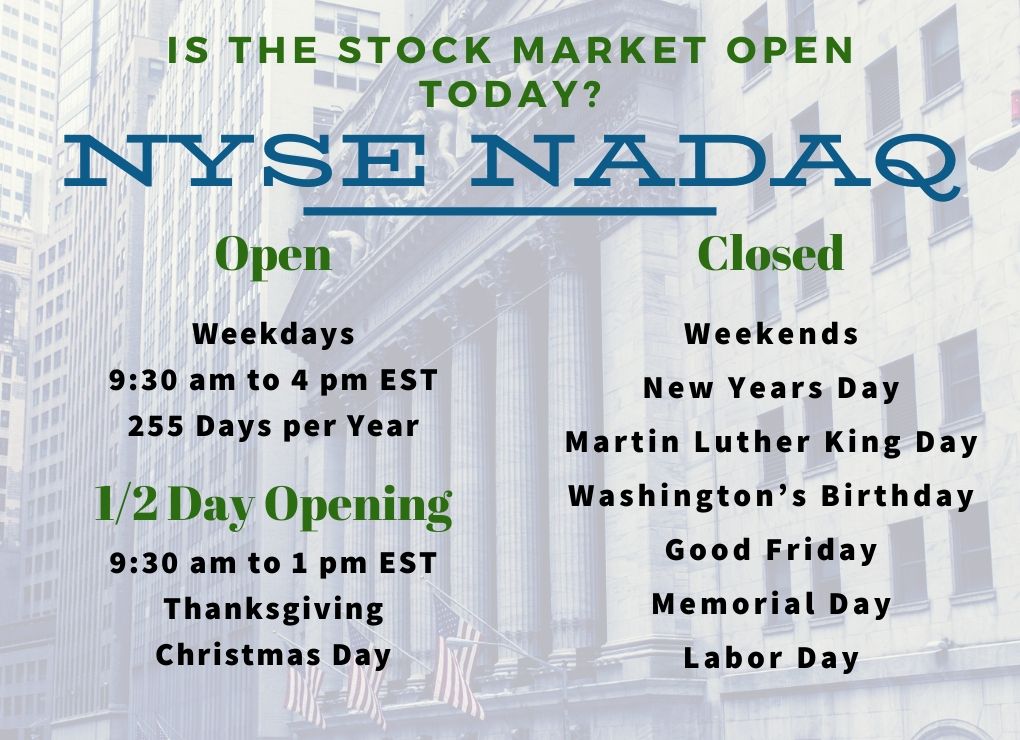
If you check the clock and realize it is only 1:30 PM ET, but the tickers have stopped moving, you might have run into an early closure or a market holiday. The financial calendar is dotted with specific days where the standard 4:00 PM close does not apply.
Scheduled Early Closures
The U.S. markets typically observe early closures at 1:00 PM ET on certain days, most notably the day after Thanksgiving (Black Friday) and sometimes Christmas Eve. These shortened sessions usually see lower trading volume as many institutional traders are away. For an investor, these days are often characterized by “choppy” price action, where small trades can move a stock more than usual because there are fewer participants to absorb the order.
Unscheduled Halts: Circuit Breakers and Technical Glitches
Sometimes the market closes—or pauses—unexpectedly. To prevent a total market collapse during periods of extreme panic, the SEC has “circuit breakers” in place. If the S&P 500 drops by 7% (Level 1) or 13% (Level 2) from the previous day’s close, trading is halted for 15 minutes. If it drops by 20% (Level 3), the market closes for the remainder of the day. While rare, these unscheduled closures are vital for maintaining “orderly markets” and giving investors time to breathe and process information.
How to Track the Financial Calendar
To avoid being caught off guard, every investor should maintain access to a reliable financial calendar. Most personal finance apps and brokerage platforms provide a schedule of market holidays (such as Labor Day, Juneteenth, or Martin Luther King Jr. Day) when the markets are closed entirely. Knowing these dates is essential for managing options expirations or ensuring that a planned sale of stock settles in time for a needed cash withdrawal.
The Psychology and Strategy of the Closing Bell
The “close” is more than a time; it is a psychological boundary. The way a stock finishes the day often dictates the sentiment for the following morning. Professional traders pay close attention to the “closing print” to gauge the conviction of the market.
The “Closing Auction” and Institutional Rebalancing
Large institutional investors, such as pension funds and insurance companies, often wait until the final minutes of the day to execute their largest trades. This leads to the “Power Hour” (3:00 PM to 4:00 PM ET), where volume spikes. Many institutions use “Market on Close” (MOC) orders, which guarantee they will receive the official closing price. This concentration of volume makes the closing time the most important window for price discovery in the entire day.
Weekend Risk: Carrying Positions Over the Friday Close
The Friday 4:00 PM close is particularly significant. It represents a 60-plus hour gap where markets are closed, but world events continue to happen. This is known as “weekend risk.” If a major geopolitical event occurs on a Saturday, investors cannot sell their positions until Monday morning. Strategic investors often reduce their “leverage” (borrowed money) before the Friday close to ensure they aren’t wiped out by a “gap down” at Monday’s open.
Using Market Close Data for Technical Analysis
For those who use charts to make investment decisions, the closing price is the most weighted data point. Many technical indicators, such as Moving Averages or the Relative Strength Index (RSI), are calculated based on daily closing prices. A stock “closing above” a certain resistance level at 4:00 PM is seen as a much stronger bullish signal than if it simply touched that price at noon and fell back down.
Essential Tools for Real-Time Market Monitoring
In the digital age, you should never have to wonder “what time did the market close.” A suite of tools exists to keep you informed of every tick, halt, and bell.
Financial News Suites and Terminal Access
While professional traders use a Bloomberg Terminal (which costs tens of thousands of dollars a year), retail investors have access to excellent free or low-cost alternatives. Websites like Yahoo Finance, CNBC, and Google Finance provide real-time countdowns to the market open and close. They also highlight after-hours movement, which helps you see if the “closing price” you saw at 4:00 PM is still relevant at 6:00 PM.
Mobile Apps for the Modern Investor
Apps like Robinhood, Fidelity, and Schwab have integrated notifications. You can set alerts to notify you of the market close or specifically when a stock in your watchlist hits a certain price during the closing auction. This allows you to manage your personal finances without being tethered to a desktop computer all day.

Automating Your Strategy Around Market Times
If you cannot be present at 4:00 PM, you can use “limit orders” or “stop-loss orders.” A limit order allows you to set a price at which you are willing to sell, and it will execute automatically if the market hits that price before the close. This automation ensures that your financial strategy is executed regardless of your personal schedule, effectively making the “market close” a servant to your goals rather than a source of stress.
In conclusion, knowing what time the market closed today is the first step in a deeper journey into financial literacy. By understanding regular hours, the nuances of after-hours trading, the schedule of holidays, and the strategic importance of the closing auction, you move from being a passive observer to a disciplined participant in the global economy. Whether the bell rings at 4:00 PM or 1:00 PM, your preparedness is what ultimately determines your success in the world of money.
aViewFromTheCave is a participant in the Amazon Services LLC Associates Program, an affiliate advertising program designed to provide a means for sites to earn advertising fees by advertising and linking to Amazon.com. Amazon, the Amazon logo, AmazonSupply, and the AmazonSupply logo are trademarks of Amazon.com, Inc. or its affiliates. As an Amazon Associate we earn affiliate commissions from qualifying purchases.