
The beauty of a meteor shower has captivated humanity for millennia, but in the modern era, the experience has evolved from simple observation to a high-tech pursuit. If you are wondering what time you can see the meteor shower tonight, the answer is no longer found just by looking up at the horizon and hoping for the best. Instead, it is found through a sophisticated ecosystem of mobile applications, predictive algorithms, and advanced optical hardware. Technology has effectively removed the guesswork from astronomy, allowing both amateur enthusiasts and professional researchers to pinpoint the exact moment of peak activity with startling accuracy.

To maximize your experience tonight, you need to look beyond the naked eye. From augmented reality (AR) sky maps to AI-powered smart telescopes, the intersection of technology and celestial observation has never been more accessible. This guide explores the essential tech tools you need to track, view, and document the meteor shower tonight.
The Digital Observatory: Top Apps for Tracking Celestial Events
The first step in planning your meteor shower viewing is identifying the radiant point—the area in the sky from which the meteors appear to originate. This is where software becomes your most valuable asset. The App Store and Google Play are filled with “sky guide” applications, but the professional-grade options utilize real-time GPS data and gyroscopic sensors to create an immersive, accurate map of the heavens.
AR Sky Maps: Navigating the Night Sky with Precision
Apps like Stellarium, SkySafari, and Star Walk 2 have revolutionized how we interact with the night sky. By using Augmented Reality (AR) overlays, these apps allow you to point your smartphone or tablet at the sky to see a digital map of constellations, planets, and meteor shower radiants superimposed over your live camera view.
For tonight’s meteor shower, these tools are indispensable for identifying the “Radiant.” If you are watching the Perseids, for example, the app will guide your gaze toward the constellation Perseus. The tech behind this—utilizing the device’s magnetometer and accelerometer—ensures that as you move your phone, the stars move in sync, providing a 1:1 digital twin of the universe. High-end versions of these apps also include “Night Mode” (red light filters) to preserve your natural night vision, a critical feature for any serious stargazer.
Predictive Analytics: Using Meteor Shower Forecast Tools
Beyond visual maps, specialized apps like MeteorActive or the American Meteor Society’s website provide predictive data models. These tools calculate the ZHR (Zenithal Hourly Rate), which predicts how many meteors will be visible per hour based on your specific geographic coordinates, local light pollution levels, and current cloud cover.
These platforms ingest data from global weather satellites and astronomical models to give you a “viewing probability” score. Instead of standing outside in the cold and hoping for a glimpse, you can use these data-driven insights to determine the exact 30-minute window when the shower will be at its most intense in your specific ZIP code.
Hardware and Optics: Choosing the Right Gear for High-Definition Viewing
While your eyes are sufficient for seeing the brightest streaks, the “tech-forward” way to experience a meteor shower involves optics that can gather more light and provide greater detail. The market for telescopes and binoculars has seen a significant shift toward digital integration and “Smart Optics.”
Smart Telescopes: The Rise of AI-Integrated Optics
The most significant technological leap in amateur astronomy is the “Smart Telescope,” led by brands like Unistellar and Vaonis. Unlike traditional telescopes that require manual alignment and a deep knowledge of celestial coordinates, these devices are essentially robotic cameras.
Smart telescopes use “Autonomous Field Detection” powered by onboard computers. Once you set the device down, it analyzes the stars in its field of view, compares them to an internal database of millions of celestial objects, and self-aligns. Through a connected smartphone app, you simply select the meteor shower tonight, and the telescope’s motors move it into the perfect position. These devices also use “Enhanced Vision” technology—a form of real-time digital stacking—to show you deep-space objects and faint meteor trails that would be invisible through a standard glass eyepiece.
High-Performance Binoculars: Portability Meets Precision
For those who prefer a more tactile experience, modern binoculars have integrated stabilization technology. High-end models from Sony and Canon feature Electronic Image Stabilization (EIS), which compensates for the natural tremors of the human hand. This is crucial for meteor watching, as it allows you to maintain a steady gaze on a specific patch of sky for extended periods without the need for a heavy tripod.
Furthermore, the lens coatings on modern optics have seen massive improvements. Anti-reflective coatings and high-transmission glass ensure that every photon of light from a distant meteor reaches your eye, providing a level of clarity and color fidelity that was previously reserved for professional observatories.
Capturing the Moment: Advanced Tech Tips for Meteor Photography
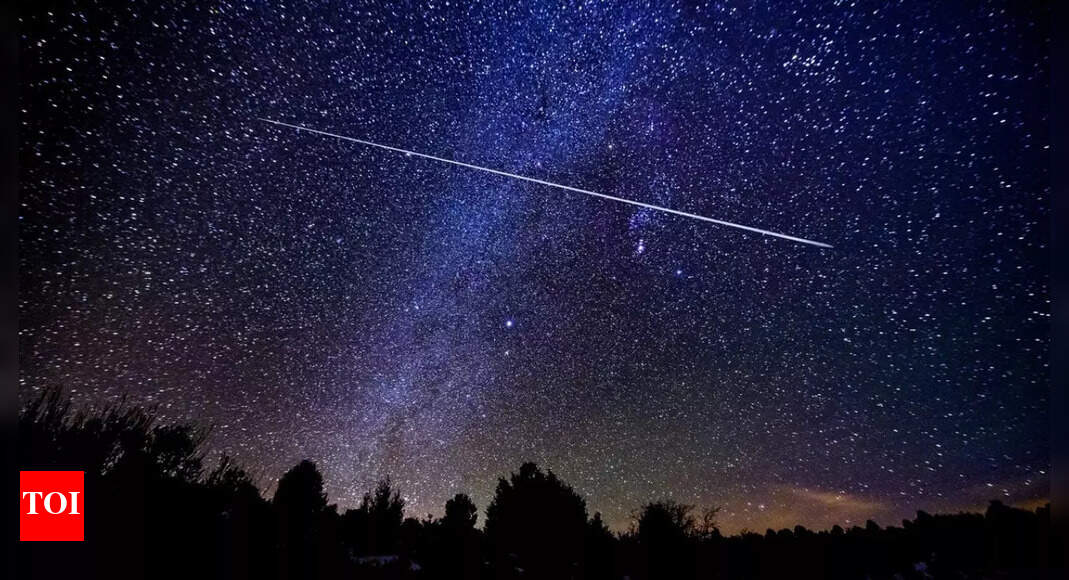
In the age of social media and digital portfolios, “seeing” the meteor shower is often only half the goal; the other half is capturing it. Astrophotography was once an incredibly expensive and technical niche, but advancements in sensor technology and computational photography have democratized the process.
Long Exposure and Computational Photography on Smartphones
If you are using a flagship smartphone like the iPhone 15 Pro or the Samsung Galaxy S24 Ultra, you have a powerful astrophotography tool in your pocket. These devices utilize “Night Mode” or “Astrophoto Mode” (within the Expert RAW app for Samsung), which uses computational photography to stack multiple exposures.
When you set your phone on a tripod to capture the meteor shower tonight, the software performs thousands of calculations per second to reduce noise, correct for the earth’s rotation (to avoid star trails), and brighten the faint streaks of meteors. By utilizing the RAW format, you can capture a much higher dynamic range, allowing you to pull out details in the dark sky during post-processing that the human eye might miss.
Mirrorless Cameras and Sensor Technology for Low-Light Excellence
For the best results, a dedicated mirrorless camera with a Full-Frame sensor is the gold standard. Sensors from manufacturers like Sony (the Alpha series) have reached a level of low-light sensitivity (ISO) that is nearly noise-free at high settings. To capture a meteor, you need a wide-angle lens with a fast aperture (f/1.8 or f/2.8).
The “tech” trick here is using an intervalometer—either built-in or via a smartphone app—to take continuous 20-second exposures throughout the night. Post-processing software like Adobe Lightroom or AI-driven tools like Topaz Photo AI can then be used to sharpen the images and remove any digital grain, resulting in professional-quality images of the cosmic event.
Connectivity and Security: Protecting Your Data in Remote Locations
To get the best view of a meteor shower, you often have to travel away from city lights into “Dark Sky” parks or remote wilderness areas. In these environments, your reliance on technology increases, but so do the risks regarding connectivity and digital security.
Satellite Connectivity for Off-Grid Exploration
If your quest for the perfect view takes you outside of cellular range, satellite technology is your lifeline. Modern smartphones, such as the latest iPhone models, now include Emergency SOS via satellite. For more robust needs, gadgets like the Garmin inReach Mini 2 allow you to send and receive texts and share your GPS coordinates via the Iridium satellite network.
Furthermore, for those who want to live-stream their stargazing experience from the middle of nowhere, portable Starlink kits have become a game-changer. These flat-panel satellite dishes provide high-speed internet in the most remote locations, ensuring you can stay connected to meteor tracking apps even when the nearest cell tower is miles away.
Digital Security and Privacy in Outdoor Tech
When using various third-party apps and connecting to remote nodes or public Wi-Fi at campgrounds, digital security remains a priority. Many stargazing apps require location permissions to function. It is essential to review your privacy settings and ensure you are using a VPN (Virtual Private Network) if you connect to any shared networks during your trip. Protecting your device with biometric locks and ensuring your “Find My Device” features are active is also critical when carrying thousands of dollars of tech into the woods.
The Future of Citizen Science: AI and Space Observation
Technology hasn’t just made it easier to see the meteor shower; it has made it possible for you to contribute to scientific discovery. This is the era of “Citizen Science,” where the data collected by your gadgets can help astronomers understand the composition of our solar system.
Crowd-Sourced Data and Machine Learning
Projects like CAMS (Cameras for Allsky Meteor Surveillance) allow enthusiasts to set up low-light security cameras that feed data into a central AI. This machine-learning algorithm analyzes thousands of video feeds from around the world to map meteor orbits in 3D.
When you check what time the meteor shower is tonight, you are benefiting from this global network of interconnected tech. In the future, we can expect AI to provide even more localized “micro-forecasts,” telling you not just what time to look up, but exactly which quadrant of the sky will have the most activity based on real-time atmospheric data.
Conclusion
As you prepare to head out tonight, remember that the “what time” is only the beginning. By leveraging the power of AR apps, smart optics, and computational photography, you are transforming a traditional pastime into a cutting-edge technological experience. Whether you are a hobbyist with a smartphone or a pro with a robotic telescope, the tech at your fingertips ensures that you won’t miss a single spark in the night sky. The universe is putting on a show, and thanks to modern technology, you have a front-row seat.
aViewFromTheCave is a participant in the Amazon Services LLC Associates Program, an affiliate advertising program designed to provide a means for sites to earn advertising fees by advertising and linking to Amazon.com. Amazon, the Amazon logo, AmazonSupply, and the AmazonSupply logo are trademarks of Amazon.com, Inc. or its affiliates. As an Amazon Associate we earn affiliate commissions from qualifying purchases.