
The digital landscape witnessed a significant shift with the launch of Threads, a platform developed by the Instagram team that fundamentally altered the trajectory of text-based social networking. While many initially perceived it as a reactionary product, a deeper technical analysis reveals a sophisticated integration of existing social graphs with emerging decentralized protocols. Threads represents Meta’s most ambitious attempt to bifurcate its ecosystem, moving away from purely visual content toward a high-velocity, text-centric information stream. To understand what Threads is within the Instagram ecosystem, one must look past the user interface and examine the software architecture, the interoperability of the Fediverse, and the algorithmic structures that govern its operations.

The Engineering of an Instant Ecosystem
The most remarkable technical feat of Threads was its “Day One” scalability. Unlike traditional startups that must solve the “cold start” problem—the difficulty of building a user base from zero—Threads was engineered to leverage the existing Instagram infrastructure. This allowed the platform to onboard over 100 million users in less than a week, a feat previously thought impossible in the realm of software deployment.
Social Graph Migration and Identity Management
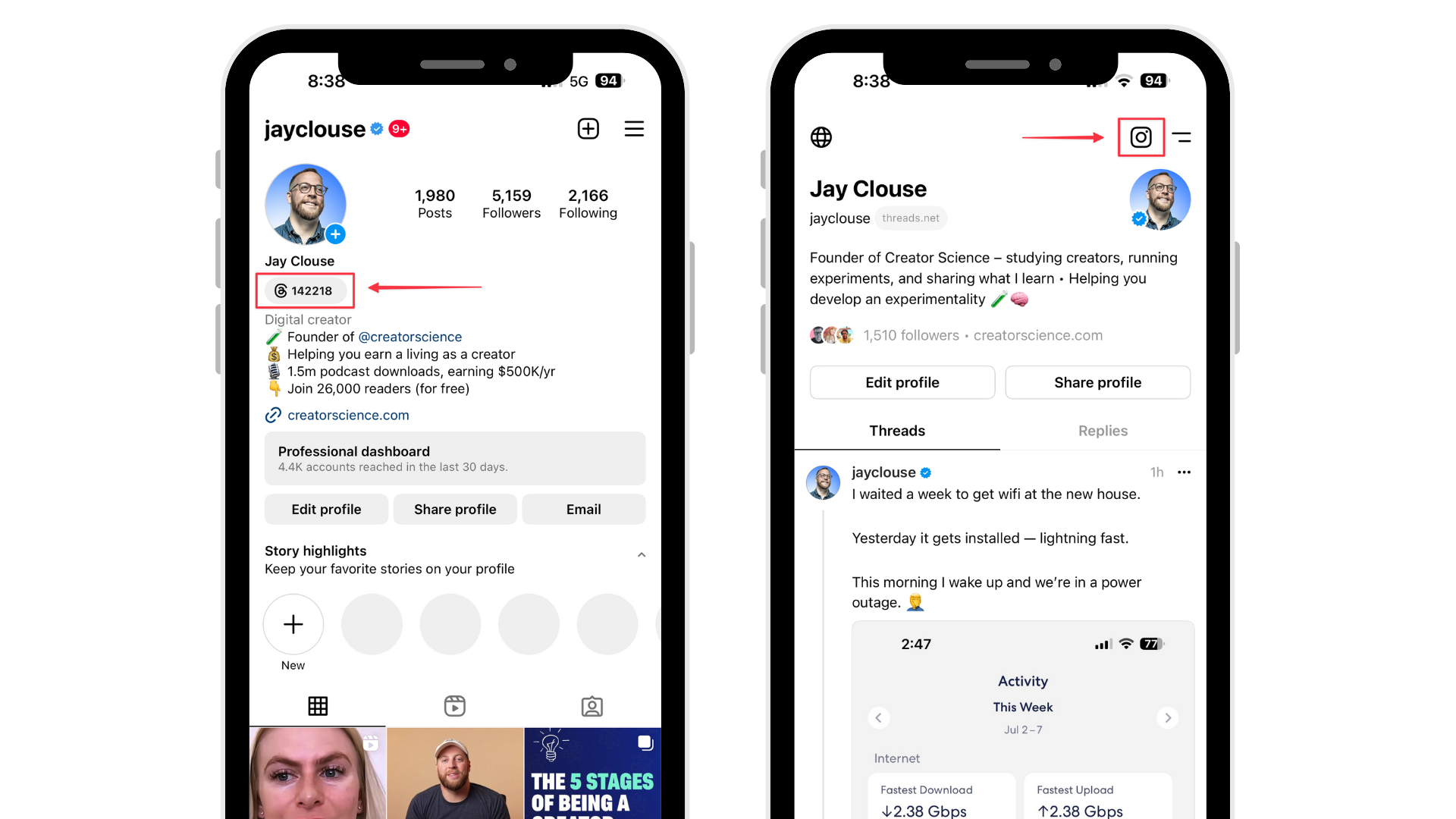
Threads is not a standalone application in the traditional sense; it is an extension of the Instagram Social Graph. From a backend perspective, this means that the user identity, authentication protocols, and relationship databases are shared. When a user “joins” Threads, the system does not create a new entity from scratch. Instead, it creates a new entry in a specialized database that references the existing Instagram User ID (UID).
This architectural choice has significant implications for digital security. By utilizing Instagram’s established authentication framework, Threads inherited years of security iterations, including two-factor authentication (2FA) and sophisticated bot-detection algorithms. However, this tight integration also presents challenges in data isolation, as the two platforms essentially operate as synchronized nodes within Meta’s broader data centers.
Infrastructure and Scalability Challenges
Building a text-based platform requires a different infrastructure priority than a photo-sharing app. While Instagram focuses on Content Delivery Networks (CDNs) for high-resolution images and videos, Threads prioritizes low-latency text delivery and real-time notification systems. The backend must handle millions of concurrent “read/write” operations as conversations splinter into complex trees of replies. The engineering team utilized a refined version of Meta’s internal tech stack, likely leveraging React Native for cross-platform UI consistency and a robust C++ or Python-based backend capable of handling the massive influx of telemetry data generated by rapid-fire text interactions.
Interoperability and the Fediverse Strategy
Perhaps the most disruptive technological aspect of Threads is its commitment to the ActivityPub protocol. This move marks a pivot in Meta’s long-standing “walled garden” philosophy, signaling a shift toward decentralized social media, often referred to as the “Fediverse.”
The ActivityPub Protocol Explained
ActivityPub is an open, decentralized social networking protocol. It provides a standardized API for creating, updating, and deleting content, as well as a mechanism for notifying actors that content has been created. By integrating with ActivityPub, Threads aims to become interoperable with other platforms like Mastodon and Lemmy.
From a technical standpoint, this means that a user on a completely different server, running entirely different software, could theoretically follow and interact with a Threads user without ever creating a Meta account. This is achieved through “inboxes” and “outboxes” defined by the protocol, where servers exchange JSON-LD (JSON for Linked Data) objects to communicate state changes across the network.
Challenges of Decentralization for Centralized Entities
Integrating a centralized giant like Instagram into a decentralized ecosystem presents unique technical hurdles. Data moderation becomes complex when content leaves Meta’s controlled servers. For instance, if a Threads post is deleted, the system must broadcast a “Delete” activity to all federated servers. However, Meta cannot force an independent server to comply with that deletion request. Navigating this “eventual consistency” model while maintaining user privacy and safety standards is a primary focus for the Threads engineering team.
Functional Mechanics and Algorithmic Sorting
What differentiates Threads from its predecessors is how it handles the flow of information. While Instagram’s primary algorithm is optimized for visual engagement and “dwell time,” the Threads algorithm is designed to prioritize conversational relevance and real-time information density.
The Hybrid Feed Logic
The Threads feed operates on a hybrid model. Initially, the platform relied heavily on an algorithmic “For You” feed, which utilized machine learning (ML) models to predict which conversations a user might find interesting based on their Instagram interests. These models analyze signals such as:
- Interaction Velocity: How quickly a thread is gaining replies and likes.
- Relationship Proximity: Whether the user follows the poster or their followers on Instagram.
- Content Embeddings: Using Natural Language Processing (NLP) to understand the topic of a thread and match it with a user’s historical preferences.
As the platform matured, Meta introduced a “Following” feed, which relies on a more traditional chronological sorting mechanism. Technically, managing two distinct feed logics requires a robust indexing system that can re-rank thousands of candidate posts in milliseconds to ensure the user experience remains fluid and responsive.
Media Integration and High-Fidelity Threading
Despite being text-focused, Threads supports rich media, including 5-minute videos and high-resolution carousels. The technical challenge here is maintaining the “lightweight” feel of a text app while supporting the heavy data payloads of Instagram-style media. Threads employs aggressive image compression and adaptive bitrate streaming for video to ensure that users on slower connections can still participate in high-velocity discussions without significant lag.
Security, Privacy, and the Infrastructure of Safety
In the modern tech landscape, the success of a platform is often determined by its approach to digital security and content moderation. Threads benefits from Meta’s multi-billion dollar investment in safety infrastructure, but it also introduces new privacy paradigms.
Automated Moderation via Large Language Models (LLMs)
Threads heavily utilizes AI-driven moderation to filter out spam and malicious content. Given the text-heavy nature of the platform, Meta leverages Large Language Models to identify not just banned keywords, but the “intent” behind a post. These models are trained to recognize hate speech, harassment, and misinformation in context, which is significantly more difficult than identifying prohibited imagery. The system uses a “human-in-the-loop” approach, where the AI flags high-risk content for review by human moderators, while automatically suppressing low-level spam.
Data Portability and User Controls
A key feature of the Threads technical roadmap is data portability. In line with the ActivityPub integration, Meta has worked on tools that allow users to export their data or move their followers to another platform. This is a radical departure from the traditional “lock-in” strategy. On the user side, the app includes “Hidden Words” filters and advanced mute/block features that sync across the Instagram ecosystem. If you block a user on Instagram, the technical handshake ensures they are automatically blocked on Threads, maintaining a consistent safety perimeter for the user.
The Roadmap: API Development and Programmable Social Media
As Threads evolves, its transition from a simple app to a programmable platform is becoming evident. The release of the Threads API (Application Programming Interface) is a pivotal moment for developers and the broader tech community.
Building for the Ecosystem
The Threads API allows third-party developers to create tools for scheduling posts, analyzing engagement data, and managing large-scale interactions. This requires Meta to expose specific endpoints that provide access to the platform’s data while strictly adhering to privacy regulations like GDPR and CCPA. The API is designed with rate-limiting and OAuth 2.0 authentication to ensure that third-party integrations do not compromise platform stability or user security.
AI Integration and the Post-Platform Era
Looking forward, the integration of generative AI is expected to be a core component of the Threads experience. We are likely to see “smart replies,” AI-generated summaries of long threads, and advanced search capabilities that use semantic understanding rather than simple keyword matching.
Technically, this means moving toward a “post-platform” era where the interface is less about a static feed and more about a dynamic, AI-curated information stream. By combining the social graph of Instagram with the openness of the Fediverse and the intelligence of modern AI, Threads is positioning itself as a foundational layer of the future internet—a place where text, data, and human interaction converge in a highly scalable, secure, and interoperable environment.
aViewFromTheCave is a participant in the Amazon Services LLC Associates Program, an affiliate advertising program designed to provide a means for sites to earn advertising fees by advertising and linking to Amazon.com. Amazon, the Amazon logo, AmazonSupply, and the AmazonSupply logo are trademarks of Amazon.com, Inc. or its affiliates. As an Amazon Associate we earn affiliate commissions from qualifying purchases.