
In the modern landscape of alternative investments, few assets have seen as meteoric a rise as high-end collectible trading cards. At the pinnacle of this market sits the “Manga Rare”—a specific tier of ultra-rare chase cards, primarily associated with the One Piece Card Game and other Bandai-produced titles. For the casual enthusiast, these cards represent a stunning piece of art; for the strategic investor, they represent a high-variance financial instrument. Understanding the “percent chance” of pulling one of these cards is not merely a matter of curiosity—it is a fundamental exercise in risk management and capital allocation.

Understanding the Mathematical Probability of the Manga Rare
To treat the pursuit of a Manga Rare as a financial endeavor, one must first deconstruct the supply-side mechanics. Unlike standard holographic cards or “Super Rares,” Manga Rares are distributed with extreme scarcity, often calculated at the “case” level rather than the “booster box” level.
Case Ratios and Print Runs
In the world of collectible card games (TCGs), a “case” typically consists of 12 sealed booster boxes. Industry data and community-led statistical tracking suggest that a Manga Rare typically appears once in every three to four cases. This places the raw probability of encountering a Manga Rare at approximately 1 in 36 to 1 in 48 booster boxes.
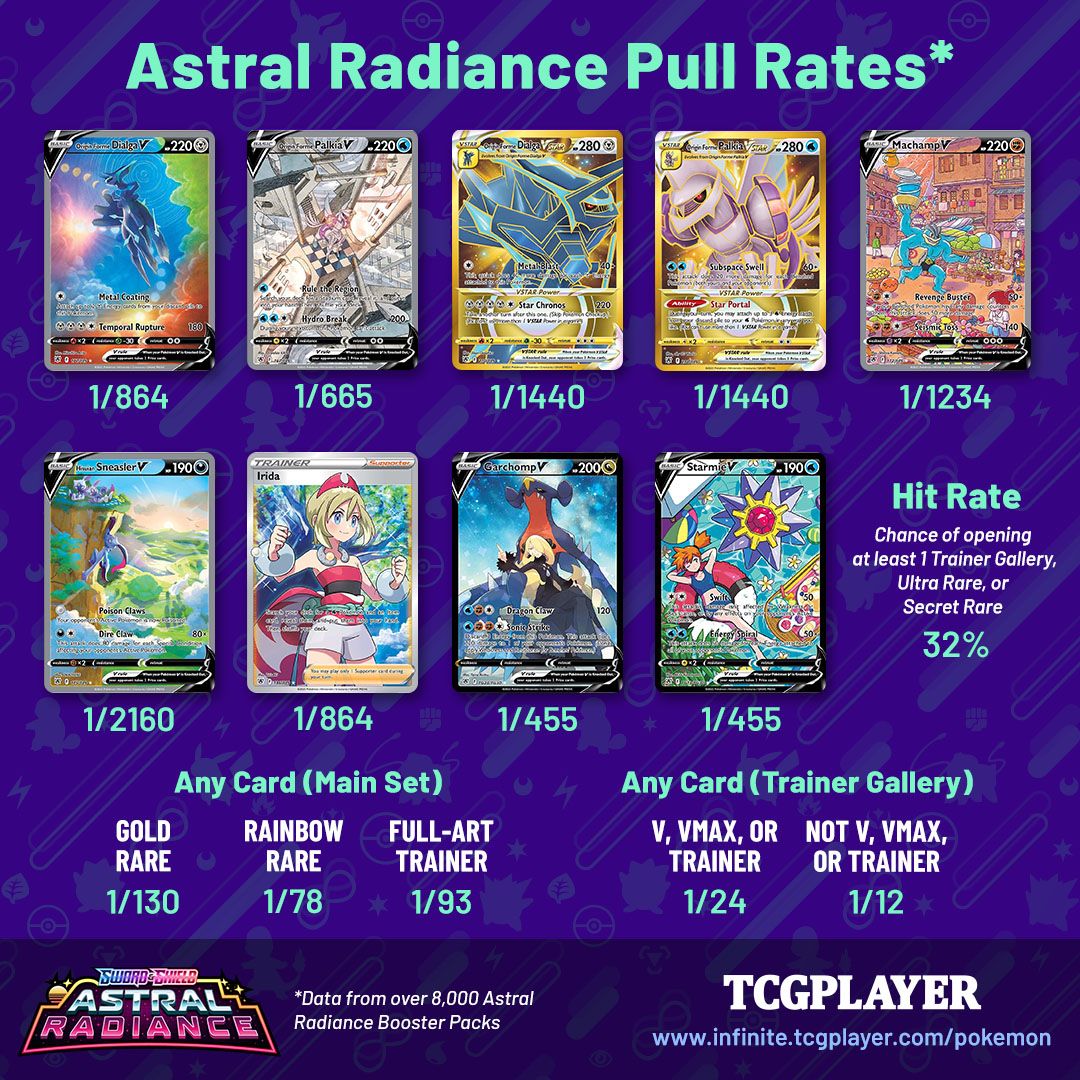
When you break this down further into individual booster packs—with 24 packs per box—the mathematical probability plummets to roughly 0.08% to 0.11% per pack. For an investor, these odds represent a high-risk “lottery” mechanic. Relying on “pulling” the asset from a pack is statistically inefficient compared to direct acquisition on the secondary market.
The Statistical Variance of Individual Booster Packs
The concept of “variance” is crucial here. Probability does not guarantee results; it describes averages over a long horizon. An investor could theoretically open five cases (60 boxes) and never see a Manga Rare, a phenomenon known as “running cold.” Conversely, “running hot” might result in two Manga Rares in a single case. Because Bandai does not officially disclose pull rates, investors must rely on “observed ratios,” which adds a layer of information asymmetry to the market. This lack of transparency is a hallmark of speculative assets, where the perceived rarity often drives the price more than the actual circulating supply.
The Financial Asset Class: Why Manga Rares Command Premium Valuations
If the odds of pulling a Manga Rare are so low, the natural question for a business-minded individual is: what justifies the thousand-dollar price tags these cards often command? The answer lies in the intersection of brand equity and artificial scarcity.
Scarcity as a Value Driver
In economics, the value of a luxury good is often inversely proportional to its availability. The Manga Rare is the “Veblen good” of the TCG world. By utilizing iconic artwork from the original manga—often drawn by the series creator—the publisher creates a bridge between the intrinsic value of the intellectual property (IP) and the extrinsic value of the card’s rarity. This creates a “hard floor” for the price. As long as the IP remains relevant, the demand for the rarest iteration of its most iconic characters (such as Portgas D. Ace or Monkey D. Luffy) remains constant, while the supply remains fixed once the set goes out of print.
Grading and Its Impact on Liquidity
A Manga Rare’s value is not static; it is highly dependent on its physical condition. This has given rise to a secondary service industry: third-party grading (PSA, BGS, CGC). A “Raw” Manga Rare might sell for $1,000, but a “Black Label” or “Pristine 10” version can command a 300% to 500% premium.
From a money management perspective, grading is a value-add strategy. It transforms a subjective collectible into a standardized financial asset. A graded card provides “liquidity” because buyers can trust the quality without physical inspection, making it easier to trade on global platforms. For those looking to maximize their “pull,” the cost of grading must be factored into the total investment cost.
Risk Management in Collectible Investing

Navigating the TCG market requires the same discipline as trading equities or crypto-assets. The “thrill of the pull” is often a distraction from the cold reality of ROI (Return on Investment).
The “Sunk Cost” Fallacy in Box Breaking
The primary risk in chasing a Manga Rare is the “Sunk Cost Fallacy.” An investor may spend $2,000 on several cases of cards, fail to pull the chase card, and then feel compelled to spend another $2,000 to “break even.” Mathematically, each pack opened is an independent event (or close to it, depending on factory mapping).
The “expected value” (EV) of a booster box is often significantly lower than its retail price once the “hype period” ends. If a box costs $100 and the average value of the cards inside is $60, you are losing 40% of your capital the moment you break the seal. This “gambler’s tax” is the price paid for the slim chance of hitting a Manga Rare.
Diversification: Singles vs. Sealed Product
Professional collectors often employ a “barbell strategy.” On one end, they buy “Singles”—purchasing the Manga Rare directly from the secondary market. While this requires a high upfront capital outlay, it eliminates the variance of pack-opening. On the other end, they hold “Sealed Product.”
Historically, sealed booster boxes of popular sets appreciate in value over time because the “supply” of unopened packs diminishes as people hunt for the Manga Rares inside. In this scenario, the investor doesn’t care about the 0.1% pull rate; they profit from the desire of others to take that risk. Selling the “shovels” during a gold rush is often more profitable than digging for gold yourself.
Market Dynamics and the Secondary Economy
The value of a Manga Rare is not just determined by its pull rate, but by the health of the broader ecosystem. As a financial tool, the card is subject to market cycles, plateaus, and crashes.
Market Volatility and Hype Cycles
The “percent chance” of pulling a card stays the same, but the “value” of that chance fluctuates. During a new set release, “Fear Of Missing Out” (FOMO) often drives prices to unsustainable highs. A Manga Rare might debut at $3,000, only to settle at $1,200 three months later as more supply enters the market.
Smart money enters the market during the “trough of disillusionment”—the period after the initial hype has died down but before the set goes out of print. Understanding the timing of these cycles is just as important as understanding the probability of the pull itself.
Platforms and Transaction Costs
Finally, one must consider the friction of the market. Selling a high-value asset like a Manga Rare involves transaction fees (10-15% on platforms like eBay or TCGPlayer), shipping insurance, and potential taxes. If you pull a card worth $1,000, your net take-home might only be $850.
When calculating the “percent chance” of a profitable pull, these overhead costs must be subtracted from the potential upside. This reinforces the argument that “pulling” a Manga Rare is rarely a sound financial strategy for pure profit; rather, it is a high-risk speculative event that occasionally yields a windfall.
Conclusion: The Professional Outlook on Chase Cards
So, what is the percent chance you will pull a Manga Rare? Statistically, it is roughly 1 in 1,000 packs. From a financial perspective, those are not odds one should bet a portfolio on.
However, the existence of the Manga Rare serves a vital purpose in the TCG economy. It acts as a flagship asset that drives brand engagement, increases the value of sealed inventory, and creates a high-ceiling for the secondary market. For the serious investor, the goal should not be to “beat the odds” through volume opening, but to understand the market forces that make those odds so valuable. Whether you are buying the single to hedge against inflation or holding sealed cases to sell to the next generation of “chasers,” treat the Manga Rare as a sophisticated financial instrument, and your bottom line will thank you.
aViewFromTheCave is a participant in the Amazon Services LLC Associates Program, an affiliate advertising program designed to provide a means for sites to earn advertising fees by advertising and linking to Amazon.com. Amazon, the Amazon logo, AmazonSupply, and the AmazonSupply logo are trademarks of Amazon.com, Inc. or its affiliates. As an Amazon Associate we earn affiliate commissions from qualifying purchases.