
The sneaker industry has long transitioned from a utilitarian market focused on athletic performance into a complex ecosystem of storytelling, brand equity, and strategic marketing. At the heart of this evolution lies Nike’s “What The” series—a design concept that intentionally clashes various colorways, textures, and narratives from a single model’s history into one chaotic, yet harmonious, product. When the Nike KD VII “What The” was released, it wasn’t just another performance basketball shoe; it represented a pinnacle of brand strategy. By deconstructing the KD VII through a branding lens, we can uncover the sophisticated methods modern corporations use to solidify product identity and leverage nostalgia to drive consumer engagement.
The Evolution of the “What The” Identity
The “What The” concept began as a niche experiment in 2007 with the Nike SB Dunk Low, but by the time it reached Kevin Durant’s seventh signature shoe, it had become a cornerstone of Nike’s brand architecture. This strategy is rooted in the “Philosophy of Aggregation”—the idea that a product’s value is the sum of all the stories told throughout its lifecycle.
From Subculture to Mainstream Strategy
Originally, the mashup aesthetic was a nod to the skateboarding subculture’s irreverence. However, as Nike transitioned this concept to its premier basketball lines—LeBron, Kobe, and Durant—the strategy shifted. It became a celebratory “victory lap” for a product line. For the KD VII, the “What The” iteration served as a visual archive. In a market where consumer attention spans are fleeting, Nike used this design to force a retrospective. By looking at the shoe, a consumer was reminded of every previous marketing campaign associated with that model year, effectively reinforcing months of brand messaging in a single glance.
The Philosophy of Aggregation
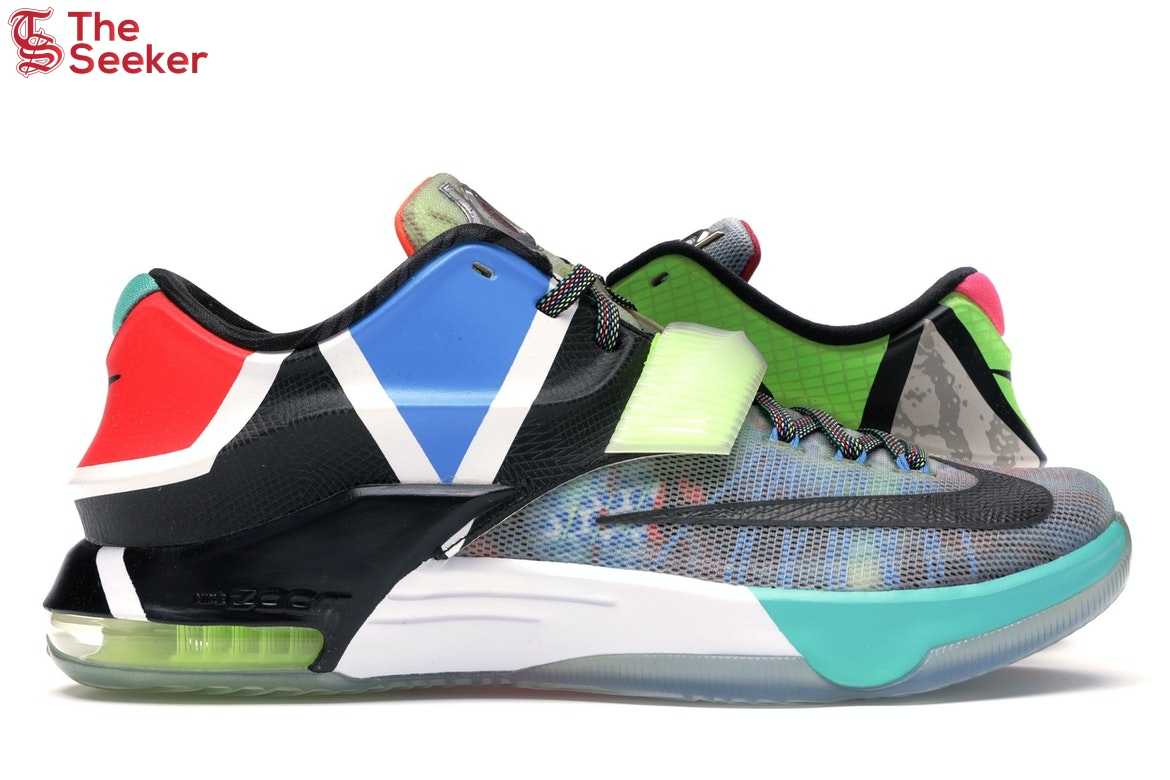
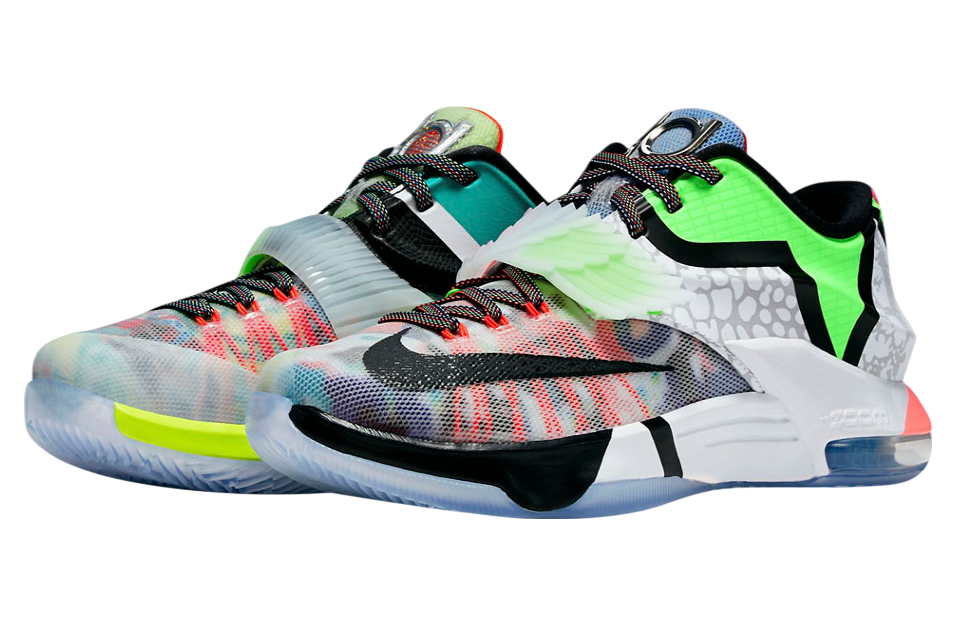
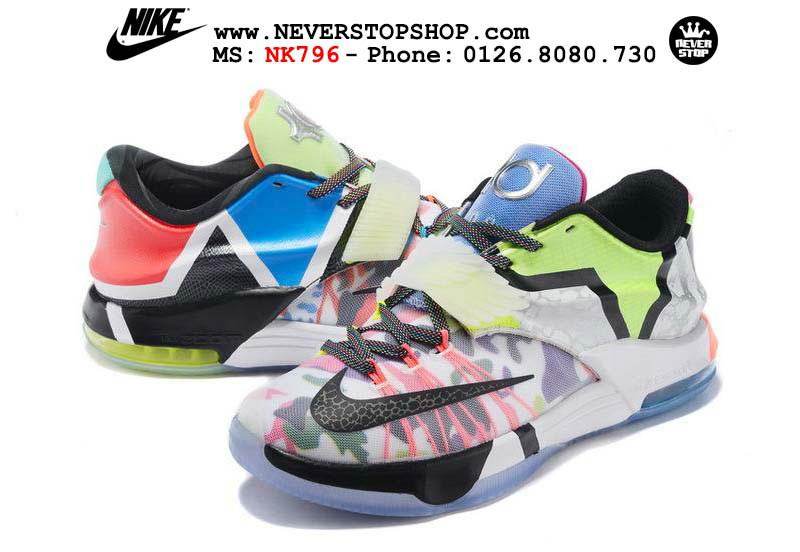
In branding, consistency is usually king. However, the “What The” KD VII challenged this by embracing cognitive dissonance. The left shoe did not match the right; the straps, soles, and mesh panels were borrowed from various predecessors like the “Aunt Pearl,” “Global Game,” and “All-Star” editions. This “Philosophy of Aggregation” works because it transforms the product into a collector’s map. From a brand management perspective, this is a brilliant move in asset utilization—taking existing intellectual property (previous designs) and re-packaging them into a new, high-demand premium asset.
Deconstructing the KD VII Design as a Brand Portfolio
Every successful brand has a “visual vocabulary.” For the KD VII, that vocabulary was defined by specific technical innovations and personal narrative cues. The “What The” version acted as a portfolio, showcasing the versatility of the Kevin Durant brand and Nike’s technical prowess.
Mapping the Narrative Layers
The KD VII was unique because it utilized a midfoot strap and a hybrid construction of mesh and Hyperposite. In the “What The” edition, these components were used as “narrative anchors.” For example, the inclusion of the “Aunt Pearl” wing-strap served as a powerful emotional touchpoint, honoring Durant’s late aunt. When a brand can successfully weave a philanthropic and personal story into a mass-market product, it builds “Brand Resonance”—the highest level of customer relationship where the consumer feels a personal connection to the brand’s values.
Hyperposite and Technical Identity
Beyond the storytelling, the KD VII was a vehicle for Nike’s “Innovation Branding.” The use of Hyperposite on the heel was a functional choice for stability, but in the “What The” context, it became a canvas for graphic storytelling. By featuring different patterns on these panels, Nike showcased the “extensibility” of their technology. They proved that a technical component could also be an aesthetic asset, bridging the gap between high-performance gear and high-fashion streetwear. This dual-identity is essential for brands looking to dominate multiple market segments simultaneously.
Strategic Scarcity and Market Positioning
The release of the KD VII “What The” was a calculated exercise in market positioning. It was positioned not just as a shoe for athletes, but as a “Grail” for collectors. This distinction is vital in brand strategy because it shifts the product from a “commodity” to an “investment.”
The Peak of the Product Life Cycle
Every product goes through a lifecycle: Introduction, Growth, Maturity, and Decline. Typically, toward the end of a sneaker’s yearly cycle, interest begins to wane as consumers look toward the next model. The “What The” release is a strategic intervention that spikes interest at the very end of the Maturity phase. It prevents the brand from sliding into “Decline” by creating a final, high-energy event. For the KD VII, this meant that even as the KD VIII was being teased, the VII remained the center of conversation, ensuring the brand maintained its momentum without a “dead zone” in consumer interest.
Leveraging Collector Psychology
Brand loyalty is often driven by the “Endowment Effect,” where consumers value things more because they feel a sense of ownership or exclusive access. By producing the “What The” KD VII in more limited quantities than the general releases, Nike leveraged scarcity to boost perceived value. This creates a “halo effect” for the entire KD line. Even if a consumer couldn’t purchase the “What The” edition, the hype generated by its release increased the “cool factor” of the more accessible KD VII colorways sitting on retail shelves. This is a classic “Top-Down” marketing strategy where a flagship product elevates the status of the entire brand portfolio.
The Legacy of the KD Line in Modern Personal Branding
The KD VII was a pivotal moment for Kevin Durant’s personal brand. It moved him away from the “quiet scorer” persona into a more vibrant, fashion-forward space. The “What The” edition was the exclamation point on this transformation.
Building Athlete Equity through Design
In the world of sports marketing, an athlete’s signature line is a direct reflection of their “Brand Persona.” During the KD VII era, Durant was transitioning into a global icon. The bold, eclectic nature of the “What The” design mirrored this expansion. It signaled that the KD brand was no longer just about “Easy Money Sniper” efficiency; it was about global influence, artistic expression, and versatility. This alignment between the athlete’s career trajectory and the product’s design language is a masterclass in “Brand Synchronization.”
Lessons for Contemporary Brand Managers
What can modern brand managers learn from the “What The” KD VII? First, the importance of “Narrative Durability.” The shoe worked because the previous stories (the individual colorways) were strong enough to be recognized even when fragmented. Second, the power of “Controlled Chaos.” In a world of sterile, minimalist branding, taking a risk with a bold, maximalist “mashup” can capture the cultural zeitgeist and cut through the noise. Finally, it teaches the value of “Product Genealogy.” Brands should not just look forward; they should find ways to celebrate their history, turning past successes into the fuel for future innovation.
In conclusion, the Nike KD VII “What The” is far more than a colorful basketball shoe. It is a sophisticated piece of brand architecture that successfully managed product lifecycles, leveraged personal storytelling, and utilized market psychology to create a lasting legacy. It serves as a reminder that in the modern economy, the most successful brands are those that can turn their history into a cohesive, compelling, and highly compensable future. Whether through sneakers or software, the ability to “mashup” one’s greatest hits into a new, premium offering remains one of the most potent tools in a brand strategist’s arsenal.
aViewFromTheCave is a participant in the Amazon Services LLC Associates Program, an affiliate advertising program designed to provide a means for sites to earn advertising fees by advertising and linking to Amazon.com. Amazon, the Amazon logo, AmazonSupply, and the AmazonSupply logo are trademarks of Amazon.com, Inc. or its affiliates. As an Amazon Associate we earn affiliate commissions from qualifying purchases.