
Ancient Cosmogony and the Dawn of Inquiry
For millennia, humanity gazed at the night sky, crafting narratives to comprehend the vast expanse above. Before the advent of sophisticated observational technology, the cosmos was a realm of profound mystery, interpreted through cultural lenses and spiritual frameworks. The Bible, as a foundational text for a significant portion of global civilization, offers a glimpse into an ancient Near Eastern understanding of “space” – the heavens, the firmament, and the celestial bodies. This early conceptualization, while not a scientific treatise, represents a critical precursor to human inquiry, laying intellectual groundwork that would eventually be challenged and expanded by technological advancements.
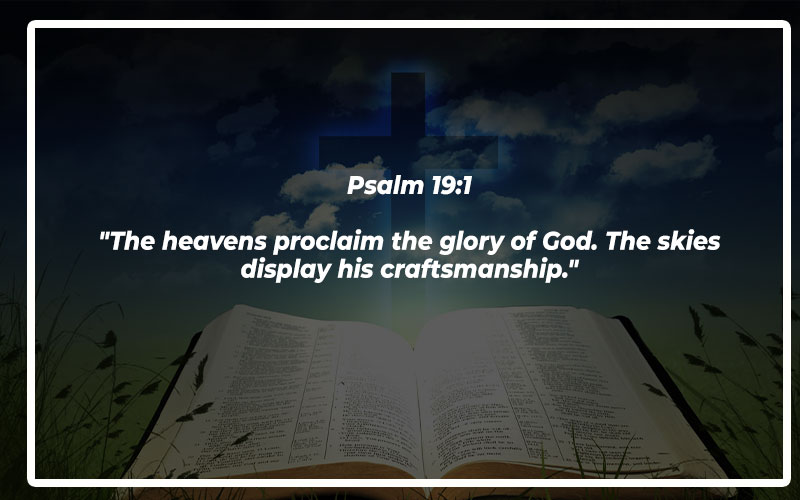
The biblical narrative begins with a cosmology that posits a created universe. Genesis 1 describes a layered cosmos: the earth established beneath a “firmament” (Hebrew: raqia), which separates the waters above from the waters below. Within this firmament, God places the sun, moon, and stars – functional entities designated for signs, seasons, days, and years. This portrayal, often termed a “three-tiered universe” (heaven, earth, underworld), served as an intuitive model for early agricultural societies. Lacking instruments to measure celestial distances, observe planetary motion with precision, or even understand gravity, this model was an information system, a framework for organizing observations and constructing meaning. It represents a primitive form of data structuring, providing answers to fundamental questions about existence and purpose, albeit without the empirical rigor of modern scientific methodology. Understanding this ancient “data model” is crucial for appreciating the revolutionary impact of subsequent technological developments in astronomy and space exploration.
Bridging Ancient Narratives with Modern Technological Exploration
The journey from biblical cosmology to our current understanding of the universe is fundamentally a story of technological innovation. Where ancient texts offered theological interpretations, modern technology provides empirical data. The shift began not with rockets, but with optical instruments that extended human vision. The invention of the telescope in the early 17th century marked a paradigm shift, moving the discussion of “space” from philosophical speculation and textual exegesis to empirical observation. Galileo Galilei’s observations of lunar craters, the phases of Venus, and Jupiter’s moons directly contradicted the geocentric model, which had been implicitly supported by earlier interpretations of biblical cosmology. This early optical technology was the first major technological “disruptor” to the ancient understanding of space.
The trajectory of space technology accelerated dramatically in the 20th century. Rocketry, initially developed for military applications, was repurposed to propel humanity beyond Earth’s atmosphere. Satellites, space probes, and crewed missions have since transformed our understanding of the cosmos, providing unprecedented data streams that dwarf the observations available to ancient civilizations. These technologies – from the Hubble Space Telescope providing breathtaking images of distant galaxies, to Mars rovers analyzing extraterrestrial geology, to gravitational wave detectors sensing cosmic ripples – represent an unparalleled expansion of human perception and analytical capability. The biblical firmament has been replaced by an ever-expanding universe, teeming with billions of galaxies, dark matter, and cosmic phenomena that were unimaginable in ancient times. Modern space exploration technology not only challenges ancient cosmologies but also offers new data points for philosophical and theological reflection, fostering a dialogue between ancient wisdom and cutting-edge scientific discovery.

Digital Humanities and the Textual Analysis of Ancient Cosmology
While telescopes and spacecraft explore the physical cosmos, a different kind of technology is revolutionizing our understanding of ancient texts like the Bible: digital humanities. AI tools, advanced linguistic software, and vast digital libraries are allowing scholars to analyze biblical texts with unprecedented depth, extracting nuances in ancient cosmology that might have been overlooked through traditional methods.
Natural Language Processing (NLP) and machine learning algorithms can now process vast corpora of biblical manuscripts and related ancient Near Eastern texts. This allows researchers to identify patterns in language use surrounding terms like “heavens,” “firmament,” “stars,” and “cosmos.” By cross-referencing these terms across different books, historical periods, and linguistic contexts, AI tools can help reconstruct the ancient conceptual framework of “space” more accurately. For instance, sophisticated sentiment analysis can gauge the emotional and symbolic weight attached to celestial objects, revealing how ancient authors perceived them not just as physical entities but as divine manifestations or portents.
Furthermore, digital visualization tools are transforming how ancient cosmologies are presented and understood. Scholars can now create interactive 3D models of the biblical “three-tiered universe,” allowing users to explore the spatial relationships described in Genesis or other ancient texts. Augmented Reality (AR) and Virtual Reality (VR) applications can immerse users in ancient worldviews, illustrating concepts like the “windows of heaven” or the “pillars of the earth” in a visually engaging and educationally powerful manner. This technology bridges the gap between abstract textual descriptions and concrete spatial understanding, offering new avenues for engaging with ancient thought. Databases like the Comprehensive Aramaic Lexicon or the OpenText.org initiative provide structured access to ancient languages and textual variants, enabling scholars to apply computational linguistics to better understand the semantic fields associated with “space” in its various biblical contexts. These digital tools are not just archives; they are analytical engines, transforming the study of ancient texts into a vibrant field of data science and digital archaeology.
The Intersection of Faith and Future Space Technology
As humanity continues its push into the final frontier, the historical and philosophical underpinnings provided by ancient texts, including the Bible, remain relevant, albeit in new forms. The ethical considerations surrounding space colonization, the search for extraterrestrial life, and the long-term stewardship of celestial bodies are questions that resonate with ancient narratives about humanity’s place in the universe and its responsibilities.
Modern space technology, especially advanced AI for autonomous exploration and complex environmental systems for long-duration missions, brings forth new ethical dilemmas. For example, if microbial life is discovered on another planet, how do ancient texts that speak of creation and unique human dominion inform our decisions about its preservation or interaction? While the Bible doesn’t offer a direct “space exploration policy,” its themes of creation care, human stewardship, and the profound wonder of the cosmos can contribute to a broader ethical framework for future technological endeavors in space.
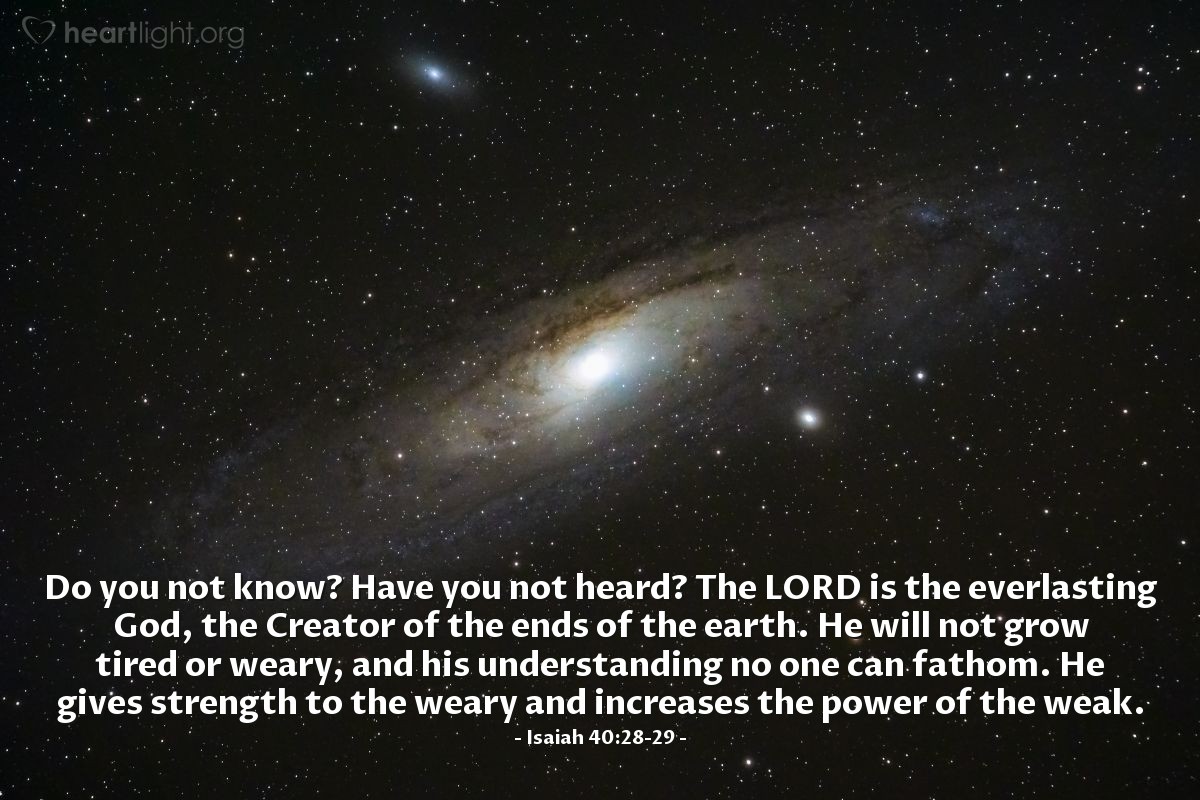
Moreover, the psychological and spiritual impact of space travel, vividly illustrated by astronauts who describe seeing Earth from afar as a profoundly transformative experience, touches upon themes of awe and transcendence found in religious texts. Virtual reality and augmented reality are increasingly used to simulate these experiences, not just for training but also for educational and contemplative purposes. Imagine a VR experience that allows one to “witness” the biblical creation narrative overlaid with actual cosmic imagery captured by the James Webb Space Telescope – a fusion of ancient textual inspiration and cutting-edge visual technology. Such applications can serve to connect contemporary audiences with the enduring human quest for meaning within the vastness of “space,” utilizing technology to bridge the ancient and the modern, the spiritual and the scientific. As our technological capabilities expand our reach into the universe, the timeless questions about our origins and destiny, first pondered in ancient texts, continue to inspire and inform our journey.
aViewFromTheCave is a participant in the Amazon Services LLC Associates Program, an affiliate advertising program designed to provide a means for sites to earn advertising fees by advertising and linking to Amazon.com. Amazon, the Amazon logo, AmazonSupply, and the AmazonSupply logo are trademarks of Amazon.com, Inc. or its affiliates. As an Amazon Associate we earn affiliate commissions from qualifying purchases.