
In the world of personal finance and wealth management, we often search for the latest algorithms, market trends, or fiscal theories to guide our decision-making. However, some of the most enduring and effective principles of wealth creation are found in the ancient metaphor of “sowing seeds.” While the phrase has deep roots in biblical scripture, its applications to modern money management, investing, and charitable giving are profound. The concept of sowing and reaping is not merely a religious sentiment; it is a fundamental economic law that dictates how capital grows, how risk is managed, and how financial legacies are built.

Understanding what the Bible says about sowing seeds allows investors and professionals to adopt a mindset that favors long-term growth over short-term speculation. By viewing money as “seed” rather than just a commodity for consumption, individuals can transform their financial trajectory through disciplined stewardship and strategic allocation.
The Financial Law of Sowing and Reaping
The cornerstone of biblical financial wisdom is found in the principle that you reap what you sow. In a modern economic context, this is the foundational law of investment returns. If you do not put capital (the seed) into the ground (the market or a business venture), there is no possibility of a harvest.
Capital Allocation as Seed Selection
In 2 Corinthians 9:6, the text states, “Whoever sows sparingly will also reap sparingly, and whoever sows generously will also reap generously.” From a wealth-building perspective, this highlights the direct correlation between the amount of capital deployed and the potential for significant returns. In finance, this translates to the necessity of consistent, aggressive saving and investing. If an individual only “sows” a small fraction of their income into interest-bearing assets, the eventual “harvest” of retirement funds or passive income will be proportionately small.
The Power of Compounding
The biological process of a seed turning into a tree that produces thousands of more seeds is the ultimate metaphor for compound interest. When the Bible discusses the multiplication of the harvest, it mirrors the mathematical reality of exponential growth. A single “seed” of investment, left undisturbed in a productive environment, yields a return that eventually exceeds the original input. For the modern investor, “sowing” early in life ensures that the element of time—the “growing season”—is maximized to its fullest potential.
Diversification: Managing Risk Through Multiple Seeds
One of the most frequent mistakes in personal finance is the over-concentration of assets. People often “bet the farm” on a single stock or a single business idea. However, biblical wisdom provides a direct precursor to modern portfolio theory and the necessity of diversification.
The “Seven or Eight” Rule
Ecclesiastes 11:1-2 offers a striking piece of financial advice: “Ship your grain across the sea; after many days you may receive a return. Invest in seven ventures, yes, in eight; you do not know what disaster may come upon the land.” This is a clear directive toward diversifying “seeds” across multiple channels.
In the context of modern money management, this suggests that one should not rely solely on a single income stream or a single asset class. By sowing seeds in various “fields”—such as equities, real estate, bonds, and side businesses—an individual protects their overall wealth from the “disaster” that might strike one specific sector. If one field fails to produce a harvest due to market volatility, the other seven or eight ventures provide the necessary sustenance and growth.
Assessing the Soil
The Parable of the Sower emphasizes that the environment in which the seed is placed is just as important as the seed itself. For the investor, “the soil” represents the quality of the investment vehicle. Sowing seeds in “rocky ground” might represent high-risk, speculative bubbles that lack a solid foundation. Sowing among “thorns” could represent investments with high hidden fees or predatory terms that choke out the profits. Finding “good soil”—profitable companies, stable markets, and tax-advantaged accounts—is essential for ensuring that the sown capital actually reaches maturity.
The Psychology of Generosity and Net Worth
A unique aspect of what the Bible says about sowing seeds is the emphasis on the “cheerful giver.” While it may seem counterintuitive to give money away when trying to build wealth, the psychological and financial benefits of charitable “sowing” are well-documented in professional circles.

Breaking the Scarcity Mindset
The act of sowing a seed requires the sower to give up something they currently hold in their hand. If a farmer eats all his seed, he has no future. If he hoards it in a barn, it eventually rots. The Bible teaches that “One person gives freely, yet gains even more; another withholds unduly, but comes to poverty” (Proverbs 11:24).
In the realm of money management, this addresses the “scarcity mindset.” Those who are terrified of losing money often make poor, fear-based decisions. By practicing regular charitable giving or “sowing” into the lives of others, an investor cultivates an abundance mindset. This mental shift allows for more rational, objective decision-making in the markets, as the individual is no longer emotionally enslaved to every cent.
The Networking and Social Capital Aspect
Sowing seeds is not always about direct financial return; it is often about sowing into relationships and communities. In the professional world, this is known as building social capital. When you “sow” your time, expertise, or resources into others without an immediate expectation of return, you are building a network of goodwill. In the long term, these seeds often return in the form of business opportunities, partnerships, and career advancements that would never have been available to someone who only looked out for their own immediate profit.
Patience and the Long-Term Investment Horizon
Perhaps the most difficult aspect of sowing seeds is the waiting period. In an era of high-frequency trading and “get rich quick” schemes, the biblical model of the patient farmer is more relevant than ever.
The Seasonality of Wealth
James 5:7 encourages patience by pointing to the farmer: “See how the farmer waits for the land to yield its valuable crop, patiently waiting for the autumn and spring rains.” Financial growth is rarely linear and never instantaneous. There is a “planting season” where money is moved out of reach and into investments, and there is a “growing season” where the market may fluctuate or remain stagnant.
True wealth is built by those who understand that you cannot sow today and reap tomorrow. Modern investors must learn to ignore the “noise” of daily market fluctuations and trust the process of growth. This biblical perspective on time prevents the common mistake of “digging up the seed” (liquidating investments prematurely) before it has had a chance to bear fruit.
Diligence and the “Ant” Philosophy
While the Bible speaks of the miracle of growth, it never advocates for laziness. The “seed” requires cultivation. This involves the diligent management of one’s finances—tracking expenses, rebalancing portfolios, and staying informed about economic shifts. Sowing seeds is an active process that requires the sower to be present and engaged with their resources. Wealth is not a matter of luck; it is a matter of consistent, diligent sowing over a long period.
Practical Application: Building a “Seed-Based” Financial Strategy
To apply what the Bible says about sowing seeds to a modern financial plan, one must transition from being a consumer to being a steward. A steward recognizes that the resources in their hands are “seeds” meant to be managed for maximum impact and future growth.
Identifying Your Seed Capital
The first step in a seed-based strategy is identifying what can be sown. This involves creating a budget that distinguishes between “bread for food” (living expenses) and “seed for the sower” (investment capital). If 100% of your income is going toward consumption, you are “eating your seed,” which is a recipe for long-term financial failure. By intentionally carving out a percentage of income to be sown into investments, you ensure a future harvest.
Strategic Charitable Giving
Integrating a “sowing” component into your financial plan through tithing or charitable giving can also have practical tax benefits. In many jurisdictions, donations to non-profits are tax-deductible, effectively allowing you to “sow” more by reducing your taxable liability. Furthermore, focusing on “impact investing”—putting money into ventures that provide a social or environmental “harvest” alongside a financial one—aligns one’s portfolio with the broader biblical principle of leaving the world better than you found it.
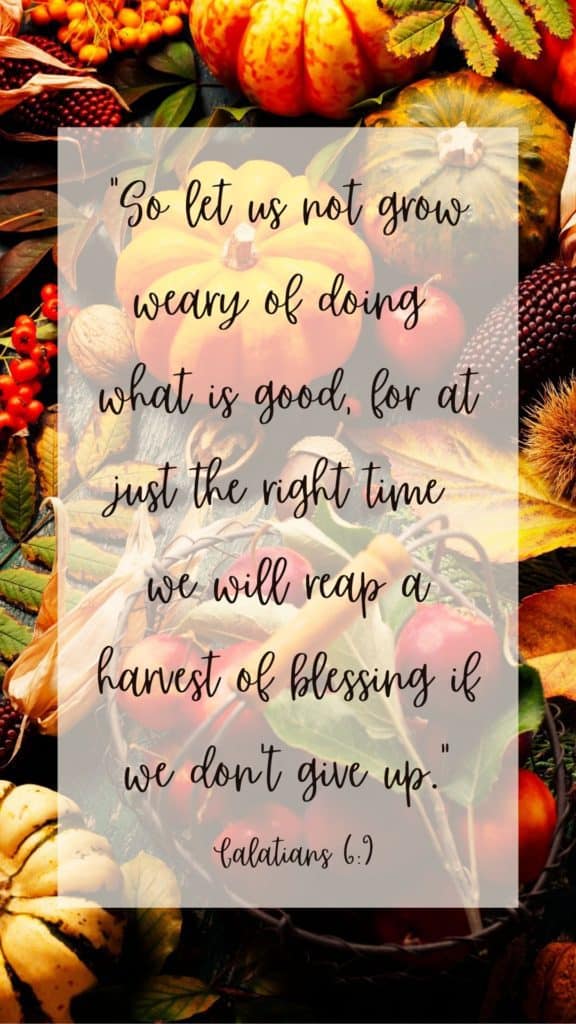
The Legacy Harvest
Finally, the Bible speaks of a good man leaving an inheritance to his children’s children (Proverbs 13:22). This is the ultimate harvest. By viewing wealth management through the lens of sowing seeds, the goal shifts from personal accumulation to legacy building. When you sow seeds today, you are often planting trees under whose shade you will never sit. This long-term, multi-generational approach to money is what separates true wealth builders from those who are merely “rich” for a moment.
In conclusion, the biblical metaphor of sowing seeds offers a comprehensive framework for personal finance that remains unmatched in its wisdom. It emphasizes the necessity of action (sowing), the wisdom of spreading risk (diversification), the health of the spirit (generosity), and the discipline of time (patience). By treating your finances as a field to be planted rather than a pile of gold to be guarded, you unlock the potential for a harvest that is not only financially abundant but also meaningful and enduring.
aViewFromTheCave is a participant in the Amazon Services LLC Associates Program, an affiliate advertising program designed to provide a means for sites to earn advertising fees by advertising and linking to Amazon.com. Amazon, the Amazon logo, AmazonSupply, and the AmazonSupply logo are trademarks of Amazon.com, Inc. or its affiliates. As an Amazon Associate we earn affiliate commissions from qualifying purchases.