
Understanding Your Financial Landscape and Goals
Embarking on the entrepreneurial journey begins not with an idea, but with a thorough introspection of your personal financial situation and a clear articulation of your financial goals. The “best” business is inherently subjective, deeply intertwined with what you aim to achieve and what resources you are willing and able to commit. A foundational understanding of your financial bedrock is critical for making informed decisions and setting a sustainable course.
Assessing Your Capital and Risk Tolerance
Before even brainstorming business concepts, quantify your available capital. This isn’t just liquid cash; it includes access to credit, potential lines of equity, or even transferable assets. Understanding your starting capital dictates the scale and type of business you can realistically launch. A low-capital venture might mean a service-based business requiring minimal upfront investment, leveraging your skills. Conversely, a business requiring significant inventory, equipment, or real estate will demand substantial initial funding.
Equally important is assessing your risk tolerance. Are you comfortable taking on debt, or do you prefer a bootstrapped approach? How much of your personal savings are you willing to allocate, knowing there’s a possibility of loss? Entrepreneurs with a higher risk tolerance might explore ventures with greater potential returns but also higher failure rates. Those with lower risk tolerance might gravitate towards established business models, franchises with proven track records, or businesses that can be grown organically through reinvested profits. This assessment isn’t about fear; it’s about strategic planning to protect your financial well-being while pursuing your ambitions.
Defining Your Income Objectives (Full-time vs. Side Hustle)
Your desired income stream—whether supplemental or primary—profoundly influences the business you should consider. Are you looking to replace a full-time salary immediately, or are you seeking to generate additional income alongside an existing job?
A full-time income objective typically requires a business with robust revenue streams, higher scalability, and a significant time commitment from day one. This might involve a more comprehensive business plan, dedicated marketing efforts, and potentially hiring staff sooner. You’d be looking for a business model that can support not just your living expenses but also provide for growth and re-investment.
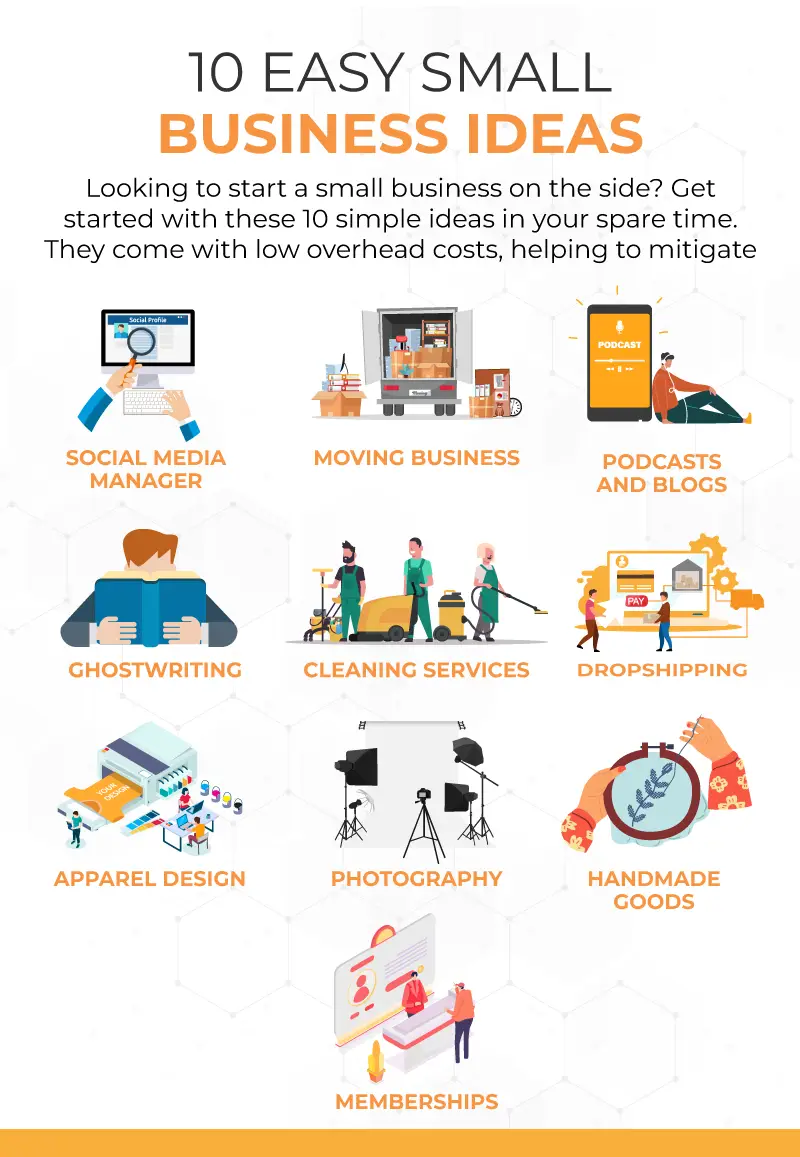
Conversely, a side hustle aims for supplemental income, often with less urgency and lower financial pressure. These businesses can start small, requiring fewer hours per week, and can be grown incrementally. Examples include freelance consulting, selling handmade goods online, or offering specialized services on a part-time basis. The financial goal here is typically focused on discretionary income, debt reduction, or saving for specific goals, rather than full financial independence. Clearly defining this objective helps narrow down potential business ideas and ensures your chosen venture aligns with your lifestyle and financial aspirations.
Leveraging Existing Financial Skills and Networks
Your personal financial acumen and professional network are invaluable assets. If you possess skills in accounting, financial analysis, investment management, or even just budgeting, consider how these can be monetized. Businesses such as financial coaching, bookkeeping services, tax preparation, or even creating educational content on personal finance require minimal startup capital beyond your expertise.
Furthermore, your existing network—colleagues, industry contacts, friends, and family—can be a source of early clients, mentors, or even initial funding. Leveraging these connections reduces customer acquisition costs and builds trust, crucial for early financial stability. A strong network can also provide valuable market insights, helping you refine your business model to meet existing demand and avoid costly missteps. Identifying how your unique financial insights and relationships can solve a market problem is often the shortest path to a profitable venture.
Identifying High-Potential Business Models in the Current Economy
The contemporary economic landscape offers a diverse array of opportunities for aspiring entrepreneurs, particularly those focused on maximizing financial returns and minimizing initial outlay. The “best” business often capitalizes on prevailing trends, unmet needs, and efficient operational models. Here, we explore several categories of businesses that consistently demonstrate high potential for profitability and sustainable growth, emphasizing their financial advantages.
Service-Based Businesses: Low Overhead, High Skill Value
Service-based businesses stand out for their relatively low startup costs and high-profit margins, as they primarily leverage intellectual capital and specialized skills rather than extensive physical inventory or infrastructure. This makes them an attractive option for individuals looking to minimize financial risk. Examples include financial consulting, virtual bookkeeping, digital marketing services, and specialized trade services.
The financial advantage here is clear: you are selling your time, expertise, or a specific problem-solving capability. Initial investments are often limited to necessary certifications, basic equipment, and marketing efforts. Customer acquisition can be organic through referrals, and pricing is determined by the value delivered, often allowing for premium rates. For instance, a financial coach can help individuals or small businesses manage their money, providing immense value without needing a physical office or large staff, directly converting expertise into revenue. The scalability often comes from refining processes, building a strong reputation, and eventually, if desired, hiring other specialists to expand service offerings.
E-commerce & Online Retail: Digital Storefronts for Niche Markets
The proliferation of online platforms has democratized retail, making e-commerce an accessible and financially viable business model. The key to success often lies in identifying and serving niche markets with specific product needs, allowing for targeted marketing and reduced competition. While there’s an investment in inventory (unless dropshipping), the overheads associated with brick-and-mortar stores—rent, utilities, extensive staff—are significantly reduced.
Financial considerations for e-commerce include managing inventory effectively to optimize cash flow, understanding shipping and fulfillment costs, and strategically pricing products for healthy profit margins. Models like dropshipping further minimize financial risk by eliminating the need for upfront inventory purchases, though margins can be tighter. Specialized digital products, such as online courses on personal finance, e-books on investing strategies, or templates for budgeting, offer even higher profit margins since production costs are one-time, and distribution is essentially free. Success in this realm hinges on effective digital marketing and a clear understanding of your target customer’s purchasing power and preferences.
Subscription Models: Recurring Revenue for Predictable Growth
Subscription-based businesses are highly coveted for their ability to generate recurring revenue, providing a predictable and stable cash flow—a cornerstone of sound financial planning. This model builds customer loyalty and facilitates long-term financial forecasting, crucial for investment and expansion. While often associated with software, the principle extends to various other domains.
Consider subscription boxes for financial tools or books, access to exclusive financial market analysis, or online communities offering ongoing support for entrepreneurs or investors. The initial financial challenge is often customer acquisition and retention, but once a subscriber base is established, the income stream becomes highly reliable. Pricing strategies are critical, balancing affordability for the customer with healthy profit margins for the business. The financial stability offered by recurring revenue allows for more confident investment in product development, customer service, and marketing, driving sustainable growth.
Content Creation & Monetization: Building Assets for Passive Income
The digital age has opened doors for individuals to build lucrative businesses around content creation, converting personal insights and expertise into income-generating assets. This model requires significant upfront time and effort but offers the potential for highly passive income streams once established. Financial bloggers, YouTube creators focused on personal finance or investment strategies, podcasters, and online educators all fall into this category.
Monetization strategies are diverse and often layered:
- Advertising: Income from ads displayed on blogs or videos.
- Affiliate Marketing: Earning commissions by recommending financial products, services, or tools.
- Digital Products: Selling e-books, online courses, or premium content related to finance.
- Sponsorships: Partnering with brands for sponsored content.
- Consulting/Coaching: Leveraging content to establish authority and attract high-paying clients for one-on-one services.
The financial appeal lies in the scalability and low operational costs. Once content is created, it can continue to generate revenue for years with minimal ongoing effort. The biggest investment is time and consistency in building an audience and delivering value. Over time, this builds a portfolio of digital assets that generate diverse revenue streams, contributing to long-term financial independence.
The Financial Blueprint for Launch and Growth
Launching a business is akin to building a financial engine; it requires meticulous planning, precise resource allocation, and a clear understanding of how money will flow in and out. A robust financial blueprint is not merely a formality but a living document that guides every critical decision from inception through scaling.
Crafting a Realistic Business Plan and Financial Projections
A comprehensive business plan serves as your financial roadmap. While it covers various aspects of your venture, its financial section is paramount. This includes detailed startup costs (e.g., permits, initial inventory, marketing, legal fees), operational expenses (e.g., salaries, rent, utilities, subscriptions), and projected revenue streams. Crucially, it must include a break-even analysis to determine when your revenues will cover your costs and begin generating profit.

Financial projections—cash flow statements, income statements, and balance sheets for the next 1-3 years—are vital. These projections should be realistic, often starting conservatively, and account for potential contingencies. They help you understand seasonal fluctuations, predict cash shortages, and identify key performance indicators (KPIs) to monitor your financial health. A well-crafted financial projection demonstrates viability to potential investors or lenders and provides internal benchmarks for success. It’s a living document that you’ll revisit and adjust as your business evolves and market conditions change.
Securing Funding: Self-Funding, Loans, or Angel Investors
Access to capital is the lifeblood of any new business. The “best” funding strategy depends heavily on your capital requirements, risk tolerance, and the stage of your business.
Self-Funding (Bootstrapping): This involves using personal savings, credit cards, or generating revenue from day one to cover expenses. It minimizes debt and gives you full control, but it requires careful budgeting and can limit the pace of growth. Many service-based or online businesses thrive with bootstrapping.
Small Business Loans: Traditional banks, credit unions, and government-backed programs (like SBA loans in the US) offer various loan products. These typically require a solid business plan, good personal credit, and often collateral. The advantage is lower interest rates compared to other external funding, but the application process can be rigorous.
Angel Investors/Venture Capital: For businesses with high growth potential and significant capital needs, angel investors (wealthy individuals) or venture capitalists (firms) can provide substantial funding in exchange for equity (ownership stake). This path involves giving up a portion of your company and often requires extensive pitching and due diligence. It’s usually pursued after initial traction has been demonstrated.
Crowdfunding: Platforms like Kickstarter or Indiegogo allow you to raise small amounts of capital from a large number of people, often in exchange for pre-orders or other perks. This can validate market demand and provide early funding, but it’s not suitable for all business types.
Choosing the right funding mechanism is a critical financial decision that impacts your ownership, debt obligations, and future flexibility.
Managing Initial Expenses and Optimizing Cash Flow
During the early stages, aggressive management of expenses and a keen eye on cash flow are paramount. Every dollar spent should directly contribute to revenue generation or essential operations. This means prioritizing critical expenditures and deferring non-essential ones.
- Lean Operations: Adopt a lean startup mentality by minimizing fixed costs. Consider co-working spaces instead of long-term leases, outsourcing non-core functions, and negotiating favorable terms with suppliers.
- Cash Flow Forecasting: Regularly project your incoming and outgoing cash. Understand your cash conversion cycle (how quickly you turn investments into cash). Proactive cash flow management helps you anticipate shortages and make timely adjustments, such as delaying non-critical purchases or accelerating collections from clients.
- Payment Terms: Negotiate favorable payment terms with suppliers and establish clear, timely payment terms for your customers. For service businesses, consider requiring upfront deposits or milestone payments. For product businesses, efficient inventory turnover directly impacts cash flow.
- Contingency Fund: Always set aside a financial buffer for unexpected expenses or downturns. This emergency fund provides stability and prevents minor setbacks from becoming major financial crises.
Effective expense management and cash flow optimization ensure that your business has the liquidity to operate, survive initial challenges, and eventually thrive.
Scaling Profitably: Reinvesting and Diversifying Revenue Streams
Once a business achieves initial financial stability, the focus shifts to profitable scaling. Growth should not come at the expense of profitability or excessive debt.
Strategic Reinvestment: Rather than immediately drawing large salaries, reinvest profits back into the business where they can generate the highest return. This could be expanding marketing efforts, improving product/service offerings, investing in efficient technology, or hiring key talent. Prioritize investments that enhance efficiency, increase customer lifetime value, or open new markets.
Diversifying Revenue Streams: Relying on a single source of income carries significant financial risk. Explore opportunities to diversify. For a financial coach, this might mean adding online courses, selling e-books, or offering corporate workshops in addition to one-on-one sessions. For an e-commerce store, it could involve adding complementary products, offering subscription options, or exploring affiliate partnerships. Diversification creates multiple pillars of income, cushioning the business against fluctuations in any single market segment and enhancing overall financial resilience.
Metrics-Driven Growth: Implement key financial performance indicators (KPIs) and regularly analyze them. Understand your customer acquisition cost (CAC), customer lifetime value (CLTV), gross margin, and net profit margin. Data-driven decisions prevent wasteful spending and ensure that growth initiatives are genuinely profitable. Scaling profitably means expanding in a controlled, data-backed manner that consistently improves your financial bottom line.
Navigating Common Financial Pitfalls and Ensuring Longevity
The path to business success is fraught with financial challenges. Many promising ventures falter not due to a lack of good ideas or effort, but because of avoidable financial missteps. Proactive awareness and robust financial management are crucial for ensuring the long-term health and longevity of your business.
Avoiding Debt Overload and Maintaining a Healthy Balance Sheet
One of the most common pitfalls for new businesses is accumulating excessive debt. While strategic debt can fuel growth, over-reliance on borrowed capital can quickly lead to financial distress, especially during lean periods or unexpected economic downturns. High interest payments can erode profits, strain cash flow, and ultimately make your business unsustainable.
Maintaining a healthy balance sheet involves more than just profitability; it’s about managing assets, liabilities, and equity effectively. Prioritize generating internal cash flow and retaining earnings to fund growth whenever possible. If external financing is necessary, opt for terms that are manageable and directly tied to revenue-generating activities. Regularly review your debt-to-equity ratio and current ratio to ensure your business remains financially sound and capable of meeting its short-term and long-term obligations without excessive strain. A strong balance sheet provides a buffer against unforeseen challenges and signals stability to partners and investors.
Understanding Tax Implications and Legal Structures
Ignoring tax obligations or choosing an inappropriate legal structure can lead to significant financial penalties and operational headaches. Early understanding and proactive planning are essential.
Legal Structures: The choice between a sole proprietorship, partnership, LLC (Limited Liability Company), or corporation has profound financial and legal implications. An LLC, for instance, offers personal liability protection (separating personal and business assets) while often allowing for pass-through taxation, which can be simpler than corporate tax structures. Each structure has different requirements for setup, ongoing compliance, and how profits are taxed. Consult with a financial advisor or tax professional to select the structure that best aligns with your business goals, risk tolerance, and tax optimization strategies.
Tax Compliance: Business taxes are complex and vary by jurisdiction. You’ll need to understand income tax, sales tax, payroll tax (if you have employees), and potentially excise taxes. Miscalculating or failing to pay taxes can result in severe fines, interest charges, and even legal action. Set aside funds regularly for tax payments and maintain meticulous financial records. Consider engaging a professional accountant or bookkeeper from the outset to ensure accurate reporting and compliance, thereby avoiding costly errors and optimizing legitimate deductions.
Building an Emergency Fund for Your Business
Just as individuals need an emergency fund, so too does a business. Unexpected events—a sudden drop in sales, a major equipment breakdown, a key client defaulting on payments, or broader economic shifts—can severely impact cash flow. Without a financial cushion, even a profitable business can face liquidity crises.
Aim to build an emergency fund equivalent to 3 to 6 months of operating expenses. This fund should be held in a separate, easily accessible account and reserved strictly for emergencies. It provides a vital safety net, allowing your business to weather temporary storms without resorting to high-interest debt or making drastic, detrimental cuts. Prioritizing the creation and maintenance of this fund should be a core component of your financial strategy, providing peace of mind and operational stability.

Continuous Financial Analysis and Adaptation
The business environment is dynamic, and financial performance is rarely static. Longevity requires continuous monitoring, analysis, and adaptation of your financial strategies. This isn’t a one-time task but an ongoing commitment to understanding your numbers and responding strategically.
Regularly review your financial statements: income statements, balance sheets, and cash flow reports. Track key performance indicators (KPIs) relevant to your industry and business model. Are your profit margins improving or declining? Are your expenses growing faster than your revenues? Is your cash flow healthy? Identify trends, both positive and negative, and investigate their root causes.
Beyond internal analysis, stay informed about economic trends, industry changes, and competitive shifts that could impact your financial forecasts. Be prepared to adjust pricing strategies, operational costs, marketing investments, or even pivot your business model entirely based on financial insights. The ability to financially adapt quickly to new information and market realities is a hallmark of resilient and long-lasting businesses. This proactive approach ensures your business remains profitable, sustainable, and capable of navigating the ever-evolving financial landscape.
aViewFromTheCave is a participant in the Amazon Services LLC Associates Program, an affiliate advertising program designed to provide a means for sites to earn advertising fees by advertising and linking to Amazon.com. Amazon, the Amazon logo, AmazonSupply, and the AmazonSupply logo are trademarks of Amazon.com, Inc. or its affiliates. As an Amazon Associate we earn affiliate commissions from qualifying purchases.