
Navigating a massive aviation hub like George Bush Intercontinental Airport (IAH) requires more than just a boarding pass; it requires a tactical understanding of logistical efficiency and financial optimization. For travelers flying with Frontier Airlines, the journey begins at Terminal A. However, knowing the terminal is only the first step in a broader financial strategy aimed at maximizing the value of the ultra-low-cost carrier (ULCC) model.
In the world of personal finance and savvy investing, air travel is often viewed as a significant overhead expense. By choosing Frontier at IAH, travelers are engaging with a specific economic ecosystem designed to unbundle costs. Understanding the interplay between terminal logistics and the Frontier business model allows passengers to reclaim their travel budgets and redirect those funds toward high-yield investments or essential savings.
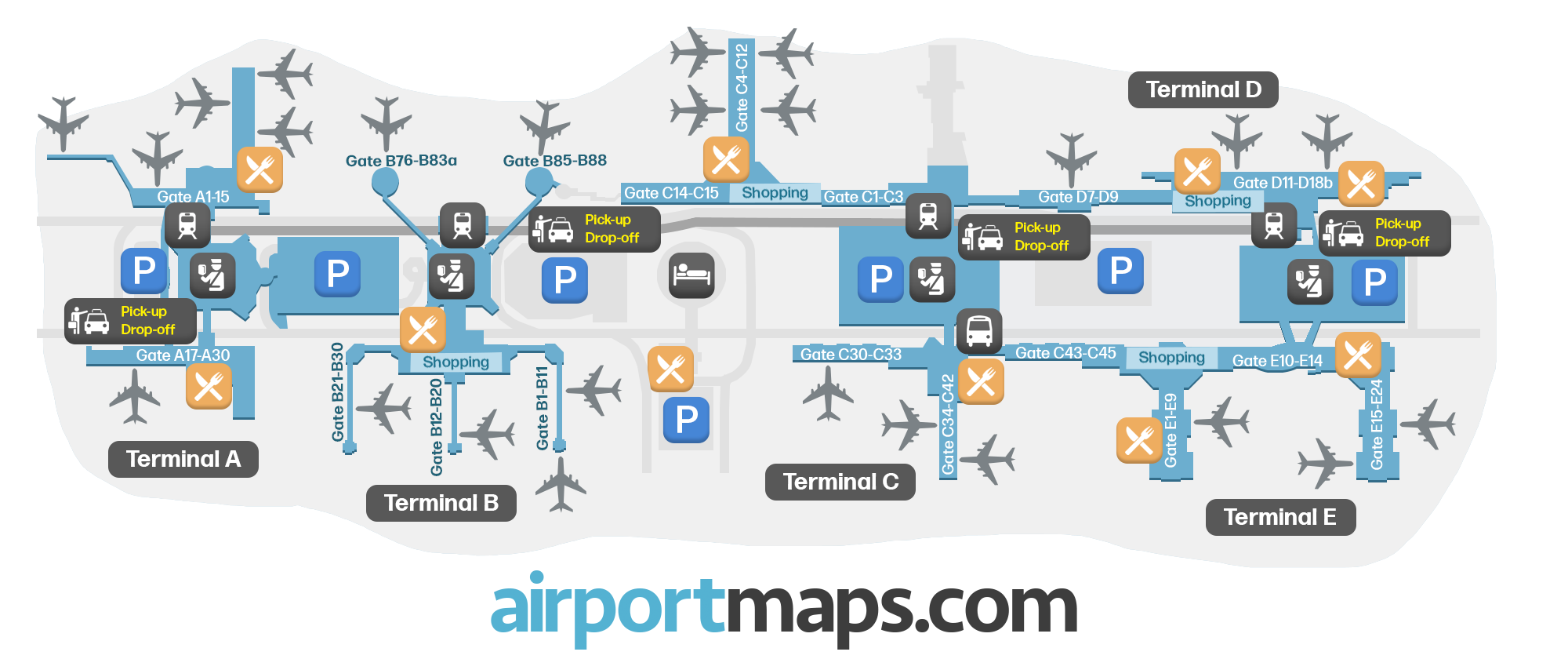
Navigating the Logistics: Where Frontier Lands at IAH
Frontier Airlines operates exclusively out of Terminal A at Houston’s George Bush Intercontinental Airport. This terminal serves as the primary hub for domestic and short-haul international flights for several non-legacy carriers. From a financial perspective, Terminal A is often the most cost-effective entry point into the IAH ecosystem, but it requires a disciplined approach to time management and resource allocation.
The Terminal A Gateway
Terminal A is designed to handle high volumes of budget-conscious travelers. Unlike the sprawling Terminal C or E, which are dominated by legacy carriers with higher overhead costs, Terminal A is optimized for quicker turnarounds. For the Frontier passenger, this means shorter walks from the security checkpoint to the gates (usually Gates A1 through A15), which translates to less time spent in the high-cost environment of an airport terminal. In financial terms, time is a non-renewable asset. Reducing the time spent navigating the terminal minimizes the temptation of “airport inflation”—the phenomenon where travelers spend disproportionate amounts on marked-up food, beverages, and retail items due to boredom or lack of preparation.
Maximizing Time to Minimize Costs
Arriving at Terminal A with a pre-downloaded digital boarding pass is a fundamental move in financial efficiency. Frontier’s business model incentivizes self-service; checking in at the counter often incurs additional fees. By mastering the digital interface of the Frontier app and navigating Terminal A’s streamlined security, a traveler can reduce their “terminal dwell time.” From a budgetary standpoint, every hour spent in an airport increases the likelihood of incidental spending. A disciplined traveler views Terminal A not as a lounge, but as a high-efficiency transit point.
The Economics of the Ultra-Low-Cost Carrier Model
To truly understand the value of flying Frontier from IAH, one must analyze the underlying economics of the ULCC model. Frontier operates on a “bare fare” philosophy, which is a masterclass in financial transparency and consumer choice. This model shifts the power from the airline to the passenger, allowing the traveler to act as their own financial controller.
Unbundling the Fare: Pay for What You Need
The primary attraction of Frontier is its baseline ticket price, which often sits significantly lower than market averages. This is achieved through “unbundling.” In a traditional airline model, the cost of a checked bag, a carry-on, and an in-flight snack is baked into the ticket price—whether you use those services or not. Frontier’s model allows the traveler to opt out of these costs.
For the financially savvy, this is an opportunity for arbitrage. If a traveler can consolidate their needs into a single personal item that fits under the seat, they are effectively paying only for the transportation of their person from Houston to their destination. The delta between a Frontier bare fare and a legacy carrier’s all-inclusive fare can be redirected into a high-interest savings account or a brokerage account. Over several trips a year, this strategy can yield thousands of dollars in “found” investment capital.
Ancillary Revenue and the Frontier Business Strategy
Frontier’s profitability is heavily dependent on ancillary revenue—fees for bags, seat assignments, and priority boarding. From a business finance perspective, this is a brilliant way to segment the market. They attract price-sensitive customers with low “lead-in” fares and generate margins from those who prioritize convenience. To “win” the Frontier game at IAH, a passenger must adopt the mindset of a lean startup: minimize overhead, avoid unnecessary “feature creep” (like paid seat assignments), and focus on the core objective—arriving at the destination at the lowest possible cost.

Personal Finance Hacks for the IAH Traveler
George Bush Intercontinental is one of the largest airports in the United States, and its sheer scale can lead to financial leakage if one is not careful. Beyond the ticket price, the ancillary costs of reaching Terminal A can erode the savings gained by flying a budget carrier.
Hidden Costs at George Bush Intercontinental
Parking and ground transportation are the primary “hidden” taxes of flying out of IAH. Terminal A is served by the Global Services parking garage, but the daily rates can often exceed the cost of a short-haul Frontier flight. To maintain the integrity of a budget-friendly trip, travelers should look at off-site parking lots with shuttle services or utilize Houston’s METRO bus system, specifically the 102 Bush IAH Express. The difference between $25-a-day terminal parking and a $1.25 bus fare is a significant margin in a personal travel budget.
Strategic Booking: The “Discount Den” and Value Optimization
For frequent flyers out of IAH, Frontier’s “Discount Den” subscription service offers a compelling ROI (Return on Investment). By paying an annual fee, travelers gain access to the lowest available fares and “Kids Fly Free” promotions. From a financial planning perspective, this is a classic “membership economy” play. If a traveler flies out of Houston more than three times a year, the membership usually pays for itself in fare savings alone. It is an upfront capital expenditure that yields long-term operational savings.
Leveraging Digital Tools for Financial Efficiency
In the modern era, personal finance is inextricably linked to digital literacy. Navigating Frontier at IAH is a digital-first experience. Those who fail to leverage technology often find themselves paying a “convenience tax” at the airport.
Frontier Miles and Value Optimization
Frontier’s loyalty program, Frontier Miles, has been redesigned to favor “spend” over “distance,” reflecting a shift in the airline’s financial strategy. For the traveler, the goal is to reach elite status levels that waive carry-on bag fees and seat assignment costs. When flying out of IAH, accumulating these miles is a form of currency hedging. You are earning “credits” that offset future travel expenses. A sophisticated traveler tracks these miles with the same rigor they track their stock portfolio, ensuring that no value is left on the table or allowed to expire.
Credit Card Synergies for the Budget Traveler
The financial impact of a Frontier flight can be further mitigated by using the right financial instruments. Many premium travel credit cards offer “airline incidental credits.” While Frontier is a budget carrier, these credits can often be applied to the fees that Frontier charges for bags or seats. By strategically using these bank-subsidized credits, a traveler can effectively turn a “bare fare” into an “all-inclusive” experience without spending a dime of their own post-tax income. This is the pinnacle of travel finance: using institutional capital to subsidize personal mobility.
The Long-Term ROI of Low-Cost Air Travel
Choosing Frontier at IAH is not merely a sign of frugality; it is a strategic decision regarding the allocation of capital. Every dollar saved on airfare is a dollar that can be put to work in more productive ways.
Opportunity Cost and Travel Frequency
The opportunity cost of flying a legacy carrier out of Houston is the experiences or investments you forego. If a family of four saves $800 by choosing Frontier from Terminal A instead of a major carrier from Terminal C, that $800 represents the cost of their accommodations at their destination, or a significant contribution to a 529 College Savings Plan. When viewed through the lens of long-term wealth accumulation, the choice of airline becomes a recurring financial decision that impacts one’s net worth.

Building a Sustainable Travel Budget
Sustainable personal finance is about balance. It is not about never spending money; it is about spending money where it provides the most utility. For many, the utility of a flight is the destination, not the thirty inches of legroom or the complimentary bag of pretzels. By mastering the logistics of Terminal A at IAH and the financial nuances of Frontier Airlines, travelers can enjoy the freedom of global mobility without compromising their financial future.
In conclusion, the question of “what terminal is Frontier at IAH” is the gateway to a much larger discussion on fiscal responsibility. Terminal A is your starting point, but your destination is financial independence. By unbundling your travel costs, leveraging digital tools, and avoiding the hidden taxes of the airport environment, you transform a simple flight into a strategic financial move. In the economy of the future, those who can navigate these systems with precision and discipline will be the ones who travel furthest—both in the sky and in their bank accounts.
aViewFromTheCave is a participant in the Amazon Services LLC Associates Program, an affiliate advertising program designed to provide a means for sites to earn advertising fees by advertising and linking to Amazon.com. Amazon, the Amazon logo, AmazonSupply, and the AmazonSupply logo are trademarks of Amazon.com, Inc. or its affiliates. As an Amazon Associate we earn affiliate commissions from qualifying purchases.