
In the world of thermodynamics, the “boiling point” is the precise temperature at which a liquid transitions into vapor, a moment of fundamental structural change. In the realm of technology, the term carries both literal and metaphorical weight. Whether we are discussing the physical thermal limits of a high-end GPU or the metaphorical “boiling point” of artificial intelligence integration in the modern enterprise, understanding these thresholds is critical for engineers, developers, and tech enthusiasts alike.
As we push the boundaries of silicon density and computational power, the “boiling point” is no longer just a concept from a physics textbook; it is the ultimate barrier to the next generation of digital evolution. This article explores the intersection of thermal management, hardware longevity, and the industry-wide tipping points that are currently reshaping our digital landscape.

The Physics of Performance: Thermal Throttling and Silicon Limits
At the heart of every gadget, from the smartphone in your pocket to the massive server racks powering the cloud, is silicon. However, silicon has a literal boiling point—or more accurately, a maximum operating temperature—beyond which the laws of physics begin to work against the user.
Understanding T-junction and Max Operating Temperatures
For hardware enthusiasts and system architects, the “boiling point” of a processor is often referred to as $T_{junction}$ (Tj Max). This is the maximum thermal temperature the internal cores can reach before the internal heat spreader can no longer effectively dissipate energy. For most modern Intel and AMD processors, this threshold sits between 95°C and 105°C.
When a chip approaches this “boiling point,” it triggers a safety mechanism known as thermal throttling. To prevent permanent physical damage—such as electromigration or the melting of microscopic solder points—the clock speed is drastically reduced. This represents a performance ceiling where the hardware chooses survival over speed. Understanding this limit is essential for software developers who write resource-intensive applications; if the code is not optimized, the hardware will hit its thermal boiling point, leading to a degraded user experience regardless of the raw specs.
The Engineering Challenge of Phase Change and Liquid Cooling
To combat these thermal limits, the tech industry has looked toward actual boiling points to solve cooling problems. High-end cooling solutions, such as vapor chambers and heat pipes, rely on the phase-change cycle. Inside a copper heat pipe, a small amount of liquid reaches its boiling point at a relatively low temperature due to the internal vacuum. As it boils, it carries latent heat away from the CPU to a radiator.
This “boiling point” management is what allows modern gaming laptops to pack the power of a desktop into a thin chassis. Without the sophisticated manipulation of boiling points within cooling loops, our current trajectory of mobile performance would have plateaued a decade ago.
Data Centers at the Boiling Point: The Energy Crisis of Big Data
If an individual chip has a boiling point, then a data center is a pressurized cauldron. As we transition deeper into the era of Large Language Models (LLMs) and Big Data analytics, the sheer volume of heat generated by thousands of H100 GPUs running in parallel has pushed traditional cooling methods to their breaking point.
Sustainable Infrastructure and Heat Rejection
The “boiling point” of the data center industry is currently defined by the Power Usage Effectiveness (PUE) ratio. For years, air cooling was sufficient. However, as chip TDP (Thermal Design Power) exceeds 400W and moves toward 1000W per socket, air is no longer a viable medium for heat rejection.
We are seeing a shift toward “Liquid-to-Chip” cooling. In these environments, the boiling point of the coolant is the most critical variable. If the cooling system fails, the ambient temperature in a high-density rack can rise to critical levels in seconds, leading to a “thermal runaway” event. Managing this is not just an engineering hurdle; it is a sustainability requirement. Tech giants are now being forced to locate data centers in colder climates or underwater to utilize the natural “heat sink” of the environment, delaying the point at which their infrastructure hits a thermal wall.
Immersion Cooling: When Components Literally Boil
One of the most radical shifts in tech infrastructure is Two-Phase Immersion Cooling (2PIC). In this setup, entire servers are submerged in a non-conductive, engineered fluid. This fluid has a low boiling point (often around 50°C). As the server components heat up, the fluid boils, turning into vapor and rising to a condenser coil.

This method is incredibly efficient because it uses the latent heat of vaporization—the energy required to reach the boiling point—to remove heat 100 times more effectively than air. By embracing the boiling point rather than fearing it, data centers can increase their computational density by 10x while reducing energy consumption for cooling by up to 90%.
The Metaphorical Boiling Point: The AI Revolution and Market Saturation
Beyond the hardware, the tech industry is reaching a metaphorical boiling point in terms of innovation and societal impact. A boiling point in this context is a “tipping point”—a moment where a technology moves from a niche curiosity to an inescapable utility.
Exponential Growth and the Tipping Point of AGI
For decades, Artificial Intelligence followed a steady, linear path. However, with the advent of Transformers and Generative AI, we have reached a temperature where the liquid of “data” is turning into the steam of “intelligence.” This is the boiling point of the Information Age.
The industry is currently divided: some believe we are at the boiling point of Artificial General Intelligence (AGI), where machines will soon surpass human cognitive abilities across all domains. Others argue that the “boiling” we see is merely a bubble caused by hype. Regardless of the outcome, the pressure within the tech ecosystem is at an all-time high. The speed of iteration—where new models are released every few weeks—suggests that the industry has entered a phase change that is irreversible.
Security and Ethics: Reaching the Critical Mass
Digital security is also at a boiling point. The traditional methods of perimeter defense are evaporating as AI-driven social engineering and deepfakes become common. We are reaching a critical mass where “Zero Trust” is no longer a luxury but a baseline requirement.
When a system reaches its boiling point, the old structures break down to make way for the new. In digital security, the “boiling point” of traditional passwords and encryption methods is forcing a transition toward post-quantum cryptography and biometric-centric authentication. The friction between privacy and convenience has reached a heat level where the legislative and technological structures must change to survive.
Future Proofing: Beyond the Thermal Wall
As we look toward the future, the goal of technology is to move beyond the constraints of traditional boiling points. We are entering an era where we must reinvent how we process information to avoid the physical and metaphorical overheating of our systems.
Quantum Computing and the Transition to Cryogenics
While current tech is obsessed with managing high temperatures, the future of computing—Quantum Computing—operates at the opposite extreme. Quantum processors must be kept at temperatures near absolute zero, far below the freezing point of any natural substance.
This shift represents a total inversion of the “boiling point” problem. In quantum tech, even the slightest “heat” (vibration or thermal energy) causes decoherence, destroying the computational state. The “boiling point” here is any temperature above a few millikelvins. Solving the cooling challenges of quantum systems will require a brand-new branch of tech that focuses on extreme refrigeration, potentially leading to computers that are millions of times faster than today’s supercomputers without ever “breaking a sweat.”
The Decentralization of Compute
Finally, to prevent the “boiling point” of centralized power—both electrical and political—the tech industry is pivoting toward edge computing and decentralization. By distributing the workload across millions of smaller devices rather than concentrating it in massive, heat-generating hubs, we can manage the thermal and energetic “boiling points” of our global network more effectively.
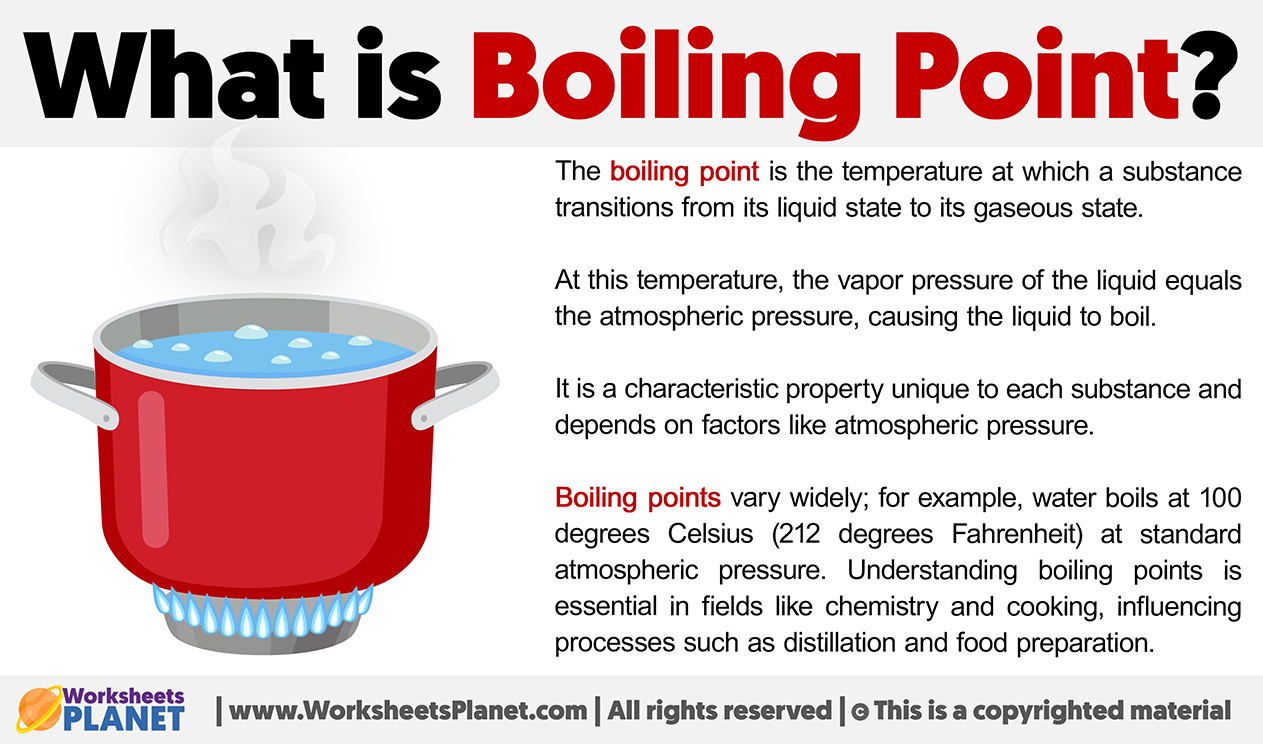
Conclusion: Mastering the Heat
The question “What temperature is boiling point?” has many answers in the technology sector. It is 100°C for a liquid-cooled loop; it is 105°C for a strained CPU; and it is a metaphorical “white heat” for the current pace of AI development.
To thrive in the modern tech landscape, we must be masters of these temperatures. We must build hardware that can withstand the heat, software that doesn’t waste energy, and a society that can handle the rapid phase-change of innovation. The “boiling point” is not an end; it is a transition. Whether we are turning water to steam to cool a server or turning data into insight to transform an industry, the boiling point is where the real work—and the real progress—begins. By understanding and respecting these limits, we ensure that our technological future remains bright, efficient, and above all, sustainable.
aViewFromTheCave is a participant in the Amazon Services LLC Associates Program, an affiliate advertising program designed to provide a means for sites to earn advertising fees by advertising and linking to Amazon.com. Amazon, the Amazon logo, AmazonSupply, and the AmazonSupply logo are trademarks of Amazon.com, Inc. or its affiliates. As an Amazon Associate we earn affiliate commissions from qualifying purchases.