
The geopolitical landscape of the last decade has been defined by a fundamental shift in the trading relationship between the world’s two largest economies. For investors, business owners, and financial analysts, understanding the specific tariffs China imposes on United States exports is no longer a niche requirement—it is a core component of risk management. These tariffs, largely born out of the trade disputes that escalated in 2018, represent a complex web of retaliatory measures that affect everything from the price of pork to the stock valuation of major automotive manufacturers.
To navigate this environment, one must look past the headlines and analyze the structural reality of these duties. China’s tariff regime is not a monolithic wall but a strategic tool used to exert economic pressure on specific American industries, often chosen for their political or regional sensitivity.
The Architecture of Retaliation: How China Structures Its Import Duties
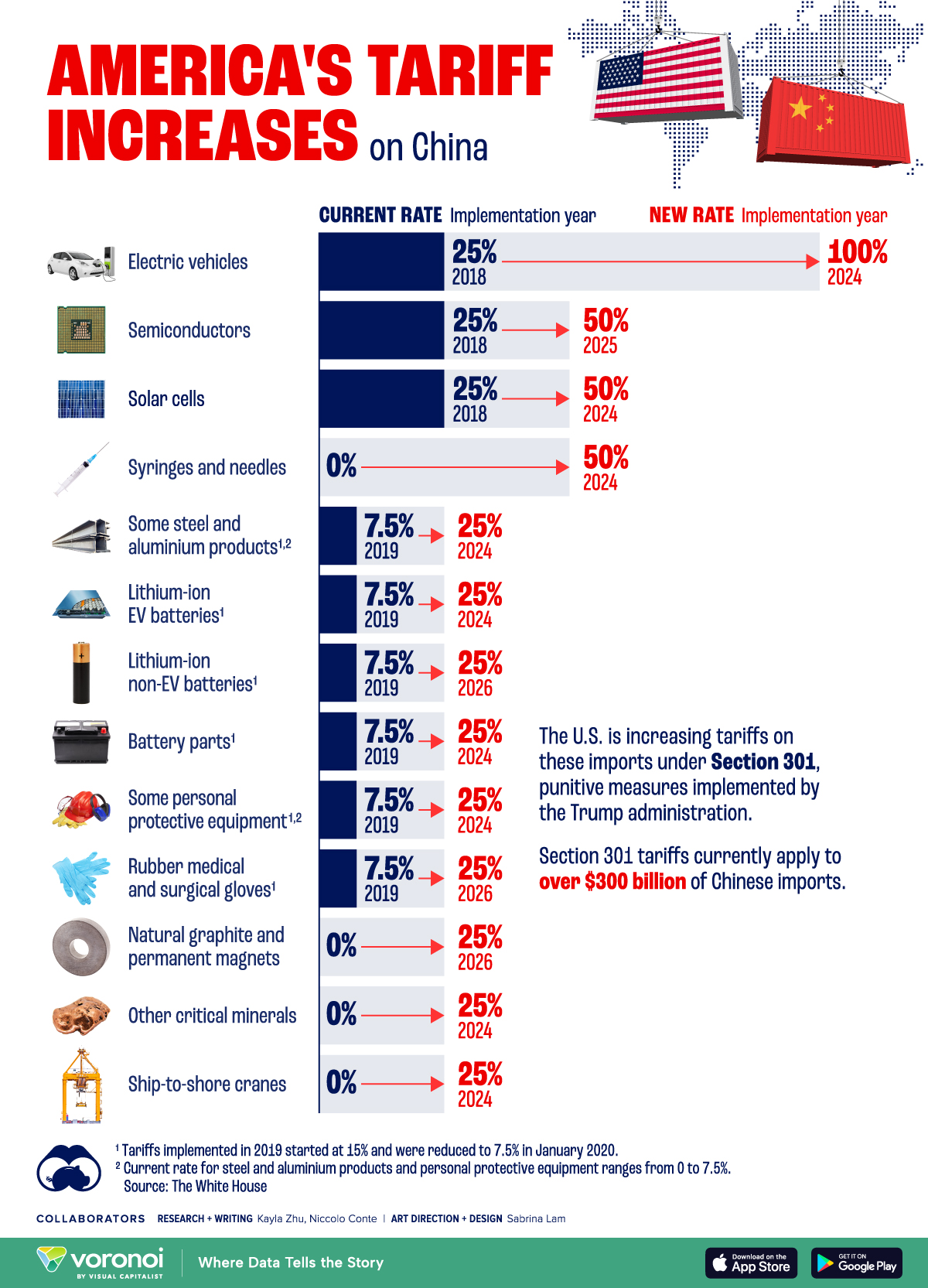
The current state of Chinese tariffs on US goods is primarily a response to the “Section 301” investigations initiated by the United States. When the US imposed tariffs on Chinese aluminum, steel, and later a vast array of consumer and industrial goods, Beijing responded with a series of retaliatory lists. Unlike general customs duties applied to all World Trade Organization (WTO) members, these are “tit-for-tat” measures designed specifically to balance the scales of trade friction.
From Section 301 to Global Trade Shifts
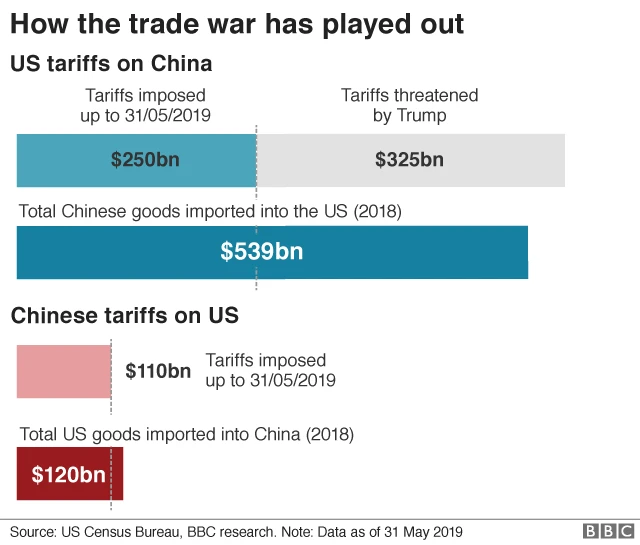
The retaliatory cycle began in earnest in mid-2018. China initially targeted US agricultural products and automobiles. As the US expanded its lists to include nearly $550 billion worth of Chinese imports, China followed suit, eventually covering approximately $110 billion of US exports. While the “Phase One” trade deal signed in early 2020 saw some temporary de-escalation and the implementation of an exclusion process, many of those tariffs remain in place today, creating a “new normal” for trans-Pacific trade.
The Weighted Average: Measuring the Real-World Burden
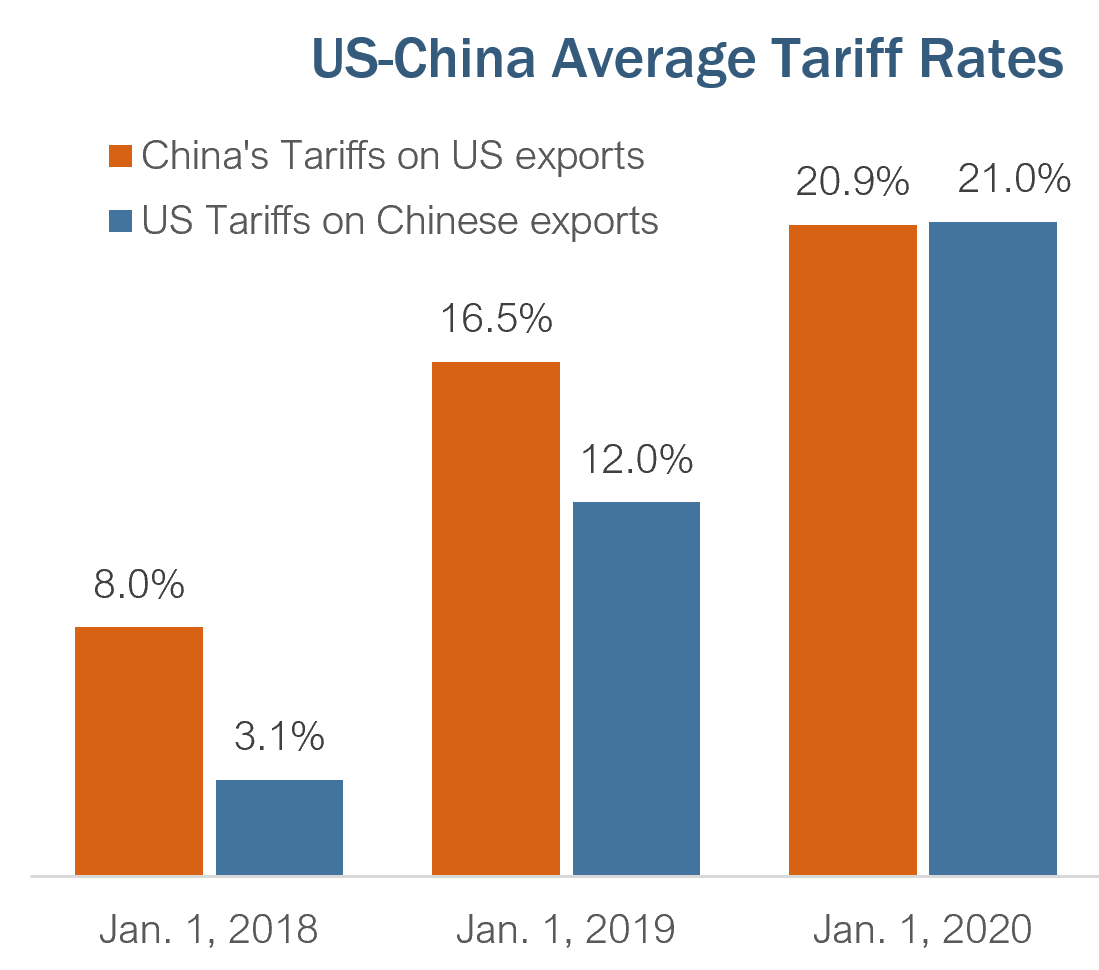
Before the trade war, the average Chinese tariff on US products was approximately 3.1%. By the height of the conflict, that average had spiked to over 20%. Even with exemptions and adjustments, the weighted average remains significantly higher than historical norms. For a business operating in this space, this translates to a direct hit on Gross Margins. When a 25% tariff is applied to a specialized industrial component, the American exporter must either absorb the cost—cutting into their EBITDA—or raise prices, potentially losing market share to European or Southeast Asian competitors who do not face the same duties.
Analyzing the Hardest-Hit Sectors in the US Economy
China’s selection of goods for tariff application is rarely accidental. By targeting sectors where the US has a comparative advantage or where production is concentrated in politically influential regions, Beijing attempts to maximize its leverage.
Agriculture and the Weaponization of Commodities
Agriculture has historically been the most volatile sector in the US-China trade relationship. China is a massive consumer of American soybeans, corn, pork, and cotton. When tariffs of 25% or higher were applied to these commodities, the impact on the US “Farm Belt” was immediate.
For investors in agribusiness, this creates a cycle of high volatility. Soybeans, in particular, became a symbol of the trade war. While China has occasionally granted waivers to state-owned enterprises to buy US beans to meet domestic demand, the underlying tariff threat remains. This has forced US producers to seek alternative markets in the EU and South America, though often at lower price points, impacting the long-term profitability of the US agricultural sector.
Automotive and Aerospace: High-Value Exports at Risk
The automotive sector has faced a rollercoaster of tariff adjustments. At various points, US-made vehicles faced duties as high as 40% in China. While some of these were suspended or reduced during negotiations, the threat of re-imposition looms over companies like Tesla (prior to its Shanghai Gigafactory expansion), Ford, and BMW (which exports US-made SUVs from its South Carolina plant).
In the aerospace sector, Boeing has faced a dual challenge of regulatory hurdles and potential tariff threats. As one of America’s largest exporters, Boeing is a primary target for retaliatory measures. The financial implication for shareholders is clear: uncertainty in the Chinese market—one of the world’s fastest-growing aviation markets—leads to reduced order books and long-term revenue stagnation.
Industrial Machinery and Manufacturing Components
Beyond consumer goods, China maintains significant tariffs on US-made medical equipment, precision instruments, and heavy machinery. These “List 1” through “List 4” items are critical because they sit in the middle of global supply chains. When a Chinese factory faces a 20% tariff on a specialized American sensor, they are incentivized to find a domestic Chinese or German substitute. This “forced substitution” is perhaps the most damaging long-term effect for US manufacturers, as it leads to a permanent loss of market integration.
Navigating the Financial Consequences for Corporate America
The financial reality of Chinese tariffs extends far beyond the customs office. It permeates corporate balance sheets and influences macroeconomic indicators like inflation and capital expenditure.
Supply Chain Inflation and Margin Compression
For US companies with manufacturing footprints in China, the tariffs are a double-edged sword. They pay US tariffs to bring components home and then face Chinese retaliatory tariffs if they try to sell finished goods back into the Chinese market. This “double-taxation” effect leads to significant margin compression.
In quarterly earnings calls, we frequently see CFOs discussing “tariff mitigation strategies.” These include re-shoring, near-shoring to Mexico, or moving production to “Altasia” (Alternative Asia) countries like Vietnam and India. However, these transitions require massive capital outlays, which can depress short-term free cash flow and dividend growth.
Capital Expenditure and Investment Uncertainty
Markets dislike uncertainty more than they dislike high costs. The “will they, won’t they” nature of tariff announcements has created a “wait-and-see” approach to capital expenditure (CapEx). When a US firm is unsure if their primary export market will implement a 25% tariff next quarter, they are less likely to invest in new production lines or R&D for that specific market. This stagnation in investment can lead to a slowdown in innovation and a reduction in the long-term valuation of industrial stocks.
Strategic Asset Allocation in an Era of Trade Friction
As an investor, the presence of permanent Chinese tariffs on US goods requires a rethink of portfolio construction. The “globalization play” that worked from 1990 to 2015—buying companies with the most exposure to Chinese growth—is now fraught with geopolitical risk.
Identifying Low-Exposure Opportunities
One strategy involves pivoting toward sectors that are “tariff-immune.” Domestic services, healthcare providers with limited international footprints, and utilities are largely insulated from the trade war. Furthermore, US companies that have localized their Chinese production (producing in China for the Chinese market) are less affected by border duties, though they still face “behind-the-border” regulatory risks.
The Rise of “China Plus One” and Alternative Markets
Investors are increasingly looking at companies that have successfully implemented a “China Plus One” strategy. By diversifying manufacturing and sales across multiple regions, these companies can bypass the direct impact of US-China bilateral tariffs. For example, a footwear company that moved 40% of its production from China to Vietnam is better positioned to weather a sudden spike in trade tensions. Monitoring a company’s geographic revenue split and supply chain origin is now as vital as checking their P/E ratio.
The Long-Term Economic Outlook: Decoupling vs. De-risking
The persistence of Chinese tariffs on US goods suggests that we are not in a temporary skirmish, but a long-term structural realignment. The terms “decoupling” and “de-risking” have become central to the financial lexicon.
If tariffs remain high, we can expect a continued bifurcation of the global economy. The US will continue to subsidize domestic manufacturing (as seen with the CHIPS Act), and China will continue to push for “Self-Reliance” in high-tech and agricultural sectors. This reduces the overall efficiency of the global market—leading to higher costs for consumers and lower aggregate growth—but it also creates new opportunities in domestic-focused industries and defense-related sectors.
For the savvy financial actor, the goal is not to wait for a return to the low-tariff era of the early 2000s, but to build a financial framework that thrives in a protectionist environment. Understanding the specific tariffs China holds over the US is the first step in identifying which companies will be the “vulnerable laggards” and which will be the “resilient leaders” in this new age of economic statecraft. By analyzing the sectors targeted—from the soy fields of the Midwest to the tech hubs of the West Coast—one can gain a clearer picture of where the real value lies in a world where trade is no longer just about business, but about power.
aViewFromTheCave is a participant in the Amazon Services LLC Associates Program, an affiliate advertising program designed to provide a means for sites to earn advertising fees by advertising and linking to Amazon.com. Amazon, the Amazon logo, AmazonSupply, and the AmazonSupply logo are trademarks of Amazon.com, Inc. or its affiliates. As an Amazon Associate we earn affiliate commissions from qualifying purchases.