
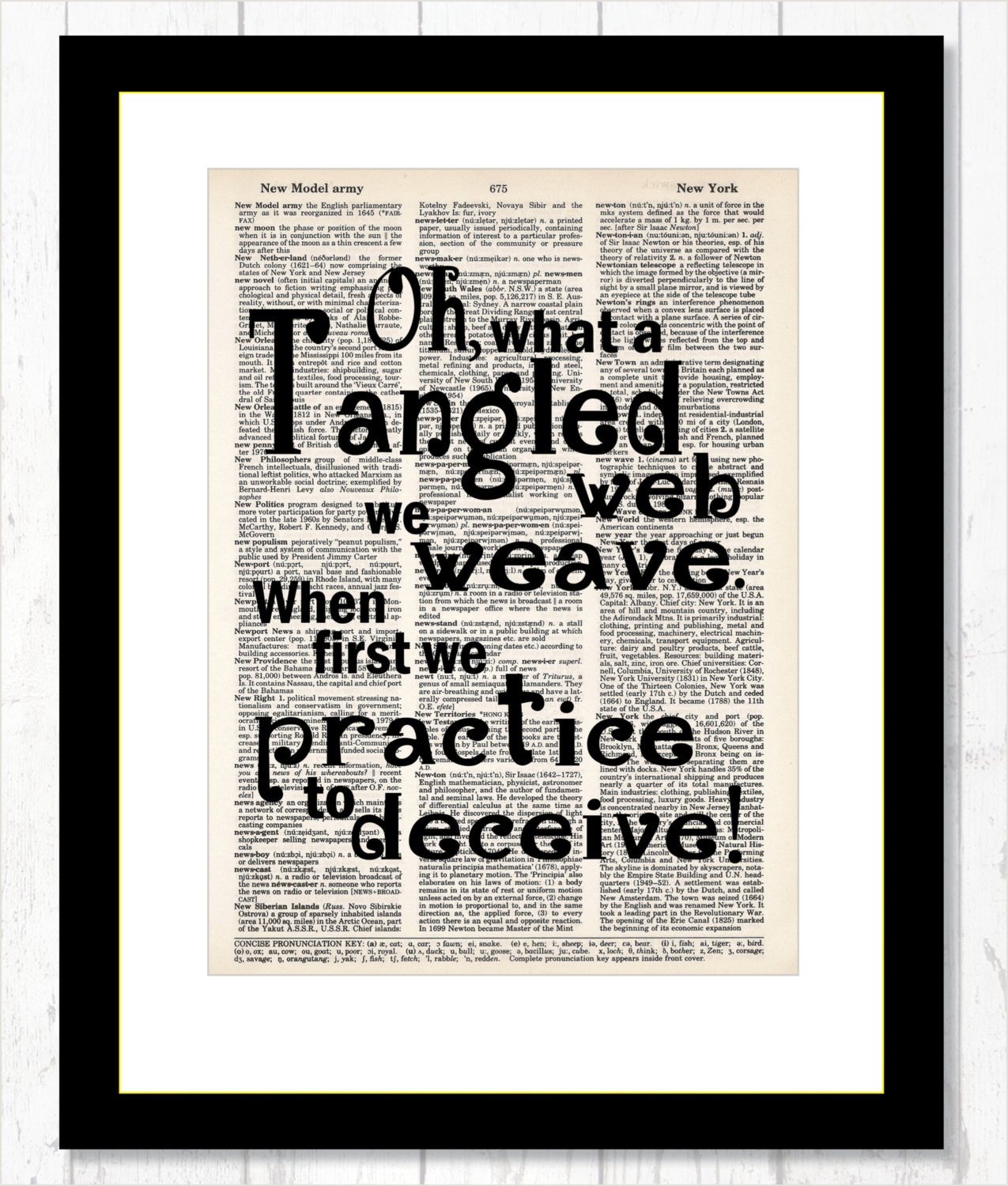
The famous line from Sir Walter Scott’s poem Marmion—”Oh, what a tangled web we weave / When first we practice to deceive!”—was originally a commentary on the unintended consequences of dishonesty. In the third decade of the 21st century, however, this “tangled web” has taken on a literal, digital, and far more systemic meaning. We live in an era defined by a hyper-connected global infrastructure where every device, application, and user is part of a sprawling, invisible architecture.
While this connectivity has fueled unprecedented innovation, it has also created a labyrinth of dependencies. Today, the “web” we have woven is so complex that even its architects often struggle to map its boundaries. For technology leaders, security professionals, and software developers, the challenge is no longer just about building a functional product; it is about managing the intricate, often deceptive vulnerabilities inherent in a world of interconnected tech.

The Anatomy of Connectivity: The Web of API and Cloud Infrastructure
The modern enterprise does not exist in a vacuum. It is a composite of hundreds, if not thousands, of third-party services, cloud environments, and internal microservices. This shift from monolithic software to distributed systems has created a web of technical debt and hidden risks.
The API Economy: The Glue and the Gap
Application Programming Interfaces (APIs) are the invisible threads that hold the modern web together. They allow your CRM to talk to your email marketing tool and your mobile app to process payments through a third-party gateway. However, this convenience comes at a cost. Every API represents a potential entry point for unauthorized access. When we “weave” these connections, we often overlook the security protocols of the endpoints we connect to. “Shadow APIs”—those that are undocumented or forgotten—frequently become the weakest link in a company’s digital perimeter.
Cloud-Native Complexity: Containers and Microservices
The move toward cloud-native development has introduced “containers” and “microservices” to the tech stack. While these allow for rapid scaling and deployment, they also create a highly fragmented environment. Instead of securing one large server, IT teams must now secure thousands of ephemeral containers that may only exist for a few minutes. Navigating this tangled architecture requires a high level of observability; without it, a security breach can propagate through the network before the system even registers that a container has been compromised.
The Deceptive Web: The Evolution of Modern Cyber Threats
The “deception” referred to in Scott’s poem has evolved into sophisticated cyber-warfare. Today’s threat actors use the very complexity of our systems against us, weaving their own webs of misinformation, social engineering, and algorithmic fraud.
Social Engineering and the Human Element
Despite all our technological advancements, the most vulnerable part of any web is the human at the keyboard. Phishing has evolved from poorly spelled emails to “spear-phishing” and “whaling” campaigns that are indistinguishable from legitimate corporate communications. By leveraging the vast amounts of personal data available on the “tangled web” of social media, attackers can craft highly personalized deceptions. The “web we weave” in our personal lives—our check-ins, our professional updates, and our public interactions—provides the raw material for attackers to deceive us.
The Rise of AI-Generated Deception and Deepfakes
Artificial Intelligence has added a new layer of complexity to the digital web. Generative AI can now produce convincing deepfake audio and video, allowing attackers to impersonate CEOs or IT administrators in real-time. This is the ultimate “tangled web”—a reality where the digital signals we rely on for trust can be fabricated by an algorithm. As AI tools become more accessible, the barrier to entry for high-level deception drops, forcing tech organizations to rethink the very nature of digital identity and verification.
The Supply Chain Crisis: A Web of Global Dependencies
In 1958, Leonard Read wrote an essay titled “I, Pencil,” arguing that no single person knows how to make a pencil because the materials and processes are too globally dispersed. The same is true for modern software. No single developer knows every line of code in a modern application because it is built upon a “tangled web” of open-source libraries and third-party dependencies.
Open Source Vulnerabilities and the “Log4j” Lesson
The vast majority of modern software is built using open-source components. This collaboration is the engine of tech progress, but it creates a massive supply chain risk. The “Log4j” vulnerability of 2021 was a perfect example of this. A tiny, obscure piece of code used for logging in Java applications was found to be vulnerable. Because this code was woven into millions of enterprise systems worldwide, the entire digital world was suddenly at risk. We had woven a web so intricate that we didn’t even know where the rot began.
Third-Party Risk Management (TPRM)
To manage these tangled dependencies, organizations are shifting toward more rigorous Third-Party Risk Management. It is no longer enough to secure your own house; you must ensure your neighbors, your suppliers, and your suppliers’ suppliers are equally secure. This requires a Software Bill of Materials (SBOM)—a comprehensive list of every component within a piece of software. In an era of global tech “webs,” transparency is the only antidote to the systemic risk of dependency.
Untangling the Web: Strategies for Digital Resilience
If the web we have woven is too complex to fully map, how do we secure it? The answer lies in moving away from a “castle and moat” mentality and toward a philosophy of resilience and constant verification.
Zero Trust Architecture: Trust No One, Verify Everything
The fundamental flaw in early network design was the concept of “trusted” internal networks. Once an intruder was inside, they had free rein. Modern tech is moving toward a “Zero Trust” model. In this framework, we assume the web is already compromised. No user and no device is trusted by default, regardless of whether they are inside or outside the corporate network. By requiring continuous authentication and granting only the “least privilege” necessary to perform a task, organizations can prevent a single strand of the web from pulling down the entire structure.
AI-Driven Defense and Automated Orchestration
Just as attackers use AI to weave deceptions, defenders must use AI to untangle them. The sheer volume of data moving through modern networks is too great for human analysts to monitor. AI-driven security tools can identify patterns of behavior that indicate a breach—such as a database being accessed at 3:00 AM from an unusual IP address—and automatically isolate the affected system. This automated orchestration is essential for maintaining a semblance of order in our increasingly tangled digital environments.

Conclusion: The Path Toward a More Transparent Web
The “tangled webs” of modern technology are unavoidable. We cannot go back to the days of isolated computers and simple, monolithic software. Our global economy, our social structures, and our scientific progress depend on the very interconnectivity that creates these risks.
However, the “deception” mentioned in the original quote does not have to be our destiny. By embracing transparency through SBOMs, adopting the rigors of Zero Trust, and leveraging AI for defense, we can manage the complexity we have created. The goal is not to stop weaving the web, but to ensure that the web we build is resilient, visible, and founded on a foundation of verified trust. In the world of technology, simplicity is a luxury, but clarity is a necessity. As we continue to weave our digital future, we must ensure that we are the masters of the web, rather than becoming entangled in its threads.
aViewFromTheCave is a participant in the Amazon Services LLC Associates Program, an affiliate advertising program designed to provide a means for sites to earn advertising fees by advertising and linking to Amazon.com. Amazon, the Amazon logo, AmazonSupply, and the AmazonSupply logo are trademarks of Amazon.com, Inc. or its affiliates. As an Amazon Associate we earn affiliate commissions from qualifying purchases.