
Mastering the art of selecting the perfect pair of sunglasses is not merely a matter of trend-following; it is an exercise in visual branding and strategic design. Your choice of eyewear serves as a permanent accessory that frames your face, acting as a crucial component of your personal identity. In the world of design and brand strategy, the face is the “canvas,” and the frame is the “logo.” Just as a luxury brand meticulously chooses a typeface to convey its essence, you must select eyewear that harmonizes with your unique facial geometry to project the professional image you desire.
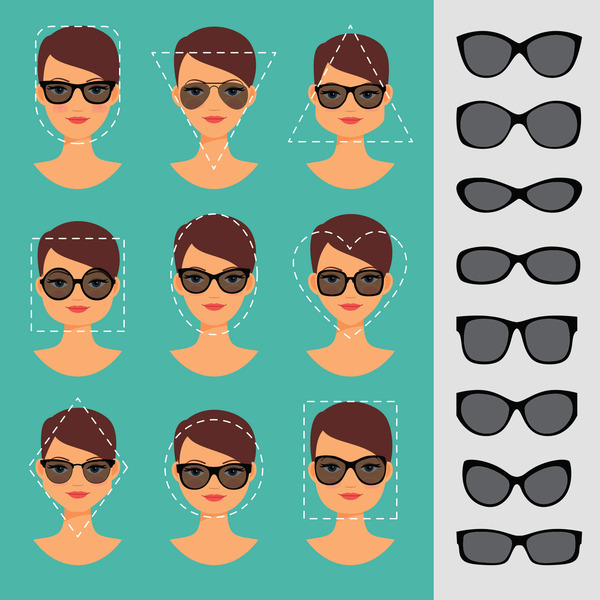
The Geometry of Brand Identity: Understanding Face Shapes
In design, symmetry and proportion are the foundational pillars of aesthetic appeal. When choosing sunglasses, you are essentially applying the principles of structural design to your own silhouette. The objective is to achieve balance. If your face is angular, you introduce curves to soften the presentation; if your face is soft and rounded, you introduce angular lines to provide structure and “edge.”
Identifying Your Facial Blueprint
Before analyzing frame styles, you must accurately categorize your face shape. The most common shapes include oval, round, square, heart, and diamond. To determine yours, pull your hair back and look directly into a mirror. Trace the outline of your face using a dry-erase marker or simply observe the dominant lines.
- Oval: The forehead is slightly wider than the chin, with high cheekbones.
- Round: The width and length of the face are roughly the same, with soft, rounded jawlines.
- Square: The forehead, cheekbones, and jawline have similar widths, with a strong, angular jaw.
- Heart: A wider forehead that tapers down to a narrow, pointed chin.
- Diamond: Narrower forehead and jawline with prominent, wide cheekbones.
Understanding this blueprint is the first step in your personal branding strategy. It dictates the “whitespace” and “framing” of your face, ensuring that the accessories you choose reinforce, rather than distract from, your brand presence.
Strategic Frame Selection: Matching Style to Structure
Once you have identified your facial geometry, you can select frames that leverage your natural features. In professional branding, the goal is to create a cohesive image that feels authentic. Selecting the right frame shape is a psychological play—frames create visual cues that people process subconsciously.
The Oval Face: The Universal Standard
If your face is oval, you possess the “golden ratio” of facial shapes. You are fortunate in that almost any frame style—aviators, wayfarers, cat-eye, or oversized squares—will harmonize with your features. However, for a high-impact personal brand, avoid frames that are wider than the broadest part of your face. Focus on frames that maintain the natural balance of your features rather than disrupting it.
The Round Face: Introducing Architectural Structure
For round faces, the primary objective is to add definition. Because your facial lines are soft, you should look for frames that introduce contrast. Sharp, rectangular, or angular frames are your best assets. These shapes act like a “bold font” on your face, providing the structure and professionalism that a soft jawline may lack. Avoid small or circular frames, as these will only repeat the roundness of your face and diminish your visual authority.
The Square Face: Softening the Professional Edge
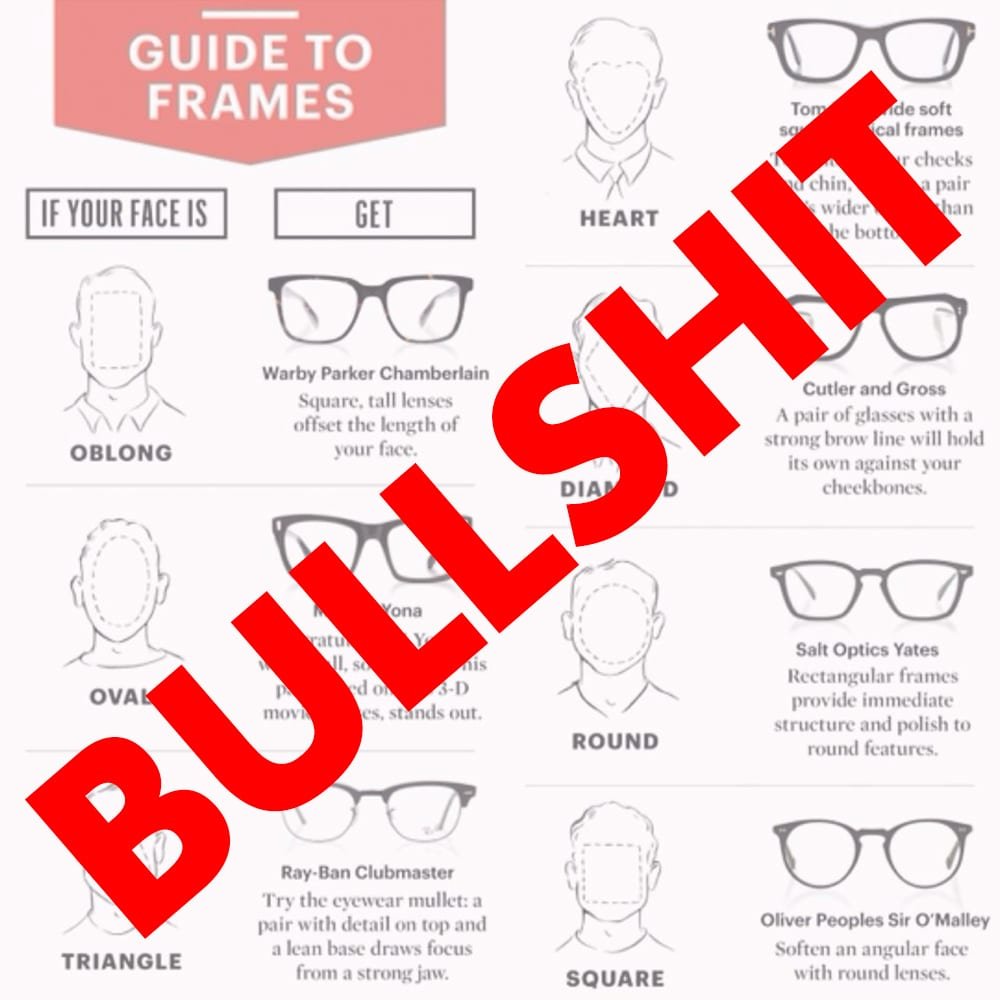
Square faces are defined by strength and stability—traits often associated with reliability and leadership. To complement these features, you should choose frames that soften the sharp angles. Opt for rounded or oval-shaped glasses. Aviators or “teardrop” frames work exceptionally well here, as they draw the eye toward the center of the face, softening the impact of a strong, angular jawline. By choosing frames with thinner metal rims rather than thick, heavy plastic, you maintain a refined, high-end aesthetic.
The Heart and Diamond Faces: Creating Balance
Heart-shaped faces often have a wider upper face and a delicate lower face. The goal is to minimize the width of the top portion while adding volume to the bottom. Bottom-heavy frames or light-colored, rimless styles work effectively to draw attention downward. Conversely, diamond faces, which are defined by wide, dramatic cheekbones, benefit from frames that feature distinctive brow lines, such as “browline” glasses or cat-eye shapes. These styles emphasize the eyes and forehead, creating a balanced, sophisticated silhouette that draws the focus to your intellect and presence.
The Psychology of Color and Material in Brand Perception
Beyond the shape of the frame, the material and color you choose serve as “brand signals.” In a professional or social setting, these choices communicate volumes about your personality and your approach to your craft.
The Material Palette
Acetate (high-quality plastic) frames convey a sense of modern, approachable confidence. They allow for bold colors and thick profiles, signaling creativity and a willingness to stand out. Metal frames, by contrast, convey minimalism, precision, and sophistication. A titanium or gold-toned metal frame suggests an appreciation for detail and a lean, high-performance mindset. When selecting materials, consider your brand’s “vibe.” If your personal brand is rooted in creative innovation, bold acetate frames may be your signature. If your brand is rooted in executive leadership and precision, refined metals will better serve your image.
The Significance of Color Theory
The color of your frames should complement your skin tone and hair color, but it should also reflect your brand’s personality. Neutral tones—tortoiseshell, black, slate gray, and navy—are the “navy suits” of the eyewear world. They are timeless, versatile, and convey a high level of professional competence. If you want to convey a bolder, more disruptive brand identity, consider introducing one “brand color” into your eyewear. A subtle pop of deep burgundy or forest green can create a memorable signature look without sacrificing professionalism.
Scaling Your Eyewear Strategy: Functionality Meets Style
In the modern landscape of personal branding, a single pair of sunglasses is rarely sufficient. Just as you have different outfits for different professional scenarios, you should curate a “frame wardrobe” that supports your varied activities.
The “Boardroom” vs. “Weekend” Look
Your daily professional activities require a frame that suggests focus and reliability. For a high-stakes environment, look for classic shapes in neutral, premium materials. These frames should disappear into your overall look, allowing your face—and your ideas—to remain the focal point.
For your off-duty or creative time, you can afford to experiment with more experimental shapes. This is where your personality truly shines. Using accessories as a tool for storytelling allows you to transition your image from “the expert” to “the visionary.” When you invest in high-quality, well-fitted eyewear, you are investing in the consistency of your personal brand.

Final Considerations for the Discerning Professional
Regardless of the current fashion cycle, prioritize fit above all else. A frame that is too wide or too narrow will disrupt the symmetry of your face, regardless of how well it aligns with your shape category. Ensure the bridge rests comfortably on your nose and that the temples do not pinch the sides of your head.
Finally, remember that the most successful brand identities are those that feel effortless. Once you have identified the shapes, colors, and materials that suit your specific facial geometry, lean into them. Consistency is the hallmark of a powerful brand. By understanding the design principles of eyewear and applying them to your unique facial structure, you move beyond mere fashion and into the realm of intentional self-presentation—ensuring that whenever you enter a room, your presence is as sharp, clear, and well-designed as the frames you wear.
aViewFromTheCave is a participant in the Amazon Services LLC Associates Program, an affiliate advertising program designed to provide a means for sites to earn advertising fees by advertising and linking to Amazon.com. Amazon, the Amazon logo, AmazonSupply, and the AmazonSupply logo are trademarks of Amazon.com, Inc. or its affiliates. As an Amazon Associate we earn affiliate commissions from qualifying purchases.