
In an increasingly digitized world, the convenience of mobile payment applications has transformed how consumers manage their finances and conduct transactions. Among the frontrunners in this financial technology revolution is Cash App, a powerful tool that combines banking, investing, and peer-to-peer payments into a single, intuitive interface. A particularly innovative feature, and one gaining significant traction, is its “scan-to-pay” functionality. This capability allows users to complete purchases at physical retail locations simply by scanning a QR code with their smartphone, bypassing traditional credit cards or even physical debit cards. Understanding which stores embrace this technology requires delving into the technical infrastructure, strategic partnerships, and evolving trends shaping the digital payment ecosystem.

The proliferation of Cash App’s scan-to-pay feature is not merely a matter of consumer preference; it represents a significant shift in payment processing technology. For retailers, adopting such systems means embracing new hardware, software integrations, and a commitment to modernizing their point-of-sale (POS) systems. For consumers, it offers unparalleled convenience, enhanced security features, and a seamless transactional experience. This article will explore the technological underpinnings of Cash App’s scan functionality, identify the types of merchants that are integrating it, and discuss the future trajectory of this burgeoning payment method within the broader tech landscape.
The Mechanics Behind Cash App’s Scan-to-Pay Feature
At its core, Cash App’s scan-to-pay functionality is an elegant application of QR code technology combined with robust backend payment processing. This system allows for rapid, secure, and touch-free transactions, addressing both convenience and modern health concerns.
How QR Code Technology Powers In-Store Payments
QR (Quick Response) codes are two-dimensional barcodes that can store a substantial amount of information, far more than traditional linear barcodes. For payment applications, a QR code typically contains encrypted data related to the merchant, the transaction amount, or a unique identifier that links to the payment request on the merchant’s system. When a customer uses the Cash App to scan a merchant’s QR code, the app instantaneously decodes this information.
The process usually follows one of two primary models:
-
Merchant-Presented QR Code: The merchant displays a static or dynamic QR code (on a terminal screen, sticker, or receipt). The customer scans this code, enters the payment amount (if not pre-populated), and confirms the transaction within their Cash App.
-
Customer-Presented QR Code: Less common for Cash App’s in-store payments but prevalent in other mobile wallets, this involves the customer generating a unique QR code within their app for the merchant to scan.
For Cash App, the merchant-presented model is predominant, leveraging the widespread use of Square’s POS systems. When a Cash App user scans a QR code generated by a Square terminal, the Cash App communicates directly with Square’s payment network, authenticating the user and processing the funds transfer from the user’s Cash App balance or linked bank account to the merchant’s Square account. This direct integration streamlines the entire payment flow, minimizing latency and reducing potential points of failure. The underlying technology relies on secure tokenization and encryption protocols to protect sensitive financial data during transmission.
The User Experience: From App to Transaction
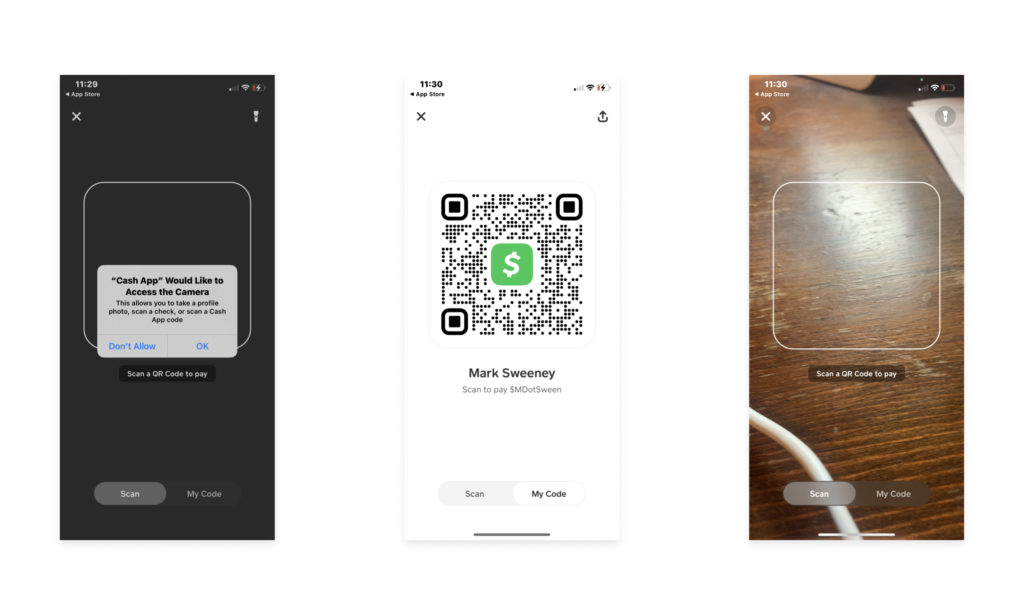
The brilliance of Cash App’s scan-to-pay lies in its simplicity for the end-user. The process typically involves just a few steps:
-
Open Cash App: The user launches the Cash App on their smartphone.
-
Tap the Scan Icon: Usually a prominent button on the home screen, this activates the phone’s camera for scanning.
-
Scan the QR Code: The user points their camera at the merchant’s QR code displayed at checkout.
-
Confirm Payment: The app displays the merchant name and transaction amount (if applicable). The user reviews and confirms the payment, often using a PIN, fingerprint, or facial recognition for added security.
-
Receive Confirmation: Both the customer and merchant receive instant confirmation of the successful transaction.
This intuitive flow removes friction points associated with card payments, such as swiping, inserting, or manually entering card details. The app’s integration with the device’s biometrics (Face ID, Touch ID) further enhances security and speed, making the checkout process remarkably efficient. From a technical standpoint, the app is designed to handle potential network inconsistencies, ensuring transaction integrity even under less-than-ideal connectivity.
Security Protocols for Scan-Based Payments
Digital security is paramount for any financial application, and Cash App employs multiple layers of protection for its scan-to-pay feature.
-
Encryption: All data transmitted during the transaction process is encrypted end-to-end, preventing unauthorized interception.
-
Tokenization: Sensitive card or bank details are replaced with unique, randomly generated tokens that are meaningless if intercepted, protecting the user’s actual financial information.
-
Two-Factor Authentication (2FA) / Biometrics: Users can enable 2FA or use biometric verification (fingerprint, face scan) for confirming payments, adding a crucial layer of security against unauthorized use if a phone is lost or stolen.
-
Fraud Monitoring: Cash App’s sophisticated fraud detection systems continuously monitor transactions for suspicious activity, employing AI and machine learning algorithms to identify and flag potential threats in real-time.
-
PCI DSS Compliance: As a payment processor, Cash App (and its parent company, Block/Square) adheres to the Payment Card Industry Data Security Standard (PCI DSS), a set of security standards designed to ensure that all companies that process, store, or transmit credit card information maintain a secure environment.
These robust security measures ensure that while the payment process is swift and seamless, the underlying financial data remains highly protected against cyber threats.
Expanding Acceptance: Where Cash App Scan is Making Inroads
The adoption of Cash App’s scan-to-pay functionality is deeply intertwined with the broader ecosystem developed by its parent company, Block (formerly Square, Inc.). This strategic alignment has been crucial in driving its presence in physical retail environments.
Square’s Ecosystem and Cash App Integration
The primary catalyst for Cash App’s in-store acceptance is its symbiotic relationship with Square’s extensive point-of-sale (POS) network. Square is a leading provider of payment processing hardware and software for small and medium-sized businesses (SMBs). Merchants using Square’s terminals (such as Square Register, Square Stand, or even the basic Square Reader) automatically gain the capability to accept Cash App payments via QR code.
When a merchant processes a transaction through a Square terminal, the option to pay with Cash App is often presented alongside traditional card payments. This seamless integration means that any store that uses Square for its payment processing is inherently equipped to accept Cash App scans. This includes a vast array of businesses, from local coffee shops and food trucks to boutiques, salons, and independent retailers across the United States. Square’s dominance in the SMB market has thus provided a ready-made acceptance network for Cash App, allowing it to scale its in-store presence rapidly without needing to onboard each merchant individually for Cash App specifically.
Direct Merchant Integration vs. Third-Party Processors
While Square remains the primary conduit, Cash App’s acceptance is not exclusively limited to Square merchants.
-
Direct Integration: Larger retailers or specific chains might choose to integrate Cash App payment options directly into their proprietary POS systems. This requires significant development effort but allows for a more customized experience and tighter control over the payment flow. However, such direct integrations are less common for Cash App compared to established networks like Apple Pay or Google Pay, which have broader native support across payment terminals.
-
Third-Party Payment Processors: Some other payment processors might offer Cash App as part of their suite of accepted payment methods, especially those with partnerships with Block. This expands the reach beyond Square’s direct hardware, though it’s still a developing area. For the immediate future, identifying stores that accept Cash App scan largely means identifying stores that utilize Square payment solutions.
The Growing Trend of Contactless Payments and Mobile Wallets
Cash App’s scan-to-pay feature is part of a larger, irreversible trend towards contactless payments and mobile wallets. Driven by convenience, speed, and heightened hygiene awareness (especially post-pandemic), consumers are increasingly opting for methods that avoid physical contact with terminals or cash.
-
NFC (Near Field Communication): While Cash App’s scan-to-pay relies on QR codes, the broader movement includes NFC-based payments (like Apple Pay and Google Pay), which allow users to tap their phone or wearable device on a compatible terminal.
-
Market Share Shift: Mobile payment solutions are steadily eroding the market share of traditional payment methods. As smartphone penetration continues to grow, so does the adoption of apps like Cash App that leverage these devices for financial transactions.
-
Global Phenomenon: The success of mobile payments in Asia (e.g., WeChat Pay, Alipay) has demonstrated the immense potential and demand for such systems, influencing their growth in Western markets.
This broader technological shift creates a fertile ground for Cash App’s continued expansion, as both consumers and merchants become more accustomed to and expect diverse digital payment options.
The Technical Requirements for Merchants Accepting Cash App Scan
For merchants looking to accept Cash App scan payments, understanding the underlying technical requirements is crucial. While Square integration simplifies much of this, there are still considerations regarding hardware, software, and staff preparedness.
Hardware and Software Compatibility
The primary hardware requirement for merchants is a compatible point-of-sale (POS) system capable of displaying or generating a QR code.
-
Square POS Hardware: This is the most straightforward path. Devices like the Square Register, Square Stand, and even iPads running the Square POS app can display a QR code on their customer-facing screen. The basic Square Reader, while only accepting card dips/swipes/taps, can be paired with an iOS or Android device running the Square app to show a QR code for Cash App payments.
-
Custom POS Systems: Merchants with non-Square POS systems would need to ensure their software can generate a unique QR code for each transaction or display a static merchant QR code, and crucially, that their backend system can communicate with Cash App’s (or Square’s) API to confirm payment. This often requires custom development or integration work.
-
Internet Connectivity: Reliable internet access (Wi-Fi or cellular) is essential for both the merchant’s POS system to communicate with the payment network and for the customer’s phone to connect to Cash App.
From a software perspective, merchants primarily need the Square POS application (on a tablet, smartphone, or integrated terminal) to process these payments. The app handles the generation of transaction-specific QR codes and the communication with the payment processing backend.
POS System Integration Challenges and Solutions
Integrating new payment methods into existing POS systems can present several challenges:
-
API Development: For non-Square merchants, integrating Cash App would likely involve developing or utilizing an API (Application Programming Interface) to allow their POS system to securely communicate with Cash App’s payment processing infrastructure. This requires technical expertise and adherence to security standards.
-
Workflow Adjustments: The checkout workflow needs to accommodate the Cash App payment option. This means training cashiers to prompt customers about Cash App, display the QR code correctly, and confirm successful transactions within the POS system.
-
Reconciliation: Ensuring that Cash App transactions are correctly recorded and reconciled with other payment methods in the merchant’s accounting system is vital. Square’s system automates this for its users, but custom integrations might require manual adjustments or specialized reporting tools.
Solutions often involve leveraging existing integrations (like Square), partnering with payment gateways that support Cash App, or investing in modern, flexible POS systems designed for easy integration of new payment types.
Staff Training and Technical Support
Technology adoption is only as effective as the people using it. Comprehensive staff training is paramount for a smooth transition to accepting Cash App scan payments.
-
Process Familiarity: Staff need to understand the step-by-step process of accepting Cash App payments, including how to generate the QR code, troubleshoot minor issues, and confirm successful transactions.
-
Customer Assistance: Employees should be prepared to guide customers who are new to the Cash App scan process, answering common questions and providing assistance.
-
Troubleshooting: Basic technical troubleshooting skills are beneficial, such as knowing how to restart the POS terminal or check internet connectivity.
-
Technical Support: Merchants need access to reliable technical support, either from Square directly or from their custom POS provider, to address any complex issues that arise.
Effective training and readily available support ensure that the technology enhances the customer experience rather than creating frustration.
Future Outlook: The Evolution of Cash App Scan and Payment Technology
The trajectory of Cash App’s scan-to-pay feature is intrinsically linked to broader trends in financial technology and consumer behavior. As digital payments continue to evolve, Cash App is poised to adapt and expand its capabilities.
Innovations in Mobile Payment Security
Security will remain a top priority. Future innovations are likely to include:
-
Enhanced Biometrics: More sophisticated biometric authentication methods, potentially including behavioral biometrics (analyzing typing patterns or gestures), could be integrated.
-
AI-Powered Fraud Detection: Continuous advancements in AI and machine learning will lead to even more proactive and accurate fraud detection, identifying new attack vectors faster.
-
Quantum-Resistant Cryptography: As quantum computing advances, the payment industry will need to transition to quantum-resistant encryption algorithms to secure data against future threats.
-
Decentralized Identity: The integration of decentralized identity solutions could offer enhanced privacy and security for transaction authentication, putting more control in the hands of the user.
Broader Adoption and Market Penetration
Cash App’s expansion will likely follow several paths:
-
Continued Square Growth: As Square expands its merchant base globally, so too will the potential reach of Cash App’s scan-to-pay feature.
-
Strategic Partnerships: Cash App may form more direct partnerships with larger retail chains or other payment processors to broaden its acceptance independently of Square hardware.
-
International Expansion: While currently strong in the US and UK, Cash App’s model could be replicated in other markets with suitable regulatory environments and tech infrastructure.
-
Feature Integration: Further integration with other Cash App features, such as Boosts (instant discounts), could drive more users to choose Cash App for in-store payments.

Interoperability with Other Payment Systems
The future of digital payments may trend towards greater interoperability. While proprietary systems currently dominate, there’s a growing desire for seamless integration across different platforms.
-
Universal QR Code Standards: The adoption of universal QR code standards could allow any mobile payment app to scan and pay at any compliant merchant terminal, regardless of the underlying provider.
-
Open Banking Initiatives: Broader open banking initiatives could facilitate smoother, more secure direct bank-to-bank payments, potentially integrating with apps like Cash App to bypass traditional card networks.
-
CBDCs (Central Bank Digital Currencies): If central bank digital currencies become a reality, mobile payment apps would undoubtedly play a crucial role in facilitating their use, further evolving their technical requirements and capabilities.
In conclusion, Cash App’s scan-to-pay feature is a testament to the power of technological innovation in the financial sector. Its acceptance, largely driven by its integration with the Square ecosystem, signifies a clear shift towards more convenient, secure, and touch-free transactions. As payment technology continues to advance, Cash App is well-positioned to remain a significant player, continually adapting its technical capabilities to meet the evolving demands of both consumers and merchants in the digital age.
aViewFromTheCave is a participant in the Amazon Services LLC Associates Program, an affiliate advertising program designed to provide a means for sites to earn advertising fees by advertising and linking to Amazon.com. Amazon, the Amazon logo, AmazonSupply, and the AmazonSupply logo are trademarks of Amazon.com, Inc. or its affiliates. As an Amazon Associate we earn affiliate commissions from qualifying purchases.