
For many investors, the S&P 500 is more than just an index; it’s a barometer for the health of the U.S. economy, a benchmark for portfolio performance, and a gateway to understanding the market’s leading companies. When people ask “what stocks are in the S&P 500?”, they’re seeking to understand the very fabric of American corporate prowess and innovation. This index, managed by S&P Dow Jones Indices, tracks the performance of 500 of the largest publicly traded companies in the United States, selected not just by size, but by a committee for their liquidity, sector representation, and public float.

Understanding the S&P 500 is crucial for anyone engaging with the stock market, whether they’re a seasoned institutional investor or just starting their journey into personal finance. It represents a significant portion of the total market capitalization of U.S. equities, making its movements influential and its constituents critical to analyze. This article will demystify the S&P 500, exploring its composition, selection criteria, sector distribution, and the myriad ways investors can gain exposure to its performance.
Understanding the S&P 500: More Than Just a Number
The S&P 500 is far more sophisticated than a simple list of the 500 biggest companies. Its methodology ensures it remains a relevant and accurate reflection of the broad U.S. equity market, providing a robust tool for economic analysis and investment strategy.
What is the S&P 500?
At its core, the S&P 500 is a market-capitalization-weighted index of 500 leading publicly traded companies in the U.S. The “market-capitalization-weighted” aspect is critical: companies with larger market caps (share price multiplied by the number of outstanding shares) have a greater impact on the index’s performance. For instance, a 1% move in Apple (one of the largest companies by market cap) will affect the S&P 500 more than a 1% move in a smaller constituent. This weighting ensures the index accurately reflects the relative size and influence of its component companies within the broader market.
Unlike some other indices that use a fixed number of companies, the S&P 500 aims for coverage of approximately 80% of the total U.S. market capitalization. This breadth makes it an excellent proxy for the overall health and direction of the U.S. stock market and, by extension, the economy.
How Companies Qualify for Inclusion
Inclusion in the S&P 500 is a prestigious accomplishment for any company, often leading to increased investor interest and liquidity. However, it’s not simply about being one of the largest 500 companies. S&P Dow Jones Indices employs a rigorous set of criteria, which includes:
- U.S. Company: The company must be headquartered in the U.S. and its primary listing must be on a U.S. exchange (NYSE or NASDAQ).
- Market Capitalization: While the “500 largest” is a general descriptor, there’s a specific minimum market cap requirement, which is periodically adjusted. This ensures that only large-cap companies are considered.
- Liquidity: The stock must be highly liquid, meaning it trades frequently and in high volumes, ensuring that large trades don’t unduly impact its price. A certain minimum public float (shares available for trading) and trading volume are usually required.
- Public Float: A significant portion of the company’s shares must be available for public trading, excluding restricted stock, closely held shares, or shares held by strategic investors.
- Profitability: Companies must demonstrate a track record of positive earnings. Specifically, the sum of the most recent four consecutive quarters’ GAAP earnings must be positive, as must earnings in the most recent quarter. This ensures financial stability and viability.
- Sector Representation: The committee also considers the overall sector balance of the index, ensuring it remains representative of the broader U.S. economy, avoiding overconcentration in any single industry.
The Role of the S&P Dow Jones Indices Committee
The final decision on which companies enter or exit the S&P 500 rests with the S&P Dow Jones Indices Index Committee. This committee meets regularly to review the index’s composition and make changes as needed. Their decisions are based on the criteria mentioned above, but also involve a degree of qualitative judgment. Changes can occur due to mergers and acquisitions, bankruptcies, or if a company no longer meets the eligibility criteria. These adjustments ensure the index remains a dynamic and accurate reflection of the current market landscape. While the criteria are objective, the committee’s discretion allows for nuanced decisions that maintain the index’s integrity and relevance.
The Composition of the S&P 500: A Sectoral Breakdown
The S&P 500 is a living entity, its composition shifting to reflect economic trends, technological advancements, and corporate performance. Understanding its sectoral distribution provides invaluable insight into the dominant forces shaping the U.S. economy.
Key Sectors Represented
The S&P 500 categorizes its constituent companies into 11 primary sectors, following the Global Industry Classification Standard (GICS). These sectors ensure a diversified representation of the U.S. economy. While the exact weighting fluctuates, typically the largest sectors by market capitalization include:
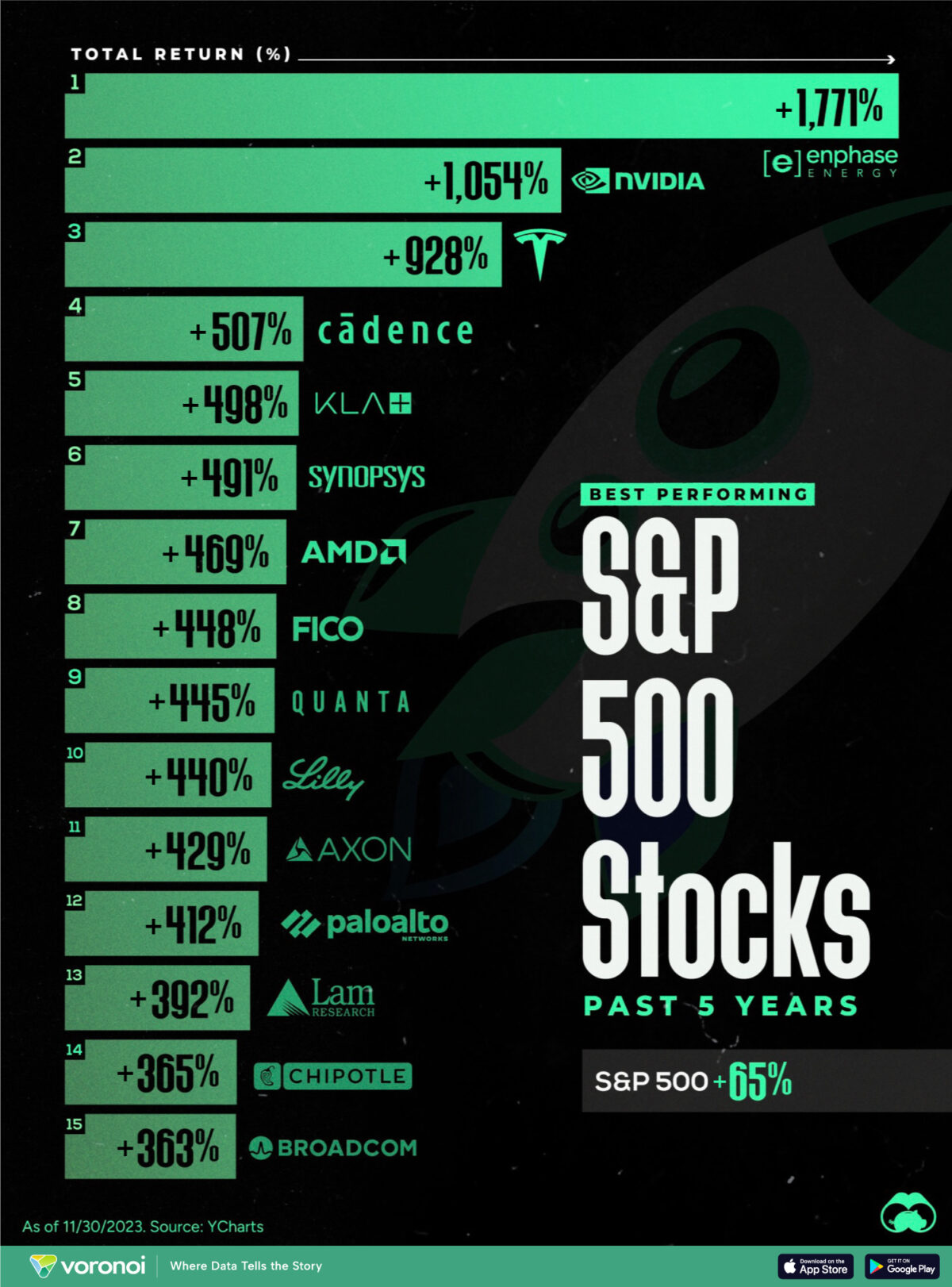
- Information Technology (IT): Often the largest sector, it includes software, hardware, semiconductors, and IT services. Giants like Apple, Microsoft, and NVIDIA dominate this space.
- Financials: Comprises banks, insurance companies, capital markets firms, and real estate services. JPMorgan Chase, Bank of America, and Visa are prominent examples.
- Health Care: Encompasses pharmaceutical companies, biotechnology, healthcare providers, and medical equipment manufacturers. UnitedHealth Group, Eli Lilly, and Johnson & Johnson are key players.
- Consumer Discretionary: Features companies that sell non-essential goods and services, such as retailers, automotive companies, and leisure services. Amazon and Tesla are significant components.
- Communication Services: Includes telecommunications, media & entertainment, and interactive media & services. Alphabet (Google), Meta Platforms (Facebook), and Verizon are found here.
- Industrials: Comprises machinery manufacturers, aerospace & defense, transportation, and construction firms. General Electric, Boeing, and Caterpillar represent this sector.
- Consumer Staples: Companies providing essential goods and services like food, beverages, tobacco, and household products. Procter & Gamble, Coca-Cola, and Walmart are mainstays.
- Energy: Covers oil, gas, and consumable fuels, along with energy equipment and services. ExxonMobil and Chevron are leading names.
- Utilities: Includes electric, gas, and water utilities. Companies like NextEra Energy and Duke Energy are typical constituents.
- Real Estate: Comprises real estate investment trusts (REITs) and real estate management & development companies.
- Materials: Includes companies involved in chemicals, construction materials, metals & mining, and paper & forest products. Dow Inc. and Freeport-McMoRan are examples.
The dominance of sectors like Information Technology and Communication Services over the past decade highlights the ongoing digital transformation of the economy, demonstrating how the S&P 500 evolves with the times.
Top Holdings and Market Capitalization Weighting
Due to its market-cap weighting, a handful of mega-cap companies often exert a disproportionate influence on the S&P 500’s performance. As of various periods, companies like Apple, Microsoft, Amazon, Alphabet (Google), NVIDIA, Meta Platforms, and Tesla frequently appear among the top 10 holdings. Their sheer size means that their individual stock movements can significantly sway the entire index.
For example, if the top five companies account for 20% of the index’s total market capitalization, a 1% rise in these five stocks would have the same impact on the S&P 500 as a 1% rise in the next 20-30 smaller companies combined. This concentration can lead to periods where the index’s performance is heavily driven by a few dominant players, often within a specific sector like technology.
Dynamics of Index Rebalancing
The S&P Dow Jones Indices Committee regularly rebalances the S&P 500, typically on a quarterly basis, though changes can occur more frequently if necessary. This rebalancing involves adding new companies, removing others (due to mergers, acquisitions, bankruptcy, or failing to meet criteria), and adjusting the weightings of existing constituents.
Rebalancing ensures that the index continues to accurately represent the market. When a company is added, funds tracking the S&P 500 (like ETFs and mutual funds) must buy shares of that company, often leading to a temporary spike in its stock price. Conversely, removed companies often see their stock prices decline as index funds sell their holdings. These events highlight the significant impact of index inclusion and exclusion on individual stock performance.
Why the S&P 500 Matters to Investors
Beyond its role as a market indicator, the S&P 500 holds immense importance for investors, offering a reliable benchmark and a convenient way to achieve broad market exposure.

A Barometer of the U.S. Economy
The S&P 500 is widely considered the best single gauge of large-cap U.S. equities and a leading indicator of the U.S. economy’s health. Its components represent the titans of American industry, technology, and commerce. When these companies are performing well—reporting strong earnings, expanding operations, and growing revenues—it signals a robust economy. Conversely, sustained declines in the S&P 500 often precede or coincide with economic downturns, reflecting corporate distress and reduced consumer confidence. Economists, policymakers, and financial analysts routinely reference the S&P 500’s movements to assess current conditions and forecast future trends.
Diversification Benefits for Portfolios
Investing in the S&P 500 offers inherent diversification. Instead of picking individual stocks, which carries significant company-specific risk, an investment in the S&P 500 provides exposure to 500 different companies across 11 distinct sectors. This broad diversification reduces the impact of any single company’s poor performance or failure on an investor’s overall portfolio. If one S&P 500 company performs poorly, its effect on the total index is mitigated by the performance of the other 499 companies. This built-in diversification is a cornerstone of prudent investment strategy, helping to manage risk without sacrificing potential returns from the overall market.
Benchmarking Performance
For professional money managers and individual investors alike, the S&P 500 serves as a critical benchmark. Fund managers often compare their actively managed portfolios against the S&P 500 to demonstrate their ability to “beat the market.” If a fund’s returns consistently lag the S&P 500, it raises questions about the value proposition of that active management. For individual investors, comparing their personal portfolio’s returns against the S&P 500 provides a simple, yet effective, way to assess how well their investments are performing relative to a widely accepted market standard. This benchmarking is essential for evaluating investment strategies and making informed adjustments.
Investing in the S&P 500: Accessible Strategies
Gaining exposure to the S&P 500’s performance is remarkably straightforward and accessible to nearly all investors, thanks to financial innovations that track the index.
Exchange-Traded Funds (ETFs)
ETFs are perhaps the most popular and efficient way for investors to invest in the S&P 500. These funds hold all the stocks in the S&P 500 in the same proportions as the index itself. Key advantages of S&P 500 ETFs include:
- Diversification: Instantaneous diversification across 500 companies.
- Low Cost: Typically feature very low expense ratios (management fees) because they are passively managed, simply aiming to replicate the index.
- Liquidity: Trade like individual stocks on exchanges throughout the day, offering flexibility for buying and selling.
- Accessibility: Available through virtually any brokerage account.
Popular S&P 500 ETFs include SPDR S&P 500 ETF Trust (SPY), iShares Core S&P 500 (IVV), and Vanguard S&P 500 ETF (VOO). These are often used as core holdings in diversified portfolios.
Index Mutual Funds
Similar to ETFs, S&P 500 index mutual funds aim to replicate the performance of the S&P 500 by holding its constituent stocks. The main differences lie in their trading structure and fee implications:
- Trading: Mutual funds are typically priced once a day, at the close of the market, and orders are executed at that price.
- Minimum Investments: Some mutual funds may have higher minimum initial investment requirements compared to ETFs, though many brokers now offer fractional shares and low minimums.
- Expense Ratios: While generally low for index funds, they can sometimes be slightly higher than comparable ETFs.
Vanguard 500 Index Fund Admiral Shares (VFIAX) is a well-known example of an S&P 500 index mutual fund, favored by investors who prefer the traditional mutual fund structure.
Individual Stock Selection Challenges
While theoretically one could buy all 500 individual stocks in the S&P 500, this approach is highly impractical for most investors. The capital required would be immense, the transaction costs prohibitive, and the effort involved in rebalancing and managing 500 separate positions overwhelming. For these reasons, ETFs and index mutual funds are the preferred vehicles for S&P 500 exposure, offering a cost-effective and low-maintenance solution that delivers the same diversified market returns.
Beyond the S&P 500: Broader Market Context
While the S&P 500 is a cornerstone of U.S. equity investing, understanding its place within the broader market landscape is crucial for a well-rounded financial perspective.
Comparing with Dow Jones Industrial Average and Nasdaq Composite
The S&P 500 is often compared to other major U.S. indices, each with its unique characteristics:
- Dow Jones Industrial Average (DJIA): The Dow is an index of 30 “blue-chip” U.S. companies. Unlike the S&P 500, it is price-weighted (meaning higher-priced stocks have a greater impact, regardless of market cap) and represents a much narrower slice of the market. While historically significant, many consider the S&P 500 a better overall market barometer due to its broader coverage and market-cap weighting.
- Nasdaq Composite: This index includes virtually all stocks listed on the Nasdaq stock exchange, with a heavy weighting towards technology and growth companies. While broader than the Dow, it is more concentrated in certain sectors compared to the S&P 500. It’s often used as a benchmark for tech-heavy portfolios.
The S&P 500 strikes a balance, offering broad market coverage across diverse sectors, making it a more comprehensive representation of the U.S. economy than either the DJIA or the Nasdaq Composite alone.
Global Indices and Diversification
While the S&P 500 provides excellent diversification within the U.S. market, it does not offer international diversification. For truly global exposure, investors should consider adding funds that track international indices, such as the MSCI EAFE (Europe, Australasia, and Far East) for developed markets or the MSCI Emerging Markets Index. Combining U.S. market exposure (via the S&P 500) with international market exposure helps to further diversify a portfolio, potentially reducing risk and capturing growth opportunities from around the world.
The Future of Index Investing
Index investing, spearheaded by the S&P 500, has revolutionized how individuals and institutions approach the market. Its low costs, broad diversification, and consistent market-matching returns have made it a go-to strategy for long-term wealth building. As financial markets continue to evolve, and technology makes investing even more accessible, indices like the S&P 500 will remain central to personal finance strategies, adapting their composition to reflect the ever-changing landscape of corporate power and economic innovation. For those looking to understand and participate in the growth of the American economy, knowing “what stocks are in the S&P 500” is a fundamental starting point.
aViewFromTheCave is a participant in the Amazon Services LLC Associates Program, an affiliate advertising program designed to provide a means for sites to earn advertising fees by advertising and linking to Amazon.com. Amazon, the Amazon logo, AmazonSupply, and the AmazonSupply logo are trademarks of Amazon.com, Inc. or its affiliates. As an Amazon Associate we earn affiliate commissions from qualifying purchases.