
The Nasdaq stock market has become synonymous with innovation, growth, and the future-forward companies shaping our world. For investors, entrepreneurs, and financial enthusiasts alike, understanding “what stocks are in Nasdaq” is crucial for comprehending the pulse of modern economies and identifying potential investment opportunities. More than just a list of companies, Nasdaq represents a vibrant ecosystem where technology, biotechnology, telecommunications, and other high-growth sectors converge, offering a unique window into the companies driving progress and commanding significant market capitalization.
This article delves into the intricate world of Nasdaq, exploring its structure, the types of companies it hosts, and why it holds such a pivotal position in the global financial landscape. We’ll unpack the distinctions between its key indices, examine the characteristics of its constituent stocks, and provide insights into how investors can engage with this dynamic market.
The Nasdaq Exchange: A Hub for Innovation and Growth
The Nasdaq Stock Market, often simply referred to as “Nasdaq,” stands as the second-largest stock exchange in the world by market capitalization, trailing only the New York Stock Exchange (NYSE). However, its influence extends far beyond its size, particularly in fostering the growth of technology companies and disruptive innovators. Unlike the NYSE’s traditional auction-based system, Nasdaq pioneered electronic trading, making it a truly modern exchange from its inception.
Origins and Evolution: From OTC to Global Powerhouse
Launched in 1971 by the National Association of Securities Dealers (NASD), Nasdaq began as the world’s first electronic stock market. Its initial purpose was to bring automation and transparency to the over-the-counter (OTC) market, which was then characterized by manual processes and fragmented price information. By providing a centralized, electronic quotation system, Nasdaq quickly revolutionized how securities were traded. This electronic foundation made it particularly attractive to younger, growth-oriented companies that might not have met the stringent listing requirements or preferred the traditional image of the NYSE.
Over the decades, Nasdaq evolved from a quotation system to a full-fledged exchange, offering sophisticated trading technologies, diverse listing options, and a global reach. It became the default home for many of the most iconic technology companies that emerged in the late 20th and early 21st centuries, solidifying its reputation as the “tech-heavy” exchange.
The Nasdaq Composite vs. The Nasdaq 100: Key Distinctions
When people refer to “stocks in Nasdaq,” they often implicitly think of one of two primary indices: the Nasdaq Composite or the Nasdaq 100. Understanding the difference between these is fundamental:
- Nasdaq Composite Index: This is the broadest measure of the Nasdaq stock market. It includes virtually all common equities listed on the Nasdaq Stock Market, encompassing over 3,000 stocks. Its sheer breadth makes it an excellent indicator of the overall health and performance of the Nasdaq exchange. While tech-heavy, it also includes companies from various sectors like finance, industrials, and healthcare, provided they meet Nasdaq’s listing requirements.
- Nasdaq 100 Index: This index is a more selective and concentrated measure. It comprises the 100 largest non-financial companies listed on the Nasdaq Stock Market. By excluding financial companies and focusing on the largest firms, the Nasdaq 100 becomes an even more pronounced barometer for large-cap growth stocks, particularly those in the technology sector. It’s often seen as a proxy for the performance of major U.S. and international tech giants.
Investors frequently track both, but the Nasdaq 100 often receives more attention due to its focus on influential, high-growth companies that tend to drive market sentiment.
Listing Requirements: Gatekeeping for Quality Companies
For a company to have its stocks listed on Nasdaq, it must meet specific criteria designed to ensure liquidity, financial health, and transparency. These requirements vary depending on whether the company seeks to list on the Nasdaq Global Select Market, Nasdaq Global Market, or Nasdaq Capital Market, with the Global Select having the most stringent standards. General requirements include:
- Financial Standards: Minimum shareholder equity, net income, or market value.
- Liquidity Standards: Minimum share price, public float (number of publicly traded shares), and number of shareholders.
- Corporate Governance Standards: Adherence to robust governance practices, including independent board members, audit committees, and shareholder voting rights.
These requirements ensure that companies listed on Nasdaq are reputable, financially stable (or demonstrate strong growth potential), and committed to investor protection, thereby contributing to the overall integrity and attractiveness of the market.
Diving Deeper into Nasdaq’s Constituent Stocks
While Nasdaq’s reputation is heavily anchored in technology, a closer look reveals a more nuanced and diverse landscape of companies. The composition of Nasdaq’s indices reflects not just current market leaders but also emerging trends across various high-growth sectors.
Technology Dominance: The Core of Nasdaq’s Identity
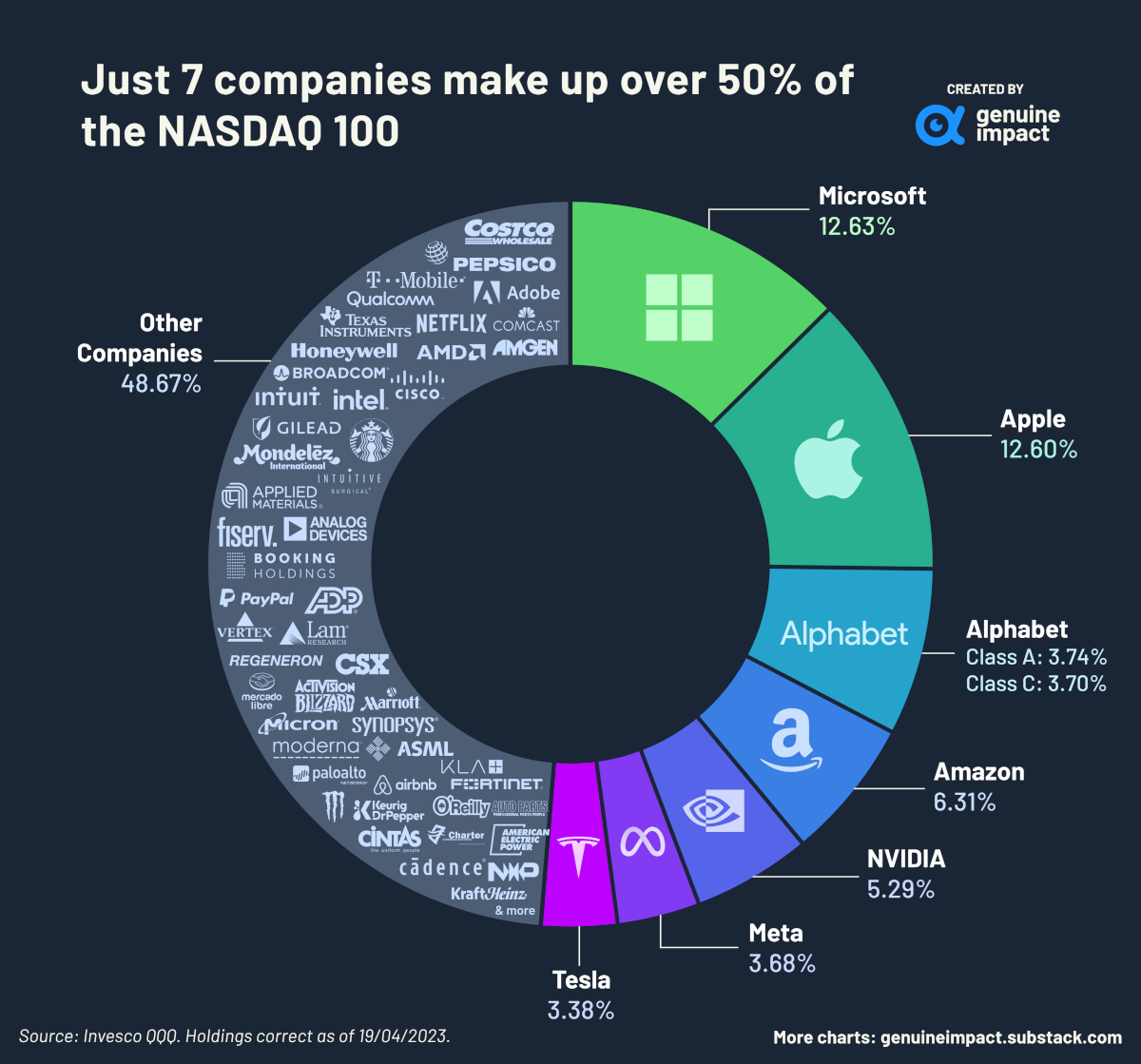
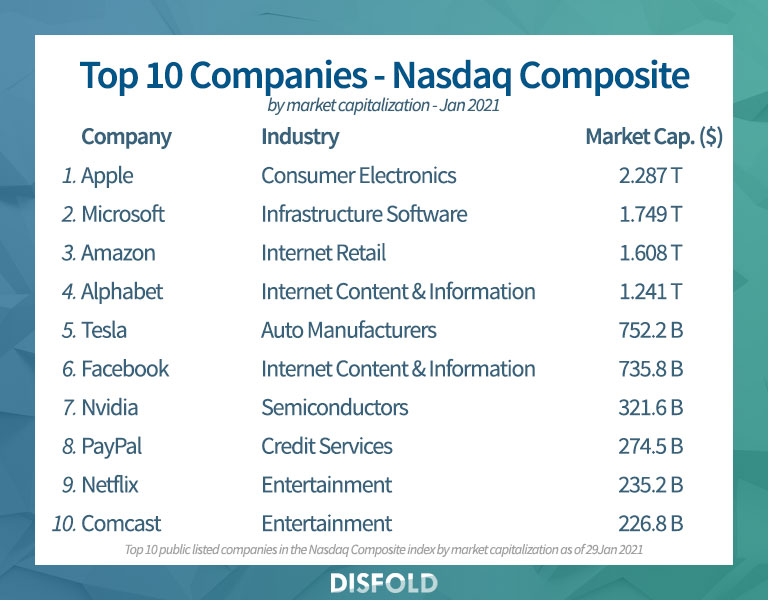
It’s impossible to discuss Nasdaq without acknowledging its profound connection to the technology sector. Companies like Apple, Microsoft, Amazon, Google (Alphabet), Meta Platforms (Facebook), and NVIDIA are not just listed on Nasdaq; they are its titans, representing a significant portion of its market capitalization and driving much of its performance. These companies span various sub-sectors within tech, including:
- Software and Cloud Computing: Microsoft, Adobe, Salesforce
- E-commerce and Digital Services: Amazon, Booking Holdings
- Semiconductors and Hardware: NVIDIA, Intel, Broadcom
- Social Media and Internet Services: Meta Platforms, Google
- Biotechnology and Healthcare Innovation: Amgen, Gilead Sciences
This concentration of tech giants means that movements in the tech sector often have a disproportionate impact on Nasdaq’s overall performance.
Beyond Tech: A Diversified Portfolio of Growth Sectors
While technology reigns supreme, Nasdaq is not exclusively a tech exchange. It hosts a significant number of companies from other innovative and growth-oriented sectors. Particularly within the broader Nasdaq Composite, one can find a rich mix:
- Biotechnology and Pharmaceuticals: Companies engaged in groundbreaking medical research and drug development, a sector often characterized by high risk and high reward.
- Telecommunications: Providers of essential communication infrastructure and services.
- Retail (Non-Tech): Innovative retail models and consumer brands that leverage technology but are not primarily tech companies themselves.
- Industrials: Companies applying advanced technologies to manufacturing and industrial processes.
- Healthcare Services: Beyond biotech, companies offering medical devices, diagnostics, and healthcare services.
This diversification, while often overshadowed by the tech behemoths, provides a broader spectrum of investment opportunities and reflects Nasdaq’s commitment to fostering growth across a wide array of forward-looking industries.
Megacap Influence: The Weight of Giants
A key characteristic of both the Nasdaq Composite and especially the Nasdaq 100 is the significant influence of megacap companies. A handful of the largest companies—often referred to as “FAANG” (or “Magnificent Seven” in recent contexts)—carry immense weight due to their massive market capitalizations. This cap-weighted approach means that the performance of Apple, Microsoft, Amazon, Alphabet, and NVIDIA can significantly sway the entire index.
While this can lead to periods of impressive gains when these giants are performing well, it also introduces a concentration risk. Should these few companies face significant headwinds, the impact on the overall index can be substantial, highlighting the importance of understanding this dynamic for investors.
Why Investors Look to Nasdaq: Opportunities and Considerations
For many investors, Nasdaq represents a gateway to future growth and innovation. Its unique composition and market characteristics offer distinct advantages, but also present specific considerations that must be carefully evaluated.
Growth Potential: Tapping into Future-Forward Industries
The primary allure of Nasdaq-listed stocks is their inherent growth potential. Companies that list on Nasdaq are often at the forefront of technological advancements, market disruption, and innovation. Investing in these companies allows individuals to potentially participate in the expansion of rapidly evolving industries like artificial intelligence, cloud computing, biotechnology, renewable energy, and electric vehicles. For investors with a long-term horizon and an appetite for growth, Nasdaq offers exposure to businesses poised to scale and redefine markets.
Volatility and Risk: Understanding the Growth Stock Landscape
While growth potential is high, it often comes hand-in-hand with increased volatility and risk. Growth stocks, particularly those in nascent or rapidly changing industries, can be more susceptible to market sentiment shifts, technological obsolescence, regulatory changes, and competitive pressures. Many Nasdaq companies reinvest heavily in research and development, which can mean lower or non-existent dividends, with returns primarily coming from capital appreciation.
Additionally, the concentration of megacap tech stocks means that the Nasdaq indices can be more sensitive to sector-specific downturns or shifts in investor confidence towards technology. Investors considering Nasdaq stocks should be prepared for potential price swings and integrate these investments as part of a well-diversified portfolio strategy.
Diversification Strategies: Balancing Your Portfolio
Given the growth and sector concentration of Nasdaq, diversification is paramount. Investors can manage risk by:
- Combining Nasdaq holdings with broader market indices: Integrating S&P 500 or total market funds can provide exposure to more traditional sectors and dividend-paying companies.
- Investing across different Nasdaq sectors: Rather than just focusing on large-cap tech, explore opportunities in biotech, software, or other emerging Nasdaq-listed industries.
- Utilizing ETFs: Nasdaq-tracking ETFs (like QQQ for the Nasdaq 100) offer immediate diversification across the index’s constituents without needing to pick individual stocks.
- Considering global markets: Diversifying geographically can further mitigate risks tied to a single market or economy.
A balanced approach helps harness the growth potential of Nasdaq while buffering against its inherent volatility.
How Stocks Get Added or Removed from Nasdaq Indices
The composition of Nasdaq’s indices is not static; it’s a dynamic reflection of market performance, corporate activity, and systematic rebalancing. Understanding how stocks enter and exit these prestigious lists is crucial for comprehending index behavior and investor strategies.
Index Rebalancing: Maintaining Relevance and Representation
Index providers, such as Nasdaq’s own index division, periodically review and rebalance their indices. For the Nasdaq 100, this typically occurs once a year in December, with quarterly reviews for minor adjustments. The goal of rebalancing is to ensure the index accurately reflects its stated methodology (e.g., the 100 largest non-financial companies) and remains representative of the market segment it aims to track. During rebalancing, companies that have grown sufficiently may be added, while those whose market capitalization has shrunk or no longer meet the criteria may be removed. This process ensures the index remains relevant and liquid.
Performance Metrics: The Criteria for Inclusion/Exclusion
Inclusion and exclusion decisions for indices like the Nasdaq 100 are primarily driven by objective, rule-based criteria. The most significant metric is market capitalization, which determines a company’s size and ranking. Other factors considered include:
- Trading Volume: Ensuring sufficient liquidity for efficient trading of the stock.
- Listing Venue: The stock must be listed on the Nasdaq Stock Market.
- Sector Classification: For the Nasdaq 100, the company must be non-financial.
- Adherence to Listing Requirements: Continuous compliance with Nasdaq’s general listing standards.
Companies that consistently underperform, drop significantly in market cap, or fail to meet continuous listing standards risk being removed, making way for new entrants that better embody the index’s purpose.
Corporate Actions: Mergers, Acquisitions, and Delistings
Beyond scheduled rebalancing, corporate actions can also trigger changes in index composition. If a Nasdaq-listed company is acquired by another entity (especially one not in the index or not on Nasdaq), it will be removed. Similarly, a merger between two index constituents might lead to one entity being removed or its weight adjusted. Companies that go bankrupt or are taken private are also delisted from the exchange and removed from any associated indices. These events can happen at any time and often lead to immediate adjustments within the indices.
Investing in Nasdaq-Listed Companies
For those looking to gain exposure to the innovative companies listed on Nasdaq, several avenues are available, each offering different levels of control, diversification, and risk.
Direct Stock Purchases: Picking Individual Winners
For investors who enjoy researching individual companies and believe they can identify future market leaders, buying individual Nasdaq-listed stocks is a direct approach. This allows for concentrated bets on specific companies within the tech, biotech, or other high-growth sectors. However, this strategy requires significant due diligence, continuous monitoring, and carries the highest level of idiosyncratic risk—the risk specific to a single company. Success depends heavily on the investor’s ability to pick winners and manage a diversified portfolio of individual stocks.
Exchange-Traded Funds (ETFs): Broad Market Exposure
ETFs are a popular and often recommended way for investors to gain diversified exposure to Nasdaq. There are ETFs that track the Nasdaq 100 (e.g., QQQ), the broader Nasdaq Composite, or even specific sectors within Nasdaq (e.g., technology ETFs, biotech ETFs). ETFs offer several advantages:
- Instant Diversification: A single ETF purchase provides exposure to dozens or hundreds of companies.
- Lower Risk: The risk is spread across multiple companies, reducing the impact of any single stock’s poor performance.
- Liquidity: ETFs trade like stocks on exchanges throughout the day.
- Lower Fees: Generally, ETFs have lower expense ratios compared to actively managed mutual funds.
For most investors, especially those who prefer a hands-off approach, Nasdaq-focused ETFs are an excellent way to participate in the growth of Nasdaq companies.
Mutual Funds: Actively Managed Portfolios
While less common specifically for direct Nasdaq tracking than ETFs, many actively managed mutual funds invest heavily in Nasdaq-listed growth stocks, particularly those with a focus on technology or aggressive growth strategies. These funds are managed by professional fund managers who make buy and sell decisions based on their research and market outlook. Advantages include professional expertise and diversification, but they typically come with higher expense ratios and may or may not outperform their benchmark indices after fees.
In conclusion, “what stocks are in Nasdaq” is a question that opens up a rich discussion about market dynamics, innovation, and investment strategy. From its origins as an electronic marketplace to its current status as a global hub for technology and growth companies, Nasdaq continues to be a crucial barometer for forward-looking industries. By understanding its indices, the characteristics of its companies, and the various ways to invest, individuals can strategically position themselves to participate in the ongoing evolution of the global economy.
aViewFromTheCave is a participant in the Amazon Services LLC Associates Program, an affiliate advertising program designed to provide a means for sites to earn advertising fees by advertising and linking to Amazon.com. Amazon, the Amazon logo, AmazonSupply, and the AmazonSupply logo are trademarks of Amazon.com, Inc. or its affiliates. As an Amazon Associate we earn affiliate commissions from qualifying purchases.