
In the relentless, dynamic world of global finance, the question “what stock markets are open right now?” is far more complex than it first appears. For investors, traders, and financial professionals, understanding the intricate dance of market hours across different time zones is not merely academic; it’s fundamental to strategic decision-making, risk management, and capitalizing on fleeting opportunities. The global stock market operates like a relay race, with exchanges opening and closing as the sun travels across the globe, creating a continuous, interconnected financial ecosystem.
This article delves into the nuances of market accessibility, providing a comprehensive guide to navigating the global trading landscape. We’ll explore the operational hours of major exchanges, discuss the tools available for real-time market status, and underline why this knowledge is indispensable for effective financial engagement.
The Global Tapestry of Stock Exchanges
The world’s economy is powered by an intricate network of stock exchanges, each with its own rhythm and operating schedule. These venues, where securities are bought and sold, are critical arteries for capital flow, reflecting corporate health, investor sentiment, and global economic trends. Understanding their individual operational frameworks is the first step in mastering the global financial calendar.
Understanding Market Hours and Time Zones
The primary challenge in answering “what stock markets are open right now” stems from the Earth’s rotation and the resulting global time zones. While a typical trading day for most major exchanges is approximately 6-8 hours, these hours are fixed to local time. This means that when the New York Stock Exchange (NYSE) is bustling, markets in Asia might be closed, and European markets might be preparing to open or winding down. For instance, a market open at 9:30 AM in New York is 2:30 PM in London and 10:30 PM in Tokyo, if all were on the same day. However, due to the International Date Line, Tokyo’s “tomorrow” might already be New York’s “today.” This temporal disjointedness creates a continuous, albeit fragmented, global trading day. Investors must account for daylight saving shifts as well, which can temporarily alter the time difference between regions. This constant shift requires diligent tracking to maintain an accurate understanding of which markets are currently active.
Major Financial Hubs Across Continents
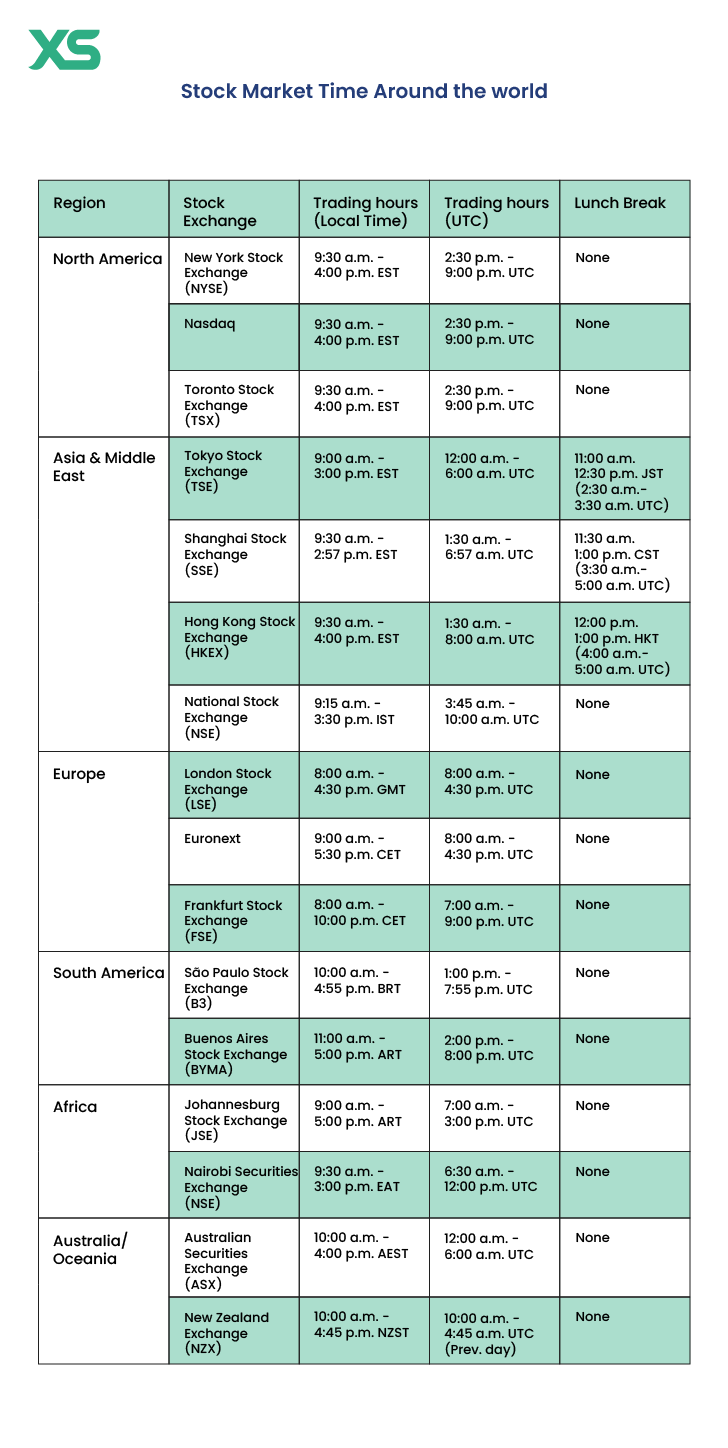
To illustrate this global relay, consider some of the world’s most influential stock exchanges and their standard trading hours (local time, subject to holidays and daylight saving):
-
North America:
-
New York Stock Exchange (NYSE) / NASDAQ (USA): 9:30 AM to 4:00 PM ET (Eastern Time). These are typically the first markets many Western investors think of, representing the largest equity markets by capitalization globally.
-
Toronto Stock Exchange (TSX) (Canada): 9:30 AM to 4:00 PM ET.
-
-
Europe:
-
London Stock Exchange (LSE) (UK): 8:00 AM to 4:30 PM GMT/BST. A crucial bridge between Asian and American trading sessions.
-
Euronext (various European cities like Paris, Amsterdam, Brussels): 9:00 AM to 5:30 PM CET/CEST. Represents a significant portion of the European market.
-
Deutsche Börse (Frankfurt Stock Exchange) (Germany): 9:00 AM to 5:30 PM CET/CEST.
-
-
Asia-Pacific:
-
Tokyo Stock Exchange (TSE) (Japan): 9:00 AM to 11:30 AM and 12:30 PM to 3:00 PM JST (Japan Standard Time). This split session is common in Asian markets.
-
Shanghai Stock Exchange (SSE) / Shenzhen Stock Exchange (SZSE) (China): 9:30 AM to 11:30 AM and 1:00 PM to 3:00 PM CST (China Standard Time).
-
Hong Kong Stock Exchange (HKEX) (Hong Kong): 9:30 AM to 12:00 PM and 1:00 PM to 4:00 PM HKT (Hong Kong Time).
-
Australian Securities Exchange (ASX) (Australia): 10:00 AM to 4:00 PM AET (Australian Eastern Time). Often among the first major markets to open each new trading day.
-
Bombay Stock Exchange (BSE) / National Stock Exchange (NSE) (India): 9:15 AM to 3:30 PM IST (Indian Standard Time).
-
This staggered schedule means that at virtually any point during the standard Monday-Friday work week, some major stock market somewhere in the world is active, offering opportunities or posing risks.
The Concept of Trading Sessions
Beyond the standard “open” and “closed” states, markets often feature different trading sessions that expand the effective window for activity:
-
Pre-Market Trading: Occurs before the regular market open. During this phase, typically a few hours before the official start, investors can place orders that are executed electronically. Volume is generally lower, and prices can be more volatile, but it allows for reaction to overnight news or earnings reports.
-
Regular Trading Session: This is the official operating window, characterized by the highest liquidity and trading volume. It’s when most retail and institutional transactions occur.
-
After-Hours Trading: Takes place after the regular market close. Similar to pre-market, it’s electronic, has lower liquidity, and is often used by institutional investors or those reacting to late-day news.
These extended hours, facilitated by electronic trading systems, allow markets to process information and transactions beyond the traditional bell-to-bell schedule, albeit with different characteristics regarding liquidity and price discovery.
Navigating Real-Time Market Information
Given the complexity of global market hours and sessions, real-time information is paramount. Investors need reliable sources to ascertain the current status of markets and to inform their trading decisions. The proliferation of digital platforms has made this easier than ever, but knowing where to look and what to interpret remains crucial.
Essential Tools for Live Market Data
A range of tools and platforms are indispensable for tracking market hours and real-time status:
-
Financial News Websites: Reputable financial news outlets (e.g., Bloomberg, Reuters, The Wall Street Journal, Financial Times, Yahoo Finance, Google Finance) typically provide global market summaries that indicate which major exchanges are currently open or closed, along with key indices.
-
Brokerage Platforms: Most online brokerage accounts offer dashboards that display the status of markets relevant to the securities they offer. These platforms often integrate real-time data feeds, showing market hours, pre-market/after-hours indicators, and trading holiday calendars.
-
Dedicated Data Terminals: For professional investors and institutions, platforms like Bloomberg Terminal and Refinitiv Eikon provide comprehensive, high-speed, real-time data across virtually all global exchanges, including detailed market calendars and status indicators.
-
Time Zone Converters and World Clock Apps: Simple yet effective, these tools help align local time with global market hours, ensuring investors don’t miss an opening or closing bell in a foreign market.
Utilizing a combination of these resources ensures that an investor is always aware of the live trading environment relevant to their portfolio.
Interpreting Market Status Indicators
Beyond a simple “open” or “closed,” market data providers often use specific indicators to convey more nuanced status:
-
“Open”: The regular trading session is active, with full liquidity and standard operations.
-
“Closed”: The regular trading session has ended. Trading may resume in pre-market or after-hours, but the primary session is finished.
-
“Pre-Market” / “After-Hours”: Indicates that extended-hours trading is active, often with a disclaimer about lower liquidity and higher volatility.
-
“Holiday”: The market is closed for a public or exchange-specific holiday. These closures can be national holidays (e.g., Christmas, New Year’s Day) or specific to the financial industry (e.g., Good Friday, Thanksgiving in the US).
-
“Suspended”: Trading in a specific security or the entire market has been temporarily halted, often due to extreme volatility, pending news, or technical issues. This is a critical indicator for risk management.
Understanding these indicators is vital for interpreting the current trading environment and for making informed decisions about placing or executing trades.
The Impact of Trading Holidays and Weekends
Weekends are universally observed non-trading periods for conventional stock markets. Saturdays and Sundays offer a reprieve from the daily market action, allowing investors to reassess strategies and catch up on news. However, the exact days for public holidays vary significantly by country and culture. For example, while Western markets are closed for Christmas and New Year’s Day, some Asian markets might operate on New Year’s Eve. Conversely, many Asian markets observe Lunar New Year, a period when most Western exchanges are fully operational.
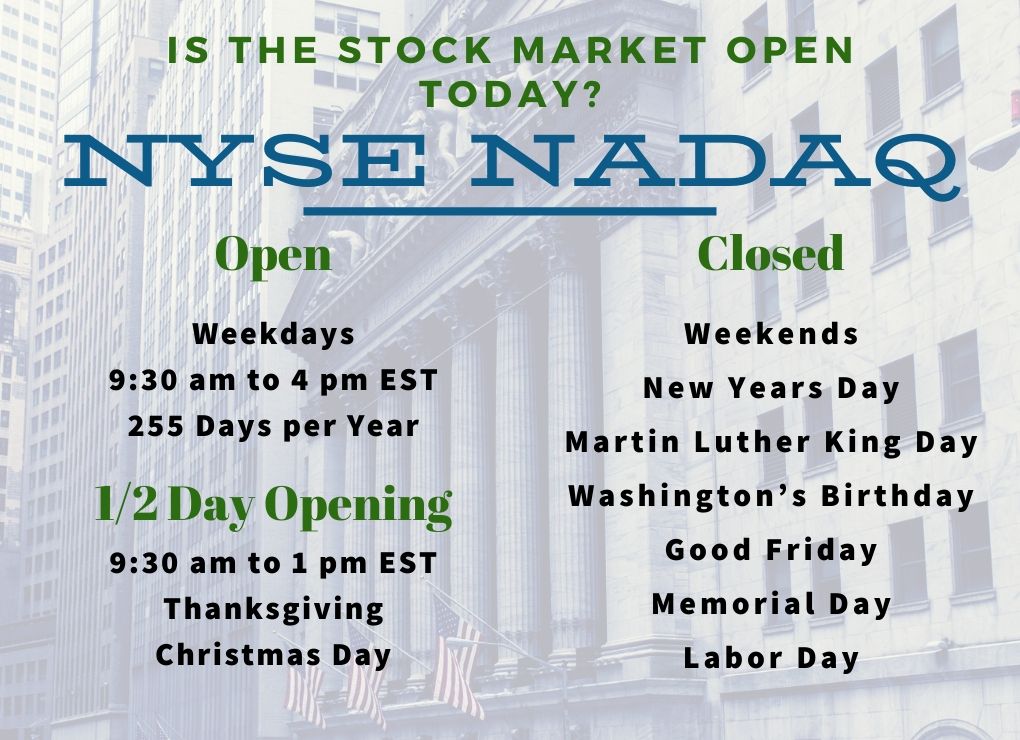
It’s crucial for global investors to keep a multi-country holiday calendar. An unexpected market closure can impact trade execution, settlement times, and overall portfolio liquidity. Missing a major market holiday could mean a planned trade sits unexecuted for an extra day or two, potentially missing a price target or exposing the investor to unforeseen overnight risks. Therefore, financial calendars provided by exchanges or reputable data providers are indispensable.
Why Knowing Market Hours Matters for Investors
The seemingly mundane task of tracking market hours transforms into a critical strategic imperative for investors. This knowledge directly impacts execution quality, risk exposure, and the ability to react to global events.
Strategic Trading and Execution
For day traders and swing traders, precise knowledge of market open and close times is foundational. These traders rely on immediate price action and liquidity. Trading during the regular session typically offers the tightest spreads and best execution prices due to high volume. Trying to execute large orders during illiquid pre-market or after-hours sessions can lead to significant price slippage. Furthermore, the first and last hours of the regular session are often characterized by heightened volatility and volume, presenting both opportunities and risks that savvy traders aim to leverage. Long-term investors, while less focused on minute-by-minute price movements, still need to understand market hours for placing limit orders, managing dividends, or reacting to major economic news released outside trading hours.
Managing Global Portfolios
Investors with diversified portfolios that include international stocks or ETFs face the added complexity of managing assets across multiple time zones. An investor holding shares in a Japanese company needs to be aware of the TSE’s trading hours to react to company news or macroeconomic data releases relevant to Japan. Similarly, news impacting European markets might require action during European trading hours, which could be overnight for an American investor. This necessitates either constant monitoring or the strategic use of advanced order types (like good-till-canceled orders) that remain active across sessions. Understanding the overlap of major trading sessions can also be strategic, as liquidity can surge when, for example, European and North American markets are simultaneously open.
Risk Management and Volatility
Market hours are directly linked to liquidity and volatility, two critical components of risk management. During regular market hours, high liquidity typically allows for efficient buying and selling, minimizing price impact for large orders. Outside these hours, particularly in pre-market and after-hours sessions, lower liquidity can lead to wider bid-ask spreads and more significant price swings on smaller volumes. This increased volatility can be a double-edged sword: it offers potential for quick gains but also exposes investors to greater downside risk. Major news events, such as geopolitical developments or unexpected economic data releases, occurring outside regular trading hours can trigger substantial price gaps at the next market open, fundamentally altering the value of investments before an investor even has a chance to react. Being aware of these periods helps investors decide whether to hold positions overnight or to adjust their exposure before the market closes.
Beyond Standard Hours: The Extended Trading Landscape
While traditional market hours define the core of trading activity, the financial world has evolved to offer trading opportunities beyond the conventional open and close bells. Electronic trading has fundamentally reshaped market access, pushing the boundaries of when and how assets can be exchanged.
Pre-Market and After-Hours Trading
As previously mentioned, pre-market and after-hours trading extend the window for equity transactions. These sessions are largely driven by Electronic Communication Networks (ECNs), which match buy and sell orders electronically without the need for a physical trading floor. While they offer flexibility and allow investors to react promptly to news, they come with caveats. Lower trading volumes mean that orders might take longer to fill, and prices can be less stable due to reduced liquidity. Spreads between bid and ask prices tend to be wider, potentially leading to less favorable execution prices. Consequently, these extended hours are often more suitable for experienced traders or those with urgent, small-volume trades, rather than for large institutional orders seeking optimal execution.
Electronic Communication Networks (ECNs) and Dark Pools
ECNs are pivotal to extended-hours trading and have also become significant in regular market hours, offering alternative venues for trade execution. They provide automated order matching and facilitate faster, often cheaper, transactions. Beyond ECNs, “dark pools” are private exchanges where institutional investors can trade large blocks of securities anonymously, without public price disclosure until the trade is executed. These venues are designed to minimize market impact for large orders. While they don’t directly answer “what markets are open right now” in the traditional sense, they represent a significant portion of trading activity that occurs continuously, often overlapping with and extending beyond conventional market hours, driven by institutional demand.
The 24/7 Nature of Certain Financial Instruments
In stark contrast to equity markets, some financial instruments operate on a near 24/7 basis, unconstrained by traditional exchange hours:
-
Forex (Foreign Exchange) Market: The world’s largest financial market, currency trading operates continuously from Monday morning in Asia (Sunday evening ET) until Friday evening in New York. This is because currency trading is decentralized and conducted over-the-counter (OTC) across a network of banks and financial institutions globally. As one major financial center closes, another opens, ensuring constant liquidity.
-
Cryptocurrencies: Digital assets like Bitcoin and Ethereum trade on various cryptocurrency exchanges around the clock, every day of the week, including weekends and holidays. Their decentralized nature means there’s no single “market open” or “market close.” This constant trading environment presents unique opportunities and challenges, including continuous exposure to volatility.
These instruments highlight a future trend where technological advancements could potentially lead to more continuous trading across other asset classes, further blurring the lines of traditional market hours.
Future Trends in Market Accessibility and Hours
The financial landscape is in a constant state of evolution, driven by technological innovation, investor demand, and regulatory considerations. The concept of “what stock markets are open right now” may itself evolve as the industry contemplates greater accessibility and potentially longer trading hours.
The Push for Extended Trading
There’s an ongoing debate within the financial industry about the feasibility and desirability of extending stock market trading hours, or even moving towards a 24/7 model for equities, similar to forex or crypto. Proponents argue that longer hours would allow investors to react more immediately to global news, reduce overnight risk gaps, and offer greater flexibility. It could also make US markets more accessible to investors in distant time zones. However, critics raise concerns about the impact on market professionals’ work-life balance, the potential for increased volatility and algorithmic trading dominance, and the economic implications for market infrastructure. While a full 24/7 stock market for equities is unlikely in the immediate future due to these complexities, further extensions of pre-market and after-hours sessions are a distinct possibility.
Technological Advancements and Global Integration
Technology is the primary enabler of extended trading. High-frequency trading (HFT), algorithmic trading, and advanced electronic platforms have already transformed how quickly and efficiently trades are executed. As these technologies become even more sophisticated, they will continue to facilitate seamless cross-border transactions and potentially longer trading periods. Artificial intelligence (AI) and machine learning are also poised to play a greater role in predicting market movements during off-hours, providing analytical tools that help investors navigate complex global schedules. The increasing integration of global economies through digital means will naturally pressure financial markets to become more globally synchronized and accessible.
The Evolving Role of Retail Investors
The rise of commission-free trading, user-friendly mobile trading apps, and the explosion of financial information online have democratized investing. Retail investors, now more empowered and engaged than ever, increasingly demand flexibility and access. This growing demographic, often trading outside traditional work hours, is a powerful force driving the demand for extended market accessibility. As brokerages compete for these clients, they are likely to continue pushing for mechanisms that allow for more flexible trading, even if full 24/7 stock markets remain a distant prospect. The ability to trade fractional shares, for instance, has lowered barriers to entry, further increasing participation and the demand for continuous engagement.
In conclusion, understanding “what stock markets are open right now” is a dynamic and essential aspect of modern investing. It’s a knowledge base that informs strategic timing, mitigates risk, and unlocks global opportunities. As technology continues to reshape financial markets, the traditional notion of market hours may slowly give way to an increasingly integrated and accessible global trading environment, requiring investors to stay ever-vigilant and adaptable.
aViewFromTheCave is a participant in the Amazon Services LLC Associates Program, an affiliate advertising program designed to provide a means for sites to earn advertising fees by advertising and linking to Amazon.com. Amazon, the Amazon logo, AmazonSupply, and the AmazonSupply logo are trademarks of Amazon.com, Inc. or its affiliates. As an Amazon Associate we earn affiliate commissions from qualifying purchases.