
The rhythmic ticking of clocks, the subtle shift in daylight, and the recurring debate – these are the hallmarks of Daylight Saving Time (DST) in the United States. For many, the twice-yearly adjustment is a familiar, if sometimes jarring, part of life. But the question of “what states have time change?” is more nuanced than a simple yes or no. While the concept of DST is federal, its implementation is largely left to individual states, leading to a patchwork of adoption and a continuous conversation about its relevance.
This article will delve into the intricacies of Daylight Saving Time in the US, exploring its history, the states that observe it, and the ongoing discussions surrounding its benefits and drawbacks. We’ll also touch upon how this seemingly simple time adjustment intersects with our increasingly digitized lives, impacting everything from our personal productivity to the brands we engage with and even our financial decisions.
The Historical Roots and Federal Framework of Daylight Saving Time
To understand which states observe DST, we must first grasp its origins and the federal legislation that governs it. The concept of “saving daylight” gained traction in the early 20th century, championed by figures like Benjamin Franklin, though his initial proposals were more satirical than serious. The primary argument for DST has always been to make better use of natural daylight, extending it into the evening hours during warmer months. This, proponents argued, could lead to reduced energy consumption, fewer traffic accidents, and more opportunities for outdoor activities.
In the United States, DST was first implemented nationally during World War I as a wartime measure to conserve fuel. However, it was not consistently observed until the Uniform Time Act of 1966. This federal law established a system where DST would begin on the last Sunday in April and end on the last Sunday in October. Crucially, the Act provided an opt-out clause: states could choose not to observe DST and remain on standard time year-round. This is the bedrock upon which the current system of state-by-state decisions is built.
The Uniform Time Act has been amended several times since its inception. Most notably, the Energy Policy Act of 2005 extended the DST period, starting it on the second Sunday in March and ending it on the first Sunday in November. This current framework is what most Americans experience today.
Federal Mandate vs. State Autonomy: The Patchwork of DST
The Uniform Time Act of 1966, as amended, grants states the authority to opt out of Daylight Saving Time. This is why the answer to “what states have time change?” is not universal. States that choose to observe DST will adjust their clocks twice a year according to the federal schedule. States that opt out will remain on standard time throughout the year.
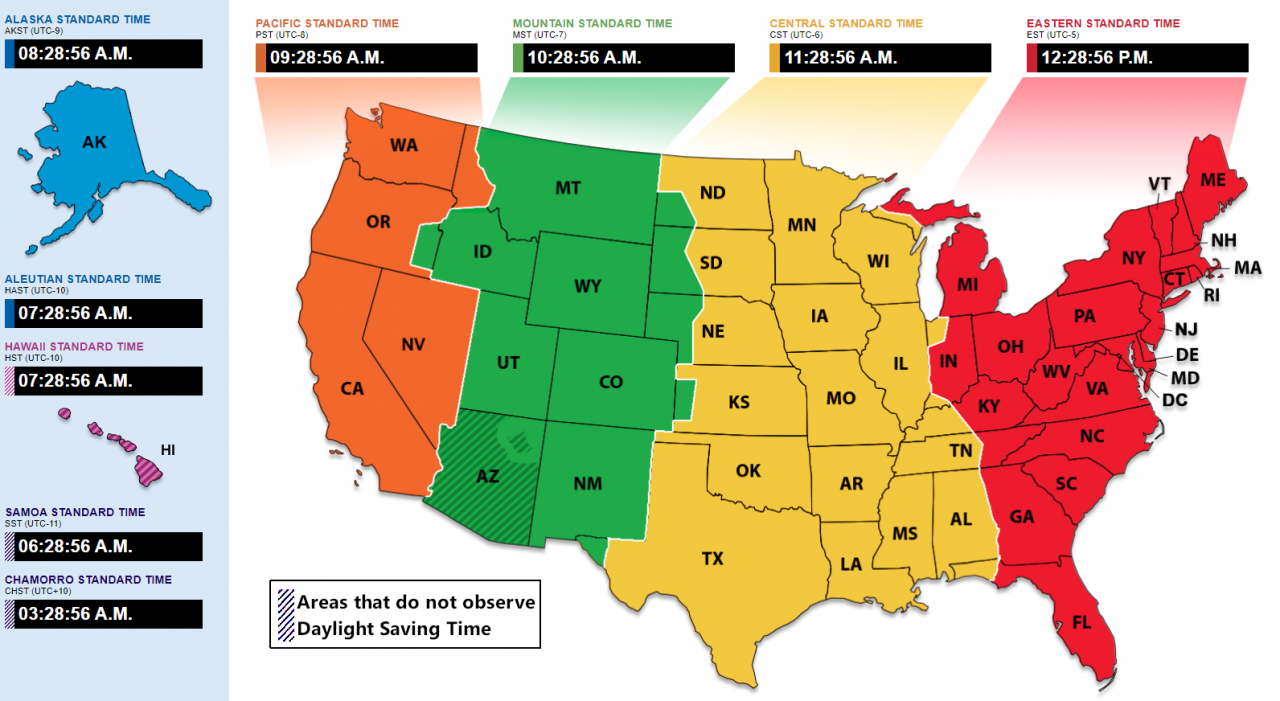
This distinction is critical. When a state decides to opt out, it means its entire population remains on what is considered “standard time.” For example, if Arizona (with the exception of the Navajo Nation) does not observe DST, it means its clocks are perpetually set to Mountain Standard Time (MST), even when other parts of the country are observing Mountain Daylight Time (MDT).
The States That Currently Observe Daylight Saving Time
As of the latest information, the vast majority of US states do observe Daylight Saving Time. This means that if you live in most of the contiguous United States, your clocks will be adjusted in March and November. The exact list of states observing DST can be a moving target as legislatures occasionally revisit the issue. However, the consistent pattern is that most states, driven by the federal framework and the historical inertia of DST, continue to participate.
It’s important to note that even within states that observe DST, there can be specific exceptions or local practices that deviate, though these are rare. For instance, the Navajo Nation within Arizona, while geographically within a state that opts out, chooses to observe DST. This highlights the localized nature of timekeeping decisions.
The States That Do Not Observe Daylight Saving Time
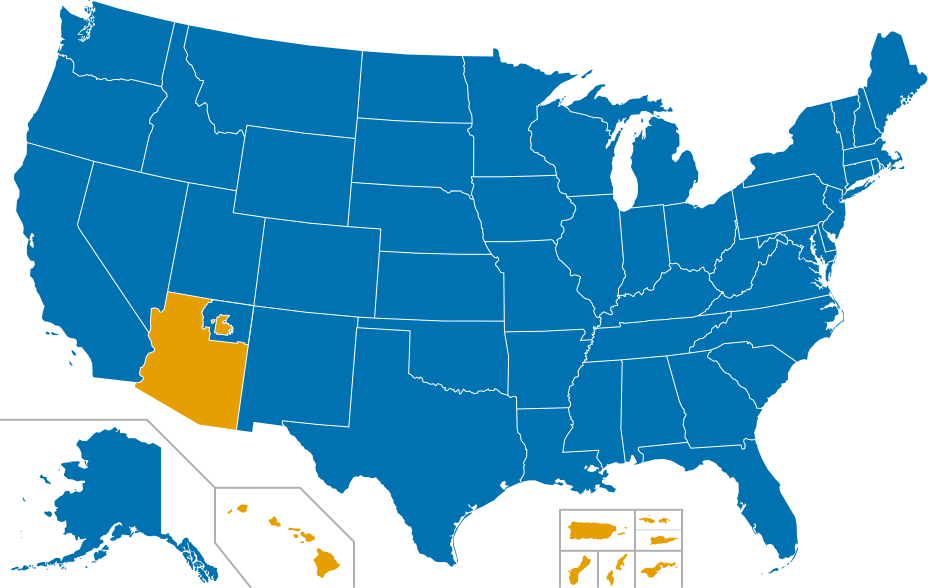
The primary states that do not observe Daylight Saving Time are Hawaii and Arizona.
-
Hawaii: This tropical state is unique in that it has never observed DST since it was enacted nationally. The reasoning behind this is multifaceted, but the primary driver is the state’s consistent daylight hours throughout the year due to its equatorial location. The argument for DST – extending daylight into the evenings – is less impactful when evenings are already relatively long and dark due to its latitude, and the potential for energy savings is minimal.
-
Arizona: Most of Arizona also opts out of DST. Similar to Hawaii, the rationale often cited is the potential for energy savings. During the hot summer months, an extra hour of daylight in the evening could theoretically lead to increased use of air conditioning, negating the intended energy conservation. There’s also the practical consideration of aligning with neighboring states that might observe DST. However, the Navajo Nation, located within Arizona, does observe DST. This creates a time difference within the state during the DST period.
Other US territories and possessions also generally do not observe DST. These include American Samoa, Guam, the Northern Mariana Islands, Puerto Rico, and the U.S. Virgin Islands. Their geographical locations and specific needs lead them to maintain standard time year-round.
The Modern Impact: DST in the Age of Technology, Brands, and Finance
While the debate over DST often centers on energy and sleep patterns, its effects ripple into other aspects of our modern lives, particularly in the realms of technology, branding, and finance.
H2: Daylight Saving Time and the Digital Landscape
The interconnectedness of our digital world means that time zone changes, whether due to DST or other factors, can have tangible impacts.
H3: Tech Trends and Synchronization Challenges
The core of many technological advancements relies on precise timing and synchronization. From global financial markets to distributed computing networks and even the seamless functioning of your smartphone’s calendar, accurate timekeeping is paramount.
- Software and App Functionality: Developers must account for DST when building applications. Scheduling features, event reminders, and any time-based calculations need to be robust enough to handle the biannual clock shifts. Errors in DST handling can lead to missed appointments, incorrect data logging, and general user frustration. For instance, a travel app that doesn’t correctly adjust for DST might show a flight arriving an hour off, leading to significant logistical problems for travelers.
- AI and Machine Learning: As AI tools become more sophisticated, their reliance on temporal data increases. Training models on historical data that includes DST shifts requires careful consideration to avoid introducing biases or inaccuracies. For example, an AI analyzing energy consumption patterns might misinterpret a sudden drop or increase in usage if it doesn’t account for the clock change.
- Digital Security: Time synchronization is crucial for security protocols, such as certificate validation and logging. If systems are not perfectly synchronized across different time zones and DST observances, it can create vulnerabilities. Imagine trying to verify a digital signature if the timestamps on the signing event and the verification request are out of sync due to an unhandled DST change.
- Productivity Tools: Many productivity apps and platforms are designed to help users manage their time and schedules. The effectiveness of these tools is directly tied to their ability to accurately reflect local time. A team collaborating across states with different DST observances needs their scheduling tools to be flawlessly accurate to avoid meeting conflicts.
H3: Gadgets and Wearable Technology
The proliferation of smartwatches, fitness trackers, and other connected gadgets means that more individuals are directly experiencing the DST shift through their personal devices. These devices, often synced to smartphones or cellular networks, typically handle DST adjustments automatically. However, the underlying algorithms and data sources they rely on must be kept up-to-date. For the consumer, a glitch in a wearable device’s DST setting could mean inaccurate sleep tracking or workout logs, impacting personal health insights.
H2: Branding and Consumer Perception in a Time-Shifted World
While DST might not be the first thing that comes to mind when discussing brand strategy, its subtle influence on daily routines and consumer behavior is undeniable.
H3: Marketing and Brand Campaigns
The longer daylight hours during DST can influence consumer behavior and marketing strategies.
- Retail and E-commerce: In spring and summer, with more daylight in the evenings, consumers might be more inclined to engage in outdoor activities, shop for leisure items, or extend their shopping hours. Brands that sell outdoor equipment, gardening supplies, or even evening wear might see a boost in sales during these periods. Marketing campaigns can be tailored to capitalize on these longer, lighter evenings.
- Event Marketing: Scheduling events, especially outdoor ones, is heavily influenced by daylight. Event planners and brands hosting festivals, concerts, or sporting events must carefully consider DST when setting their schedules to maximize attendance and attendee experience.
- Brand Reputation and Consumer Trust: While not directly tied to DST, a brand’s ability to provide reliable and predictable services is crucial for its reputation. Inconsistent timekeeping due to DST errors in a brand’s app or service can erode consumer trust. Conversely, a seamless technological experience that accounts for these shifts can enhance a brand’s image as modern and user-friendly.
H3: Personal Branding and Productivity
For individuals focused on personal branding and professional development, managing time effectively is key. DST disruptions, however minor, can impact perceived productivity.
- Maintaining Professional Image: Showing up to virtual meetings on time, responding to emails promptly, and managing project deadlines are all critical for professional success. DST changes can momentarily throw off these rhythms if not managed carefully, potentially impacting how one is perceived by colleagues and clients.
- Productivity Hacks and Time Management: Many personal branding strategies involve sharing productivity tips and time management techniques. The DST shift can serve as a recurring reminder of the importance of robust time management systems, both in the digital and analog worlds.
H2: Financial Implications: From Personal Finance to Business Operations
The impact of Daylight Saving Time extends into the financial realm, influencing everything from personal budgeting to the complex operations of global financial markets.
H3: Personal Finance and Online Income
While not a direct cause-and-effect, DST can indirectly influence personal financial decisions and the pursuit of online income.
- Energy Consumption and Bills: The original rationale for DST was energy savings. While the extent of this saving is debated, changes in daylight hours can influence household energy consumption. For example, more daylight in the evening might mean less reliance on artificial lighting, potentially leading to minor savings on electricity bills. Conversely, the extended daylight might encourage more outdoor activity, which could involve spending money on leisure or hobbies.
- Side Hustles and Online Work: For individuals earning income through online platforms or side hustles that operate on a global scale, understanding time zones and DST is crucial. Coordinating with clients or customers in different regions requires accurate timekeeping to ensure timely communication and service delivery. A freelance designer working with clients in the US and Europe, for instance, needs to be acutely aware of how DST in both continents affects their meeting schedules and project turnaround times.
H3: Business Finance and Global Markets
The financial world is a prime example of an industry where precise timing is everything.
- Stock Markets and Trading: Stock exchanges around the world operate on strict schedules. The transition to and from DST in major financial centers like New York, London, and Tokyo can impact trading hours and necessitate adjustments in trading algorithms and strategies. A slight miscalculation in DST can lead to significant financial losses.
- International Business Transactions: For companies engaged in international trade and finance, synchronizing operations across different time zones and DST observances is a constant challenge. Payment processing, transaction settlements, and international conference calls all depend on accurate and consistent timekeeping.
- Financial Tools and Software: Financial software and platforms used by businesses and individuals must be capable of handling DST adjustments seamlessly. This includes accounting software, budgeting tools, and investment platforms, all of which rely on accurate temporal data for reporting and analysis.
Conclusion: A Persistent Debate with Evolving Implications
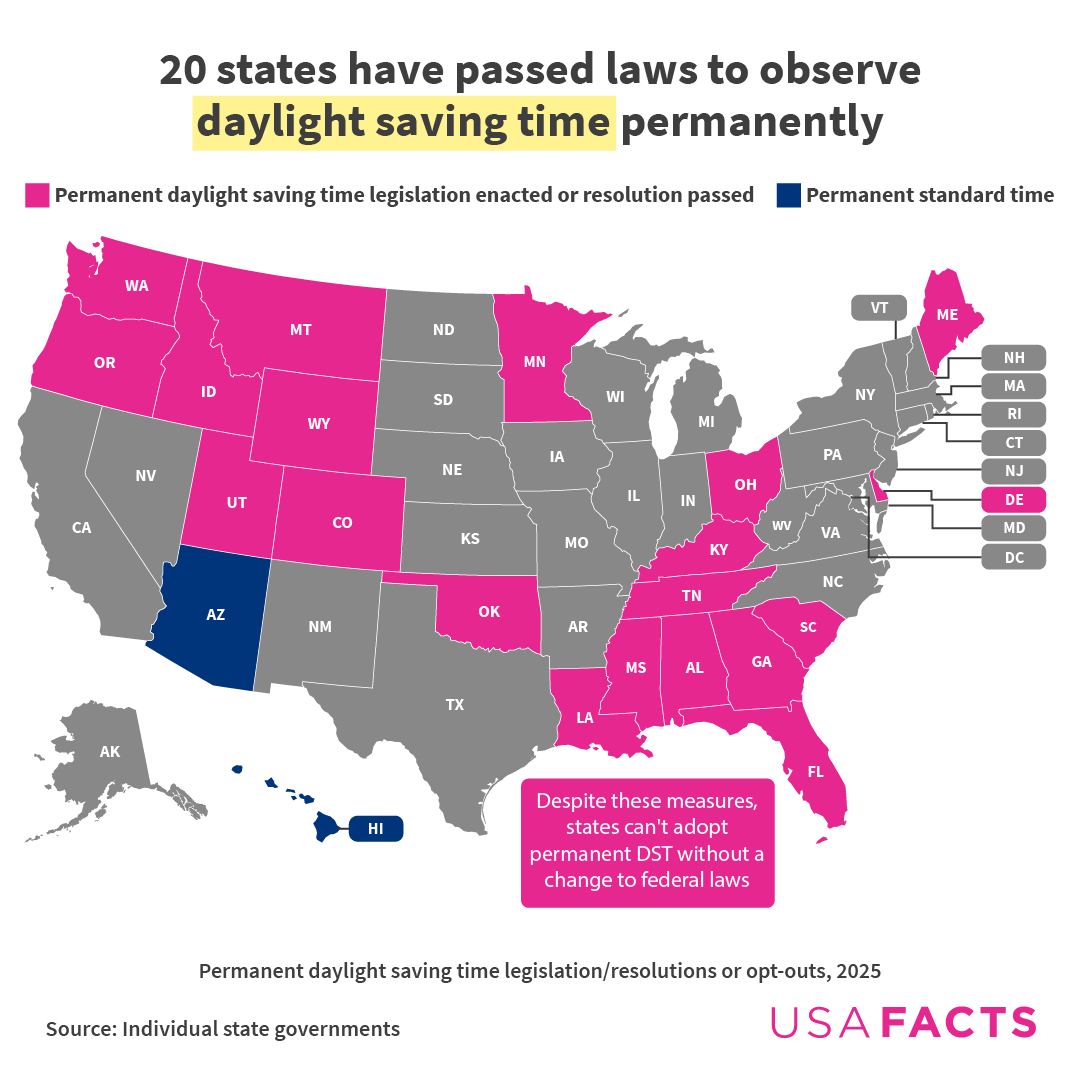
The question of “what states have time change” leads us down a path of understanding federal legislation, state autonomy, and the historical evolution of Daylight Saving Time. While the majority of US states continue to observe DST, a vocal minority, along with federal discussions about potentially standardizing time year-round, ensure that this debate is far from over.
As our lives become increasingly intertwined with technology, influenced by brand messaging, and managed through financial planning, the seemingly simple act of changing our clocks twice a year has surprisingly broad implications. The digital landscape relies on precise synchronization, brands leverage shifting consumer behaviors, and financial markets operate on exact timing. DST, therefore, remains a relevant, albeit often overlooked, factor in how we navigate our modern world. Whether it persists in its current form or evolves into a permanent standard time for all states, its impact, both overt and subtle, will continue to shape our daily routines and interactions.
aViewFromTheCave is a participant in the Amazon Services LLC Associates Program, an affiliate advertising program designed to provide a means for sites to earn advertising fees by advertising and linking to Amazon.com. Amazon, the Amazon logo, AmazonSupply, and the AmazonSupply logo are trademarks of Amazon.com, Inc. or its affiliates. As an Amazon Associate we earn affiliate commissions from qualifying purchases.