
Since the debut of the Apple Watch in 2015, the wearable has transformed from a niche gadget into the world’s most popular timepiece. While its internal processing power and health-tracking sensors often take center stage, the physical ergonomics of the device—specifically how it attaches to the wrist—are critical to the user experience. Choosing the correct watch band size is not merely an aesthetic choice; it is a technical requirement for sensor accuracy, comfort, and the security of the hardware itself.
As Apple has iterated on the industrial design of the watch, the case sizes have expanded, leading to a complex web of compatibility. Understanding the nuances between “Small” and “Large” case categories, the specific measurements of various series, and how to calibrate a fit for biometric performance is essential for any user looking to customize their device.

Understanding Apple Watch Case Sizes and Geometric Evolution
To determine which band size you need, you must first identify the generation and case size of your specific Apple Watch model. Apple has historically grouped its watches into two primary sizing tiers, though the exact millimeter measurements have shifted as screen-to-body ratios improved.
The Legacy Models: Series 0 through Series 3
The original design language of the Apple Watch featured two distinct case sizes: 38mm and 42mm. These measurements refer to the vertical height of the watch case. For these early models, bands were manufactured specifically to match these dimensions. If you are still utilizing a Series 3 or earlier, your band selection is restricted to these two legacy standards.
The Modern Redesign: Series 4 through Series 6 and SE
With the launch of the Series 4, Apple moved to a more rounded, edge-to-edge display architecture. This resulted in an increase in case size to 40mm and 44mm. Despite the increase in physical dimensions, Apple maintained a crucial design philosophy: backward compatibility. The 40mm case retained the same lug width and attachment mechanism as the 38mm, while the 44mm case matched the 42mm.
The Contemporary Standard: Series 7, 8, and 9
The most recent iterations of the standard Apple Watch have pushed the boundaries further, offering 41mm and 45mm cases. By shrinking the bezels even more, Apple increased the screen real estate without significantly bloating the footprint on the wrist. Technically, these models follow the established two-tier system: the 41mm belongs to the “Small” tier, and the 45mm belongs to the “Large” tier.
The Ultra Era: 49mm Form Factor
The introduction of the Apple Watch Ultra and Ultra 2 introduced a third, “Rugged” tier. With a 49mm titanium case, this device is significantly larger and deeper than its predecessors. While it introduces new band styles like the Ocean Band and Alpine Loop, its lug architecture is designed to be compatible with the “Large” tier (42mm/44mm/45mm) bands, though the visual integration may vary.
Technical Compatibility: How Band Sizes Cross-Pollinate
One of the most impressive feats of Apple’s engineering is the consistency of the band attachment slot. Because the locking mechanism has remained largely unchanged for nearly a decade, users can often transition bands from older devices to newer ones, provided they stay within the correct size cluster.
The Two-Tier System
The most important rule in Apple Watch band sizing is identifying which of the two connector widths your watch uses.
- The Small Connector: This category includes the 38mm, 40mm, and 41mm cases. If you have a band designed for a 38mm Series 0, it will slide perfectly into a 41mm Series 9.
- The Large Connector: This category encompasses the 42mm, 44mm, 45mm, and 49mm (Ultra) cases. A band designed for the 42mm Series 1 will technically lock into the 49mm Ultra, although the band may appear slightly narrower than the Ultra’s wide titanium frame.
Band Materials and Mechanical Tolerances
While the connectors are cross-compatible, the material of the band affects how it sits within the lug. Metal Link Bracelets and Milanese Loops are machined to precise tolerances. If you use a 42mm Link Bracelet on a 45mm watch, the fit will be secure, but you may notice a microscopic gap where the lug meets the curve of the case. Conversely, Sport Bands and Sport Loops, made of fluoroelastomer and woven nylon respectively, are more forgiving and provide a more seamless aesthetic transition across different case generations within the same tier.

How to Measure Your Wrist for the Perfect Technical Fit
A watch band that is too loose will result in poor data collection from the heart rate and blood oxygen sensors, as the green and red LEDs requires consistent contact with the skin to read capillary blood flow. A band that is too tight can cause discomfort and impede circulation during exercise.
The Solo Loop Sizing System
With the introduction of the Solo Loop and Braided Solo Loop, Apple moved away from traditional buckles to a single, continuous piece of stretchable material. Because these bands are not adjustable, Apple introduced a 1-through-12 sizing system.
- Size 1-9: Generally intended for the smaller case sizes (41mm).
- Size 4-12: Generally intended for the larger case sizes (45mm/49mm).
To find your size, you can use a printable tool provided by Apple or a simple measuring tape. You must measure the circumference of your wrist exactly where you intend to wear the watch. If you are between sizes, it is technically recommended to choose the smaller size, as the silicone and yarn materials are designed to stretch slightly over time.
Traditional Buckles and Adjustability
For bands like the Sport Band, Sport Loop, and Leather Link, sizing is usually categorized as S/M (Small/Medium) or M/L (Medium/Large).
- S/M: Typically fits wrists 130mm to 180mm.
- M/L: Typically fits wrists 150mm to 200mm.
For the Apple Watch Ultra’s specialized bands, sizing is often Small, Medium, or Large, specifically tailored to accommodate wearing the watch over a wetsuit or cold-weather gear.
Specialized Considerations for Different Activity Profiles
The “size” of a watch band isn’t just about the circumference; it’s about the volume and weight distribution relative to your activity.
Performance Athletics and Band Tension
During high-intensity interval training (HIIT) or running, the wrist can expand slightly due to increased blood flow. A band that fits perfectly at rest might become constricting. For these scenarios, the Sport Loop is the technically superior choice. Its hook-and-loop fastener allows for micro-adjustments that traditional pin-and-tuck bands cannot provide. Ensuring the band is “snug but breathable” is the technical benchmark for ensuring the photoplethysmography (PPG) sensors maintain a “locked” signal during vigorous movement.
Formal and Professional Aesthetics
In a professional setting, the “size” of the band also relates to the visual weight. A 49mm Ultra on a small wrist paired with a bulky Ocean Band may interfere with shirt cuffs and provide an unbalanced aesthetic. For those with smaller wrists using larger watch cases, choosing a thinner band like the Milanese Loop can reduce the perceived bulk of the device while maintaining the technical benefits of the larger display.
Troubleshooting Common Sizing and Attachment Issues
Even with the correct size, hardware issues can arise if the band is not maintained or attached correctly.
Lug Security and Safety
Every Apple Watch band features three locking “pills” on the connector. The middle pill is a spring-loaded metal or plastic piece that snaps into the center of the watch’s lug slot. When sliding a band in, you should hear an audible click. If the band slides through without locking, the size may be correct, but the spring mechanism is likely fouled with debris or skin oils. Cleaning the lug slot with a non-abrasive, lint-free cloth and a small amount of isopropyl alcohol can restore the mechanical lock.
Skin Sensitivities and Breathability Factors
If you find that the correct size band is causing skin irritation, the issue might not be the fit, but the “occlusion effect.” When a non-porous band (like the fluoroelastomer Sport Band) is worn too tightly, moisture is trapped against the skin. In this case, sizing up or switching to a breathable woven nylon Sport Loop can alleviate the issue. The technical goal is to maintain sensor contact while allowing enough airflow to prevent moisture buildup.
Third-Party Variations
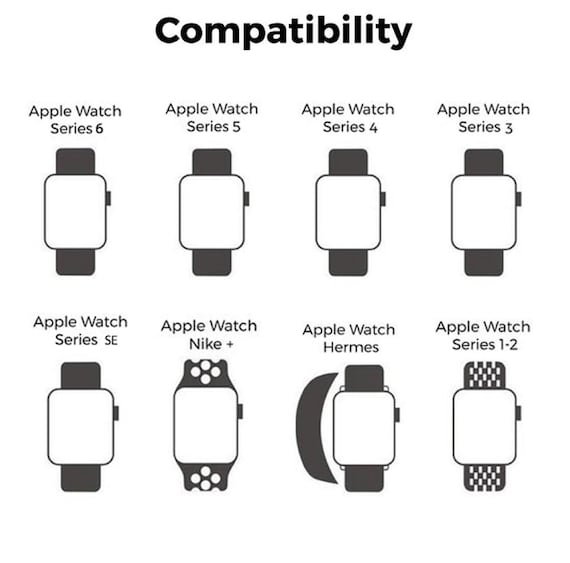
When venturing outside the first-party Apple ecosystem, “size” becomes more variable. Third-party manufacturers often use different grades of stainless steel or silicone, which may not match Apple’s exact lug dimensions. Always verify that a third-party band explicitly states compatibility with your specific millimeter size. A “one-size-fits-all” approach rarely works with the precision-milled slots of the Apple Watch, and using a poorly fitted band can lead to the lug getting stuck or, worse, the watch falling off the wrist.
By understanding the evolution of the Apple Watch case and the strict two-tier compatibility system, users can confidently select bands that enhance both the utility and the style of their wearable technology. Whether prioritizing the rugged demands of the Ultra or the sleek profile of the Series 9, the correct band size remains the foundation of the Apple Watch experience.
aViewFromTheCave is a participant in the Amazon Services LLC Associates Program, an affiliate advertising program designed to provide a means for sites to earn advertising fees by advertising and linking to Amazon.com. Amazon, the Amazon logo, AmazonSupply, and the AmazonSupply logo are trademarks of Amazon.com, Inc. or its affiliates. As an Amazon Associate we earn affiliate commissions from qualifying purchases.