
In the meticulous world of brand strategy and corporate identity, every detail contributes to the overarching narrative and perception of a company. From the chosen typeface to the color palette, and crucially, to the physical dimensions of print materials, each element plays a significant role in conveying a brand’s message, values, and professionalism. One such detail, often overlooked yet strategically important, is paper size. While A4 might be the ubiquitous standard, understanding and deliberately employing other ISO paper sizes, such as B6, can offer unique advantages in brand communication and design. Far more than just a measurement, the choice of a specific paper size is a deliberate design decision that influences everything from user experience to perceived value, deeply embedding itself within a brand’s tangible presence.
Decoding the B-Series: ISO 216 and its Relevance to Brand Design
The international standard for paper sizes, ISO 216, provides a globally recognized system that simplifies printing, design, and production processes. This system is founded on a single aspect ratio of the square root of 2 (approximately 1:1.414), meaning that when a sheet is folded or cut in half parallel to its shorter side, the resulting halves maintain the same aspect ratio as the original. This mathematical elegance underpins a system designed for efficiency and aesthetic consistency, proving invaluable for brands operating across diverse markets.
The ISO Standard Explained: A Global Language for Print
The ISO 216 standard comprises two primary series: the A series and the B series, along with the less common C series (for envelopes). The A series, starting with A0 (one square meter in area), is the most widely recognized, with A4 being the global standard for documents, letters, and magazines. Each subsequent size in the A series (A1, A2, A3, A4, A5, A6, etc.) is exactly half the size of the previous one. This systematic reduction ensures that designs can be scaled up or down without distortion, a critical advantage for maintaining brand consistency across various print formats. For brand managers and designers, adherence to ISO 216 means designs created for one size can often be adapted for another with minimal effort, saving time and ensuring visual integrity across all brand collateral.
Beyond A4: Introducing the B-Series for Enhanced Flexibility
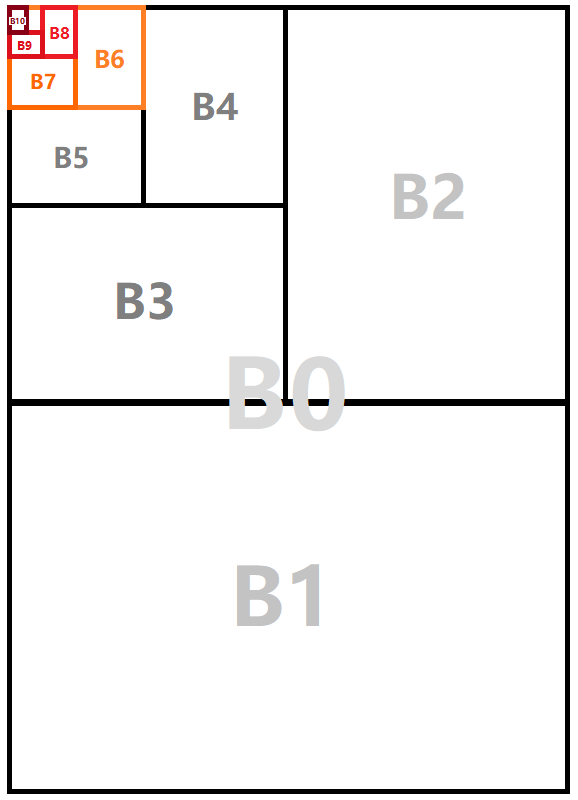
While the A series dominates general use, the B series offers an intermediate set of sizes that can be particularly advantageous for specific branding and marketing applications. Each B-series size is the geometric mean of two consecutive A-series sizes, making them slightly larger than their corresponding A-series counterparts. For example, B1 is between A0 and A1 in size, and B5 is between A4 and A5. This characteristic positions the B series as a versatile option when an A-series size feels either too small or too large for a particular design requirement, providing a nuanced scale that can dramatically impact the tactile experience and visual prominence of a brand’s materials. The B series is frequently utilized in books, posters, and certain types of stationery where a slightly more substantial feel or a different visual presence is desired compared to the A series.
The Exact Dimensions of B6 and its Proportionality
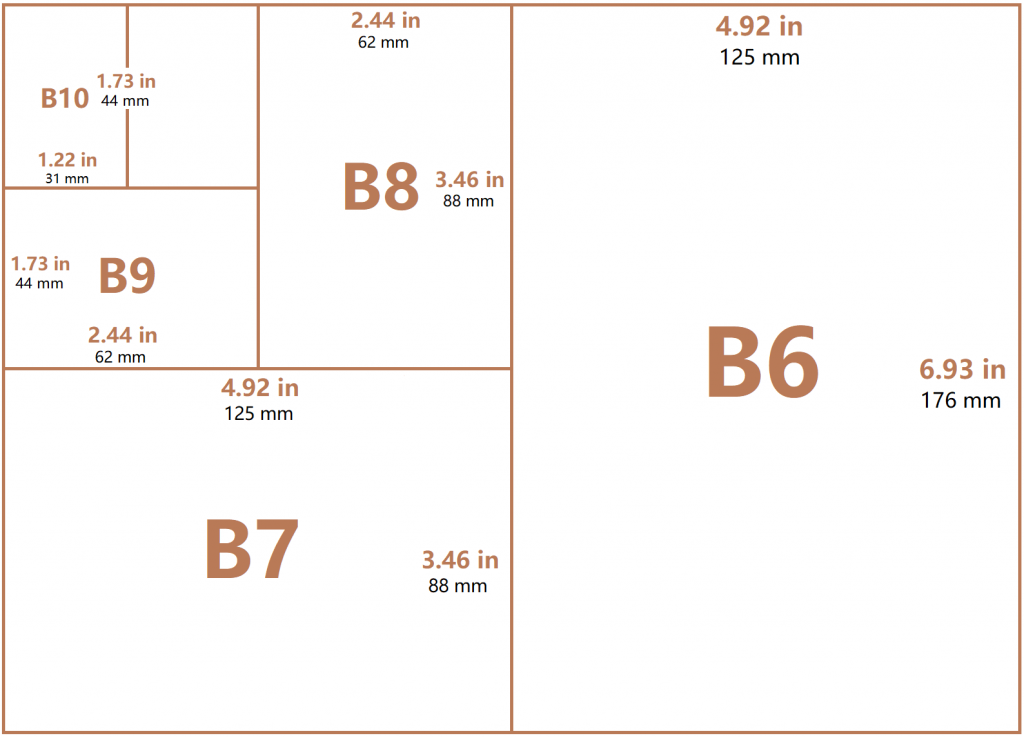
To answer the fundamental question: B6 paper measures 125 x 176 mm (millimeters), or approximately 4.9 x 6.9 inches.
Like all ISO 216 paper sizes, B6 maintains the 1:√2 aspect ratio. This means that if you cut a B5 sheet in half along its longest side, you get two B6 sheets. Conversely, two B6 sheets placed side-by-side along their longest edge will form a B5 sheet.
This precise dimension places B6 as a compact, yet substantial, format. It is larger than A6 (105 x 148 mm) but smaller than A5 (148 x 210 mm). This intermediate size makes B6 a compelling choice for brands looking to differentiate their print collateral, offering a distinctive feel that stands out from the more common A-series dimensions. Its unique proportions allow for creative layouts and a heightened sense of exclusivity or bespoke design, qualities highly valued in brand perception.
Why B6 Matters: Strategic Applications in Brand Communication
The deliberate choice of B6 for brand collateral transcends mere utility; it becomes a strategic design decision that can elevate the user’s interaction with a brand and reinforce its identity. Its particular dimensions lend themselves to a range of applications where compactness, substantiality, and a distinct visual footprint are desired.
Compact and Versatile: Ideal for Niche Marketing Materials
The compact yet not-too-small nature of B6 makes it ideal for marketing materials that need to be easily handled, carried, or filed, yet still offer ample space for compelling content. Consider direct mail pieces, small brochures, or informational inserts. A B6 format avoids the flimsiness sometimes associated with smaller A-series sizes like A7 or A8, while still being more manageable and less imposing than an A5 or A4. This versatility allows brands to create engaging, information-rich pieces that feel premium and considerate, without being cumbersome. For instance, a luxury brand might use B6 for product specifications or mini-catalogues that customers can easily slip into a purse or pocket.
Corporate Identity Elements: From Notepads to Promotional Inserts
In corporate identity, B6 offers a refined option for various stationery items. Think about bespoke notepads for internal use or as client gifts. A B6 notepad feels substantial and executive, differentiating it from generic smaller pads. Similarly, for promotional inserts within corporate presentations, press kits, or event welcome packs, a B6 card can effectively carry key messages, contact information, or QR codes without getting lost amidst larger documents. Its distinct size ensures it catches the eye, signalling that the information it contains is important and curated. This subtle difference contributes to a perception of meticulousness and attention to detail, core attributes for a strong brand image.
Event Collateral and Information Cards: Making an Impact
For events, conferences, or trade shows, B6 can be an excellent choice for attendee badges, agenda cards, or small directional maps. Its size is large enough to be easily readable and hold necessary information without being overly bulky for attendees to wear or carry. Imagine a beautifully designed B6 event schedule card, distinct in size and tactile quality, that attendees will be more likely to keep and reference. This approach subtly elevates the perceived professionalism and thoughtfulness of the event, directly reflecting on the brand hosting it. For businesses that frequently engage in experiential marketing, B6 offers a canvas for creating memorable, tangible touchpoints.

Packaging and Product Inserts: Enhancing the Unboxing Experience
The unboxing experience has become a critical component of brand loyalty, particularly in e-commerce and luxury retail. B6 can play a pivotal role here. For instance, a brand could include a B6 thank you note, a product care guide, or a small brand story booklet within its packaging. This size allows for rich design and textual content, providing a satisfying tactile interaction that complements the primary product. Unlike smaller inserts that can feel like an afterthought, a B6 insert feels intentional and valuable, reinforcing the brand’s commitment to quality and customer experience. It provides just enough real estate for detailed storytelling or intricate graphics, enriching the overall brand interaction.
Integrating B6 into Your Brand’s Design Ecosystem
The decision to incorporate B6, or any specific paper size, into a brand’s collateral should not be an isolated choice but rather an integral part of a holistic design strategy. It requires careful consideration of brand guidelines, design principles, and practical implications.
Consistency Across Media: Ensuring a Cohesive Brand Image
A strong brand is consistent across all touchpoints. When B6 is chosen for specific materials, its integration must align seamlessly with the broader brand identity system. This means ensuring that the typography, color palette, imagery, and overall layout principles established for the brand are faithfully applied to B6 formats. While the dimensions are different, the visual language must remain unmistakably “on brand.” Designers should think about how content scales and adapts to B6’s unique aspect ratio, maintaining readability and visual impact. This consistency is vital for building recognition and trust with the audience, reinforcing the brand’s professional and unified presence.
Design Considerations: Layouts, Typography, and Visual Hierarchy
Designing for B6 requires a nuanced approach. Its relatively compact size necessitates efficient use of space without sacrificing readability or aesthetic appeal. Designers must pay close attention to typography, ensuring font sizes are legible and line spacing is appropriate for the smaller canvas. Visual hierarchy becomes paramount: what information is most important, and how can it be presented clearly and attractively within the B6 boundaries? White space, though seemingly minimal, can be crucial for preventing visual clutter and giving elements room to breathe. The careful balance between content density and visual clarity on a B6 format speaks volumes about a brand’s design sophistication.
Cost-Effectiveness and Sustainability in Print Production
While a specific paper size might offer design advantages, practical considerations like print cost and sustainability are always relevant for brand managers. B6, being a standard ISO size, is generally efficient to print, especially when nested with other standard sizes on larger print sheets. Understanding how B6 fits into standard print sheet layouts (e.g., how many B6 items can fit on a large SRA3 or B2 sheet) can lead to significant cost savings and reduced paper waste. Brands committed to sustainability can leverage this efficiency, alongside choosing recycled or ethically sourced paper stocks, to align their print collateral with their environmental values. This dual consideration of aesthetic impact and responsible production enhances a brand’s reputation and contributes positively to its corporate social responsibility initiatives.
Beyond Dimensions: The Psychological Impact of Paper Choice
The tangible interaction with a brand’s print materials goes far beyond the visual; it involves a deeply sensory experience that shapes perceptions and fosters emotional connections. The size, along with other paper characteristics, contributes significantly to this psychological impact.
Tactile Experience: Weight, Texture, and Finish
The physical feel of a B6 item—its weight, texture, and finish—is an often-underestimated aspect of brand communication. A B6 card printed on heavy, matte cardstock will convey a sense of gravitas and luxury, perhaps for an exclusive invitation or a high-end product feature. Conversely, a B6 leaflet on a lighter, subtly textured paper might suggest an approachable, eco-conscious brand. The tactile experience directly influences how a brand is perceived: solid and reliable, elegant and refined, or innovative and modern. When designers choose B6, they are not just selecting a dimension, but a canvas upon which these sensory impressions can be expertly crafted.
Perception of Value: How Size and Stock Communicate Quality
The combination of B6’s distinctive size and the quality of the paper stock chosen can profoundly affect the perceived value of a brand’s offering. A unique size like B6, especially when paired with premium paper (e.g., a thick, textured, or coated stock), signals attention to detail and a commitment to quality. It suggests that the brand values its communication enough to invest in its physical presentation. In a world saturated with digital interfaces, a well-executed B6 print piece can offer a refreshing, tangible experience that stands out. It becomes a small, palpable representation of the brand’s identity and its dedication to excellence.
Differentiating Your Brand in a Crowded Market
Ultimately, the strategic use of B6 is about differentiation. In markets where competitors often default to the same standard A-series sizes, opting for B6 provides a subtle yet powerful way to break the mold. It tells customers that this brand thinks differently, pays attention to nuance, and isn’t afraid to step outside the conventional. This distinctive choice contributes to a memorable brand experience, helping the brand to occupy a unique space in the minds of its target audience. By leveraging the specific dimensions and proportional elegance of B6, brands can craft print collateral that is not only functional and aesthetically pleasing but also a true extension of their unique identity and strategic vision.
aViewFromTheCave is a participant in the Amazon Services LLC Associates Program, an affiliate advertising program designed to provide a means for sites to earn advertising fees by advertising and linking to Amazon.com. Amazon, the Amazon logo, AmazonSupply, and the AmazonSupply logo are trademarks of Amazon.com, Inc. or its affiliates. As an Amazon Associate we earn affiliate commissions from qualifying purchases.