
In the landscape of modern sleep technology, the split king mattress represents a significant leap forward in hardware configuration and personalized user experience. While a standard king mattress offers a vast surface area, it remains a monolithic structure, often lacking the granular control required by high-performance sleepers or those utilizing integrated smart home ecosystems. To understand what size a split king mattress is, one must look beyond simple tape-measure dimensions and examine the engineering specifications that allow this dual-unit system to function as a cohesive piece of sleep technology.
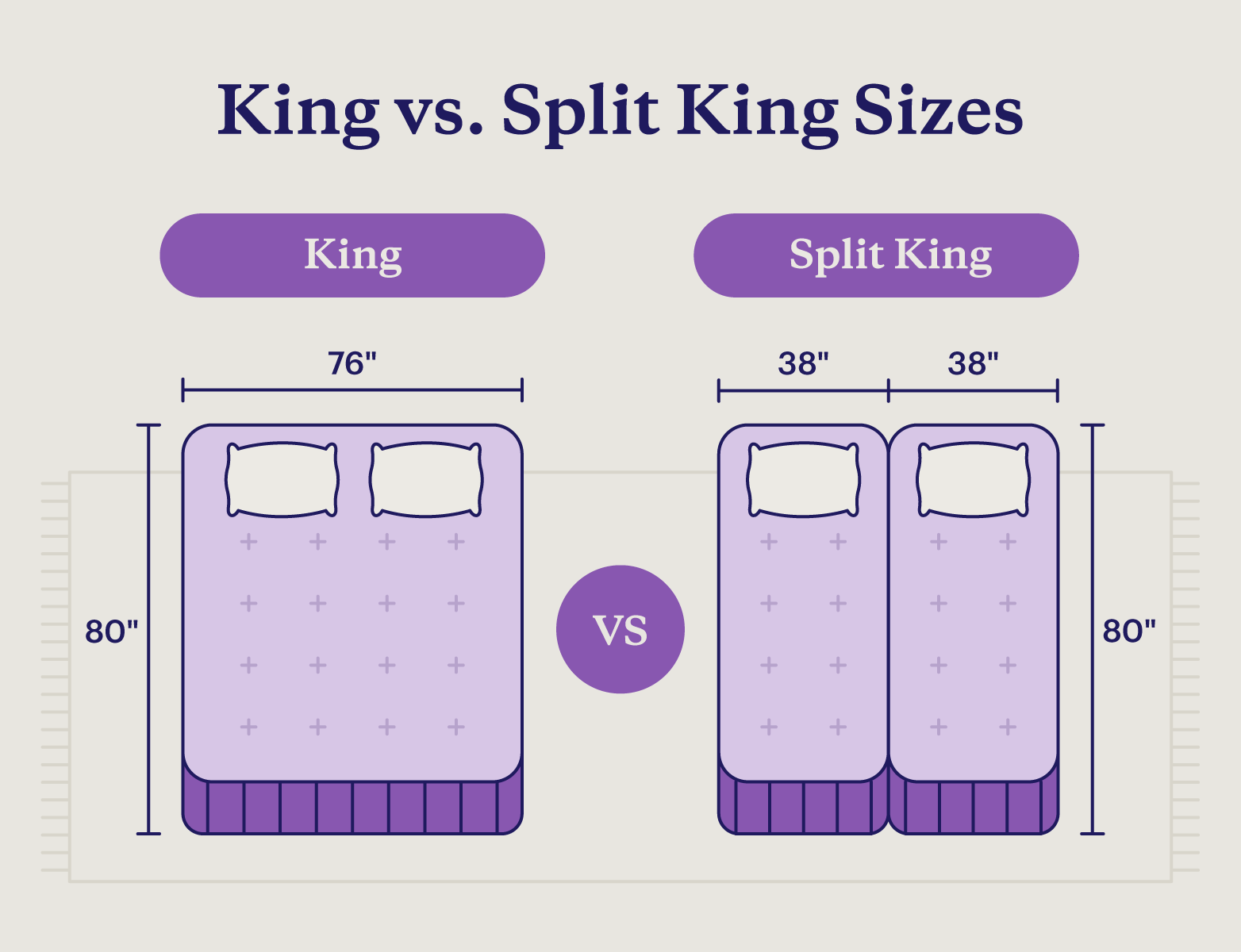
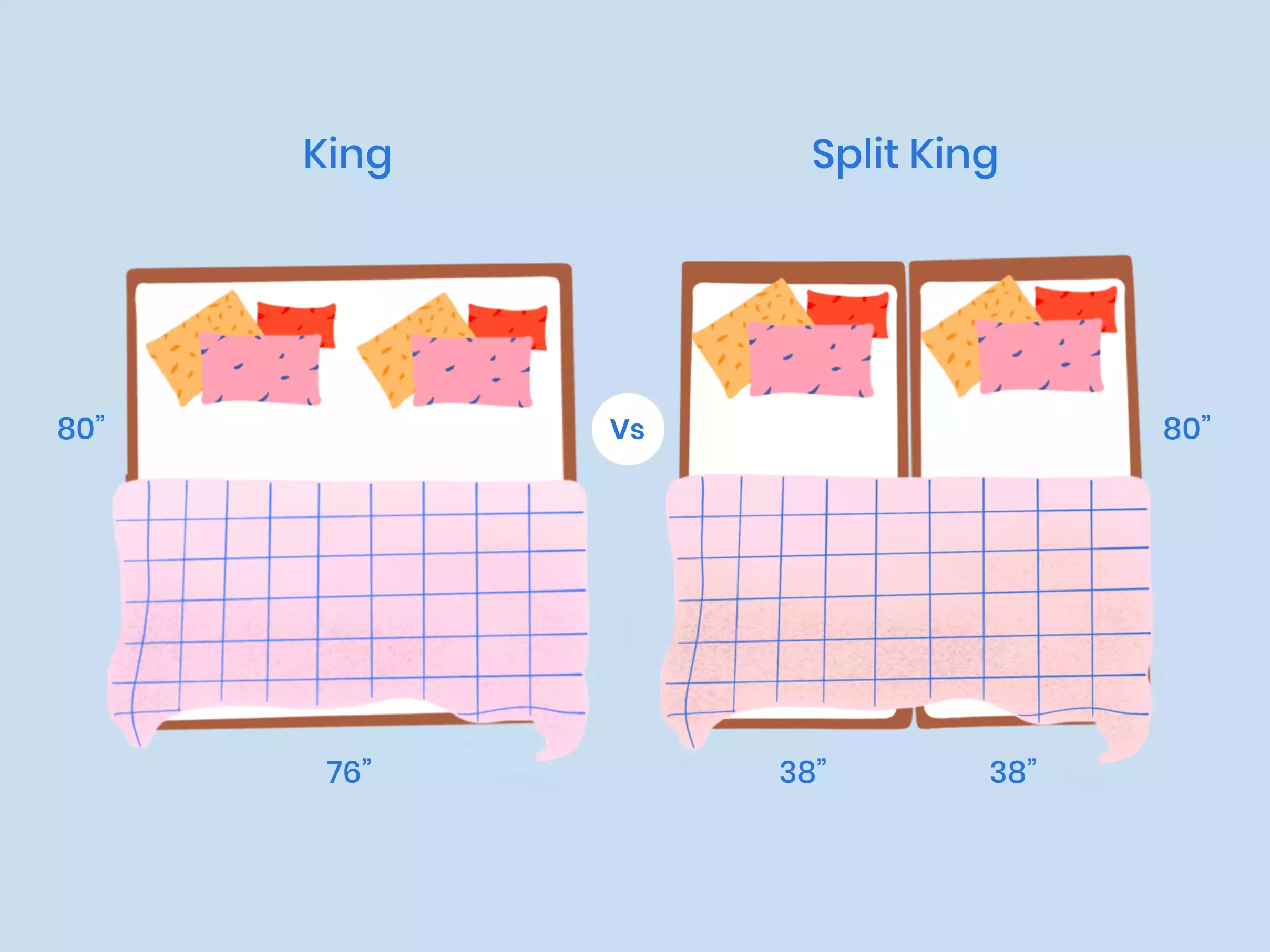
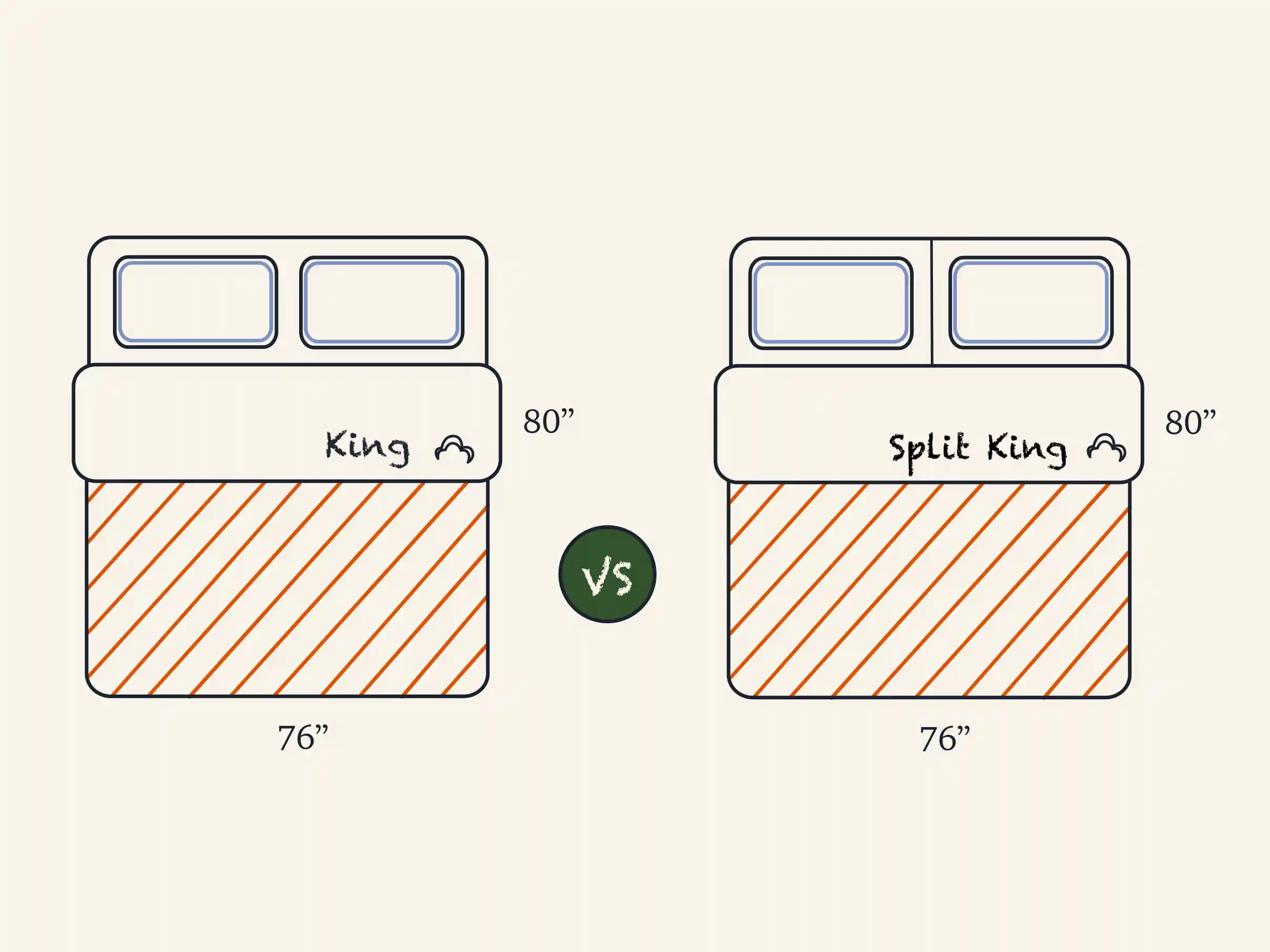
At its core, a split king mattress occupies the same footprint as a standard Eastern King. The dimensions are precisely 76 inches wide by 80 inches long. However, the technical distinction lies in its modularity. A split king is composed of two independent Twin XL units, each measuring 38 inches by 80 inches. This 1:2 configuration ratio is the foundation upon which advanced sleep tracking, independent articulation, and localized climate control are built.
Decoding the Physical Hardware: Dimensional Precision and Configuration
The engineering of a split king mattress is predicated on the concept of “independent zones.” In the tech world, we might compare this to a dual-monitor workstation; while they function together to provide a seamless visual field, each unit operates on its own circuit with its own specific settings.
The Dual-Twin XL Framework
The standard Twin XL (Extra Long) is the primary building block of the split king. Measuring 38″ x 80″, it provides five additional inches of length compared to a standard Twin, which is critical for accommodating the articulation hardware found in adjustable bases. When these two units are placed side-by-side within a single bed frame, they reach the 76″ x 80″ total width and length of a king-sized mattress.
This modularity is not merely for ease of transport; it is a prerequisite for independent motion. In a traditional king mattress, the mechanical energy of one user moving is transferred through the internal support structure—whether that be an innerspring coil system or a high-density foam core. In a split king tech stack, the physical separation acts as a “hardware firewall,” ensuring that kinetic energy and mechanical adjustments on one side do not interfere with the data or comfort of the other.
Tolerance and Clearance: Engineering the Perfect Fit
When deploying a split king system, technical tolerances are vital. Because the two mattresses operate independently—often tilting, elevating, or vibrating at different frequencies—there must be a specific degree of clearance between the units. High-end sleep tech manufacturers design these mattresses with reinforced sidewalls to prevent “trenching” or the physical gap that can occur when the two units move out of alignment.
Furthermore, the integration with a smart base requires that the mattress dimensions are calibrated to the millimeter. If the mattress is even slightly oversized, it can create friction against the bed frame or its twin counterpart, leading to mechanical strain on the lift actuators and potential software errors in the weight-sensing calibration.
The Smart Foundation: Actuators, Motors, and Mechanical Integration
The true power of the split king size is realized when paired with an adjustable power base. This is where the mattress evolves from a passive sleep surface into an active piece of hardware.
Linear Actuator Technology
The mechanics behind a split king’s movement rely on high-torque linear actuators. These motors are responsible for transitioning the mattress through various “presets,” such as Zero-Gravity mode, anti-snore elevation, or custom lounge positions. Because the mattress is split into two 38-inch units, each side utilizes its own dedicated set of actuators.
From a tech perspective, the efficiency of these motors is measured in decibels and lift capacity. Modern split king bases often feature “Whisper Quiet” technology, utilizing DC motors that provide smooth, incremental adjustments without disrupting the user’s sleep cycle. The split size allows for a higher power-to-weight ratio; since each motor only needs to move half the total surface area of a king bed, the responsiveness is significantly higher, and the latency between a remote command and physical movement is minimized.
Noise Reduction and Friction Management
One of the engineering challenges of the split king configuration is the friction generated between the two independent units. When one side is in a fully upright “reading” position and the other is in a flat “sleep” position, the vertical side surfaces rub against each other. Hardware designers solve this through specialized textile engineering—using low-friction side panels—and precisely timed motor movements that prevent the mattresses from “locking” together during complex transitions.
The Digital Interface: IoT Connectivity and App-Based Customization
A split king mattress is increasingly becoming a node in the broader Internet of Things (IoT). The 38″ x 80″ footprint of each side serves as a localized data collection zone, feeding information back to a central processor usually housed within the adjustable base or a cloud-linked control hub.
Bluetooth and Wi-Fi Synchronization
Modern split king systems utilize dual-channel communication protocols. Typically, a user interacts with the mattress via a proprietary mobile app or a dedicated wireless remote operating on a 2.4GHz frequency. Because there are two independent units, the software must be able to distinguish between “Side A” and “Side B” without signal cross-talk.
Advanced systems allow for “pairing” or “syncing” modes. If a couple wishes for the mattresses to move in unison, the software creates a master-slave relationship between the two bases. However, the default “split” mode allows for localized control, where the software manages independent profiles for firmness, elevation, and even under-bed LED lighting.
Over-the-Air (OTA) Updates for Sleep Firmware
Much like a smartphone or a smart vehicle, high-end split king mattresses now receive Over-the-Air (OTA) firmware updates. These updates can recalibrate the responsiveness of the motors, improve the accuracy of the snore-detection algorithms, or introduce new massage patterns. By maintaining two separate units, the system can perform diagnostic checks on each individual side, identifying if a specific actuator is underperforming or if a sensor requires recalibration.
Biometric Data and AI-Enhanced Sleep Tracking
The split king’s dimensions are perfectly suited for individualized biometric monitoring. In a standard king mattress, sensors often struggle to differentiate between the heart rates or respiratory patterns of two people sharing the same surface. The split configuration eliminates this “signal noise.”
Ballistocardiograph Sensors
Embedded within the layers of many smart split king mattresses are ballistocardiograph (BCG) sensors. These sensors detect the micro-movements of the body caused by the mechanical force of the heart pumping blood. Because each mattress unit is physically isolated, the sensors on the left side only pick up data from the left-side sleeper.
This data is then processed through AI algorithms to provide a daily “Sleep Score.” The metrics tracked include:
- Heart Rate Variability (HRV): A key indicator of recovery and stress levels.
- Respiratory Rate: Monitoring for deviations that might indicate illness or sleep apnea.
- Sleep Stages: Utilizing machine learning to identify periods of REM, light, and deep sleep based on movement and heart rate patterns.
Machine Learning Algorithms for Sleep Optimization
The integration of AI goes beyond simple tracking. Some split king systems feature “active response” technology. For instance, if the integrated microphone (localized to one side of the bed) detects the frequency and rhythm of snoring, the AI can trigger the base to elevate the head of that specific mattress by 10 to 12 degrees. This targeted adjustment happens automatically, utilizing the split size to solve the problem for one user without waking the other.
The Future of Residential Sleep Tech: Integration and Material Science
As we look toward the future of the split king mattress, the focus is shifting toward deeper integration into the smart home ecosystem and the application of advanced material science.
Smart Home Ecosystem Integration
The split king is no longer an island. Through platforms like IFTTT, Amazon Alexa, and Google Home, the mattress can become a trigger for automated home routines. When the sensors detect a user has entered the “awake” stage of sleep, the mattress can signal the smart thermostat to increase the room temperature or command the smart coffee maker to begin its brew cycle. The “split” nature of the bed allows these routines to be personalized; “User A” might trigger a different set of smart home actions than “User B,” despite being in the same room.
Next-Gen Material Science
The physical materials of the split king are also evolving. We are seeing the introduction of phase-change materials (PCM) and graphene-infused foams that offer superior thermal conductivity. In a split configuration, manufacturers can now offer different material “builds” for each side. One side of the split king might be engineered with high-density cooling gels for a “hot sleeper,” while the other side utilizes a more traditional memory foam with high pressure-relief properties.
In conclusion, the question of “what size is a split king mattress” is answered by its 76″ x 80″ footprint, but its value is defined by its modular, tech-forward architecture. By splitting the king into two distinct Twin XL hardware units, the industry has paved the way for a highly personalized, data-driven, and mechanically superior sleep experience. It is the ultimate expression of “personal computing” applied to the world of rest and recovery.
aViewFromTheCave is a participant in the Amazon Services LLC Associates Program, an affiliate advertising program designed to provide a means for sites to earn advertising fees by advertising and linking to Amazon.com. Amazon, the Amazon logo, AmazonSupply, and the AmazonSupply logo are trademarks of Amazon.com, Inc. or its affiliates. As an Amazon Associate we earn affiliate commissions from qualifying purchases.