
In the world of personal finance, we often discuss diversifying portfolios, optimizing tax brackets, and compounding interest. However, one of the most overlooked assets in any high-performing individual’s portfolio is their physical health. When you ask, “What size dumbbells should I get?” you are not merely asking a fitness question; you are making a capital allocation decision. You are choosing to invest in a piece of depreciating physical equipment to generate an appreciating intangible asset: your longevity, cognitive function, and metabolic health.
From a purely economic perspective, selecting the right weights is a balancing act between utility, cost-efficiency, and future scalability. Buying too light results in a “dead asset” that fails to provide a return on investment (ROI) after a few weeks. Buying too heavy introduces a liability in the form of injury risk or equipment that sits idle, collecting dust. To maximize the dividends of your home gym, you must approach the purchase of dumbbells with the same rigor you would apply to a stock pick or a real estate acquisition.
The Macroeconomics of Personal Fitness: Why Weight Selection is a Capital Allocation Decision
Every dollar spent on fitness equipment should be viewed through the lens of cost-benefit analysis. Unlike a gym membership, which is an operational expense (OpEx) that disappears the moment you stop paying, purchasing dumbbells is a capital expenditure (CapEx). You are acquiring a hard asset.
Understanding the “Price Per Pound” Metric
In the fitness equipment market, the most common way to measure value is the price-per-pound ratio. Standard cast-iron hex dumbbells typically trade at a lower price point, often ranging from $1.00 to $1.50 per pound. High-end urethane-coated weights or specialized brands may trade at $3.00 to $5.00 per pound.
When deciding what size to get, you must calculate the “Total Cost of Ownership.” For a beginner, a 20lb pair of dumbbells might cost $50. If you outgrow those weights in three months, your cost of utility is high. Conversely, investing in a weight range that offers longevity—or choosing adjustable technology—lowers the long-term cost per workout. To optimize your budget, look for the “sweet spot” where the weight is challenging enough to remain useful for at least six to twelve months of progressive overload.
Avoiding the Sunk Cost Fallacy in Fitness Equipment
Many consumers fall into the trap of purchasing “starter sets” consisting of 2lb, 3lb, and 5lb weights. From a financial standpoint, these are often poor investments for anyone without specific physical therapy needs. These weights are quickly outpaced by the body’s ability to adapt, leading to a “sunk cost” where the equipment no longer serves its primary function.
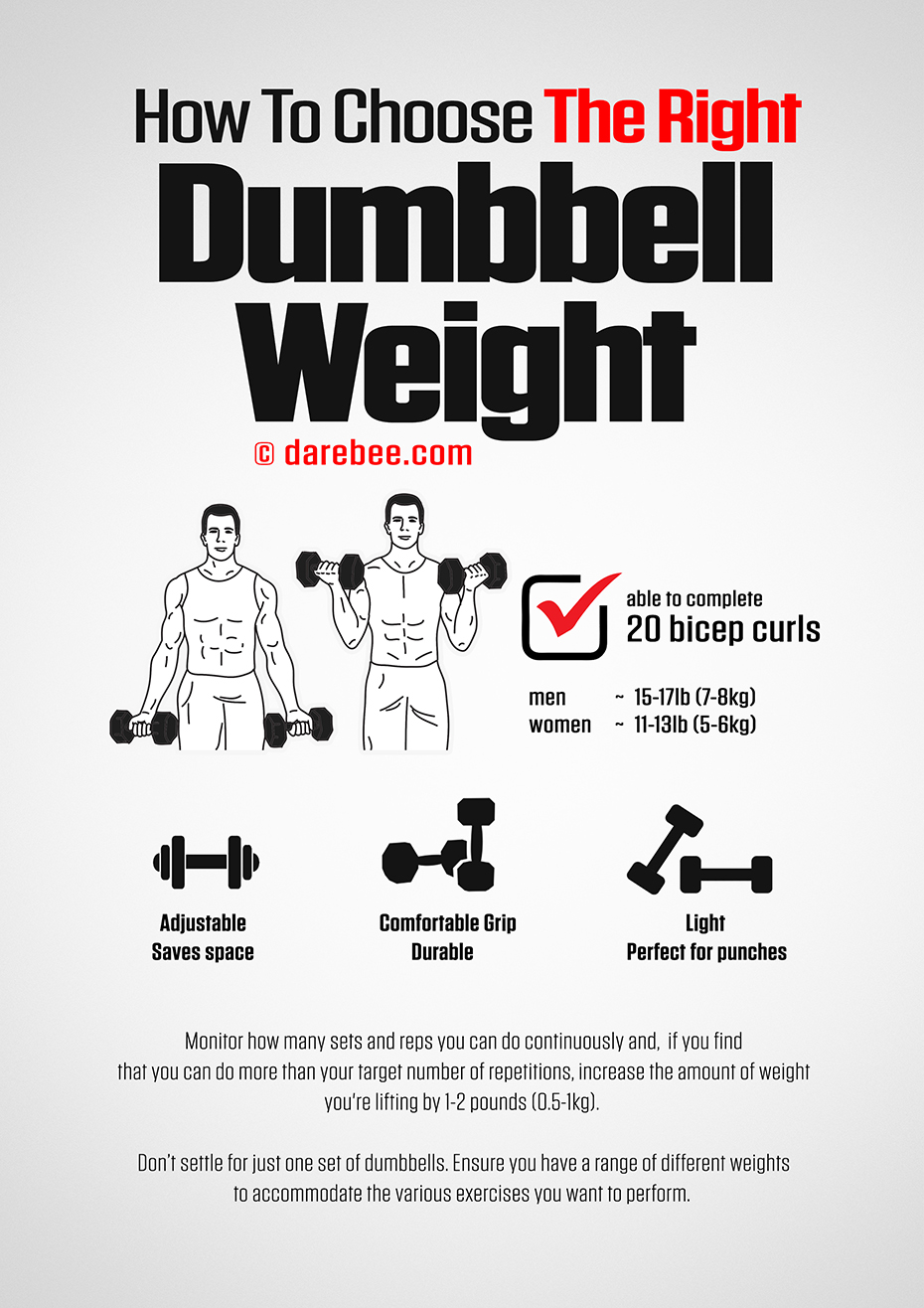
Instead of buying a broad range of light weights, a more sound financial strategy is to identify your “primary working weight”—the weight at which you can perform 10–12 repetitions of a foundational movement like an overhead press or a row. By focusing your capital on this specific tier, you ensure that every cent spent is contributing to muscle hypertrophy and caloric burn, rather than sitting in a storage rack.
Strategizing Your Initial Investment: Beginner Weight Brackets and ROI
If you are starting from a zero-base in your fitness portfolio, your initial purchase should be versatile. In finance, we value liquidity—the ability to move assets quickly. In fitness, we value versatility—the ability to use one asset for multiple “revenue streams” (exercises).
Fixed vs. Adjustable: A Comparative Cost-Benefit Analysis
The most significant decision in the “what size” debate is whether to buy fixed-weight dumbbells or an adjustable system.
- Fixed Dumbbells: These are the “blue-chip stocks” of the gym world. They are durable, have high resale value, and are virtually indestructible. However, to have a complete range (from 5lbs to 50lbs in 5lb increments), you would need to purchase ten pairs of dumbbells. At an average of $1.50 per pound, a full set costs approximately $825.
- Adjustable Dumbbells: These represent the “fintech” of fitness. Systems like PowerBlocks or Bowflex SelectTech allow you to change weights from 5lbs to 50lbs in a single pair of handles. While the upfront cost is higher—typically between $300 and $600—the cost-per-pound of utility is significantly lower. From a space-saving and financial perspective, adjustable dumbbells offer a better ROI for the home investor who lacks the square footage of a commercial facility.
Market Liquidity: Which Dumbbell Sizes Retain the Most Resale Value?

Should you decide to liquidate your home gym assets, not all weights are created equal. On the secondary market (platforms like Facebook Marketplace or eBay), mid-range weights—specifically the 25lb, 35lb, and 50lb increments—move the fastest. These are considered “liquid assets” in the fitness community because they are the standard benchmarks for many popular training programs. If you are unsure of what size to get, leaning toward these common increments ensures that you can recoup a significant portion of your initial investment if you decide to upgrade later.
Scaling Your Physical Assets: The Power of Progressive Overload as Compound Interest
In finance, compound interest is the eighth wonder of the world. In physiology, the equivalent is “progressive overload.” To see a return on your physical capital, you must consistently increase the stress placed on your muscles. This means that the “right size” dumbbell today will, by definition, be the “wrong size” in the future.
The Risk Management of Incremental Loading
A common mistake is jumping from a 20lb dumbbell to a 30lb dumbbell—a 50% increase in load. In any other investment scenario, a 50% increase in risk without a corresponding increase in infrastructure would be considered reckless. This is where “fractional plates” or small-increment adjustable weights come into play.
By choosing dumbbells that allow for 2.5lb or 5lb jumps, you manage the “downside risk” of injury. Smaller increments allow for a smoother “growth curve” in your strength, ensuring that you don’t plateau. When selecting your weights, consider the jump between sizes. If the gap is too large, you may find yourself stuck in a “stagnant asset” phase where you are too strong for your current weight but not strong enough to safely move to the next tier.
Hedging Against Gym Membership Inflation
As commercial gym memberships continue to rise in price—often accompanied by initiation fees and maintenance dues—the home gym serves as a hedge against inflation. A quality pair of 35lb dumbbells might cost $100 today. If that pair of dumbbells allows you to cancel a $60/month gym membership, the “break-even point” on that investment is less than two months. Beyond that point, every workout performed with those weights is essentially “profit” added back into your monthly cash flow.
Long-Term Financial Outcomes: The Dividend of a Well-Equipped Home Gym
The ultimate goal of choosing the right dumbbell size is to facilitate a lifetime of health. The financial implications of this are staggering. According to various actuarial studies, individuals who maintain a consistent strength training regimen have significantly lower lifetime healthcare costs.
Minimizing Health Liabilities Through Proper Equipment Selection
Sarcopenia (age-related muscle loss) is a massive financial liability. It leads to increased frailty, higher fall risks, and a greater dependence on expensive long-term care in later years. By investing in dumbbells that are heavy enough to stimulate bone density and muscle retention—typically weights that challenge you in the 8–12 rep range—you are effectively purchasing “long-term care insurance” at a fraction of the market rate.
When you ask “what size,” you should also consider your future self. For most men, a target goal for foundational movements (like the goblet squat or bench press) involves weights in the 40lb to 60lb range. For most women, the 20lb to 35lb range provides the necessary resistance to trigger these protective health dividends. Targeting these weights in your purchasing strategy ensures you are building a “defensive portfolio” against the biological effects of aging.

Final Audit: Building a Sustainable Fitness Portfolio
To conclude, selecting the right dumbbell size is an exercise in strategic asset management. You must evaluate your current strength levels (your “starting capital”), your goals (your “investment horizon”), and your budget (your “available liquidity”).
For most individuals, the most financially sound recommendation is to invest in a high-quality pair of adjustable dumbbells that range from 5 to 50 pounds. This single purchase covers the vast majority of exercises, occupies minimal “real estate” in your home, and offers the highest utility-to-cost ratio. If you prefer fixed weights, start with a “barbell approach”—invest in a light pair for accessory movements (10–15 lbs) and a heavier pair for compound movements (25–35 lbs), then “reinvest” in heavier increments as your strength gains provide the necessary “proof of concept.”
In the grand scheme of your financial life, the $300 to $500 you spend on dumbbells today is one of the few investments guaranteed to yield a return, provided you utilize the asset. Health is the ultimate currency, and the right set of weights is the tool that allows you to print more of it every single day.
aViewFromTheCave is a participant in the Amazon Services LLC Associates Program, an affiliate advertising program designed to provide a means for sites to earn advertising fees by advertising and linking to Amazon.com. Amazon, the Amazon logo, AmazonSupply, and the AmazonSupply logo are trademarks of Amazon.com, Inc. or its affiliates. As an Amazon Associate we earn affiliate commissions from qualifying purchases.