
When investing in a King-sized bed, the goal is ultimate comfort and a luxurious sleeping experience. A crucial, yet often overlooked, component of achieving this is the box spring. Beyond simply providing a base, the right-sized box spring is fundamental to the performance, durability, and overall health of your mattress. This guide delves into the intricacies of selecting the perfect box spring for your King mattress, ensuring you make an informed decision that translates to years of restful sleep and protected investment.
Understanding the King Mattress Dimensions
Before we can determine the appropriate box spring, a clear understanding of King mattress dimensions is paramount. This foundational knowledge prevents costly errors and ensures a harmonious fit between your mattress and its support system.
Standard King (Eastern King) Dimensions
The most common King-sized mattress is the Standard King, often referred to as the Eastern King. This is the widest option available, offering ample personal space for couples.
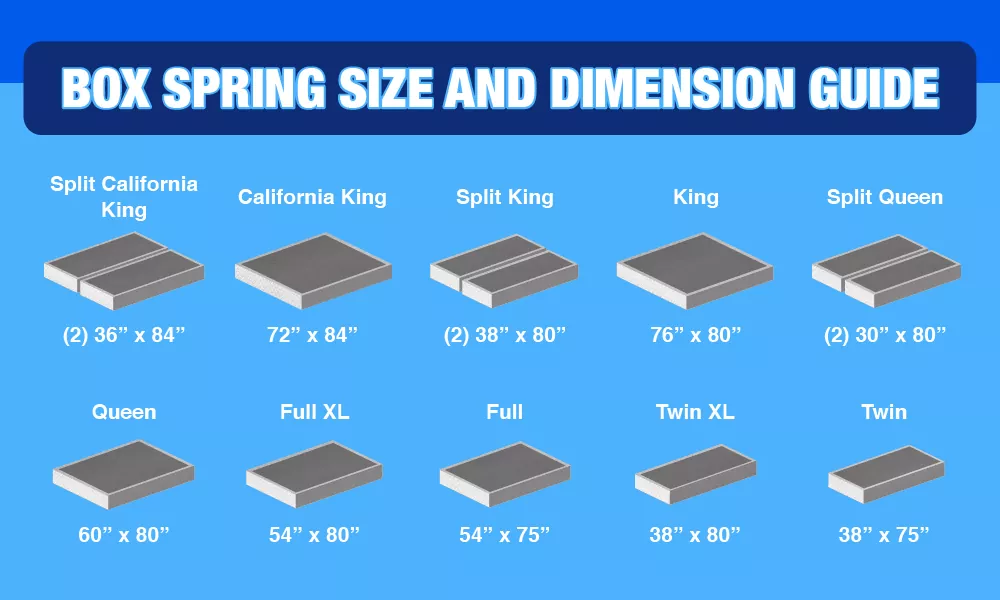
- Dimensions: Typically, a Standard King mattress measures 76 inches wide by 80 inches long.
- Surface Area: This translates to a generous 6,080 square inches of sleeping surface, providing unparalleled room to stretch out.
- Variations: While these are standard, slight variations can occur between manufacturers. It’s always advisable to confirm the exact dimensions with your specific mattress brand. However, for the purpose of box spring selection, the 76″ x 80″ specification is the universally accepted benchmark.
California King Dimensions
Distinct from the Standard King, the California King offers a different configuration, prioritizing length over width. This option is ideal for taller individuals or those who prefer a longer sleeping surface.
- Dimensions: A California King mattress typically measures 72 inches wide by 84 inches long.
- Surface Area: While narrower by 4 inches than its Eastern counterpart, it is 4 inches longer, offering 5,760 square inches of sleeping space.
- Key Distinction: The crucial difference lies in the length. If you have a California King mattress, you absolutely must pair it with a California King box spring. Attempting to use a Standard King box spring with a California King mattress will result in significant overhang, instability, and potential damage to both components.
Why Mattress Dimensions Matter for Your Box Spring
The dimensions of your mattress directly dictate the required dimensions of your box spring. A box spring is designed to perfectly match the footprint of the mattress it supports.
- Perfect Fit: A correctly sized box spring will align precisely with the edges of your King mattress. This ensures even weight distribution across the entire mattress surface, which is vital for preventing premature sagging and maintaining consistent support.
- Preventing Overhang: An oversized box spring will lead to the mattress overhanging the edges. This creates an uneven sleeping surface, can cause the mattress edges to fray or collapse, and makes it uncomfortable to sit on the edge of the bed.
- Preventing Gaps: Conversely, an undersized box spring will leave gaps around the mattress. This not only looks aesthetically unappealing but also means that a portion of your mattress is not receiving adequate support, leading to localized pressure points and accelerated wear.
- Structural Integrity: The box spring is a critical part of your bed’s structural integrity. When a mattress sits squarely on a correctly sized box spring, the weight is distributed evenly to the bed frame, preventing undue stress on any single point.
Types of Box Springs and Their Compatibility with King Mattresses
The term “box spring” has evolved, and understanding the different types and their suitability for a King mattress is essential for proper support and mattress longevity.
Traditional Box Springs
These are the classic “springs in a box” that have been a staple in bedding for decades. They consist of a wooden frame, often covered in fabric, with metal coils or springs inside.
- Function: The springs are designed to absorb shock and distribute weight evenly. They provide a slight bounce and are highly effective at extending the life of innerspring mattresses.
- King Compatibility: Traditional box springs are readily available in both Standard King and California King sizes, designed to perfectly match the dimensions discussed previously.
- Considerations for King Beds: For King-sized beds, you will typically need two separate box springs to create the full King footprint. This is often referred to as a “split” King box spring setup. For example, a Standard King bed will usually require two Twin XL box springs (each 38″ x 80″) placed side-by-side, or two Eastern King box springs (which are less common and would need careful measurement). The split design makes them easier to maneuver through doorways and up stairs. Always confirm if your King mattress requires a single large box spring or two smaller ones.
- Mattress Type Suitability: While excellent for innerspring mattresses, traditional box springs can sometimes offer too much bounce or uneven support for memory foam, latex, or hybrid mattresses, which often benefit from a more solid, uniformly supportive base.
Platform Beds and Mattress Foundations
In recent years, there has been a shift towards platform beds and specialized mattress foundations, which often negate the need for a traditional box spring.
- Platform Beds: These are bed frames that come with integrated support systems, such as a series of slats or a solid panel. They are designed to be used directly with a mattress.
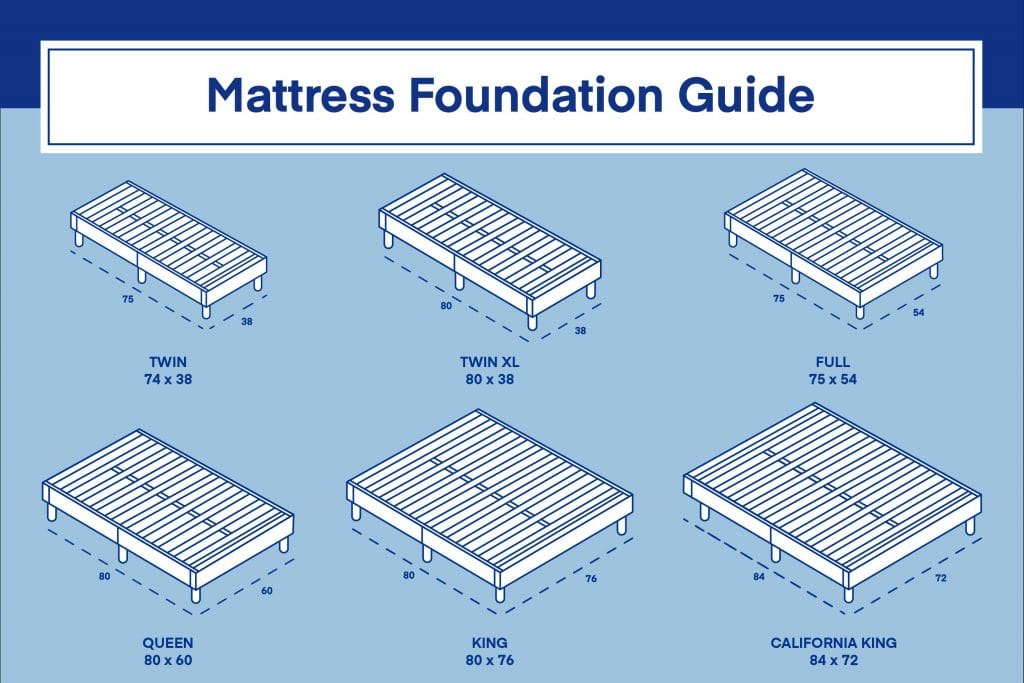
- Mattress Foundations: These are solid or slatted platforms that sit between your mattress and a traditional bed frame or directly on the floor. They are designed to provide a firm, even surface for the mattress.
- Slatted Foundations: Feature evenly spaced slats (typically 2-3 inches apart) that offer ventilation and support. For King mattresses, these are usually manufactured as a single unit or in two pieces for easier handling.
- Solid Panel Foundations: Offer a completely flat, solid surface. These are generally recommended for memory foam and some hybrid mattresses.
- King Compatibility: Foundations and platform bed support systems are designed to match specific mattress sizes, including Standard King and California King.
- When to Use: If your bed frame is a platform bed or you are using a mattress foundation, you likely will not need a traditional box spring. The foundation itself serves the purpose of supporting the mattress. Check the manufacturer’s recommendations for your specific mattress. Many modern mattresses, especially foam and hybrid varieties, explicitly state not to use them with a traditional box spring, as it can impede airflow and lead to premature sagging.
What About the “Box Spring” Label on Modern Foundations?
It’s worth noting that some manufacturers market their mattress foundations as “box springs” even if they don’t contain traditional coils. This can cause confusion. The key is to understand the underlying construction and its suitability for your mattress.
- Focus on Support: Regardless of the name, the primary function is to provide a stable and appropriate support system for your mattress.
- Check Mattress Recommendations: Always refer to your mattress manufacturer’s warranty and care instructions. They will specify the type of support system required. Using the wrong type can void your warranty.
Ensuring Proper Fit and Functionality for Your King Bed
A correctly sized and appropriately constructed box spring is not just about aesthetics; it’s about maximizing the performance and lifespan of your King mattress and ensuring a comfortable and supportive sleep environment.
The Importance of Accurate Measurement
The most critical aspect of selecting the correct box spring is ensuring it matches the dimensions of your King mattress precisely.
- Double-Check Your Mattress: Before purchasing a box spring, re-measure your King mattress. Measure the width and length in multiple spots to account for any slight manufacturing variations.
- Confirm Box Spring Dimensions: Always check the advertised dimensions of the box spring. For a Standard King, you’re looking for a box spring (or two box springs) that collectively measure 76 inches wide by 80 inches long. For a California King, it’s 72 inches wide by 84 inches long.
- Split vs. Solid King Box Springs: As mentioned, King mattresses often require a split box spring configuration (two Twin XLs for a Standard King) for ease of handling. Ensure you understand whether you need one large unit or two smaller ones. If purchasing two, make sure they are identical in size and construction.
Factors Influencing Box Spring Choice Beyond Size
While size is paramount, other factors influence the optimal box spring choice for your King mattress.
- Mattress Type:
- Innerspring Mattresses: These traditionally pair well with traditional box springs that have coils. The coils in the box spring complement the coils in the mattress, offering a familiar feel and adequate support.
- Memory Foam & Latex Mattresses: These dense materials require a firm, solid, and uniform support system. A traditional box spring with significant give can lead to premature sagging and uneven support. A slatted foundation with closely spaced slats (no more than 2-3 inches apart) or a solid panel foundation is usually recommended.
- Hybrid Mattresses: These combine innerspring coils with foam layers. The support needs can vary. Some hybrid mattresses are compatible with traditional box springs, while others require a more solid foundation. Always consult the mattress manufacturer’s guidelines.
- Bed Frame Design:
- Traditional Bed Frames: These typically require a box spring or foundation to elevate the mattress to the desired height and provide support.
- Platform Beds: As discussed, these frames often have built-in support and do not require a separate box spring.
- Adjustable Bases: If you have an adjustable bed frame, you will need a box spring or foundation specifically designed to be compatible with adjustable bases. These are typically more flexible and durable to withstand movement.
- Height Preferences: Box springs come in various heights, commonly standard (around 9 inches), low-profile (around 5-6 inches), and sometimes ultra-low or extra-tall options. The combination of your bed frame and box spring height determines the overall height of your mattress. Consider your personal preference and ease of getting in and out of bed. A lower profile can make the bed feel more grounded, while a standard height offers a more traditional feel.

The Impact of an Incorrect Box Spring on Your Mattress
Using the wrong size or type of box spring can have detrimental effects on your King mattress.
- Voiding the Warranty: Most mattress manufacturers specify the type of support system their mattresses require. Failure to comply can void your warranty, leaving you unprotected if the mattress develops defects.
- Premature Sagging and Wear: An inadequate support system can lead to the mattress sagging in the middle or developing indentations where weight is concentrated. This reduces comfort and shortens the mattress’s lifespan significantly.
- Compromised Comfort and Support: An uneven sleeping surface, whether due to an overhanging mattress or a lack of support, will negatively impact your sleep quality. You might experience aches and pains due to poor spinal alignment.
- Structural Damage: A box spring that is too small or unstable can cause the mattress to shift or sag unnaturally, potentially leading to damage to the mattress’s internal structure.
By understanding the nuances of King mattress dimensions, the different types of box springs and foundations, and their respective compatibilities, you can make a confident choice. This ensures your King bed provides the luxurious comfort and durable support you invested in, leading to countless nights of restorative sleep.
aViewFromTheCave is a participant in the Amazon Services LLC Associates Program, an affiliate advertising program designed to provide a means for sites to earn advertising fees by advertising and linking to Amazon.com. Amazon, the Amazon logo, AmazonSupply, and the AmazonSupply logo are trademarks of Amazon.com, Inc. or its affiliates. As an Amazon Associate we earn affiliate commissions from qualifying purchases.