
When evaluating the installation of a basketball system—whether for a private residence, a commercial sports complex, or a multi-family housing development—the decision regarding backboard size extends far beyond mere aesthetics or playability. It is a calculated financial decision involving capital allocation, property valuation, and long-term return on investment (ROI). In the realm of recreational infrastructure, the backboard serves as the centerpiece of the asset, and choosing the incorrect dimensions can lead to premature depreciation, reduced utility, and a failure to meet the market expectations of the intended demographic.
For the savvy investor or homeowner, understanding the cost-benefit analysis of different backboard sizes is essential. The market generally segments these products into three primary categories: the entry-level 44-to-48-inch boards, the mid-market 54-to-60-inch boards, and the premium 72-inch regulation-size boards. Each carries distinct financial implications and utility curves.

Understanding the Cost-Value Matrix of Backboard Dimensions
The correlation between backboard size and price is not strictly linear; it follows a curve dictated by material density, support structure requirements, and shipping logistics. As the surface area increases, the engineering requirements for the mounting system grow exponentially to handle wind loads and the mechanical stress of rim impacts.
The Entry-Level Tier: 44 to 48 Inches
From a personal finance perspective, the 44-to-48-inch backboard represents the lowest barrier to entry. These units are typically constructed from high-density polyethylene or thin polycarbonate. While the initial capital outlay is minimal—often ranging from $200 to $500 for a complete portable system—the rate of depreciation is high.
For a budget-conscious consumer, these sizes offer immediate utility but limited long-term value. They are prone to “dead spots” where the ball does not rebound predictably, which can stifle the skill development of serious athletes. From an investment standpoint, these are “disposable” assets. They rarely add value to a property’s appraisal and often require replacement within three to five years due to UV degradation or mechanical failure of the lightweight support poles.
The Mid-Range Sweet Spot: 54 to 60 Inches
The 54-to-60-inch category is widely considered the “sweet spot” for residential investments. A 54-inch board is the minimum size required for a functional “bank shot,” while the 60-inch board provides a professional feel without the massive footprint of a regulation unit.
In terms of financial strategy, investing in a 60-inch tempered glass backboard is often the most prudent move for a homeowner. The cost typically scales to between $800 and $1,600, but the durability of the materials (usually 3/8-inch tempered glass) ensures the asset maintains its functional integrity for decades. In the secondary market, high-quality 60-inch systems from reputable brands retain a significant percentage of their original MSRP, unlike their smaller, plastic counterparts.
The Regulation Standard: 72 Inches and High-End Capital Expenditure
A 72-inch backboard is the official size used by the NCAA and NBA. For a commercial facility or a high-end luxury estate, this is the only size that satisfies the “professional” requirement. However, the move from 60 inches to 72 inches involves a significant jump in capital expenditure.
A 72-inch system requires a heavy-duty 6×6 or 8×8 inch steel pole and a sophisticated cantilevered mounting system to support the weight of the half-inch thick tempered glass. Prices for these systems frequently exceed $2,500, plus significant installation costs involving specialized concrete work. For a commercial gym or a private training facility, this investment is necessary to justify membership fees or premium rental rates. It is an “A-grade” asset that signals quality and commitment to professional standards.
Impact on Real Estate and Property Valuation
When viewing a basketball hoop as a home improvement project, one must analyze how different backboard sizes affect the marketability and appraisal of a property. A poorly chosen hoop can be an eyesore that detracts from curb appeal, while a high-end, correctly sized installation can act as a luxury amenity.
Enhancing Curb Appeal and Marketability
In high-end real estate markets, the presence of a professional-grade (60 or 72-inch) basketball system in the driveway or on a dedicated backyard court can serve as a powerful marketing tool. It appeals to families, suggesting a lifestyle of health, activity, and high-quality home entertainment.
From a real estate branding perspective, a 72-inch glass backboard with a black powder-coated pole conveys a sense of permanence and luxury. It integrates into the property’s landscaping as a structural feature rather than a temporary toy. Real estate agents often highlight these “pro-style” courts in listing descriptions to differentiate a property in a crowded market, potentially recouping 50% to 70% of the installation cost upon the sale of the home.

Depreciation and Material Longevity
Investors must also consider the lifecycle costs of the materials associated with different sizes. Smaller boards (44-48 inches) are often made of acrylic or polycarbonate. While polycarbonate is initially shatterproof, it clouds over time when exposed to direct sunlight (UV oxidation), leading to a rapid decline in the asset’s aesthetic value.
Conversely, the larger 60 and 72-inch boards almost exclusively use tempered glass. Glass does not fade, scratch, or cloud. From a financial maintenance perspective, a glass backboard is a superior asset because its “look and feel” remain constant over a 20-year horizon. When calculating the Total Cost of Ownership (TCO), the higher upfront price of a large glass board is often offset by the lack of replacement costs and the sustained contribution to the home’s equity.
Business Applications: Facility Management and Revenue Generation
For entrepreneurs looking to monetize sports spaces, the size of the backboard is a critical factor in the business model. Whether it is a local “pay-to-play” park, a private coaching clinic, or a corporate wellness center, the equipment must align with the revenue goals.
Maximizing Court Utilization Rates
In a commercial setting, using 72-inch regulation backboards allows the facility to host sanctioned tournaments, official league play, and high-stakes training sessions. If a facility installs 54-inch boards to save on initial costs, they effectively disqualify themselves from the most lucrative segments of the market—serious amateur leagues and professional camps.
The revenue difference between a “recreational” court and a “sanctioned” court can be substantial. Sanctioned courts can command higher hourly rental rates and attract sponsors who want their branding associated with regulation-standard play. Thus, the extra $1,000 spent on a larger backboard can be recovered within the first few months of operation through increased booking fees.
Liability, Insurance, and Safety Standards
From a business finance and risk management perspective, the size and mounting of the backboard also influence insurance premiums. Larger, pro-style systems are often more stable and feature “breakaway” rims that protect the backboard (and the player) during high-impact play.
Investing in a 72-inch system with a robust padding kit is a proactive risk-mitigation strategy. It reduces the likelihood of structural failure and injury, which in turn protects the business from liability claims. In the context of business finance, spending more on “over-engineered” equipment is a form of insurance against the catastrophic costs of equipment failure.
Strategic Purchasing: Timing the Market and Navigating Supply Chains
Acquiring a basketball system at the right price requires an understanding of seasonal market trends and supply chain dynamics. Like many outdoor home improvement goods, basketball hoops experience peak demand during the spring and summer months, leading to price premiums and extended lead times for installation.
Leveraging Seasonal Discount Cycles
Strategic buyers often look to purchase systems in the “off-season”—typically late Q4 and early Q1. Retailers and manufacturers frequently offer discounts of 15% to 25% on 60-inch and 72-inch systems during these months to clear inventory for the upcoming year’s models. For a business or a homeowner, timing the purchase can save hundreds of dollars, effectively improving the ROI of the installation.
Furthermore, shipping costs for these heavy assets are a significant portion of the total price. A 72-inch glass backboard system can weigh upwards of 500 to 800 pounds. Finding a vendor that offers “flat-rate” or “inclusive” shipping during promotional periods is a key financial tactic.
The Rise of Direct-to-Consumer (DTC) Brands
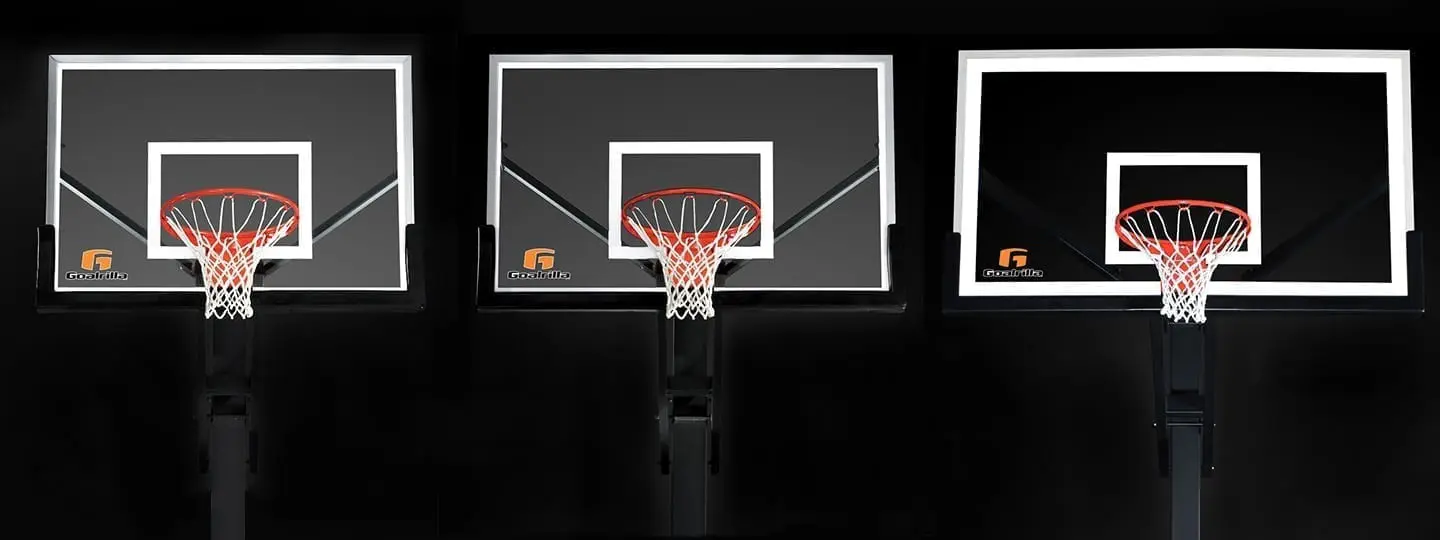
The market for basketball hoops has been disrupted by Direct-to-Consumer brands that bypass traditional big-box retail markups. By analyzing the specifications of these DTC offerings, investors can find 60-inch or 72-inch systems that rival the quality of legacy brands at a 30% lower price point. This democratization of high-end equipment allows for better capital efficiency, allowing a buyer to secure a larger, more durable backboard for the same price they might have previously paid for a mid-market retail unit.
In conclusion, the question of “what size backboard” is fundamentally an exercise in financial planning. For the casual user with limited space and budget, a 44-to-48-inch board provides a low-cost entry into the sport. For the typical homeowner, a 60-inch tempered glass system offers the best balance of price, durability, and property value enhancement. For the professional facility or the luxury estate, the 72-inch regulation board is a necessary capital expenditure that ensures long-term utility and market alignment. By treating this purchase as a strategic investment rather than a simple purchase, one can ensure that the selected backboard serves as a valuable asset for years to come.
aViewFromTheCave is a participant in the Amazon Services LLC Associates Program, an affiliate advertising program designed to provide a means for sites to earn advertising fees by advertising and linking to Amazon.com. Amazon, the Amazon logo, AmazonSupply, and the AmazonSupply logo are trademarks of Amazon.com, Inc. or its affiliates. As an Amazon Associate we earn affiliate commissions from qualifying purchases.