
The transition to new console generations often brings both excitement and questions regarding peripheral compatibility. For sim racing enthusiasts, ensuring their investment in a high-quality wheel and pedal set will seamlessly integrate with the PlayStation 5 is paramount. Fortunately, the PS5’s architecture and Sony’s commitment to backwards compatibility have paved the way for a robust ecosystem of sim racing hardware, ranging from accessible entry-level options to professional-grade direct drive setups. Understanding which wheels are officially supported and what features they offer is key to elevating your virtual racing experience.
The PS5 Ecosystem: Understanding Compatibility
Sony’s PlayStation 5 boasts impressive processing power and graphical capabilities, making it an ideal platform for immersive sim racing titles like Gran Turismo 7, F1 series, and Assetto Corsa Competizione. However, unlocking the full potential of these games requires the right hardware. Compatibility with the PS5 isn’t always straightforward, often depending on whether a device was designed specifically for the console or benefits from legacy support.
Native Support vs. Legacy Compatibility
Sim racing wheels primarily work with the PS5 through two main avenues. The most direct route is native support, where a wheel is explicitly designed and licensed for the PlayStation 5. These devices often leverage PS5-specific technologies, ensuring full functionality and optimized performance, sometimes even supporting advanced features like adaptive triggers or haptic feedback if implemented by the game developer.
The second, equally vital, avenue is legacy compatibility. Many high-quality sim racing wheels that were licensed for the PlayStation 4 also function flawlessly on the PS5. This is largely due to the PS5’s strong backward compatibility features, which allow it to run most PS4 games and utilize many PS4 peripherals. For sim racing wheels, this means that a significant number of popular PS4-compatible wheels will “just work” when plugged into a PS5, especially when playing PS4 versions of games, or PS5 versions that have maintained PS4 peripheral driver support. It’s crucial to check manufacturer specifications and game compatibility lists, as while a wheel might work, certain advanced features introduced on the PS5 might not be fully utilized without explicit PS5 native support. Firmware updates from manufacturers often play a critical role in extending or optimizing this compatibility.
Key Considerations for PS5 Sim Racing
Beyond basic functionality, several factors influence the quality of your sim racing experience on the PS5. Input lag, the delay between your physical input and the game’s response, is critical for competitive racing; newer, natively supported wheels often optimize this. Force feedback fidelity, the realism with which the wheel conveys road conditions, tire grip, and impacts, is another major differentiator. Direct drive wheels, for instance, offer unparalleled detail and strength compared to gear or belt-driven systems. Driver support and ongoing firmware updates from the manufacturer are also essential. These updates can enhance compatibility, fix bugs, and even introduce new features or optimize performance with new game titles, ensuring your hardware remains relevant and performs optimally over time.
Top-Tier Sim Racing Wheels for PS5 Enthusiasts
The market for PS5-compatible sim racing wheels is rich and diverse, offering choices for every budget and level of enthusiasm. Three major brands consistently lead the pack, each with distinct offerings that cater to different needs.
Fanatec: Premium Performance and Modularity
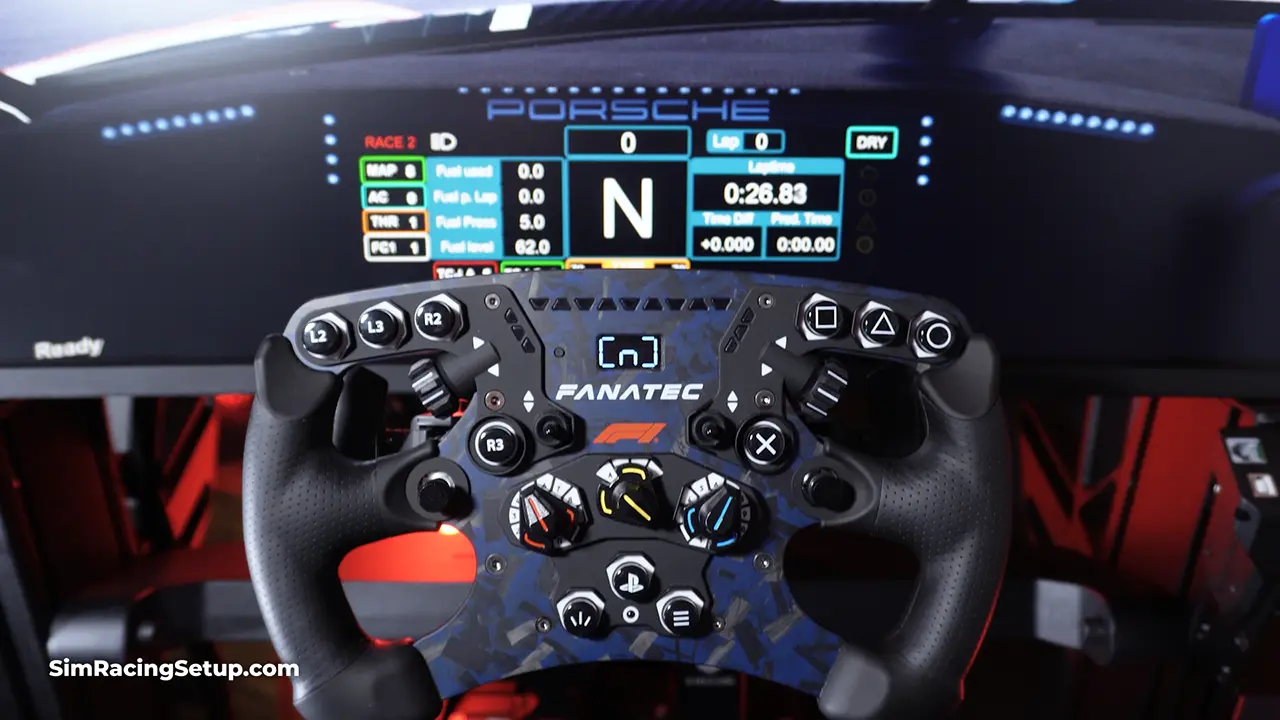
Fanatec stands at the pinnacle of consumer sim racing hardware, renowned for its premium build quality, advanced technology, and extensive modular ecosystem. Their direct drive (DD) wheels are a game-changer, replacing traditional gear or belt mechanisms with a motor directly attached to the wheel shaft. This results in incredibly precise, powerful, and nuanced force feedback, virtually eliminating dead zones and providing an unparalleled sense of connection to the virtual car.
For PS5 users, Fanatec’s flagship offering is often considered the Gran Turismo DD Pro, an officially licensed PlayStation direct drive wheel. It combines Fanatec’s celebrated direct drive technology with specific PlayStation compatibility, making it a perfect match for titles like Gran Turismo 7. The CSL DD (when paired with a PlayStation-compatible wheel rim) and the more powerful Podium F1 (which includes a specific PlayStation-compatible wheelbase) also offer top-tier performance. Fanatec’s ecosystem allows users to mix and match wheel rims, pedals (including load cell options for realistic braking), and shifters, enabling a high degree of customization and upgradeability. While these units represent a significant investment, they deliver a truly professional-grade sim racing experience.
Thrustmaster: Robust Options Across Price Points
Thrustmaster occupies the sweet spot between entry-level and high-end, offering a broad range of PS5-compatible wheels that provide excellent force feedback and durability without the premium price tag of direct drive systems. Their wheels typically utilize a hybrid belt-driven and gear-driven force feedback system, striking a good balance between smoothness and power.
The Thrustmaster T300RS GT Edition is a perennial favorite, widely regarded as one of the best mid-range choices for PlayStation consoles. It offers smooth, strong, and detailed force feedback, along with a responsive pedal set. The T-GT II represents Thrustmaster’s premium PS5-licensed offering, featuring more refined force feedback algorithms, improved cooling, and greater durability, making it an excellent choice for serious enthusiasts looking for a step up without entering the direct drive realm. More recently, the Thrustmaster T248 has emerged as a compelling option, offering a new hybrid force feedback system, a built-in display, and magnetic paddle shifters, providing a more modern entry point into the Thrustmaster ecosystem. Many of Thrustmaster’s wheels also support a wide array of interchangeable wheel rims and a separate ecosystem of pedals and shifters, allowing for future upgrades.
Logitech: Accessible Entry into Sim Racing
Logitech has long been the gateway for many into the world of sim racing, offering durable, reliable, and accessible wheels. Their gear-driven force feedback systems, while not as nuanced as belt or direct drive, provide satisfying resistance and detail, making them ideal for beginners and casual racers.
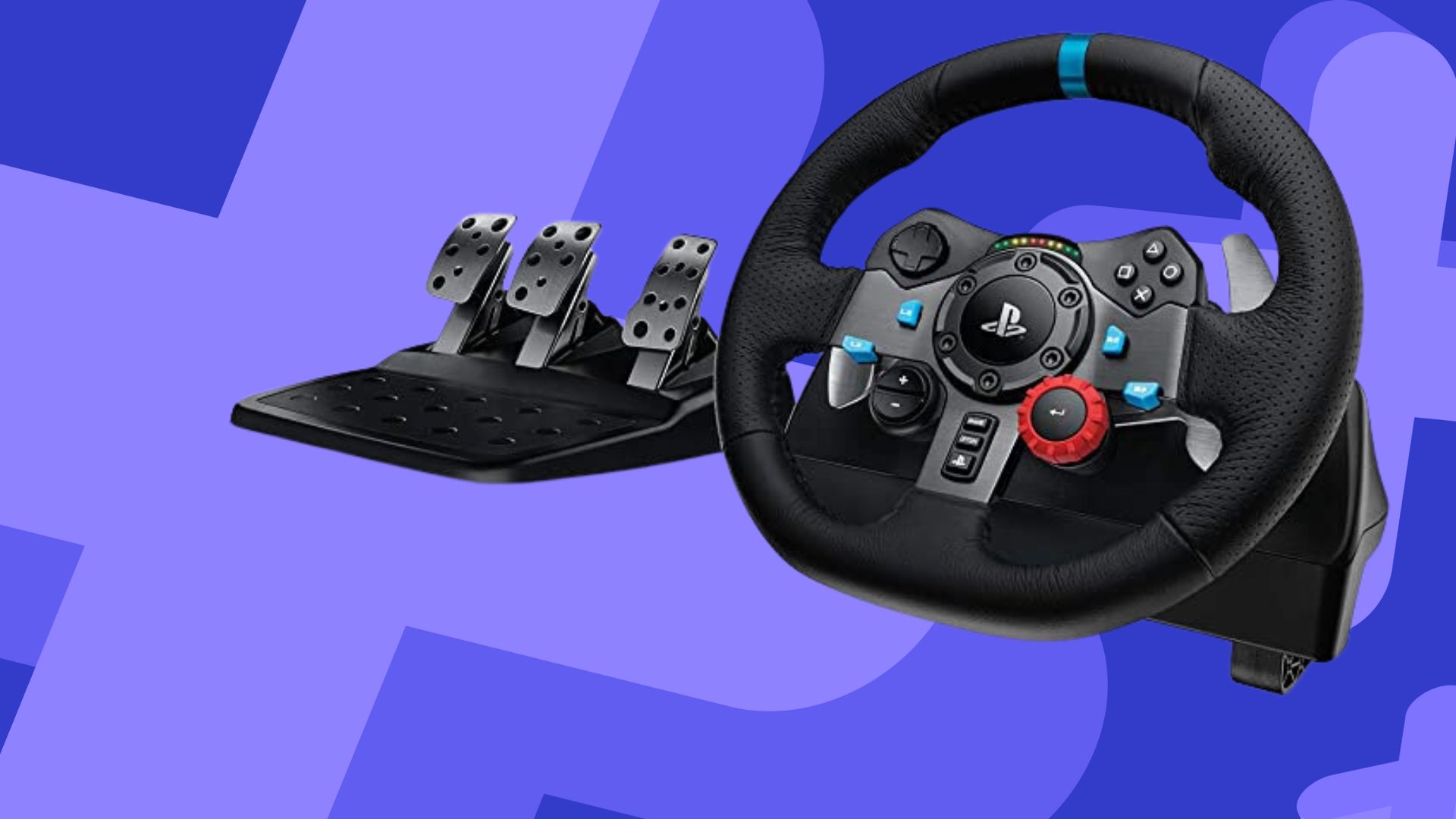
The Logitech G29 Driving Force has been a staple for PlayStation users for years. It’s a robust, well-built wheel and pedal set that offers solid force feedback and a comprehensive button layout compatible with the PlayStation interface. It’s a fantastic value proposition, often available at an attractive price point. Building on this legacy, the Logitech G923 introduced “TRUEFORCE” technology. TRUEFORCE is a next-generation force feedback system that integrates directly with game physics and audio to deliver an even more immersive and realistic feel, allowing drivers to sense engine rumble, tire traction, terrain changes, and more with greater fidelity than the G29. Both the G29 and G923 are fully PS5 compatible, making them excellent choices for those seeking a reliable and engaging sim racing experience without breaking the bank. While Logitech’s ecosystem is less modular than Fanatec or Thrustmaster, their wheels are known for their longevity and ease of use.
Beyond the Wheel: Enhancing Your PS5 Sim Rig
While the racing wheel is undoubtedly the centerpiece of any sim rig, a truly immersive and competitive experience on the PS5 benefits greatly from complementary peripherals. These additions not only enhance realism but also improve consistency and lap times.
Pedals and Shifters: Completing the Immersion
The stock pedals that come with many entry and mid-level wheels are often a good starting point, but upgrading them can significantly impact performance, especially braking. Load cell pedals, which measure pressure rather than displacement, offer a much more realistic and consistent braking feel, allowing for finer control and improved trail braking techniques. Brands like Fanatec, Heusinkveld, and Thrustmaster offer load cell pedal options that are often compatible with PS5 wheels, either directly or via adapters.
For shifters, the choice between an H-pattern gearbox (like those found in classic cars) and a sequential shifter (common in modern race cars) depends on the games you play and your preferred racing style. Many manufacturers, including Fanatec and Thrustmaster, offer standalone shifters that can be integrated into your PS5 setup, adding another layer of realism and control. Magnetic paddle shifters, often integrated into higher-end wheels, also provide crisp, satisfying shifts.
Cockpits and Mounts: Stability for Serious Racers
Strong force feedback is exhilarating, but it requires a stable mounting solution. A desk clamp might suffice for casual play, but for sustained, intense racing, a dedicated wheel stand or a full sim racing cockpit is highly recommended. Wheel stands, such as those from Next Level Racing or Playseat, provide a sturdy base for your wheel and pedals, are often foldable for storage, and improve ergonomics. Full cockpits, on the other hand, offer the ultimate in rigidity and immersion, mounting the seat, wheel, and pedals into a single, cohesive unit. These remove any flex, allowing you to fully appreciate the force feedback without unintended movement, leading to greater consistency and comfort during long racing sessions. Many cockpits are also designed to accommodate shifters, handbrakes, and even monitor mounts, creating a complete racing environment.
Software and Game Integration
The performance of your sim racing hardware isn’t solely dependent on its physical build; software integration plays a crucial role. Ensuring your wheel’s firmware is up to date is paramount, as manufacturers frequently release updates to improve compatibility, optimize force feedback algorithms, and add support for new game titles. The PlayStation 5’s operating system and individual game titles are designed to leverage these firmwares. Many PS5 racing games, such as Gran Turismo 7 and F1 2023, feature extensive in-game calibration options for various wheels, allowing users to fine-tune force feedback strength, linearity, and dead zones to their personal preference. This deep integration ensures that the nuances of each wheel’s technology are fully utilized, providing the most realistic and engaging experience possible.
Making Your Choice: Factors to Weigh
Selecting the ideal sim racing wheel for your PS5 involves a careful consideration of several key factors. Your personal preferences, budget, and long-term racing aspirations should all guide your decision.
Budget Considerations
Sim racing wheels range from a few hundred dollars to several thousand. Entry-level options like the Logitech G29/G923 offer excellent value for money, providing a robust and enjoyable experience for casual racers. Mid-range wheels from Thrustmaster (e.g., T300RS GT, T-GT II, T248) step up the force feedback fidelity and build quality, catering to more serious enthusiasts. At the high end, Fanatec’s direct drive systems represent a significant investment but deliver unparalleled realism and performance, targeting dedicated sim racers and competitive players. Determine your comfortable spending limit, but also consider the potential for future upgrades within a brand’s ecosystem.
Force Feedback Technology
This is perhaps the most significant differentiator between wheels.
- Gear-driven: Found in Logitech wheels, offering robust and reliable feedback. Can sometimes feel a bit notchy or grainy.
- Belt-driven: Common in Thrustmaster’s mid-range, providing smoother and more detailed feedback than gear-driven systems, but with some dampening.
- Direct drive (DD): The gold standard, found in Fanatec and other high-end wheels. The motor is directly connected to the wheel shaft, offering the most precise, powerful, and unadulterated force feedback, translating every nuance of the virtual track directly to your hands. This direct connection also eliminates backlash and dead zones common in other systems.
Build Quality and Durability
Consider the materials used in the wheel and pedals. Metal components generally offer greater durability and a more premium feel compared to plastic. High-quality construction ensures longevity, especially under the strenuous forces exerted during intense racing sessions. Reviews often highlight the long-term reliability of various brands and models.
Upgrade Paths and Ecosystems
Some brands, particularly Fanatec and Thrustmaster, offer modular ecosystems. This means you can often upgrade individual components like wheel rims, pedals, or shifters over time without having to replace the entire wheelbase. This provides flexibility and allows you to gradually build a more advanced rig as your skills and budget evolve. Logitech’s ecosystem is more closed, but their standalone products are known for their durability.

Your Racing Style and Preferences
Are you a casual player looking for a more immersive experience than a gamepad, or a serious competitor chasing tenths of a second? Do you prefer rally, Formula 1, GT racing, or a mix? Different wheels and pedal sets can cater better to specific racing disciplines. For instance, a direct drive wheel might be overkill for casual arcade racers but essential for highly realistic simulators. Consider the ergonomics, button layouts, and paddle shifter feel to ensure the wheel aligns with your personal racing style and comfort.
aViewFromTheCave is a participant in the Amazon Services LLC Associates Program, an affiliate advertising program designed to provide a means for sites to earn advertising fees by advertising and linking to Amazon.com. Amazon, the Amazon logo, AmazonSupply, and the AmazonSupply logo are trademarks of Amazon.com, Inc. or its affiliates. As an Amazon Associate we earn affiliate commissions from qualifying purchases.