
When newcomers encounter the teal-haired phenomenon known as Hatsune Miku, the most common question asked is, “What show is she from?” To the uninitiated, her visual design, merchandise presence, and sold-out stadium concerts suggest she is the protagonist of a long-running anime series or a Japanese blockbuster. However, the answer is far more technologically significant: Hatsune Miku is not a character from a show, but a sophisticated piece of music synthesis software.
She is the personification of a Vocaloid—a voice synthesizer application developed by Crypton Future Media. Understanding Hatsune Miku requires a deep dive into the evolution of speech synthesis, the mechanics of digital signal processing, and the hardware engineering that allows a virtual entity to perform on a physical stage.

Decoding the Vocaloid Engine: The Software Origins
Hatsune Miku’s “origin story” does not take place in a fictional universe; it takes place in the research and development labs of Yamaha and Crypton Future Media. To understand how she functions, one must look at the underlying technology of the Vocaloid engine.
The Yamaha Synthesis Technology
The core of Hatsune Miku’s existence is the Vocaloid synthesis technology developed by Yamaha. Unlike traditional text-to-speech engines that aim for functional communication, the Vocaloid engine focuses on the nuances of singing. It utilizes a system known as concatenative synthesis. This involves taking a massive library of phonetic samples recorded by a human voice actor—in Miku’s case, Saki Fujita—and slicing them into fragments called “dyads” (transitions between two phonemes).
When a user inputs a melody and lyrics into the software, the engine retrieves the necessary fragments and stitches them together. However, simple stitching creates a robotic, jarring sound. The “Tech” behind Miku lies in the software’s ability to manipulate the pitch, vibrato, and timbre of these fragments in real-time, using complex algorithms to smooth the transitions between notes and syllables.
Crypton Future Media and the CV Series
While Yamaha provided the engine, Crypton Future Media developed the “Character Vocal” (CV) series. Miku was the first of their CV series to utilize the Vocaloid 2 engine. The technical breakthrough here was the shift from trying to replicate a generic human voice to creating a “stylized” digital instrument.
Crypton’s engineers realized that by emphasizing certain frequencies and allowing for a “cybernetic” tone, they could create a voice that felt both futuristic and emotive. This was achieved through meticulous post-processing of the original recordings, ensuring the software could handle high-tempo pop and intricate ballads without losing the distinct “Miku” identity.
Beyond the Screen: The Tech of Live Performance
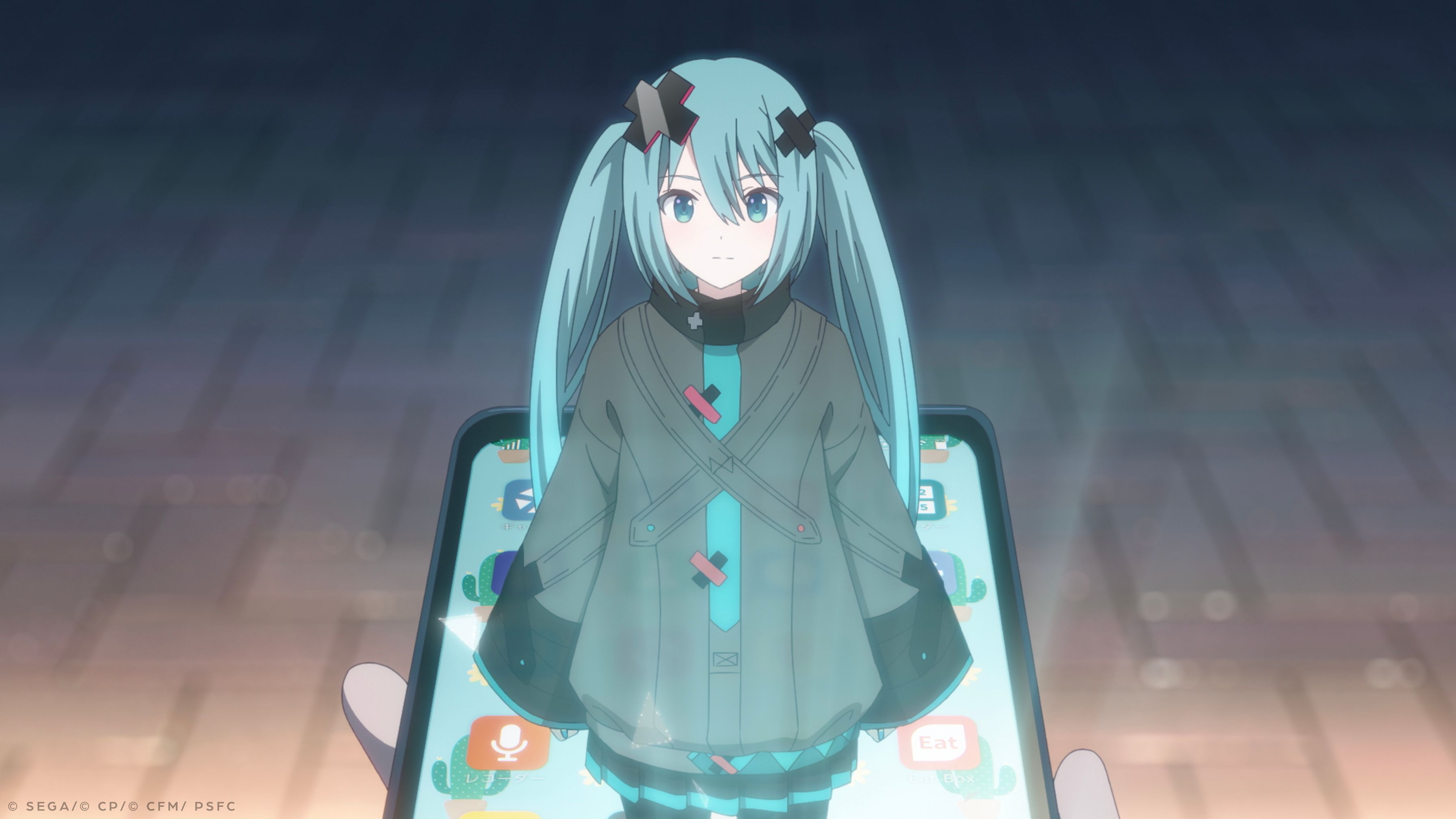
One of the most impressive technological feats associated with Hatsune Miku is her live concert series, such as “Magical Mirai” and “Miku Expo.” Since Miku does not exist in the physical world, her “live” presence is the result of high-end projection mapping and optical engineering.
The Illusion of Presence: Dilad Screens
A common misconception is that Hatsune Miku is a “hologram.” In technical terms, she is a 2D rear-projection mapped onto a transparent screen. The primary technology used is the Dilad Screen—a highly transparent film developed by Kimoto Co., Ltd.
During a concert, high-powered projectors are placed behind or below the stage. They project a specially rendered 3D animation onto the Dilad Screen. Because the screen is transparent, the audience can see the live band and the stage lights through it, while the screen catches the light of the projection. This creates a “2.5D” effect that tricks the human eye into perceiving depth, making it appear as though Miku is standing on stage alongside her human musicians.
Real-Time MIDI and Synchronized Visuals
The synchronization required for a Miku concert is a masterpiece of digital timing. The music is often performed by a live band, which must sync perfectly with the pre-rendered or real-time digital vocals. This is achieved through a complex network of MIDI (Musical Instrument Digital Interface) triggers and time-code synchronization.
In more recent iterations, Crypton has experimented with R3 (Real-time, Real-space, Real-sound), a system that allows for more dynamic interaction. This tech enables the digital model to respond to live variables, such as changes in the music’s tempo or interaction with the crowd, bridging the gap between a static video file and a responsive digital performer.
The Evolution of Digital Voice Banks
Since her release in 2007, the technology powering Hatsune Miku has undergone several generational shifts. She has evolved from a basic synthesizer into an AI-adjacent creative tool.
From Vocaloid 2 to Piapro Studio
Miku’s initial software was limited by the processing power of mid-2000s computers. As CPU power increased, Crypton moved away from being purely a Yamaha licensee to developing their own proprietary software interface, Piapro Studio.
This transition allowed for “E.V.E.C.” (Enhanced Voice Expression Control) technology. This tech allows users to change the “mood” of a voice mid-song—switching from a “Power” style to a “Soft” or “Whisper” style. This is achieved by layering multiple voice banks and using cross-synthesis to blend them seamlessly, a process that requires significant computational overhead to maintain phase coherence and naturalistic resonance.
AI and Neural Speech Synthesis
The most recent leap in Miku’s technology is the integration of Neural Networks. Traditional Vocaloid tech relied on a library of static samples. Modern iterations, such as “Hatsune Miku NT” (New Type), utilize neural synthesis to predict how a voice should transition between notes.
By training AI models on thousands of hours of singing data, the software can now generate realistic breath sounds, “growls,” and complex vibratos that were previously impossible to program manually. This represents a shift from “sampled synthesis” to “generative synthesis,” where the software understands the physics of human vocal cords and replicates them digitally.
The Open-Source Ecosystem and Development Tools
Perhaps the most “Tech-centric” aspect of Hatsune Miku is her status as an open-platform development tool. She is not just a character; she is an interface that allows creators to interact with music and animation software.
MikuMikuDance (MMD) and Community Innovation
While the voice is controlled via Vocaloid or Piapro Studio, the visual movement of Miku is often handled through MikuMikuDance (MMD). MMD is a freeware 3D animation program that was originally developed specifically for Miku.
The software utilizes a sophisticated physics engine (Bullet Physics) to simulate hair and clothing movement. The MMD community has pushed the boundaries of consumer-grade animation, developing plugins for motion capture (using Microsoft Kinect or VR sensors) and advanced shaders that rival professional studio outputs. This democratization of animation tech is why Miku appears in thousands of fan-made videos; she is essentially a “creative commons” asset for technical experimentation.
The Future of Virtual Identity in the Metaverse
As we look toward the future of technology, Hatsune Miku serves as a blueprint for the Metaverse and virtual avatars. The tech used to power her concerts and software is now being adapted for Vtubing (Virtual Youtubing) and AR (Augmented Reality) applications.
Engineers are currently working on integrating Miku into real-time AR environments, where users can view her through smart glasses as if she were in their living room. This requires advanced SLAM (Simultaneous Localization and Mapping) technology, allowing the digital model to understand the geometry of a room and interact with physical objects—like sitting on a real chair or standing behind a real table.

Conclusion: The Ultimate Tech Icon
To answer the question “What show is Miku Hatsune from?” is to realize that she is the star of a show that never ends—the show of human-computer interaction. She is a product of sophisticated digital signal processing, optical physics, and neural network evolution.
Hatsune Miku represents the point where technology and art become indistinguishable. She is a software package that has evolved into a global icon, proving that in the digital age, you don’t need a television show to have a soul; you just need the right code. Whether she is singing through a neural synthesizer or appearing on a Dilad screen, Miku remains a testament to the power of creative technology.
aViewFromTheCave is a participant in the Amazon Services LLC Associates Program, an affiliate advertising program designed to provide a means for sites to earn advertising fees by advertising and linking to Amazon.com. Amazon, the Amazon logo, AmazonSupply, and the AmazonSupply logo are trademarks of Amazon.com, Inc. or its affiliates. As an Amazon Associate we earn affiliate commissions from qualifying purchases.