
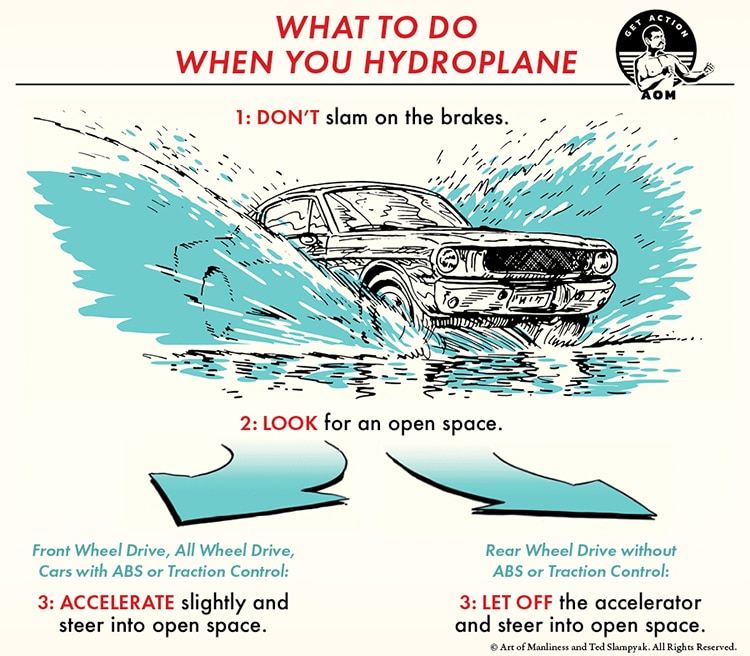
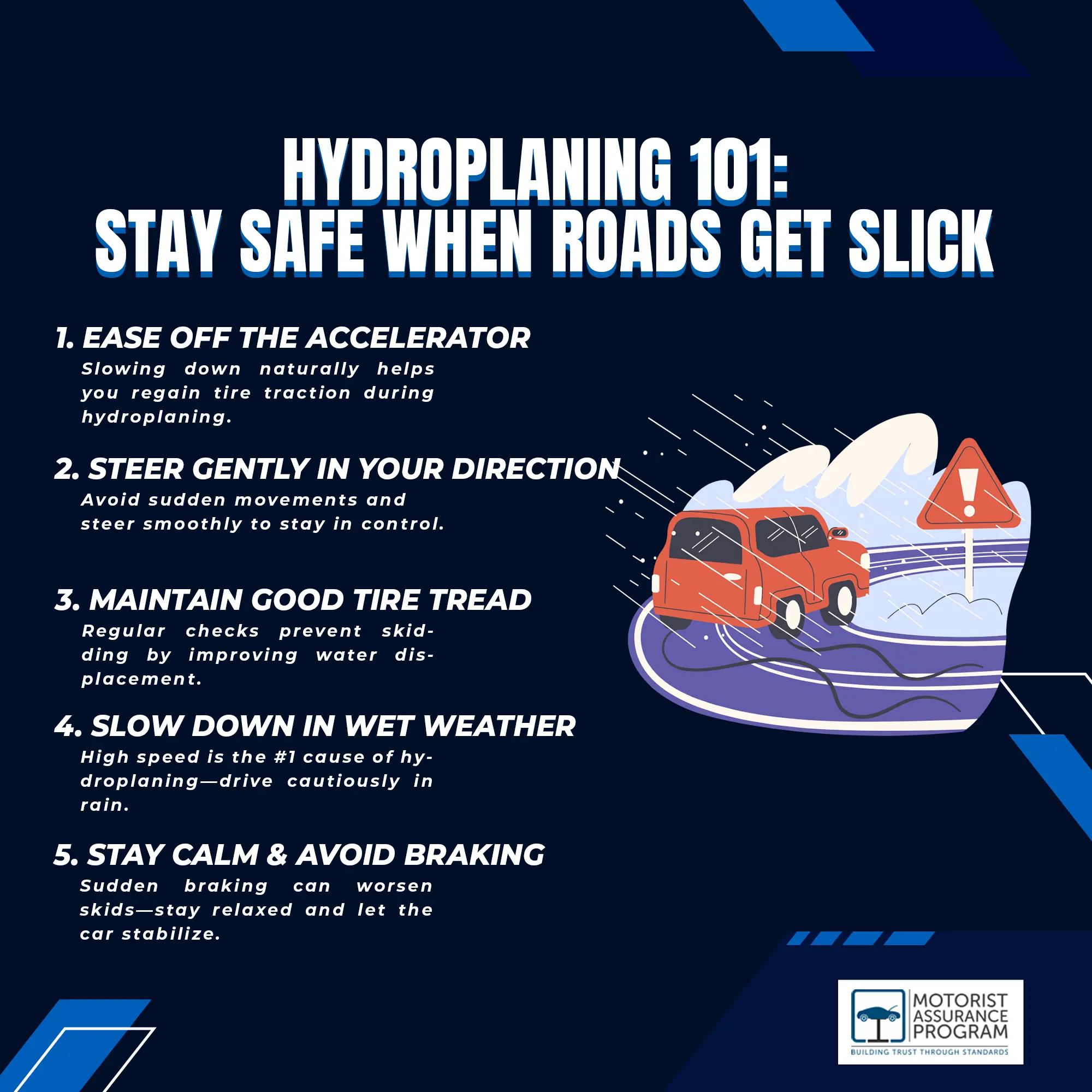
Hydroplaning is a phenomenon that occurs when a layer of water builds up between the wheels of a vehicle and the road surface, leading to a loss of traction that prevents the vehicle from responding to control inputs. For decades, the standard advice has focused on human reaction: stay calm, avoid slamming on the brakes, and steer into the direction of the slide. However, as we enter the era of the software-defined vehicle, the answer to what you should do when hydroplaning is increasingly being answered by technology. From artificial intelligence and sensor fusion to real-time data analytics, the automotive industry is transforming a terrifying loss of control into a manageable, and often preventable, digital event.
The Physics of Hydroplaning and the Rise of Intelligent Tires
To understand how technology mitigates hydroplaning, we must first understand the technical failure that occurs at the contact patch. Hydroplaning happens when the water pressure in front of the tire exceeds the weight of the vehicle, lifting the rubber off the asphalt. While traditional tire design focused on mechanical grooves to displace water, modern tech-driven solutions utilize the “Internet of Tires” (IoT) to monitor these dynamics in real-time.
Internet of Tires (IoT) and Real-Time Friction Mapping
The next generation of road safety is moving inside the tire itself. Major manufacturers are now embedding micro-sensors directly into the inner liner of the tire. These sensors measure vibrations, temperature, and pressure at a granular level. When a tire begins to lose contact with the road due to water accumulation, the vibration patterns change instantaneously.
Through high-speed data transmission, these sensors alert the vehicle’s central processing unit (CPU) long before a human driver can feel the “lightness” in the steering wheel. This real-time friction mapping allows the vehicle to adjust its internal systems—such as torque distribution and suspension stiffness—to maximize what little grip remains.
Predictive Tread Wear Monitoring
One of the primary technological defenses against hydroplaning is the move toward predictive maintenance. Low tread depth is a leading cause of hydroplaning because the tire loses its ability to channel water away. Modern automotive apps and integrated software suites now use computer vision and AI algorithms to analyze tire wear patterns.
By utilizing image recognition software via a smartphone camera or built-in garage sensors, drivers receive push notifications when their tread depth falls below a safety threshold specifically calculated for wet-weather performance. This shift from reactive to proactive tech-driven maintenance ensures that the vehicle is physically equipped to handle inclement weather before the driver even encounters a storm.
Advanced Driver Assistance Systems (ADAS): The Digital Co-Pilot
When hydroplaning occurs, the human brain’s instinct is often its own worst enemy. Panic leads to over-correction or locking the brakes, both of which exacerbate the loss of control. Advanced Driver Assistance Systems (ADAS) are designed to override these panicked inputs with precision and speed that human biology cannot match.
Electronic Stability Control (ESC) Evolution
While Electronic Stability Control (ESC) has been a standard feature for years, AI-enhanced ESC represents a significant leap forward. Traditional ESC uses sensors to detect a difference between the driver’s intended direction and the vehicle’s actual path. Modern AI-driven systems, however, incorporate “predictive control.”
By analyzing data from the rain sensors (which control the wipers) and the ambient temperature sensors, the car’s software can prime the ESC for “wet mode” the moment it detects rain. This reduces the latency between the start of a skid and the system’s intervention. If hydroplaning begins, the system applies individual brakes to specific wheels with millisecond precision, helping to rotate the car back into alignment without the driver needing to perform a complex counter-steering maneuver.
Machine Learning and Road Surface Classification
The latest research in automotive technology involves Deep Neural Networks (DNN) that can classify road surfaces in real-time. By utilizing microphones placed near the wheel wells, the AI “listens” to the sound of the tires on the road. The acoustic signature of a tire hitting a deep puddle is distinct from that of dry pavement or light rain.
When the software identifies the specific sound profile of hydroplaning risk, it can automatically reduce the vehicle’s speed if adaptive cruise control is engaged and increase the sensitivity of the traction control system. This is a prime example of how software is being used to sense environment hazards that are invisible to the human eye.

Software-Driven Responses: When AI Takes the Wheel
The question of what to do when hydroplaning is increasingly being answered by automated systems that take over the most critical tasks during those few seconds of crisis. The integration of sensor fusion—combining data from multiple sources—allows the vehicle to create a 360-degree digital understanding of the emergency.
Sensor Fusion: Integrating LiDAR and Optical Cameras
LiDAR (Light Detection and Ranging) and high-definition optical cameras are the eyes of modern autonomous and semi-autonomous vehicles. During heavy rain, human visibility is often severely limited, making it difficult to see standing water on the highway. LiDAR, however, can detect the reflective properties of water on the road surface from hundreds of meters away.
When these sensors identify a large pool of standing water, the vehicle’s software can proactively decelerate or provide haptic feedback through the steering wheel to alert the driver. If the vehicle does enter a hydroplane state, the camera system tracks lane markings to ensure that the automated steering adjustments keep the car within its lane, even when the driver is unable to see the lines through the spray.
Connectivity and Vehicle-to-Everything (V2X) Communication
One of the most exciting trends in digital security and road safety is V2X communication. In a connected ecosystem, a car that encounters a hydroplaning hazard doesn’t just save itself; it saves every other connected car behind it. When a vehicle’s onboard computer detects a loss of traction event, it immediately broadcasts a digital warning via 5G or dedicated short-range communications (DSRC) to surrounding vehicles.
This “digital flare” informs following cars of the exact GPS coordinates of the water hazard. The following vehicles can then automatically adjust their speed or suggest a lane change to the driver well before they reach the danger zone. This network-based approach to safety shifts the focus from individual driver skill to a collective, tech-driven safety net.
Future Tech: Shape-Shifting Treads and Automated Road Maintenance
As we look toward the future of automotive technology, the solutions to hydroplaning are becoming even more hardware-integrated and futuristic. Researchers are currently developing active tread designs that can change shape based on environmental data.
Active Aerodynamics and Downforce
Some high-performance electric vehicles (EVs) are beginning to use active aerodynamics to combat hydroplaning. By adjusting the angle of spoilers or opening specific air vents, the vehicle can increase its aerodynamic downforce when it detects wet conditions. This extra downward pressure helps keep the tires pressed through the water layer and onto the road surface. This is a direct application of aerospace technology to civilian road safety, managed entirely by complex software algorithms.
Smart Infrastructure and Digital Twins
Beyond the car itself, the “Money” and “Tech” sectors are converging on smart infrastructure. Cities are beginning to invest in road sensors that feed data into “Digital Twins”—virtual replicas of the city’s transport network. These systems can identify areas where drainage is failing and water is pooling. By using AI to analyze traffic patterns and weather data, municipalities can deploy automated maintenance crews or change digital road signage in real-time to lower speed limits in high-risk zones, effectively managing the risk at the infrastructural level.
Digital Tools and Apps for Driver Preparedness
While the onboard hardware does the heavy lifting during a hydroplaning event, digital tools and software applications are essential for the “before” and “after.”
The integration of hyper-local weather technology into navigation apps like Waze or Google Maps has changed how we perceive road risks. These apps now use crowdsourced data and satellite imagery to provide “hydroplaning alerts” on specific stretches of highway. For the modern driver, the first step in what to do when hydroplaning is to check the digital forecast and the real-time road reports provided by these sophisticated platforms.
Furthermore, for fleet managers and business owners, telematics software provides a detailed analysis of how drivers handle wet weather. By reviewing “harsh braking” or “traction loss” events recorded by the vehicle’s black box, companies can provide targeted safety training or utilize simulation software to help drivers practice their response to hydroplaning in a risk-free virtual environment.
In conclusion, the answer to “what should you do when hydroplaning” has evolved from a manual checklist to a sophisticated interaction between human intent and machine precision. As AI continues to integrate deeper into our vehicles, the goal is to reach a point where the technology is so effective that the driver never even realizes they were at risk. Through the combination of IoP sensors, ADAS evolution, V2X connectivity, and smart infrastructure, we are moving toward a future where the physical dangers of wet-weather driving are systematically eliminated by digital innovation.
aViewFromTheCave is a participant in the Amazon Services LLC Associates Program, an affiliate advertising program designed to provide a means for sites to earn advertising fees by advertising and linking to Amazon.com. Amazon, the Amazon logo, AmazonSupply, and the AmazonSupply logo are trademarks of Amazon.com, Inc. or its affiliates. As an Amazon Associate we earn affiliate commissions from qualifying purchases.