
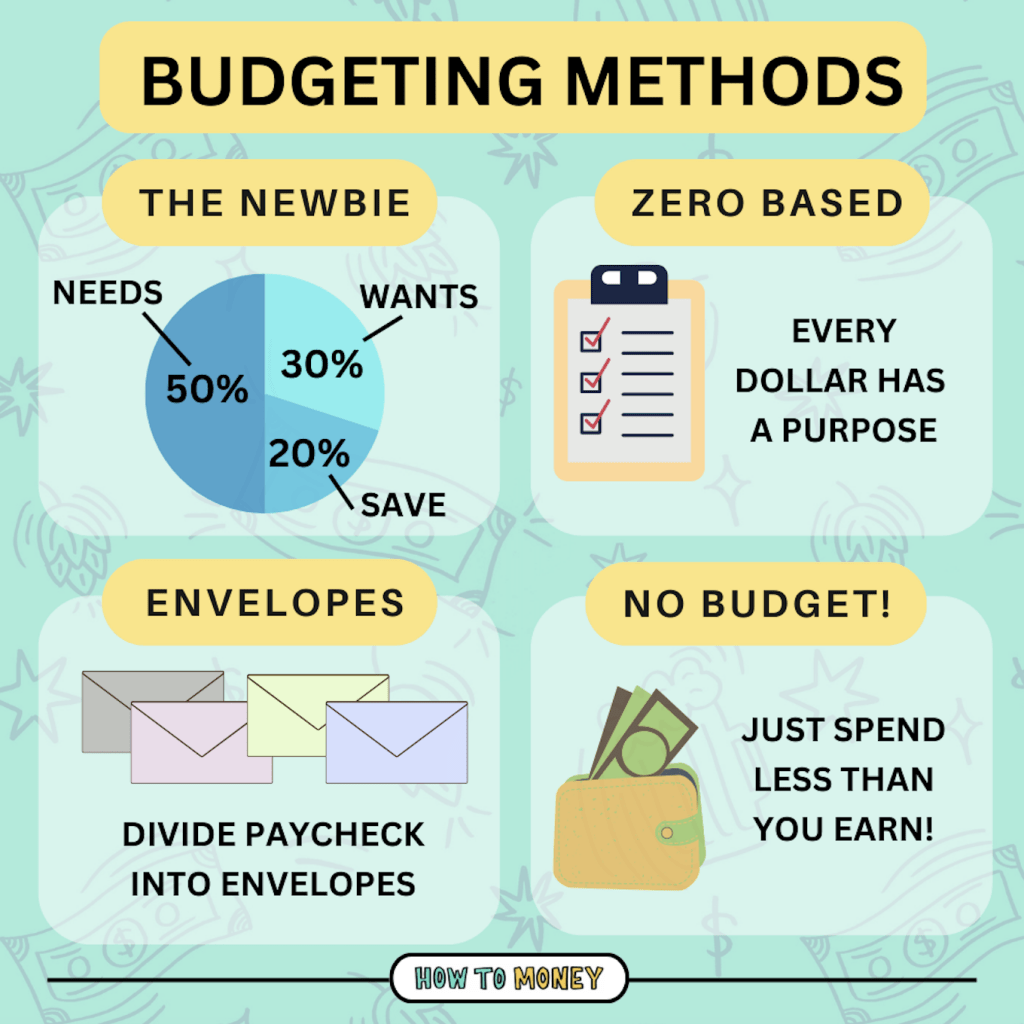
Budgeting is often perceived as a financial straitjacket, a restrictive set of rules designed to sap the joy out of spending. However, seasoned financial planners and successful wealth-builders view budgeting through a different lens: it is a strategic map for one’s life. Whether you are using the popular 50/30/20 rule, the meticulous zero-based budgeting system, or the tactile envelope method, the underlying mechanics of success remain remarkably consistent.
While the “how” of budgeting varies based on personality and lifestyle, the “what” remains constant. Effective financial management is not about the specific app or spreadsheet you use; it is about the core principles that govern the flow of money. To build a sustainable financial future, every budgeting method, regardless of its complexity, must share a few foundational pillars.
1. Absolute Visibility and Tracking
The most fundamental element that every budgeting method must share is total visibility. You cannot manage what you do not measure. A budget that ignores certain categories of spending—such as “small” cash purchases or automatic subscriptions—is a leaky vessel. To achieve financial stability, a budgeting method must account for every dollar that enters and exits your ecosystem.
The Granularity of Expenses
A successful budget requires a deep dive into historical spending patterns. Many people fail at budgeting because they underestimate their “true” expenses. They account for rent and groceries but forget the quarterly car insurance, the annual software subscription, or the occasional gift. A universal trait of any robust budget is the categorization of expenses into fixed, variable, and periodic costs. By bringing these hidden figures into the light, you eliminate the “financial surprises” that derail most plans.
Real-Time Awareness
In the modern economy, money moves at the speed of a click. Therefore, a budgeting method must prioritize real-time or near-real-time tracking. Whether this involves manually logging a transaction into a ledger or using a synced banking app, the commonality is the reduction of the “information lag.” Knowing you have $50 left for dining out before you enter the restaurant is the difference between staying on track and overspending. Awareness is the first line of defense against impulse control issues.
2. Alignment with Personal Values and Goals
A budget is not merely a mathematical exercise; it is a reflection of your priorities. If a budgeting method is purely clinical—focusing only on cutting costs without considering the human element—it is destined to fail. Every effective budgeting framework must facilitate an alignment between your capital and your values.
The Psychology of “Why”
Why are you saving? Why are you cutting back? Every budgeting method should have an integrated “goal” component. This could be a short-term goal like an emergency fund, a mid-term goal like a house down payment, or a long-term goal like retirement. When your budget is tied to a specific “why,” the act of restriction transforms into an act of prioritization. Instead of feeling like you “can’t buy that shirt,” you feel like you are “choosing the European vacation next summer.”
Defining Needs vs. Wants
While different methods categorize these differently, every successful budget must force the user to distinguish between essential survival costs and discretionary lifestyle choices. The 50/30/20 method does this explicitly, but even a zero-based budget requires this mental triage. By establishing a clear hierarchy of spending, you ensure that your basic needs are met first, followed by your future security, and finally, your current desires. This common thread ensures that even during lean months, the most critical aspects of your life remain funded.
3. Intentionality and the “Job” of Every Dollar
One of the most transformative concepts in personal finance is the idea that every dollar you own should have a specific assignment. This principle of intentionality is what separates a passive tracker from an active budgeter.
Proactive vs. Reactive Budgeting
Many people believe they are budgeting when they are actually just tracking. Tracking is looking at what you spent last month; budgeting is deciding what you will spend next month. All effective methods share this proactive stance. By assigning a purpose to your income before it is spent—whether that purpose is “rent,” “investment,” or “guilt-free fun”—you take control of the narrative. This prevents money from simply “disappearing” into the void of mindless consumption.
The Role of Savings as an Expense
A commonality among high-performing budgeting systems is the treatment of savings and debt repayment as mandatory “expenses.” Rather than saving “whatever is left over” at the end of the month, successful methods prioritize these categories. This “Pay Yourself First” mentality ensures that your future self is a stakeholder in your current budget. Whether you are building an emergency fund or investing in a 401(k), the budget must treat these contributions with the same urgency as a utility bill.
4. Built-in Flexibility and “Buffer” Zones
The greatest enemy of a budget is a rigid, unforgiving structure. Life is inherently unpredictable; car tires pop, medical emergencies arise, and social opportunities appear unannounced. A budgeting method that does not account for the volatility of real life is a fragile one.
The Emergency Fund and Sinking Funds
Every budgeting philosophy must advocate for a safety net. At the foundational level, this is the emergency fund—a stash of cash reserved for genuine crises. Beyond that, sophisticated budgeting methods use “sinking funds.” These are small amounts set aside monthly for predictable but non-monthly expenses (like holiday shopping or home repairs). By normalizing the idea that “unexpected” expenses are actually inevitable, these methods prevent a single bad week from ruining a year of progress.
The Power of Reallocation
Rigidity leads to burnout. If you overspend in one category, a successful budget should provide a mechanism to “roll with the punches.” This means having the flexibility to move funds from your “entertainment” category to cover an overage in “groceries.” The common thread here is the understanding that a budget is a living document, not a static decree. It should be adaptable enough to handle life’s fluctuations while still keeping the overall financial picture in balance.
5. Low-Friction Sustainability and Consistency
The best budgeting method is the one you actually stick to. A complex system of thirty different spreadsheets might be mathematically perfect, but if it takes four hours a week to maintain, most people will abandon it within a month. Therefore, all successful budgeting methods must prioritize sustainability and the reduction of “friction.”
Simplicity and Automation
Modern financial tools allow for a level of automation that was impossible a generation ago. Every effective budget should leverage this. Whether it is an automatic transfer to a savings account or a recurring payment for a mortgage, reducing the number of manual decisions you have to make increases your success rate. The common goal is to make the “right” financial choice the “easy” financial choice.
Behavioral Accountability
Finally, every budgeting method must include a feedback loop. This is the “review” phase where you sit down—weekly, bi-weekly, or monthly—to assess your performance. This habit of reflection is the heartbeat of financial growth. It allows you to identify patterns, celebrate wins, and adjust for failures. Without this common thread of accountability, a budget is just a list of wishes.
6. A Focus on Net Worth and Long-Term Wealth
While a budget is primarily concerned with cash flow—the money coming in and going out—every effective method should eventually point toward the bigger picture: net worth. A budget that only manages the present without building for the future is merely a survival tool, not a wealth-building tool.
Debt Elimination Strategies
Whether it uses the “Debt Snowball” or the “Debt Avalanche,” every credible budgeting method must address the reduction of liabilities. High-interest debt is a vacuum that sucks the efficiency out of any budget. Common to all successful financial plans is a systematic approach to eliminating debt, thereby freeing up more cash flow for investment and lifestyle goals.

Investing in Assets
Ultimately, the goal of a budget is to increase the gap between what you earn and what you spend. That “gap” is your primary wealth-building tool. Every budgeting method should emphasize the importance of moving money from the “expense” column to the “asset” column. This could mean contributing to a diversified portfolio of stocks, real estate, or retirement accounts. The commonality is an obsession with growth, ensuring that your money is working just as hard for you as you are for it.
In conclusion, while the specific mechanics of budgeting are varied, the principles of success are universal. A great budget provides visibility, aligns with your values, demands intentionality, allows for flexibility, and encourages long-term wealth creation. By focusing on these commonalities rather than getting bogged down in the latest financial fads, you can create a financial system that not only manages your money but also empowers your life.
aViewFromTheCave is a participant in the Amazon Services LLC Associates Program, an affiliate advertising program designed to provide a means for sites to earn advertising fees by advertising and linking to Amazon.com. Amazon, the Amazon logo, AmazonSupply, and the AmazonSupply logo are trademarks of Amazon.com, Inc. or its affiliates. As an Amazon Associate we earn affiliate commissions from qualifying purchases.