
On the morning of December 7, 1941, the world witnessed more than a geopolitical turning point; it saw a violent collision between two eras of military technology. The attack on Pearl Harbor was a definitive case study in technical obsolescence, where the reigning “gadgets” of global power—the massive, steel-clad battleships—were systematically dismantled by the emerging tech of naval aviation. To understand what ships sank at Pearl Harbor is to understand the engineering specifications, structural vulnerabilities, and the modern digital forensics currently used to preserve what remains of the Pacific Fleet.

In this deep dive, we analyze the naval architecture of the ships that were lost, the ballistics technology that brought them down, and the cutting-edge AI and sonar mapping tools being used today to monitor these underwater historical sites.
The Pinnacle of Dreadnought Technology: Engineering the “Big Five”
The ships targeted at “Battleship Row” represented the height of early 20th-century marine engineering. These vessels were not merely boats; they were floating cities powered by complex steam-turbine technologies and protected by the most advanced metallurgy available at the time.
The USS Arizona (BB-39) and the Evolution of Armor Plating
The USS Arizona was the crown jewel of the Pennsylvania-class battleships. From a technical standpoint, her construction focused on “all-or-nothing” armor. This engineering philosophy dictated that the most vital parts of the ship (the magazines and engines) were protected by a heavily armored “citadel,” while less critical areas were left virtually unprotected. The Arizona utilized Class A armor, a face-hardened steel designed to shatter incoming projectiles on impact. However, the tech of 1916—when she was launched—did not account for high-altitude, gravity-accelerated bombs hitting the horizontal deck rather than the vertical belt.
Propulsion and Power Systems of the Pre-War Era
The ships at Pearl Harbor, including the USS Oklahoma and USS West Virginia, relied on massive oil-fired boilers and triple-expansion steam engines or geared turbines. The USS California (BB-44), for instance, featured a turbo-electric drive—a sophisticated tech trend for the era that used steam turbines to generate electricity, which then powered motors to turn the propellers. While efficient for cruising, this complex electrical grid proved to be a liability when the hull was breached, leading to rapid short-circuiting and the loss of internal lighting and pumping systems during the attack.
Why They Sank: Structural Vulnerabilities and Ballistics Tech
The sinking of the Pearl Harbor fleet was not a matter of “luck,” but a result of specific technological innovations by the Japanese Imperial Navy that bypassed the defensive gadgets of the U.S. Navy.
Torpedo Defense Systems vs. Oxygen Torpedo Innovation
Battleships like the USS West Virginia and USS Oklahoma were equipped with “anti-torpedo bulges”—multi-layered compartments designed to absorb the kinetic energy of an explosion and prevent the inner hull from being breached. However, the Japanese Type 91 torpedoes used at Pearl Harbor were a technological marvel. They were modified with wooden aerodynamic fins that allowed them to be dropped in the shallow 40-foot waters of the harbor without burying themselves in the mud. The tech of the “shallow-water torpedo” effectively neutralized the deep-water defensive engineering of the American battleships.
The Impact of Armor-Piercing Bomb Technology
The loss of the USS Arizona was caused by a technological adaptation of naval artillery. The Japanese converted 16-inch (410mm) armor-piercing shells from their own battleships into 800kg aerial bombs. By fitting these shells with tail fins, they created a high-velocity, gravity-driven kinetic energy weapon. When one of these “gadgets” struck the Arizona near Turret II, its hardened steel tip allowed it to penetrate several decks of armor before detonating in the forward magazine. This was a failure of deck-armor tech, which had been designed to withstand long-range plunging fire from other ships, not precision-dropped munitions from the sky.

Modern Marine Archaeology: High-Tech Preservation of the Wrecks
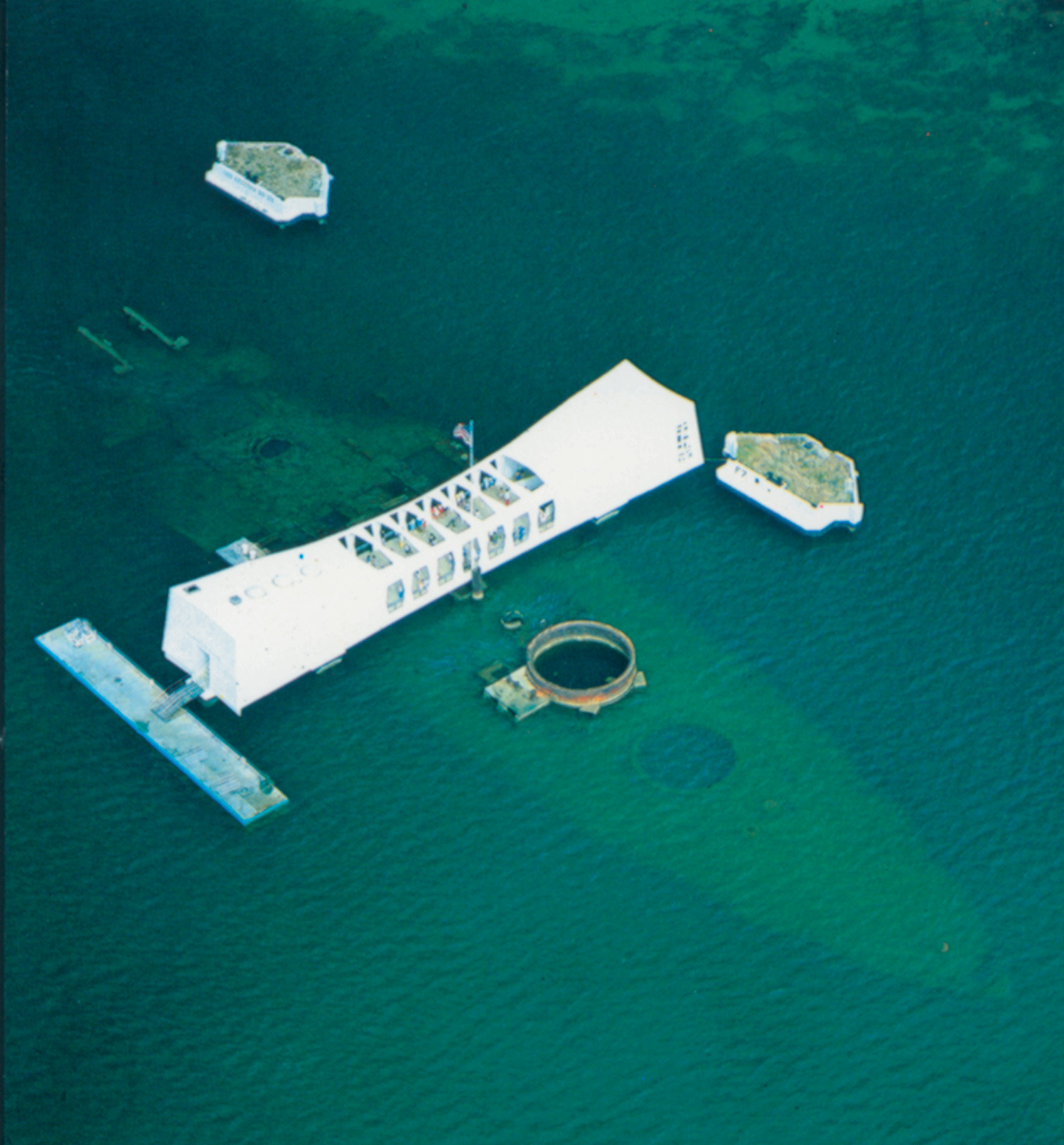
Today, the ships that sank at Pearl Harbor serve as a laboratory for some of the most advanced underwater tech in the world. Since the wrecks—specifically the USS Arizona and USS Utah—cannot be raised due to their status as war graves, the National Park Service (NPS) and various tech firms use non-invasive tools to monitor their structural integrity.
Sonar Mapping and 3D Photogrammetry
To “see” the ships in the murky, oil-tapped waters of the harbor, engineers utilize Multibeam Echo Sounders (MBES) and Side-Scan Sonar. This technology sends thousands of pings per second to create a high-resolution digital map of the wrecks. Furthermore, photogrammetry—a software-based process that stitches together thousands of high-definition underwater photos—has allowed researchers to create a “digital twin” of the USS Arizona. This allows historians to explore the ship in a virtual environment without touching the physical site.
AI-Driven Corrosion Modeling for the USS Arizona
One of the greatest technological challenges at Pearl Harbor is the “ticking time bomb” of oil leakage. The Arizona still holds an estimated 500,000 gallons of fuel oil. To prevent an ecological disaster, scientists use AI-driven software to model the rate of corrosion on the hull’s steel. By inputting data from microbial sensors and thickness gauges, the AI can predict when the structural integrity of the oil bunkers might fail. This allows engineers to plan targeted, non-invasive “surgical” extractions of the oil using robotic systems.
From Steel to Silicon: Digital Twins and Historical Reconstruction
The legacy of the ships lost at Pearl Harbor has transitioned from the physical realm into the digital one, utilizing software and hardware that would have seemed like science fiction in 1941.
Virtual Reality (VR) as a Tool for Historical Education
Educational institutions are now using VR gadgets (such as the Meta Quest and HTC Vive) to provide immersive tutorials on naval architecture. By using the digital twins generated from sonar data, students can walk through the decks of the USS Oklahoma or stand on the bridge of the USS Nevada. This application of “edutech” ensures that the technical lessons of the attack—ranging from damage control failures to engine room layouts—are preserved for future generations of engineers.
The Role of Big Data in Naval Forensic Analysis
In recent years, “Big Data” has been applied to the logs and salvage records of the Pearl Harbor fleet. By digitizing thousands of pages of post-attack reports and using data analytics software, historians have been able to pinpoint the exact sequence of technical failures that led to the sinking of the USS California and USS West Virginia. These insights are not just historical; they inform modern digital security and structural engineering for the current generation of naval vessels, ensuring that modern “tech” doesn’t fall victim to the same oversight as the dreadnoughts of old.
Conclusion: The Lasting Tech Legacy of Pearl Harbor
The question of “what ships sank at Pearl Harbor” is answered by a list of names: the Arizona, the Oklahoma, the West Virginia, the California, the Nevada, the Utah, the Oglala, and the Shaw. However, the technical answer is far more complex. It was a fleet of 19th-century concepts struggling to survive in a 20th-century tech landscape.
From the metallurgical properties of their armor to the AI-driven models currently monitoring their decay, these ships remain at the forefront of technological study. They remind us that technology is a cycle of innovation, vulnerability, and eventual digital immortality. As we use modern gadgets to peer into the depths of the harbor, we are not just looking at sunken steel; we are looking at the foundational data of modern military and marine engineering.
aViewFromTheCave is a participant in the Amazon Services LLC Associates Program, an affiliate advertising program designed to provide a means for sites to earn advertising fees by advertising and linking to Amazon.com. Amazon, the Amazon logo, AmazonSupply, and the AmazonSupply logo are trademarks of Amazon.com, Inc. or its affiliates. As an Amazon Associate we earn affiliate commissions from qualifying purchases.