
Securing a National Merit Scholarship is often viewed through the lens of academic prestige, but for the modern family, it is primarily a high-stakes financial strategy. With the cost of higher education skyrocketing, the National Merit Scholarship Program (NMSC) represents one of the most effective personal finance levers available to high school students and their parents. The difference between a qualifying score and a near-miss can translate into tens of thousands, or even hundreds of thousands, of dollars in saved tuition, effectively serving as a major windfall for a student’s future net worth.
The Financial Impact of National Merit Distinction
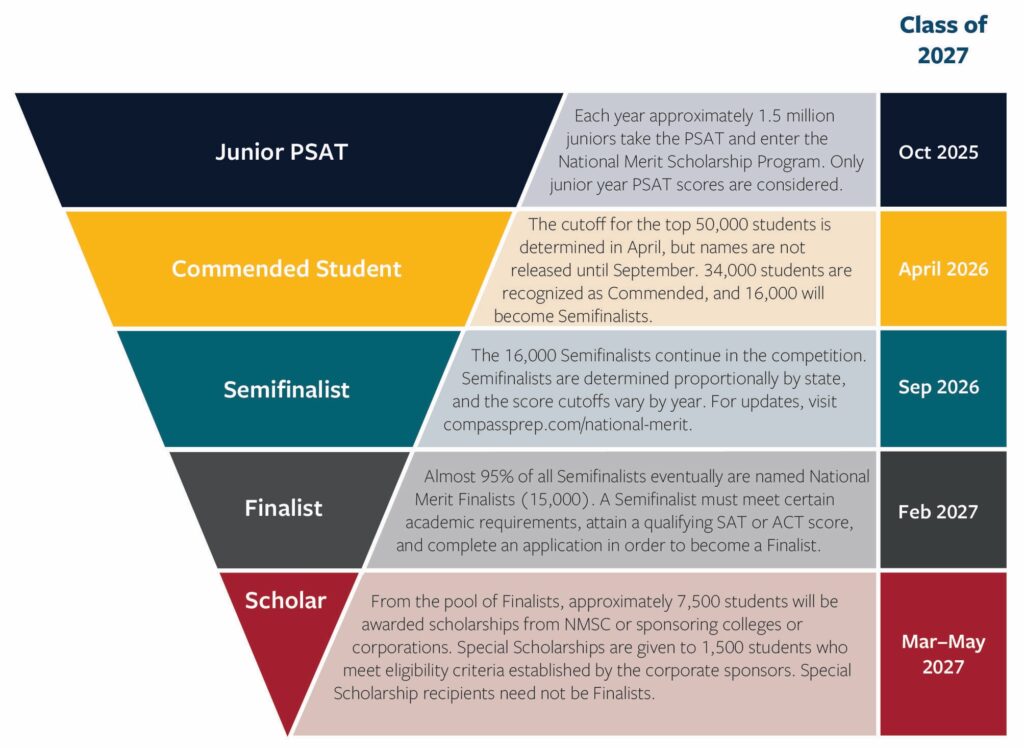
To understand the score requirements, one must first understand the financial magnitude of the award. While the NMSC itself provides a one-time $2,500 scholarship to many winners, the real financial value lies in the “institutional” scholarships. Many public and private universities use the National Merit Finalist designation as a benchmark for awarding full-ride or full-tuition scholarships. For a student planning to attend a Tier 1 research university, achieving the necessary score can be the equivalent of a $150,000 to $250,000 tax-free investment in their education.
The Tiered Value of the Designation
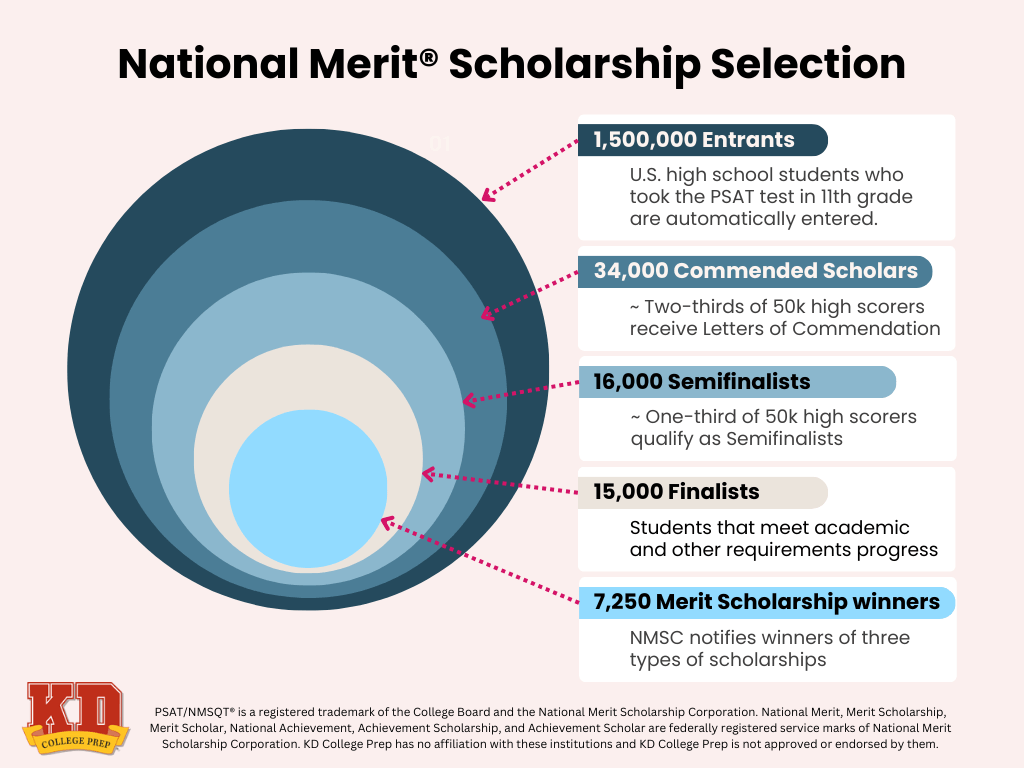
The program categorizes students into three primary financial tiers: Commended Students, Semifinalists, and Finalists. Commended students generally do not receive NMSC money but can use the distinction to bolster their applications for other private financial aid. Semifinalists represent the top 1% of scorers in each state. However, the true financial “jackpot” occurs at the Finalist level. Approximately 95% of Semifinalists become Finalists, which opens the door to corporate-sponsored awards and, more importantly, college-sponsored merit packages that can cover room, board, and even stipends for study abroad.
Reducing the Student Loan Burden
From a personal finance perspective, the National Merit Scholarship is a primary tool for debt avoidance. The average student loan debt for graduates continues to climb, often delaying major life milestones such as home ownership or retirement investing. By hitting the required PSAT/NMSQT score, a student effectively front-loads their earnings. Instead of paying off high-interest debt in their 20s, a National Merit scholar can redirect those potential loan payments into a Roth IRA or a brokerage account, benefiting from decades of compound interest.
Understanding the Selection Index: The Math Behind the Money
The score you need is not a single, flat number used across the United States. Instead, the NMSC uses a proprietary calculation known as the Selection Index. This index is derived from the PSAT/NMSQT, a test typically taken in October of a student’s junior year. Because the test is shorter and scored differently than the standard SAT, the math required to reach the qualifying threshold is specific and requires a targeted approach.
Calculating Your Selection Index
The Selection Index is calculated by doubling the sum of your Reading and Writing (RW) score and your Math score, then dividing by 10. For example, if a student scores a 36 in Reading/Writing and a 38 in Math on the test’s cross-test scales, their index would be calculated as 2(36 + 38), resulting in a Selection Index of 148. On the current digital PSAT scale, this translates to a more common simplified formula: (2 x Verbal Score + Math Score) / 10.
Because the Verbal section is weighted more heavily in this formula than the Math section—accounting for two-thirds of the total index—students who are stronger in humanities often find the National Merit threshold easier to reach. From a strategic planning perspective, this means students looking to maximize their “educational ROI” should focus heavily on the evidence-based reading and writing sections, as every point gained there is worth double what a point in math is worth in the Selection Index.
The Scaling of the Digital PSAT
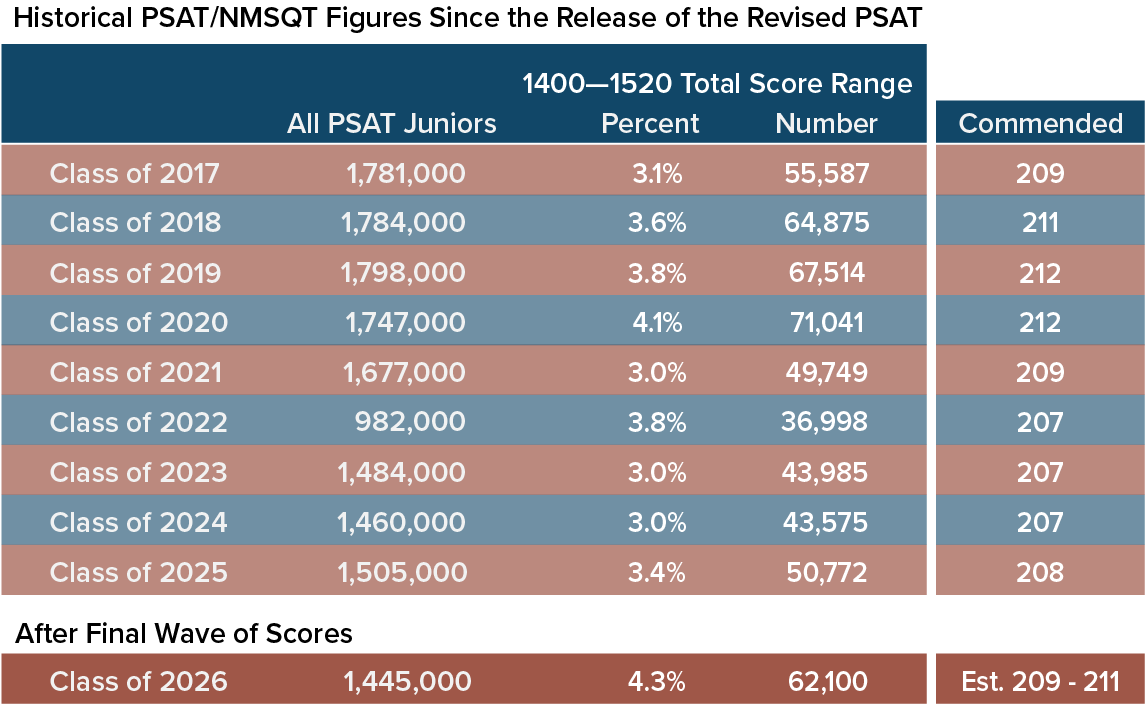
With the transition to the digital PSAT, the maximum score is 1520. However, the Selection Index caps out at 228. Most students aiming for the scholarship need to target a Selection Index between 210 and 223, depending on their residency. Understanding this math is the first step in a financial roadmap that treats test preparation as a high-yield investment rather than a mere academic chore.
State Cutoffs and the Geography of Financial Opportunity
One of the most complex aspects of the National Merit Scholarship is that the score you need depends entirely on where you live. The NMSC allocates Semifinalist slots to each state in proportion to that state’s percentage of the total graduating senior class in the U.S. This creates a “geographic arbitrage” scenario where the financial barrier to entry is significantly higher in some states than in others.
High-Competition Jurisdictions
In states with high concentrations of well-funded school districts and competitive academic environments—such as New Jersey, Massachusetts, California, and the District of Columbia—the Selection Index cutoff is consistently high. In these regions, a student may need a Selection Index of 222 or 223 to qualify. For families in these states, the “cost” of qualifying is higher in terms of the time and resources required for test preparation, but the potential payoff remains equally high due to the prestige of the award in those markets.
Lower-Threshold Opportunities
Conversely, in states like Wyoming, West Virginia, or Mississippi, the cutoff might hover around 207 to 210. This geographical variance means that a student in a lower-cutoff state has a statistically higher chance of securing a six-figure scholarship with the same raw score as a student in a higher-cutoff state who may only receive “Commended” status. For families considering a move or those with flexible residency, understanding these cutoffs can be a part of a broader financial strategy regarding school district selection and college savings.
Yearly Fluctuations
It is important to note that cutoffs are not set in stone; they fluctuate annually based on the performance of the current year’s cohort. Therefore, students should not aim for the previous year’s cutoff but rather should aim for a “safety margin” of at least 2–3 points above the historical average for their state. In the world of finance, this is known as a margin of safety—protecting your “investment” (the time spent studying) against the volatility of the year’s testing pool.
Strategic Financial Planning: Maximizing Your Merit Potential
If we treat the National Merit Scholarship as a financial asset, the “capital” required to acquire it is student effort and, often, a modest investment in test prep materials or tutoring. When compared to the potential returns, the ROI of PSAT preparation is arguably the highest of any legal financial instrument available to a teenager.
The Cost-Benefit of Test Preparation
If a parent spends $1,000 on a high-quality test prep course and the student subsequently raises their score enough to qualify for a full-tuition scholarship at a state honors college, the return on that $1,000 investment is astronomical. If the scholarship saves $100,000 over four years, the ROI is 9,900%. Even if the student only qualifies for a smaller corporate award, the prep pays for itself many times over. In the context of a family’s broader financial plan, allocating funds toward PSAT prep in the sophomore and junior years is often a more effective use of capital than adding that same $1,000 to a 529 College Savings Plan.
The Role of the “Commended” Status
Even if a student falls just short of the Semifinalist cutoff, the “Commended” designation (usually around a 207-209 index nationally) carries its own financial weight. Many private scholarship funds and corporate foundations use this designation as a filter for their own financial awards. Furthermore, being in the top 3% of scorers nationally is a significant “brand” asset for a student, allowing them to negotiate better financial aid packages from private universities that practice “preferential packaging”—a tactic where schools offer more grants and fewer loans to students with high academic profiles.
Leveraging the Finalist Status for Full-Ride Offers
The final stage of the financial journey is the transition from Semifinalist to Finalist. This process is not automatic, but for those who manage it, the financial floodgates often open. To move from Semifinalist to Finalist, students must maintain high grades, receive a school recommendation, and submit an essay. From a business perspective, this is the “due diligence” phase of the scholarship award.
Identifying “National Merit Friendly” Universities
Strategic students use their score to target specific universities that are “National Merit Friendly.” Schools like the University of Alabama, University of Oklahoma, and University of Central Florida are famous in the personal finance community for offering massive incentives to National Merit Finalists. These packages often include:
- Full tuition for four or five years.
- Guaranteed housing stipends.
- Research or study abroad grants ($2,000–$5,000).
- Laptops and book allowances.
For a family that has not saved enough for college, hitting the National Merit score is the ultimate “get out of jail free” card. It allows the student to attend a high-quality institution without depleting the parents’ retirement funds or saddling the student with debt.
Conclusion: The Score as a Financial Milestone
While the National Merit Scholarship is an academic honor, it is, at its core, a significant financial milestone. Whether the required score in your state is 210 or 223, the pursuit of that number should be treated with the same rigor as a professional investment strategy. By understanding the Selection Index math, accounting for state-specific cutoffs, and recognizing the massive ROI of the Finalist designation, students and families can leverage a single test score into a lifetime of financial freedom. In the grand scheme of personal finance, there are few actions a teenager can take that have a more profound impact on their long-term economic trajectory.
aViewFromTheCave is a participant in the Amazon Services LLC Associates Program, an affiliate advertising program designed to provide a means for sites to earn advertising fees by advertising and linking to Amazon.com. Amazon, the Amazon logo, AmazonSupply, and the AmazonSupply logo are trademarks of Amazon.com, Inc. or its affiliates. As an Amazon Associate we earn affiliate commissions from qualifying purchases.