
In the modern era, stress is often viewed as an invisible tax on productivity and longevity. At the center of this physiological tax is cortisol, a steroid hormone produced by the adrenal glands. While essential for the “fight or flight” response, chronically elevated cortisol levels lead to sleep disruption, cognitive decline, and metabolic dysfunction. For years, the advice for managing this “stress hormone” remained analog: meditate, sleep more, and exercise.
However, we are witnessing a paradigm shift. The same technological ecosystem that contributed to the “always-on” culture is now providing the most sophisticated tools to dismantle it. From wearable biosensors that track hormonal proxies to AI-driven neuro-modulation, technology is becoming the primary interface through which we understand and regulate our internal chemistry. This article explores the cutting-edge technological landscape designed specifically to monitor, manage, and ultimately reduce cortisol levels.

Wearable Technology: Real-Time Biometrics and the Cortisol Proxy
The challenge with cortisol has traditionally been measurement. Unlike heart rate, cortisol usually requires blood or saliva tests, making real-time tracking difficult. Modern tech has bypassed this hurdle by focusing on “proxies”—physiological markers that correlate directly with cortisol production.
Smart Rings and the Evolution of HRV Tracking
Leading the charge in the consumer tech space are smart rings, such as the Oura Ring and the Ultrahuman Ring AIR. These devices focus heavily on Heart Rate Variability (HRV). HRV is the measure of the variation in time between each heartbeat and is controlled by the autonomic nervous system.
When cortisol levels are high, the body stays in a sympathetic “fight or flight” state, resulting in low HRV. By providing users with a daily “Readiness Score,” these devices allow individuals to see the direct impact of their lifestyle on their nervous system. The technology uses infrared photoplethysmography (PPG) sensors to map blood flow, providing a data-driven mirror that reflects when cortisol is likely peaking, even before the user feels consciously stressed.
Electrodermal Activity (EDA) and Stress Sensing
While HRV is a lagging indicator, Electrodermal Activity (EDA) sensors offer a more immediate look at stress. Found in high-end wearables like the Fitbit Sense 2 and certain Google Pixel Watches, EDA sensors detect microscopic changes in sweat levels on the skin.
These “sweat responses” are triggered by the adrenal system. When the sensor detects a spike in skin conductance, the device prompts the user to perform a guided breathing exercise or a “mood log.” This creates a closed-loop system where the technology identifies a cortisol spike and immediately offers a digital intervention to mitigate it.
AI-Powered Wellness Platforms: From Data to Predictive Intervention
The sheer volume of data produced by wearables is useless without interpretation. Artificial Intelligence is now being leveraged to move beyond descriptive analytics (what happened) to prescriptive and predictive analytics (what will happen and how to fix it).
Predictive Analytics for Burnout Prevention
Enterprise-level tech platforms are increasingly integrating AI to help high-performers manage their hormonal health. By aggregating data from calendars, sleep trackers, and even typing speed/accuracy, AI models can now predict a “cortisol crash” before it happens.
For instance, if an AI observes a trend of decreasing deep sleep coupled with a more erratic heart rate during work hours, it can flag the user for a “high-cortisol risk.” These platforms don’t just suggest a break; they use machine learning to identify which specific interventions—such as a specific type of binaural beat or a three-minute box-breathing session—have historically been most effective for that specific user’s physiology.
Conversational AI and Digital Mental Health
Generative AI and sophisticated Large Language Models (LLMs) are also playing a role in cortisol reduction through “Digital Therapeutics.” Apps like Woebot or Wysa use Cognitive Behavioral Therapy (CBT) frameworks to help users reframe stressful thoughts.
By engaging in a text-based dialogue with an AI, users can lower their psychological distress in real-time. Because psychological stress is the primary driver of cortisol secretion, these AI “coaches” act as a front-line defense. The technology is designed to be non-judgmental and available 24/7, removing the barriers of cost and scheduling that often prevent people from seeking human-led stress management.
Neuromodulation and Hardware Innovations
While software and wearables focus on tracking and psychology, a new category of “hard tech” seeks to intervene directly in the nervous system. Neuromodulation devices use physical stimuli—vibration, electricity, or sound—to force the body out of a high-cortisol state.
Vagus Nerve Stimulation (VNS) Devices
The vagus nerve is the “superhighway” of the parasympathetic nervous system, responsible for the “rest and digest” response. Tech companies like Pulsetto and Apollo Neuro have developed wearable devices that stimulate the vagus nerve through gentle electrical pulses or specific vibrational frequencies.
The Apollo Neuro, for example, doesn’t track your health; it actively changes it. By wearing it on the wrist or ankle, the device emits “vibroacoustic” waves that the skin perceives as a soothing touch. This physical signal travels to the brain, signaling safety and causing a rapid down-regulation of cortisol. Research into these devices shows that consistent use can improve HRV and significantly lower the physiological markers of chronic stress.
Ambient Tech: The Smart Home as a Cortisol Regulator
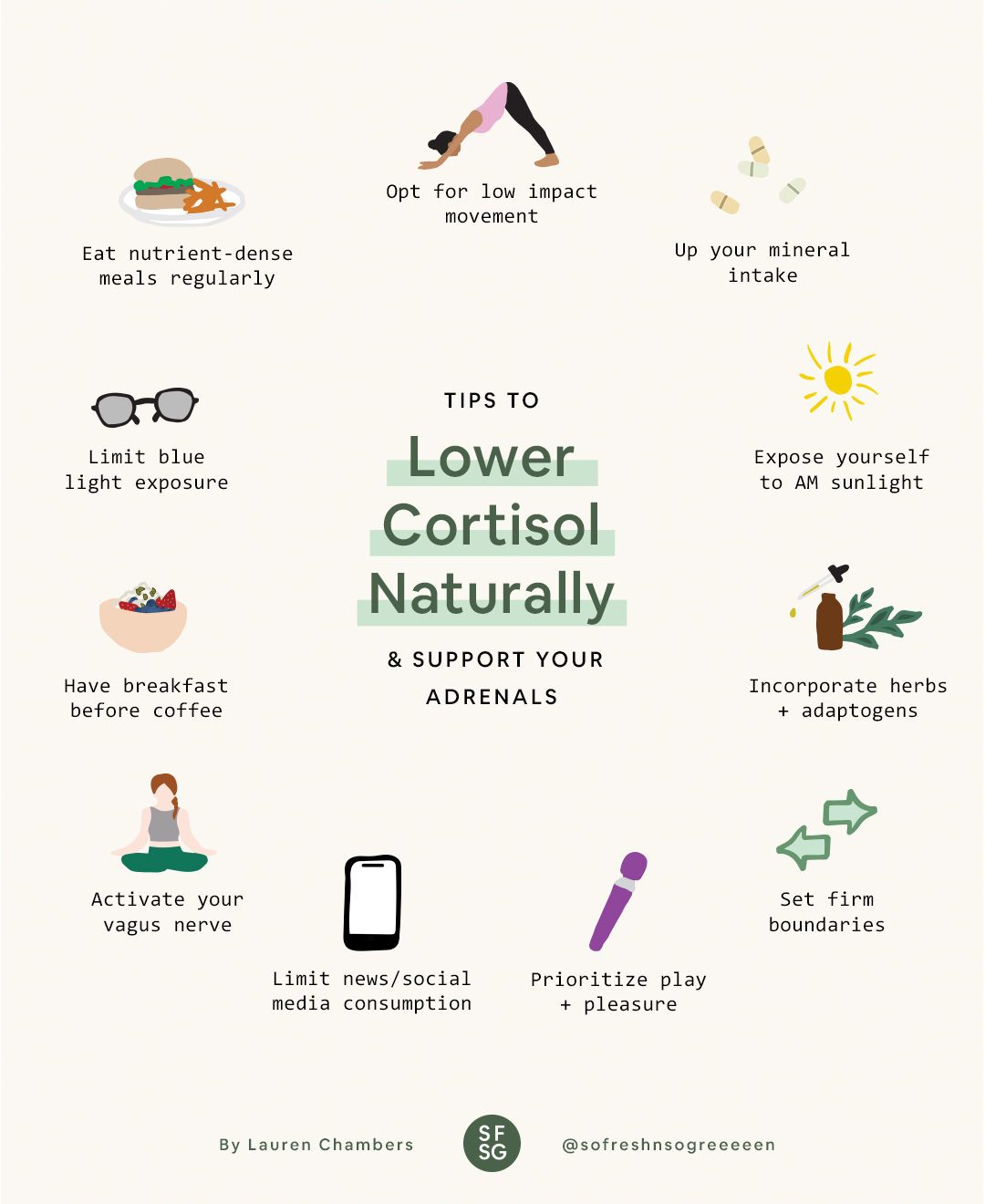
The environment we inhabit is a major determinant of our hormonal health. The “Smart Home” ecosystem is evolving to include cortisol-reducing automations. This includes circadian lighting systems (like Philips Hue or Lutron) that automatically shift from blue light to warm amber tones in the evening.
Blue light exposure suppresses melatonin and can keep cortisol levels artificially high at night. By automating the light spectrum of an entire home based on the time of day, technology ensures that the body’s natural hormonal rhythm is supported rather than disrupted. Furthermore, smart HVAC systems can now adjust room temperatures to the optimal 65–68 degrees Fahrenheit required for deep, cortisol-lowering sleep, removing the “friction” of manual environmental management.
Immersive Software: VR and Gamified Biofeedback
The final frontier in the tech stack for cortisol reduction is the use of Virtual Reality (VR) and gamification to train the brain for resilience.
VR and Immersive Therapeutic Environments
Virtual Reality is no longer just for gaming. Platforms like TRIPP VR are using “Awe-tech” to induce physiological calm. By immersing a user in a mathematically generated, visually stunning landscape accompanied by spatial audio, VR can “hijack” the visual cortex to induce a state of deep meditation that would take years to master traditionally.
Clinical studies have shown that even ten minutes in a high-quality VR meditative environment can lead to a measurable drop in salivary cortisol. The immersion is so complete that the brain’s “Default Mode Network”—the part of the brain responsible for ruminating on stress—is effectively quieted.
Gamified Biofeedback Systems
Gamification is being used to make the “work” of reducing cortisol engaging. Devices like the Muse headband use electroencephalography (EEG) to monitor brainwaves. When the user is calm, they hear peaceful weather sounds or birds chirping in their headphones. If their mind wanders and stress (and cortisol) rises, the “weather” in the app becomes stormy.
This creates a real-time feedback loop where the user is “playing a game” with their own brain chemistry. Over time, this tech trains the user to recognize the internal feeling of a cortisol spike and gives them the mental “muscle memory” to bring it back down manually.

The Future of Calm Tech
As we look toward the future, the goal of technology is to become “invisible.” We are moving toward a world where our devices don’t just tell us we are stressed, but silently adjust our environment, suggest a micro-rest, or provide a subtle haptic pulse to keep our cortisol in check.
The integration of these technologies—the “Tech Stack for Stress”—represents a move away from reactive healthcare toward proactive hormonal management. By leveraging the power of sensors, AI, and neuromodulation, we are finally gaining the upper hand on the biological mechanisms of stress, turning “cortisol reduction” from a vague wellness goal into a precise, tech-driven science.
aViewFromTheCave is a participant in the Amazon Services LLC Associates Program, an affiliate advertising program designed to provide a means for sites to earn advertising fees by advertising and linking to Amazon.com. Amazon, the Amazon logo, AmazonSupply, and the AmazonSupply logo are trademarks of Amazon.com, Inc. or its affiliates. As an Amazon Associate we earn affiliate commissions from qualifying purchases.