
For decades, Short Message Service (SMS) has been the bedrock of mobile communication, a simple yet effective way to send brief text messages between phones. It was revolutionary in its time, enabling quick, asynchronous communication that transformed personal and business interactions. However, as smartphones evolved and the internet became ubiquitous, SMS began to show its age. Its limitations—lack of rich media support, absence of read receipts or typing indicators, and basic group chat functionality—became glaringly apparent. This void was swiftly filled by a new breed of internet-based messaging applications like WhatsApp, iMessage, and Messenger, which offered a far richer, more dynamic, and often more secure user experience.

Yet, relying solely on these “over-the-top” (OTT) apps introduced its own set of challenges: fragmentation across different platforms, the need for an internet connection, and a fractured experience where users might juggle multiple apps depending on who they were communicating with. Enter Rich Communication Services (RCS)—a carrier-based messaging protocol designed to bridge this gap, bringing the advanced features users love from OTT apps directly into the native messaging experience. RCS isn’t just an upgrade; it’s a fundamental reimagining of what a standard text message can be, promising a unified, feature-rich, and interactive future for mobile communication.
The Evolution of Mobile Messaging: From SMS to RCS
The journey of mobile messaging is a testament to the rapid pace of technological innovation. What started as a barebones text service has slowly but surely transformed into a sophisticated communication channel.
The Limitations of SMS and MMS
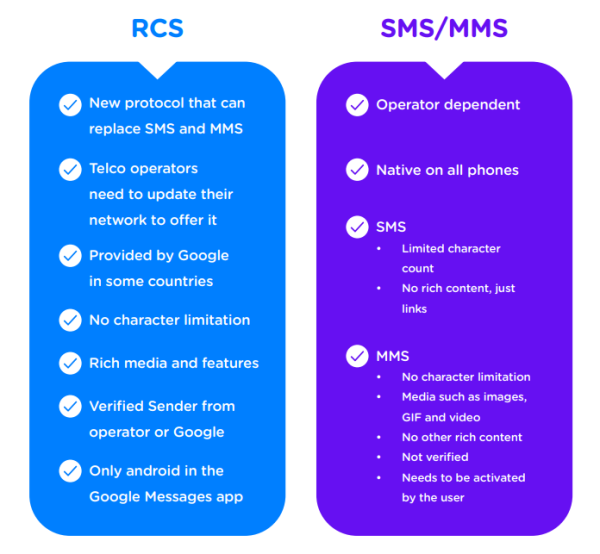
SMS, introduced in the early 1990s, was designed for brevity and simplicity. With a character limit of 160 characters (though concatenation allowed for longer messages), it was an incredibly efficient way to send short pieces of information. Its companion, Multimedia Messaging Service (MMS), later arrived to enable the sending of images and short video clips, but it too was plagued by limitations: small file size caps, compression that often degraded media quality, and unreliable delivery across different carriers and devices.
Crucially, neither SMS nor MMS offered any indication of whether a message had been delivered or read, nor did they provide real-time interaction indicators like “typing…” Moreover, the security of SMS was minimal; messages were largely unencrypted, making them vulnerable to interception. This archaic feature set created a desperate need for a more modern messaging solution.
The Rise of Over-the-Top (OTT) Apps
The smartphone era, catalyzed by the iPhone in 2007 and the proliferation of Android devices, ushered in a new paradigm. Users gained constant internet access, paving the way for apps that bypassed traditional carrier-based messaging infrastructure. WhatsApp, launched in 2009, quickly demonstrated the power of internet-based messaging, offering free, rich-featured communication. Apple’s iMessage, integrated directly into its native Messages app, provided a seamless experience for iPhone users, complete with read receipts, typing indicators, and high-quality media sharing, but only within the Apple ecosystem. Other players like Facebook Messenger, Telegram, and Signal further diversified the landscape, each offering unique features, security protocols, and user bases.
These OTT apps addressed many of the shortcomings of SMS, but they also created a fragmented messaging landscape. Communicating with someone often meant determining which app they preferred or had installed, leading to a less than universal experience.
RCS: Bridging the Gap and Standardizing Rich Messaging
RCS was conceived as a solution to this fragmentation and as a direct upgrade to SMS/MMS, bringing the beloved features of OTT apps into the native messaging client, managed by mobile carriers themselves. The GSMA (Groupe Spéciale Mobile Association), a global organization representing mobile operators worldwide, championed the development of a “Universal Profile” for RCS. This profile aimed to standardize the features and technical specifications of RCS, ensuring interoperability across different networks and devices.
The fundamental idea behind RCS is to enable a consistent, rich messaging experience for everyone, regardless of their smartphone’s brand or their mobile carrier, by leveraging IP (Internet Protocol) connectivity. It’s not a new app; it’s an enhanced protocol that powers your existing messaging app.
Key Features and Capabilities of RCS Messaging
RCS fundamentally transforms the native messaging experience, adding a layer of sophistication that users have come to expect from modern communication platforms.
Enhanced User-to-User Messaging Experience
At its core, RCS elevates person-to-person (P2P) communication, making it more intuitive and engaging. When both sender and receiver have RCS enabled (often indicated by “Chat features” in Android’s Google Messages app), users gain access to:
- Read Receipts and Typing Indicators: Know when your message has been delivered and read, and see when someone is typing a response, fostering more fluid conversations.
- High-Resolution Photo and Video Sharing: Say goodbye to pixelated images and heavily compressed videos. RCS allows for sharing media in much higher quality, preserving the integrity of your content.
- Larger File Sharing: Share documents, audio files, and other types of files directly within the chat, often with significantly larger size limits than MMS.
- Richer Group Chats: Enjoy advanced group functionalities, including the ability to name groups, add or remove participants easily, and receive group-specific notifications.
- Emoji Reactions: React directly to specific messages with a variety of emojis, adding a layer of expressiveness common in modern chat apps.
- Location Sharing: Share your live or static location with contacts directly from the messaging interface.
- Audio Messaging: Send voice notes, a convenient feature for when typing is cumbersome.
These features make the native messaging app competitive with, and in some ways superior to, many OTT apps for everyday communication, especially when considering its universal reach.
Business Messaging (RCS Business Messaging – RBM)
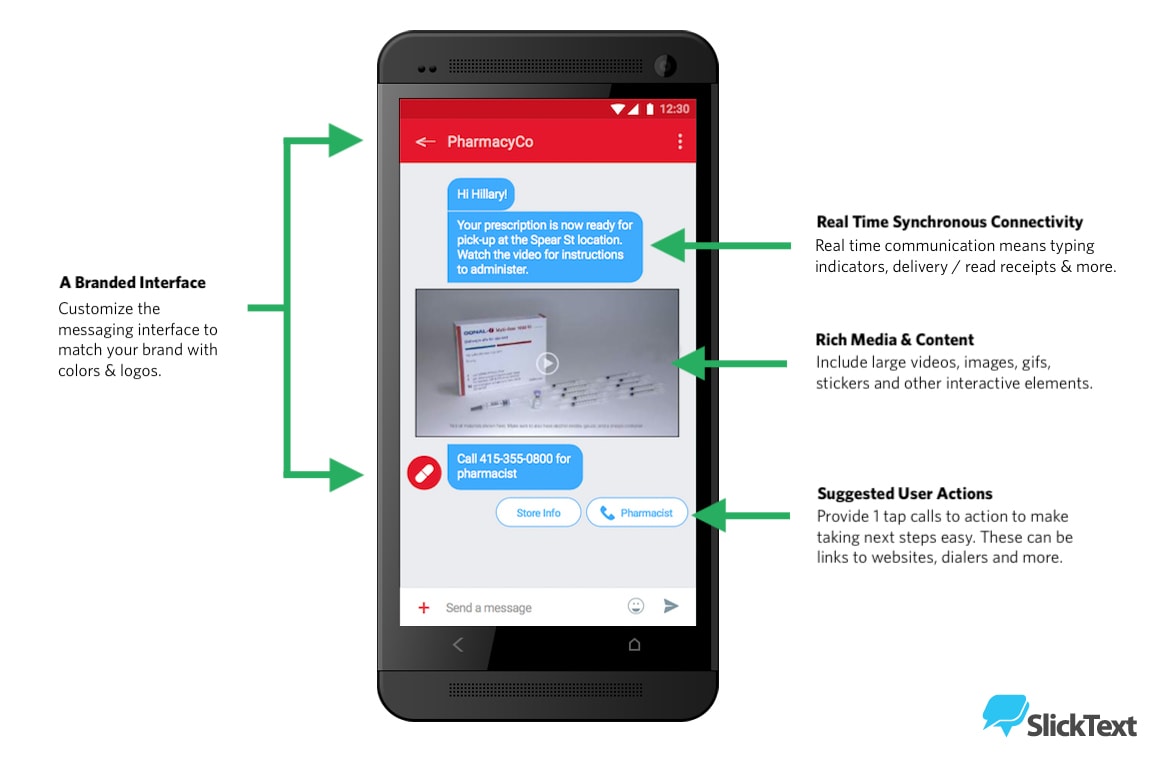
While enhanced P2P messaging is a significant draw, the true “killer app” for RCS, and where much of its enterprise value lies, is in Business Messaging (RBM). RBM empowers brands to communicate with customers in a much more dynamic, interactive, and personalized way than traditional SMS marketing.
Imagine receiving a text message that isn’t just plain text, but rather a rich, interactive interface:
- Verified Senders: Businesses can have their sender identity verified, displaying their brand logo and name, building trust and reducing spam concerns.
- Rich Cards and Carousels: Instead of a simple link, customers can receive interactive cards displaying product images, descriptions, prices, and direct “Buy Now” buttons. Carousels allow for multiple cards, perfect for showcasing product catalogs or service options.
- Suggested Replies and Actions: Businesses can provide pre-written quick replies or suggested actions (e.g., “Check Order Status,” “Talk to Agent,” “Reschedule Appointment”), streamlining customer service interactions.
- Interactive Bots: Integrate AI-powered chatbots for 24/7 customer support, answering FAQs, booking appointments, or guiding users through troubleshooting steps.
- Enhanced Transactions: Receive boarding passes with scannable QR codes, event tickets, delivery updates with tracking maps, or interactive bank statements directly in your messaging app.
- Personalized Experiences: Leverage customer data to send highly relevant promotions, personalized recommendations, and targeted information.
RBM transforms the messaging app into a powerful customer engagement and service channel, offering an experience akin to interacting with a brand’s dedicated app, but without the need for customers to download anything new. Airlines, banks, retailers, and countless other industries stand to benefit immensely from this capability.
Advanced Security and Privacy (with Caveats)
Compared to SMS, RCS offers significant advancements in security. SMS messages are typically unencrypted and can be intercepted relatively easily. RCS, leveraging IP, provides a more secure transport layer. However, the level of encryption in RCS is nuanced:
- End-to-End Encryption (E2EE): Google, a major proponent of RCS, has implemented end-to-end encryption for one-on-one conversations between users of its Google Messages app when both are using “Chat features.” This means only the sender and receiver can read the messages, protecting them from third-party interception.
- Carrier Implementation: The implementation of E2EE across all RCS-enabled carriers and clients worldwide is not universal. While Google’s push is significant, not all RCS traffic is inherently end-to-end encrypted by default, particularly for group chats or if one party is using a different RCS client or carrier implementation.
- Data Handling: As with any internet-based service, the privacy policies of the carriers and providers (like Google) managing the RCS service dictate how user data is handled, stored, and utilized. Users should be aware of these policies.
Despite these nuances, the move away from unencrypted SMS is a major step forward, and the push for more comprehensive E2EE continues to be a priority for the industry, especially with Google’s ongoing efforts.
The RCS Ecosystem: Implementation and Challenges
The vision for a unified, rich messaging standard is compelling, but its journey to widespread adoption has been complex, marked by differing corporate strategies and technological hurdles.
Google’s Pivotal Role in Driving Adoption
Google has been arguably the most ardent and effective champion of RCS. Recognizing the fragmented Android messaging landscape and the need for a viable competitor to iMessage, Google took the initiative to deploy its own RCS infrastructure. Through its Jibe Mobile platform, Google began offering “Chat features” (its branding for RCS) directly to Android users via the Google Messages app. This approach allowed Google to bypass the slow rollout of individual carriers, effectively making RCS available to millions of users even if their carrier hadn’t fully implemented it yet. Google’s strategy has been crucial in accelerating the global availability of RCS for P2P communication.
Carrier Involvement and Interoperability
Initially, mobile carriers were slow to adopt RCS universally, often launching their own fragmented versions or prioritizing competing initiatives. This created an interoperability nightmare, where RCS features might work between certain networks but not others. The GSMA’s Universal Profile was designed to address this, providing a single, consistent standard for carriers to implement. While many carriers globally have now adopted the Universal Profile, the rollout has been piecemeal, and some regions still face inconsistent experiences. The challenge remains to ensure all carriers fully support the Universal Profile with all its features.
The Apple Factor: A Game Changer
For years, Apple’s steadfast refusal to adopt RCS for iMessage was the biggest impediment to truly universal rich messaging. In markets like the United States, where iPhone penetration is high, the “green bubble / blue bubble” phenomenon created a social divide, with SMS users (green bubbles) experiencing a vastly inferior messaging experience compared to iMessage users (blue bubbles). Apple argued that iMessage offered superior security and privacy (due to its end-to-end encryption) and that RCS wasn’t a direct replacement.
However, in November 2023, Apple announced a significant shift: it would adopt RCS Universal Profile in late 2024. This move is a monumental development. While iMessage will likely remain Apple’s proprietary standard for communication between Apple devices, integrating RCS will vastly improve the messaging experience between iPhones and Android phones. Users can expect higher quality photos and videos, audio messages, read receipts, typing indicators, and potentially better group chat features when communicating across platforms. This decision effectively removes the biggest barrier to RCS becoming a truly universal standard.
Remaining Challenges to Widespread Adoption
Despite Apple’s announcement, several challenges persist:
- Feature Parity: Even with the Universal Profile, variations in carrier and device implementations can lead to inconsistencies in feature availability or performance.
- User Awareness: Many users are still unaware of what “Chat features” are or that they are using RCS, simply perceiving an improved messaging experience. Education is key.
- Competition: Entrenched OTT apps with billions of users and advanced features (e.g., video calls, payments) still pose strong competition, especially in regions where their market share is dominant.
- Global Carrier Rollout: Ensuring every carrier worldwide fully supports and properly implements RCS remains an ongoing effort, particularly in developing regions.
The Future of Messaging: What RCS Means for Users and Businesses
RCS is poised to redefine the landscape of mobile communication, offering significant benefits to both individual users and the business world.
Enhanced User Experience and Interoperability
For users, RCS promises a more consistent, feature-rich, and satisfying native messaging experience. The days of sending low-quality images or being unable to tell if a message was received when communicating across different phone types are slowly coming to an end. With Apple’s adoption, the fragmentation between iOS and Android users will be dramatically reduced, fostering greater interoperability and a more unified communication standard. Users will be able to enjoy the benefits of rich media, interactive features, and potentially enhanced security within their default messaging app, reducing the need to switch between multiple platforms for basic communication.
Unprecedented Opportunities for Businesses
For businesses, RCS Business Messaging (RBM) represents a paradigm shift in customer engagement. It transforms transactional messages (like delivery notifications or appointment reminders) into interactive dialogues. Brands can deliver personalized, visually rich, and actionable content directly to customers’ native messaging apps, leading to:
- Improved Customer Service: Automated chatbots and suggested replies can resolve common queries instantly, freeing up human agents for complex issues.
- Higher Conversion Rates: Interactive product carousels and direct call-to-action buttons can streamline the purchasing journey.
- Enhanced Brand Experience: Verified sender identities, rich branding, and engaging content foster trust and loyalty.
- Personalized Marketing: The ability to send targeted, interactive promotions can significantly increase engagement and sales.
- Rich Analytics: Businesses can gain deeper insights into customer interactions, enabling more informed marketing and service strategies.
RBM essentially provides a direct, highly engaging, and permission-based channel for businesses to interact with their customers, replacing clunky app downloads or impersonal SMS blasts with a seamless, interactive experience.
The Path Forward: A Global Standard
With Google’s relentless push and, crucially, Apple’s commitment to adopt RCS in late 2024, the protocol is firmly on track to become the new global standard for modern mobile messaging. This transition will not be instantaneous, but the trajectory is clear. As more carriers and devices fully embrace the Universal Profile, and as end-to-end encryption becomes more widely implemented for all RCS communications, the protocol will increasingly offer a compelling alternative to proprietary apps.
RCS is more than just an upgrade to SMS; it’s the foundation for a more interconnected, interactive, and intelligent communication ecosystem. It represents the maturation of mobile messaging, finally bringing the advanced capabilities of the internet to the most fundamental communication tool on our phones, enriching interactions for billions worldwide. The next chapter of mobile communication has officially begun, and RCS is writing it.
aViewFromTheCave is a participant in the Amazon Services LLC Associates Program, an affiliate advertising program designed to provide a means for sites to earn advertising fees by advertising and linking to Amazon.com. Amazon, the Amazon logo, AmazonSupply, and the AmazonSupply logo are trademarks of Amazon.com, Inc. or its affiliates. As an Amazon Associate we earn affiliate commissions from qualifying purchases.