
In the contemporary landscape of high-performance computing, mobile connectivity, and renewable energy hardware, the term “rare earth metals” has transitioned from a niche geological classification to a cornerstone of global technology strategy. While the average consumer may focus on the clock speed of a processor or the resolution of an OLED display, the physical existence of these features depends entirely on a specific group of seventeen elements: the lanthanides, plus scandium and yttrium.
These elements are not necessarily “rare” in terms of crustal abundance, but they are rarely found in concentrated, economically viable deposits. More importantly, their unique chemical and physical properties—specifically their magnetic, luminescent, and electrochemical characteristics—make them irreplaceable in the tech sector. As we push toward thinner devices, faster data transmission, and more efficient energy storage, understanding the specific roles of these metals becomes essential for anyone tracking the trajectory of modern hardware.
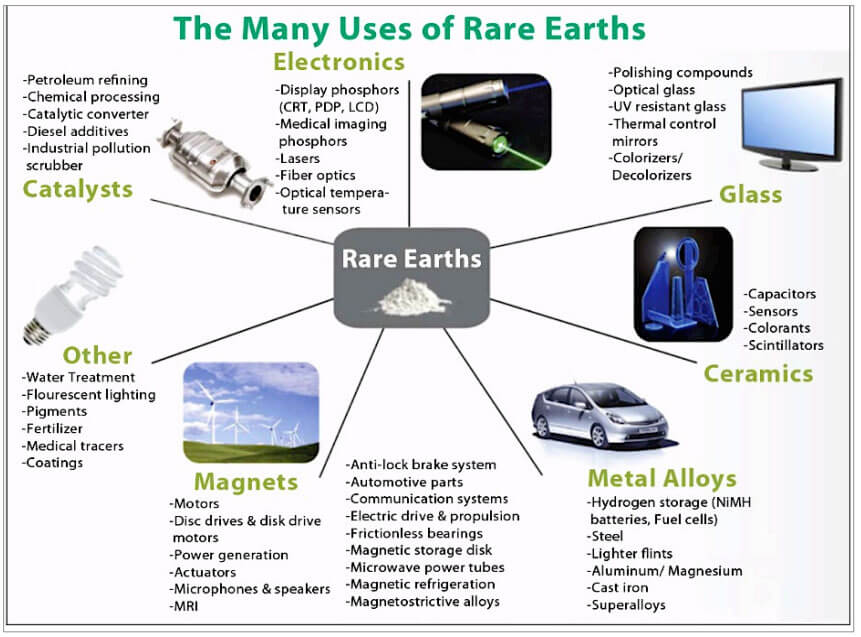
The Power of Magnets: Neodymium, Dysprosium, and Praseodymium
Perhaps the most critical application of rare earth elements (REEs) in the tech world lies in the creation of permanent magnets. Unlike traditional ferrite magnets, rare earth magnets provide an incredibly high magnetic flux density relative to their size. This allows engineers to miniaturize components that previously required significant physical volume.
Neodymium: The Core of Miniaturization
Neodymium is the heavyweight champion of the tech world. When alloyed with iron and boron, it creates the strongest permanent magnets commercially available. In the realm of consumer electronics, neodymium is what allows your smartphone to vibrate, your laptop’s speakers to produce crisp audio, and your hard disk drives (HDDs) to read data with microscopic precision.
Without neodymium, the “thin and light” revolution in laptop design would have been impossible. The actuators that move the read/write heads in traditional hard drives rely on neodymium magnets to operate at the high speeds required for modern data processing. Even as the industry shifts toward Solid State Drives (SSDs), neodymium remains vital in the high-fidelity transducers found in premium headphones and integrated laptop speakers.
Dysprosium and Praseodymium: Stability and Strength
Neodymium magnets have a significant weakness: they lose their magnetism at high temperatures. This is where dysprosium and praseodymium come into play. By adding small amounts of dysprosium to a neodymium magnet, engineers can increase its resistance to demagnetization. This is critical in the hardware powering data centers and high-performance servers, where internal temperatures can fluctuate significantly. Praseodymium is often used alongside neodymium to create high-strength alloys that are more resistant to corrosion, ensuring the longevity of internal hardware in various environmental conditions.
Visual Fidelity and the Science of Light: Europium, Terbium, and Yttrium
The evolution of display technology—from the bulky CRTs of the 1990s to the ultra-thin, vibrant OLED and MicroLED panels of today—is a story of rare earth chemistry. The ability of a screen to produce accurate, vivid colors is directly tied to the luminescent properties of specific REEs.
Europium and Terbium: Creating the RGB Spectrum
The “Red” and “Green” in the RGB (Red, Green, Blue) color model used by digital displays are often powered by europium and terbium. Europium is used as a phosphor in both LCD and OLED screens to produce a brilliant red hue. It is also essential in the backlighting of modern displays, ensuring that the white light produced by LEDs is balanced and capable of high color accuracy.
Terbium, on the other hand, is the primary element used to create the green phosphors. Because the human eye is most sensitive to green light, the purity of the terbium used in a display significantly impacts the perceived brightness and clarity of the screen. In the high-end TV and professional monitor market, the precise calibration of these rare earth phosphors is what separates a standard display from a color-accurate reference monitor used by video editors and digital artists.
Yttrium: The Foundation of Display Glass
Yttrium is often used in the composition of the glass itself or as a dopant in the LED backlighting systems. It helps in the creation of high-strength glass that can withstand the rigors of daily touch-screen use while remaining optically clear. Additionally, yttrium-based garnets are used in various laser applications within the tech manufacturing process, including the precision cutting of silicon wafers and the engraving of circuit boards.
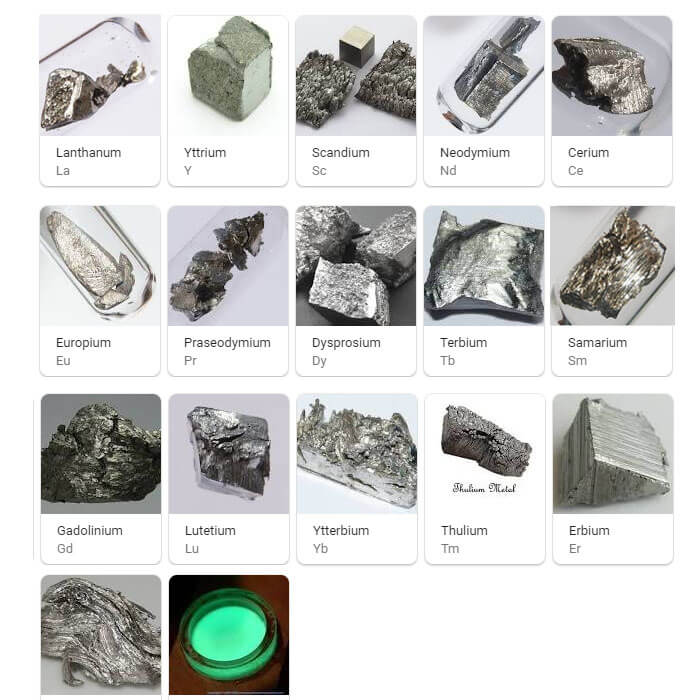
Connectivity and Optical Performance: Lanthanum, Erbium, and Cerium
As we move from the physical interface of the device to the infrastructure that connects it to the world, rare earth metals continue to play a pivotal role. The speed of our internet and the quality of the photos we take are both beholden to these elements.
Lanthanum: High-Refractive Index Lenses
Every high-end smartphone camera features a complex array of lens elements designed to minimize aberration and maximize light intake. Lanthanum is a key ingredient in high-refractive-index glass. By incorporating lanthanum oxide into the glass-making process, manufacturers can create thinner lenses that bend light more effectively than standard glass. This allows for the slim camera bumps seen on modern flagship phones, which still manage to deliver optical zoom and low-light performance that rivals dedicated cameras.
Erbium: Powering the Fiber Optic Backbone
The global internet relies on fiber optic cables that span oceans and continents. Over long distances, the light signals traveling through these cables begin to lose strength (attenuation). Erbium-doped fiber amplifiers (EDFAs) solve this problem. By “doping” a small section of the fiber optic cable with erbium ions and stimulating them with a laser, the signal is amplified without the need to convert it back into an electrical signal. This technology is the literal backbone of high-speed global data transmission, enabling the low-latency cloud computing and streaming services we use daily.
Cerium: The Precision Polisher
While not always “inside” the final device in large quantities, cerium is essential to the manufacturing process. Cerium oxide is the industry standard for chemical-mechanical planarization (CMP). This process involves polishing the surface of silicon wafers and glass substrates to an atomic level of smoothness. As transistors shrink to the 3nm and 2nm scale, the need for a perfectly flat surface becomes absolute. Cerium ensures that the complex layers of a modern microprocessor can be stacked and etched with zero defects.
The Future of Tech: Sustainability and Supply Chain Innovation
As the demand for high-performance gadgets and AI-driven hardware grows, the tech industry faces a dual challenge: the environmental impact of mining rare earth metals and the geopolitical volatility of their supply chains. This has sparked a new era of innovation within the tech sector, focusing on “urban mining” and synthetic alternatives.
The Rise of Circular Tech Economies
Major tech companies, led by industry giants like Apple and Dell, have begun implementing aggressive recycling programs specifically targeting rare earth recovery. In the past, these metals were often lost during the shredding process of e-waste. Today, specialized robotic systems are being deployed to identify and extract neodymium magnets from old iPhones and MacBooks. This “circular economy” approach aims to reduce the reliance on new mining operations by reusing the high-purity REEs already circulating in the market.
Search for Alternatives and Material Science Breakthroughs
In the R&D labs of semiconductor firms and hardware manufacturers, there is a frantic search for “rare-earth-free” components. While replacing the magnetic strength of neodymium or the luminescent purity of europium is a massive scientific hurdle, progress is being made in the field of iron-nitride magnets and advanced quantum dot technology.
Furthermore, software optimization is playing a role in reducing the physical strain on hardware. By making AI models more efficient, engineers can reduce the heat output of data centers, potentially lowering the required concentration of heat-stabilizing elements like dysprosium in the underlying hardware.
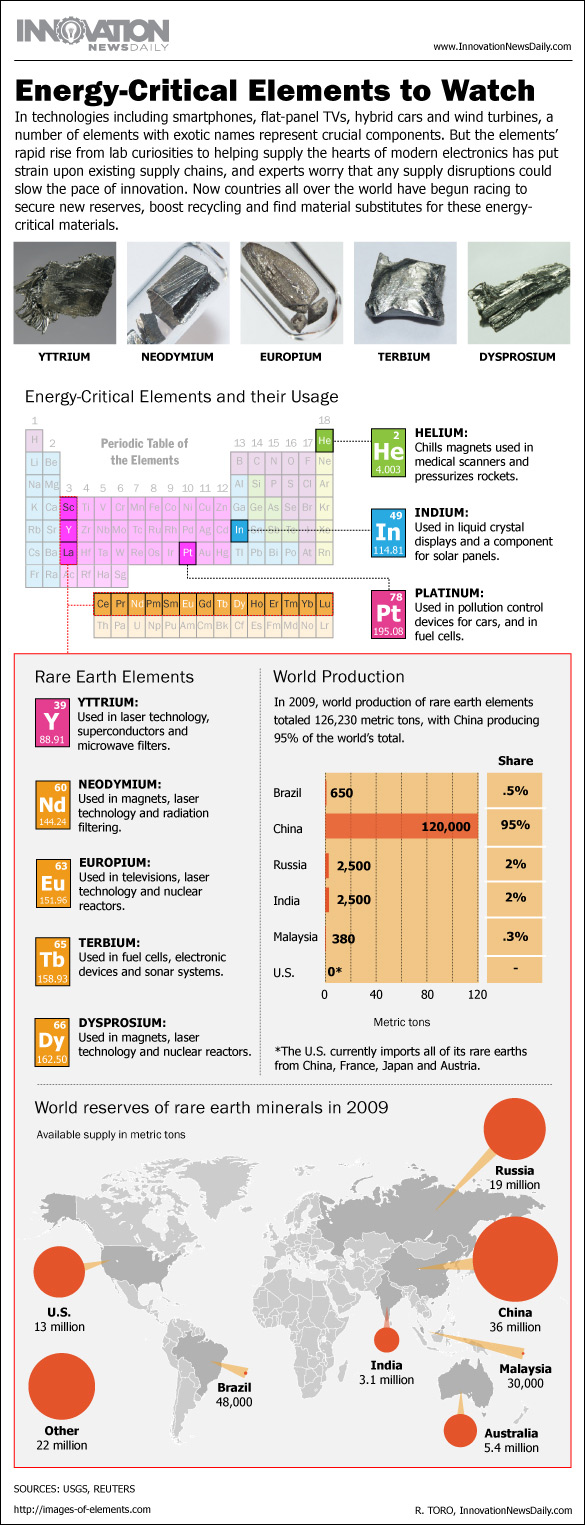
Conclusion: The Invisible Infrastructure
Rare earth metals are the invisible infrastructure of the digital age. They are the reason we can fit a supercomputer in our pockets, why our screens can display billions of colors, and why data can travel across the globe in milliseconds. As technology trends shift toward augmented reality (AR), sophisticated AI hardware, and even more compact wearable devices, the reliance on these seventeen elements will only intensify.
For the tech enthusiast and the industry professional alike, recognizing the role of REEs is about more than just understanding chemistry; it is about understanding the physical limits and possibilities of the devices that define our lives. The future of technology will not just be written in code, but forged in the precise application of these remarkable elements. Whether through the discovery of new deposits, the perfection of recycling techniques, or the breakthrough of synthetic alternatives, the story of rare earth metals will continue to be the story of human innovation.
aViewFromTheCave is a participant in the Amazon Services LLC Associates Program, an affiliate advertising program designed to provide a means for sites to earn advertising fees by advertising and linking to Amazon.com. Amazon, the Amazon logo, AmazonSupply, and the AmazonSupply logo are trademarks of Amazon.com, Inc. or its affiliates. As an Amazon Associate we earn affiliate commissions from qualifying purchases.