
Sauron, the titular antagonist of J.R.R. Tolkien’s The Lord of the Rings, is a figure of immense power and dread. His name alone conjures images of absolute tyranny, an all-seeing eye, and a suffocating darkness that threatens to engulf Middle-earth. Yet, when we attempt to pin down his “race” in the conventional sense, we encounter a fascinating enigma. Unlike the discernible lineages of Elves, Dwarves, or Men, Sauron’s origins and fundamental nature defy simple categorization, a characteristic that profoundly shapes his enduring brand as a supreme evil. This exploration delves into the “race” of Sauron not as a biological classification, but as a potent element of his brand identity, examining how his unique being has been constructed, perceived, and maintained to achieve maximum narrative and thematic impact.

The Maia Origins: A Foundation of Power and Corruption
Sauron’s true identity lies in his nature as a Maia, an angelic spirit, a lesser Vala, created by Ilúvatar before the world itself. This foundational characteristic is crucial to understanding his brand of villainy. It immediately elevates him beyond mortal concerns and petty rivalries.
The Unseen Architect: Beyond Mortal Limitations
As a Maia, Sauron possesses a level of power and intelligence far exceeding that of any mortal race. He is not born, he does not age, and his existence is fundamentally tied to the cosmic order, or in his case, its perversion. This inherent transcendence allows him to operate on a scale that human heroes can barely comprehend. His brand is not one of brute physical strength, though he possesses immense power, but rather one of insidious manipulation, strategic genius, and an unwavering, almost cosmic, malevolence. His influence is felt through corruption, fear, and the manipulation of desires, rather than direct, overt combat against every adversary. This makes his brand of evil far more pervasive and terrifying.
A Fallen Star: The Narrative of Corruption and Loss
The narrative of Sauron’s fall from grace is as integral to his brand as his original status as a Maia. Originally a servant of Aulë the Vala, known for his skill in craftsmanship and artistry, Sauron was seduced by the allure of order and control, ultimately falling under the sway of Melkor, the first Dark Lord. This transition from a being of creation and skill to one of destruction and domination is a powerful narrative arc that imbues his brand with a tragic yet terrifying dimension. He represents the ultimate betrayal of good, a perversion of inherent potential. This fallen status, symbolized by his descent into shadow, reinforces his brand as an entity that actively seeks to undo and corrupt what is pure and good, making his threat existential rather than merely political.
The Formless Shadow: The Absence of a Defined Race as a Brand Strategy
Perhaps the most compelling aspect of Sauron’s brand is the deliberate ambiguity surrounding his physical form, particularly in his later eras. His “race” becomes less about a biological descriptor and more about a manifestation of his corrupting influence.
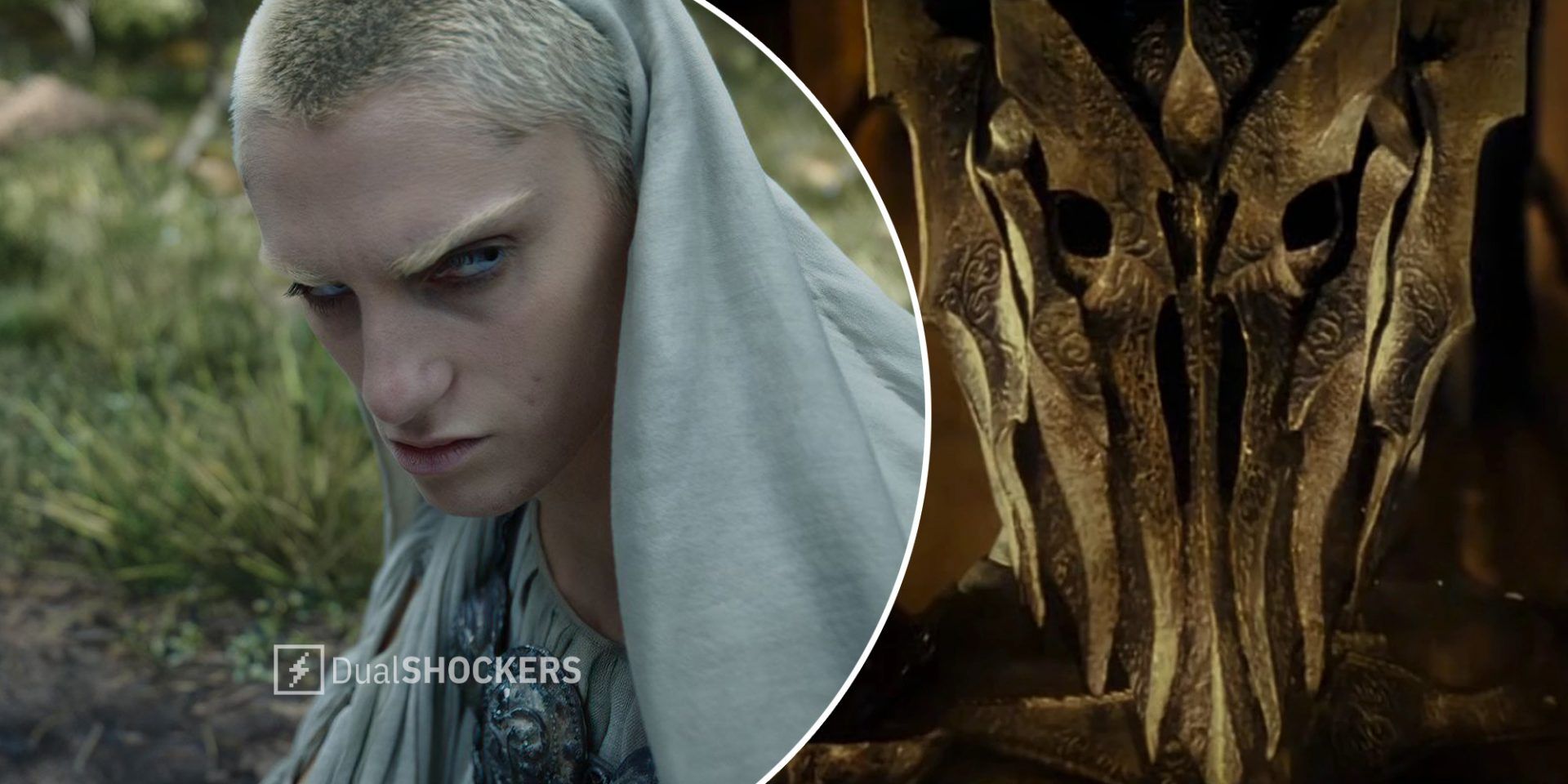
The Ring of Power: A Tangible Symbol of Abstract Evil
Sauron’s most infamous creation, the One Ring, serves as a potent physical manifestation of his will and power. It is not merely a weapon but a symbol of his ambition to dominate and control all life. This object, imbued with a significant portion of his being, allows him to exert his influence from afar, even when his physical form is diminished or absent. The Ring becomes a tangible representation of his abstract evil, a potent branding tool that allows his threat to persist and evolve across millennia. The Ring’s very existence is a testament to Sauron’s strategic brilliance and his ability to imbue an object with such immense symbolic and practical power, solidifying his brand as a master manipulator and architect of suffering.
The Eye of Sauron: An All-Encompassing Presence
In his final reign, Sauron is often depicted not as a physical being in the traditional sense, but as the “Eye of Sauron,” a searing, all-seeing gaze that instills terror throughout Middle-earth. This abstract representation of his presence is a masterstroke in branding. It suggests an omnipresent threat, a pervasive darkness that cannot be easily confronted or vanquished. The Eye becomes Sauron’s ultimate brand logo – universally recognized, universally feared. It signifies constant surveillance, the unwavering attention of a malevolent force, and the psychological warfare he wages. This abstract depiction allows him to embody a fear that transcends any single physical form, making his brand of terror deeply unsettling and persistent. It is the ultimate manifestation of an all-consuming desire for control, projected as an unblinking, relentless force.
The Power of Ambiguity: Sauron’s Enduring Brand Appeal
The deliberate elusiveness of Sauron’s “race” is not a narrative oversight but a fundamental element of his brand, designed to maximize his impact as a villain. This ambiguity allows him to represent a primal, almost existential, evil that is difficult to define or combat on conventional terms.
The Universal Antagonist: Representing Abstract Fears
By refusing to be neatly pigeonholed into a specific race or species, Sauron transcends the limitations of mortal conflict. He becomes a universal antagonist, capable of embodying a wide range of abstract fears: the fear of unchecked power, the fear of corruption, the fear of losing one’s will, and the fear of an all-encompassing darkness. This allows his brand to resonate with audiences on a deeper, more primal level. His lack of a defined “race” makes him less a character with specific biological traits and more a pure force of will, a concept that is far more terrifying and enduring. His brand is one of pure, unadulterated ambition and a desire for absolute dominion, transcending any particular physical form.
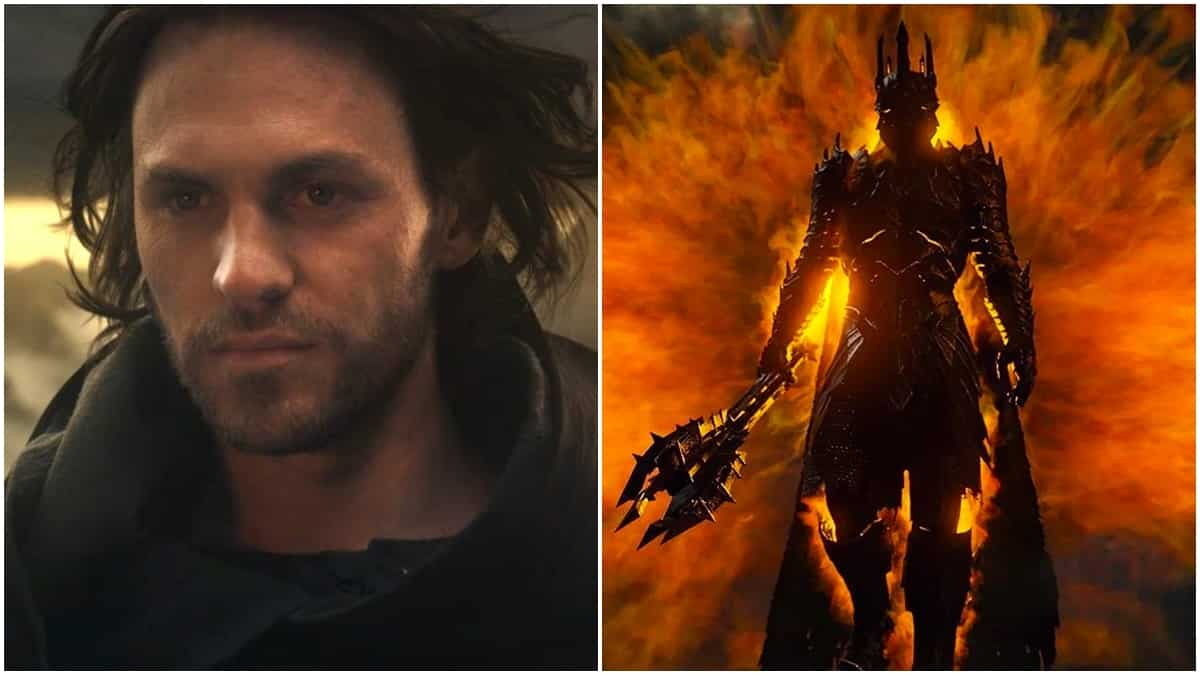
The Legacy of Fear: A Brand Built on Psychological Warfare
Sauron’s brand is not built solely on his military might but on his mastery of psychological warfare. His ability to sow discord, exploit weaknesses, and instill pervasive fear is what truly defines his long reign of terror. The mystery surrounding his true form and the source of his power contributes significantly to this fear. It allows imaginations to run wild, conjuring horrors far worse than any explicitly described. This deliberate ambiguity enhances his brand by making him an unknowable, unstoppable force. His legacy is one of dread, a testament to the power of a well-crafted villainous brand that leverages the unknown to amplify its terrifying impact. The fear he inspires is a product of his carefully cultivated reputation, a brand that has become synonymous with the ultimate embodiment of evil. His enduring appeal lies in this ability to represent a fundamental struggle against a force that is not just physically imposing but spiritually and psychologically overwhelming.
aViewFromTheCave is a participant in the Amazon Services LLC Associates Program, an affiliate advertising program designed to provide a means for sites to earn advertising fees by advertising and linking to Amazon.com. Amazon, the Amazon logo, AmazonSupply, and the AmazonSupply logo are trademarks of Amazon.com, Inc. or its affiliates. As an Amazon Associate we earn affiliate commissions from qualifying purchases.