
The question of how to classify “Mexican” identity on applications, particularly in the context of race, is a complex and often fraught issue. It highlights the historical and ongoing challenges in how data is collected, interpreted, and used, especially concerning ethnicity and nationality. While many applications offer a simple checkbox for race, the reality of Mexican identity defies such straightforward categorization. This article delves into the intricate interplay between nationality, ethnicity, and race, exploring why “Mexican” doesn’t fit neatly into predefined racial boxes and the implications of this for data collection and understanding.
The Historical and Sociocultural Nuances of “Mexican” Identity
Understanding why “Mexican” is not a race requires an exploration of its deep historical roots and the fluid nature of identity in Latin America. The concept of race itself is a social construct, evolving over time and across cultures. In the Mexican context, this construct is particularly multifaceted, shaped by centuries of interaction between indigenous populations, European colonizers, and subsequent waves of immigration.
A Tapestry of Ancestry: Indigenous, European, and Beyond
When we speak of Mexican heritage, we are often referring to a rich blend of ancestries. The pre-Columbian civilizations of Mesoamerica – the Aztecs, Maya, Olmec, and countless others – laid the foundation for a diverse indigenous population. Their genetic and cultural legacies remain integral to modern Mexican identity. Following the Spanish conquest in the 16th century, a significant European, predominantly Spanish, influx introduced new languages, religions, and cultural practices. The resulting mestizaje, the biological and cultural mixing of indigenous and European peoples, became a defining characteristic of Mexican society.
However, the story doesn’t end there. Over centuries, Mexico has been a destination for various immigrant groups, including Africans (brought during the colonial era and through later migrations), Asians (particularly Chinese and Japanese laborers in the late 19th and early 20th centuries), and more recently, individuals from the Middle East and other parts of the world. These diverse ancestral contributions mean that a “typical” Mexican person’s genetic makeup is far from uniform. Some individuals may have a predominantly indigenous heritage, while others might be of primarily European descent, and many will possess a complex mix. Therefore, attempting to assign a single racial classification to such a varied population is inherently flawed.
The Concept of “Raza” vs. “Raza Humana”
In Spanish-speaking countries, the term “raza” can sometimes carry different connotations than the English “race.” While it can refer to racial groups, it can also encompass broader notions of lineage, heritage, or even a sense of belonging to a particular group or nation. This linguistic distinction can contribute to the difficulty in translating concepts of racial classification directly from an Anglo-American context to a Mexican one.
Moreover, the historical embrace of “mestizaje” as a national identity in post-revolutionary Mexico, intended to foster unity and transcend racial divisions, further complicates the application of rigid racial categories. The official narrative often emphasized a unified Mexican identity built on this blend, rather than on distinct racial affiliations. This ideological stance can make it challenging for individuals who identify as Mexican to then select a specific racial category on forms that often operate on a binary or limited set of racial options.
The Application Dilemma: When Nationality and Race Intersect
The practical challenge arises when official forms and applications, particularly in countries like the United States, require individuals to self-identify their race. For someone who is Mexican, this presents a significant quandary.
Ethnicity vs. Race: A Crucial Distinction
The fundamental issue is the conflation of ethnicity and race. Ethnicity generally refers to a shared cultural heritage, including language, customs, nationality, and ancestry. Race, on the other hand, has historically been understood as a classification based on perceived physical characteristics. While there is overlap, they are not interchangeable. Mexican is an adjective describing nationality and a broad ethnic identity, encompassing a vast array of peoples and cultures within the nation of Mexico. It is not a racial category.
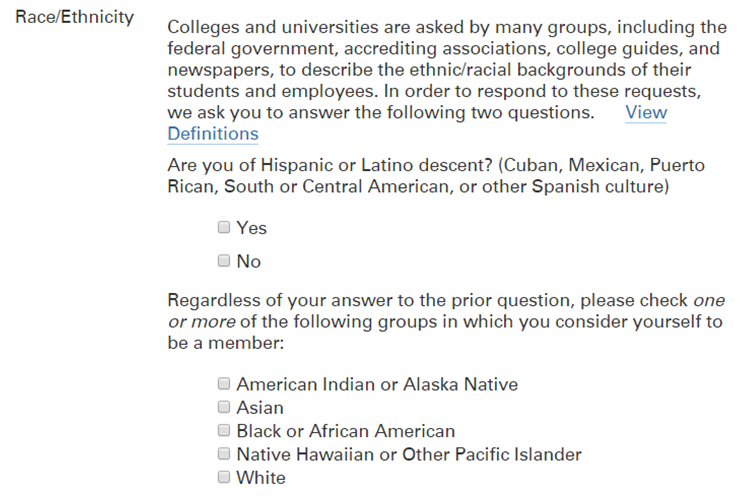
Consider this: a person from Japan is ethnically Japanese and racially categorized as Asian. A person from Germany is ethnically German and racially categorized as White. However, a person from Mexico can be ethnically Mexican and have ancestries that would lead them to identify with various racial categories, including Indigenous, White, Black, or a combination thereof. The U.S. Census Bureau, for instance, recognizes “Hispanic or Latino” as an ethnicity, separate from race, allowing individuals to select both an ethnicity and one or more races. This acknowledges that people of Hispanic or Latino origin can be of any race.
The Limitations of Standardized Forms
Standardized application forms, often designed for ease of data processing and analysis, frequently fall short in capturing this complexity. They typically offer a limited set of racial options, such as White, Black or African American, Asian, Native American or Alaska Native, and Native Hawaiian or Other Pacific Islander. When a Mexican individual is presented with these choices, they are often forced to make an imperfect selection or leave the field blank, potentially leading to misrepresentation or incomplete data.

For example, if a person of predominantly indigenous Mexican descent is asked to select a race, “White” would be inaccurate, and “Asian” or “Black” would also be incorrect. While “Native American or Alaska Native” might seem closer for some indigenous individuals, it often refers specifically to indigenous peoples of the United States, not those from Mexico. This leaves individuals in a position where their true heritage is not adequately represented by the available options. The intention behind these questions might be to track demographic diversity, but the execution can inadvertently erase or mischaracterize significant portions of the population.
Implications for Data and Decision-Making
The way “Mexican” identity is handled on applications has tangible consequences for individuals and for the broader understanding of demographic trends.
Inaccurate Representation and Data Gaps
When individuals cannot accurately self-identify their racial background, it leads to inaccurate demographic data. This can skew research, policy-making, and resource allocation. If a significant portion of individuals of indigenous Mexican descent are forced to choose “White” or are otherwise miscategorized, it can create a false impression of the racial composition of certain populations. This can impact everything from the identification of disparities in healthcare access to the effectiveness of educational programs designed to support specific communities.
Furthermore, the omission of nuanced racial identifications can create data gaps. For instance, if an application forces a Mexican individual to choose between “White” and “Black” when their ancestry is predominantly African, important data about the presence and experiences of Afro-Mexicans might be lost. This lack of precise data can hinder efforts to address specific community needs and promote equitable outcomes.
The Role of “Hispanic or Latino” as an Ethnic Identifier
The recognition of “Hispanic or Latino” as an ethnic category on many applications, including the U.S. Census, is a step towards acknowledging a broader identity beyond traditional racial lines. This designation allows individuals to identify their cultural and linguistic heritage, which often transcends national borders. However, it is crucial to remember that “Hispanic or Latino” is not a race. People who identify as Hispanic or Latino can be of any race.
The distinction between race and ethnicity is vital. While “Hispanic or Latino” can capture a shared cultural and historical connection, it doesn’t specify the racial makeup of that group. For applications that require both race and ethnicity, allowing individuals to select “Hispanic or Latino” as their ethnicity and then choose their racial identification from the available options (or provide an open-ended response) offers a more comprehensive and accurate picture. This approach acknowledges the diversity within the Hispanic/Latino umbrella and avoids the oversimplification that occurs when a single racial category is forced upon such a varied group.
Towards More Inclusive Data Collection Practices
The ongoing challenge of classifying Mexican identity on applications points to a broader need for more inclusive and nuanced data collection practices. As societies become increasingly diverse, the limitations of rigid, outdated classification systems become more apparent.
Redefining Categories and Offering Granularity
One of the primary ways to address this issue is to move beyond overly simplistic racial categories. This could involve:
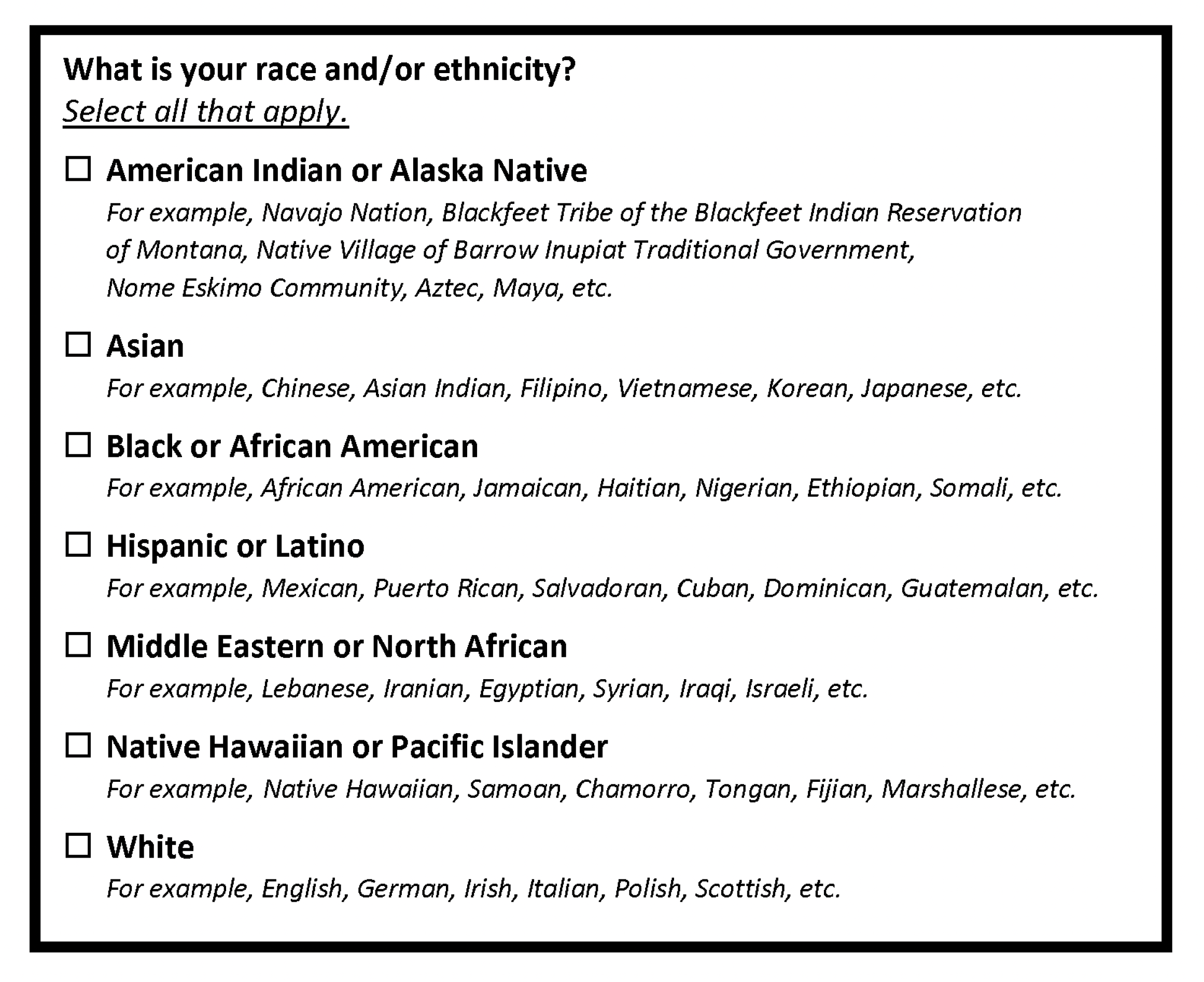
- Expanded Racial Options: Including categories that better reflect the diverse ancestries present within populations, such as “Multiracial,” or offering more specific options for indigenous peoples from different regions.
- Open-Ended Responses: Allowing individuals to write in their own racial identification provides the most accurate representation of their self-perception.
- Granular Ethnic Categories: While “Hispanic or Latino” is a useful umbrella term, offering more specific ethnic identifiers (e.g., Mexican, Puerto Rican, Cuban, Dominican, etc.) alongside racial choices can provide richer data.
- Ancestry Questions: Shifting the focus from “race” to “ancestry” or “origin” can be more effective in capturing complex heritage. Questions about country of origin for oneself and one’s parents can reveal more about an individual’s background than limited racial checkboxes.
The Importance of Self-Determination
Ultimately, the most effective approach to demographic data collection relies on the principle of self-determination. Individuals should have the agency to define their own identities in ways that feel authentic to them. This means creating application processes that are flexible enough to accommodate the complexities of human identity and avoid imposing restrictive labels.
The question “what race is Mexican on application” is not about finding a single, definitive answer. Instead, it is a prompt to critically examine how we collect and interpret demographic information. By moving towards more inclusive, nuanced, and self-determined methods of data collection, we can foster a more accurate understanding of our diverse populations and ensure that all individuals are seen and represented in the data that shapes our world.
aViewFromTheCave is a participant in the Amazon Services LLC Associates Program, an affiliate advertising program designed to provide a means for sites to earn advertising fees by advertising and linking to Amazon.com. Amazon, the Amazon logo, AmazonSupply, and the AmazonSupply logo are trademarks of Amazon.com, Inc. or its affiliates. As an Amazon Associate we earn affiliate commissions from qualifying purchases.