
In the realm of concurrent programming, where multiple threads of execution share the same memory space, the race condition stands as one of the most persistent and dangerous categories of software bugs. Among the various manifestations of these synchronization errors, the race condition leading to a null pointer or object dereference is particularly notorious. It represents a critical failure in the temporal logic of a program—a situation where the assumption that an object exists is shattered by the unpredictable interleaving of thread operations.
Understanding how a race condition can result in a null pointer dereference requires a deep dive into the “Check-Then-Act” pattern, the nuances of memory visibility, and the complexities of modern processor instruction reordering. This phenomenon is not merely a developer’s oversight; it is a fundamental challenge in building scalable, reliable, and secure software systems.
The Mechanics of Concurrent Vulnerabilities
At its core, a race condition occurs when the output or behavior of a process is dependent on the sequence or timing of other uncontrollable events. When this involves memory management, the results are often catastrophic. To understand how this leads to a null dereference, we must first examine the “window of vulnerability” created by non-atomic operations.
The Check-Then-Act Pattern
The most common scenario for a null pointer race condition is the “Check-Then-Act” anti-pattern. In a single-threaded environment, a developer safely checks if a pointer is non-null before accessing its members. However, in a multi-threaded environment, the state of that pointer can change between the check and the subsequent action.
Consider a scenario where Thread A performs a null check: if (sharedObject != null). Finding it valid, Thread A prepares to invoke a method on sharedObject. However, before the method call occurs, the operating system’s scheduler preempts Thread A and gives control to Thread B. If Thread B executes a line of code that sets sharedObject = null (perhaps as part of a cleanup or reset routine), the logic in Thread A becomes invalidated. When Thread A resumes, it proceeds to “act” on its previous “check,” dereferencing a now-null pointer and triggering a segmentation fault or a null pointer exception.
Memory Visibility and Instruction Reordering
Beyond simple interleaving, race conditions are exacerbated by how modern hardware and compilers optimize code. In high-performance environments, the order in which a programmer writes instructions is not necessarily the order in which the CPU executes them.
Instruction reordering can lead to a state where an object reference is published to other threads before the object’s constructor has fully finished executing. This creates a “partial initialization” race. A thread may see a non-null reference, try to access its fields, and find that those internal fields are still null because the assignments inside the constructor have been reordered to happen after the object pointer itself was made visible. This is a subtle and incredibly difficult bug to debug, as the pointer itself is technically non-null, but its internal state is inconsistent.
Common Scenarios Leading to Null Pointer Race Conditions
While many race conditions are unique to specific business logic, several architectural patterns are known to be hotspots for null pointer dereferences. Identifying these patterns is the first step toward building more resilient code.
Lazy Initialization and the Double-Checked Locking Pitfall
Lazy initialization is a design pattern used to delay the creation of an object until it is actually needed. A classic implementation involves checking if an instance is null and, if so, synchronizing and creating the instance. The “Double-Checked Locking” (DCL) pattern was once widely used to optimize this process, but it is a frequent source of null pointer race conditions.
In an improperly implemented DCL, a thread might check the instance variable without holding a lock. If it sees that the instance is not null, it returns it immediately. However, due to the instruction reordering mentioned previously, the instance might appear non-null to Thread B even while Thread A is still in the middle of constructing it. When Thread B attempts to use this partially constructed object, it may dereference internal null fields or encounter an invalid state, leading to a crash.
Shared State Modification in Multi-threaded Callbacks
In modern application development, particularly in UI frameworks and asynchronous systems (like Android or Node.js), callbacks are pervasive. A common source of null dereferences occurs when a background thread completes a task and attempts to update a shared object that has been nulled out by the main thread during a “teardown” or “navigation” event.
For example, a network request might be initiated by a UI component. If the user navigates away from that component, the component’s destructor or onDestroy method may set its internal references to null to prevent memory leaks. If the network callback returns milliseconds later and attempts to access the now-null reference without proper synchronization or lifecycle awareness, the application will crash. This is a classic race between the completion of the I/O task and the cleanup of the UI lifecycle.
Resource Deallocation and “Time-of-Check to Time-of-Use” (TOCTOU)
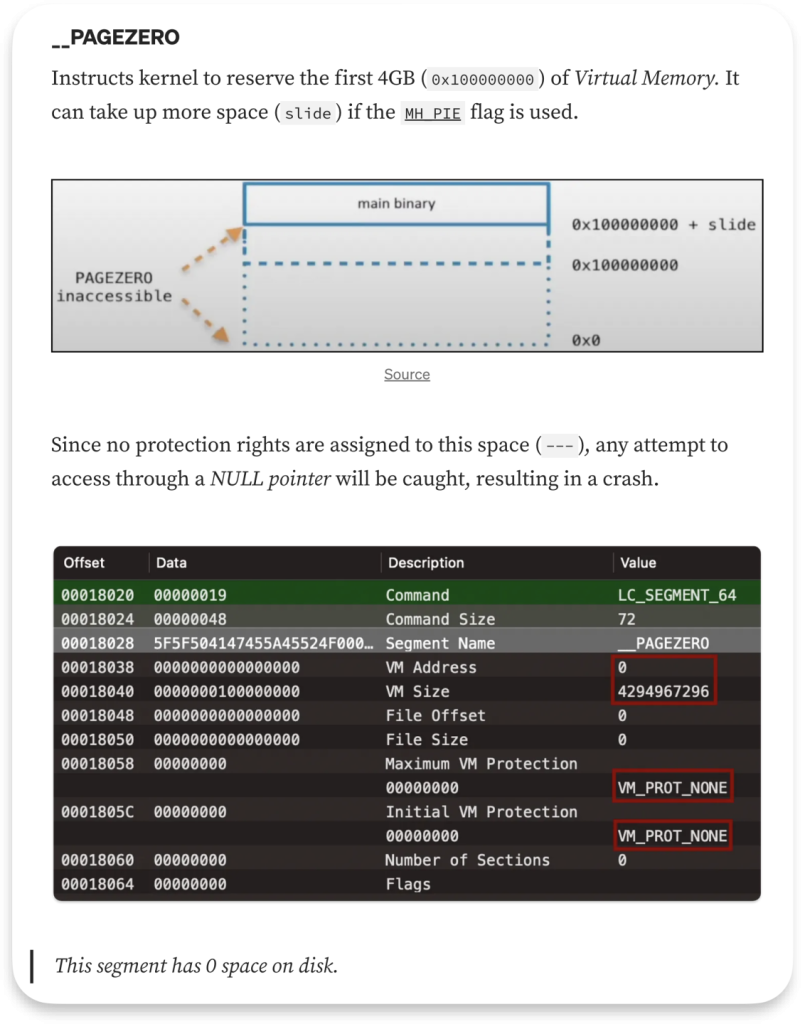
In systems programming, the TOCTOU race condition is a well-known security vulnerability that often manifests as a null dereference. This happens when a resource (like a file handle or a memory buffer) is checked for validity, but then deallocated by another thread or process before it is used. In a kernel or high-privileged context, dereferencing a pointer that has been nulled or freed can lead to more than just a crash; it can lead to system instability or exploit opportunities where the null page is mapped to malicious code.
The Impact: From System Crashes to Security Exploits
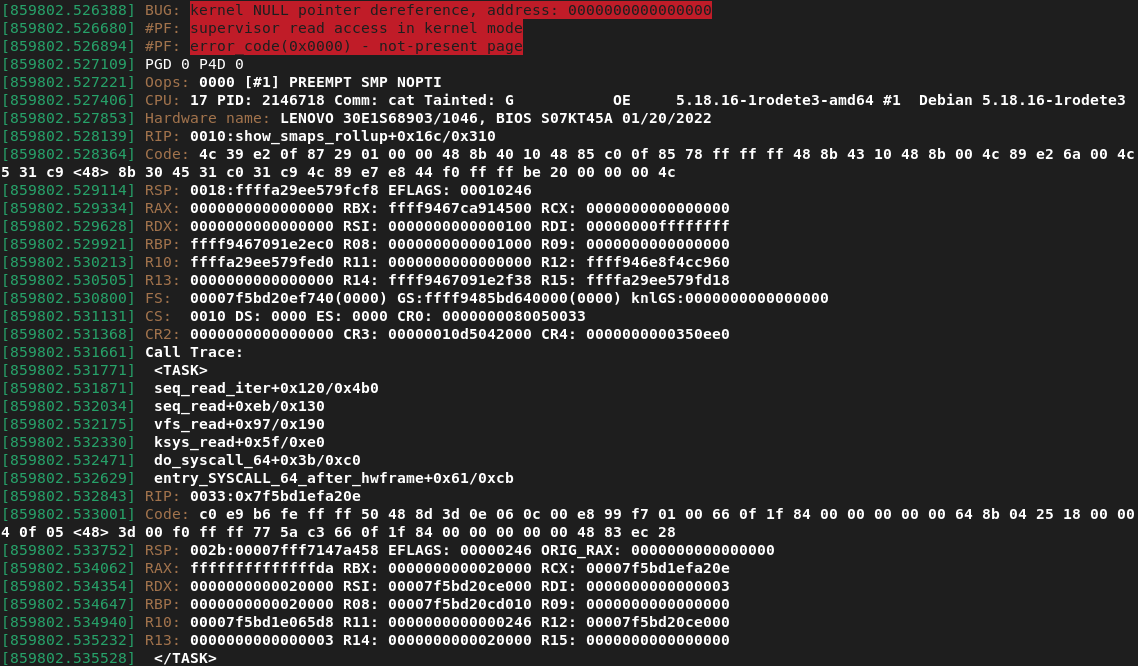
The consequences of a race-induced null pointer dereference range from minor user inconvenience to severe security breaches. In most managed languages like Java or C#, a null pointer exception (NPE) will terminate the current thread, which might crash the entire application or lead to a “zombie” state where the UI remains responsive but the background logic is dead.
Denial of Service (DoS)
In server-side environments, such as high-frequency trading platforms or web servers, a race condition that triggers a null dereference can be used as a vector for a Denial of Service attack. If an attacker can trigger a specific sequence of requests that consistently causes a worker thread to dereference a null pointer, they can effectively shut down the service by repeatedly crashing its core processes. Because these bugs are timing-dependent, they are often difficult for automated stress tests to catch, making them “zero-day” vulnerabilities in production.
Potential for Arbitrary Code Execution
In unmanaged languages like C or C++, the situation is even more dire. While dereferencing 0x0 usually triggers a segmentation fault, many platforms allow for the mapping of memory at the zero page. If an attacker can control what is stored at the memory address 0, and a race condition causes a privileged process to dereference a null pointer, the program may jump to or read from the attacker’s memory. While modern operating systems have implemented protections like mmap_min_addr to prevent mapping the null page, embedded systems and legacy architectures remain vulnerable to this specific escalation path.
Strategies for Prevention and Mitigation
Eliminating null pointer race conditions requires a shift from defensive programming to proactive synchronization and structural design.
Synchronization Primitives and Thread-Safe Wrappers
The most direct way to prevent these races is through the use of synchronization primitives like Mutexes (Mutual Exclusion), Semaphores, or Locks. By wrapping the “Check” and the “Act” within the same critical section, a developer ensures that no other thread can modify the pointer until the action is completed.
In modern languages, thread-safe wrappers and atomic references (such as std::atomic in C++ or AtomicReference in Java) provide a more performant alternative to heavy-weight locks. These use hardware-level “compare-and-swap” (CAS) instructions to ensure that the pointer update and access are atomic, effectively closing the window of vulnerability.
Immutable Data Structures and Functional Paradigms
One of the most effective ways to avoid race conditions is to eliminate shared mutable state altogether. By using immutable data structures, once an object is created, it cannot be modified or nulled out. If a change is needed, a new version of the object is created.
In a functional programming paradigm, the concept of a null pointer is often replaced with “Option” or “Maybe” types. These types force the developer to explicitly handle the case where a value might be missing, and when combined with immutability, they virtually eliminate the possibility of a race condition resulting in a null dereference.
Memory Barriers and Volatile Keywords
To combat the issues of instruction reordering and memory visibility, developers must use memory barriers. In Java and C#, the volatile keyword serves as a hint to the compiler and the CPU that a variable’s value must always be read from and written to main memory, rather than being cached in a thread’s local register. More importantly, it prevents the reordering of instructions around the volatile variable. In the case of Double-Checked Locking, marking the instance variable as volatile is the essential fix that ensures the object is fully constructed before it is made visible to other threads.
Conclusion
The race condition that results in a null pointer dereference is a stark reminder of the complexities inherent in parallel computing. It highlights the gap between the sequential logic we write and the concurrent execution performed by the hardware. As we move toward a world of increasingly multi-core and distributed systems, the “Check-Then-Act” fallacy remains a primary hurdle for software stability.
Solving these issues requires more than just careful coding; it requires a deep understanding of the underlying memory model of the language and the hardware. By employing rigorous synchronization, embracing immutability, and utilizing modern atomic primitives, developers can build systems that are not only faster but are resilient against the silent, timing-dependent failures that null pointers represent. In the end, the goal is to create software where the existence of an object is not a matter of lucky timing, but a guaranteed state.
aViewFromTheCave is a participant in the Amazon Services LLC Associates Program, an affiliate advertising program designed to provide a means for sites to earn advertising fees by advertising and linking to Amazon.com. Amazon, the Amazon logo, AmazonSupply, and the AmazonSupply logo are trademarks of Amazon.com, Inc. or its affiliates. As an Amazon Associate we earn affiliate commissions from qualifying purchases.