
When analyzing the beverage industry, few case studies are as polarizing or as successful as Fireball Cinnamon Whiskey. To the casual consumer, it is a staple of the nightlife scene, a 66-proof spirit synonymous with celebratory shots and high-energy gatherings. However, to a brand strategist, Fireball represents a calculated masterclass in market positioning, grassroots marketing, and the art of “brand proof.” While “proof” in the literal sense refers to its 33% alcohol by volume (ABV), the “proof” of Fireball’s success lies in its ability to disrupt a centuries-old category—whiskey—and redefine it for a younger, more social demographic.
Decoding the Fireball Identity: Beyond the Bottle
The rise of Fireball was not an overnight accident; it was a slow-burn strategy executed by the Sazerac Company. To understand the brand, one must first look at its identity, which purposefully distances itself from the “stuffy” or “elitist” connotations of traditional Scotch or Bourbon.
Visual Consistency and the Iconic “Fire-Breathing” Label
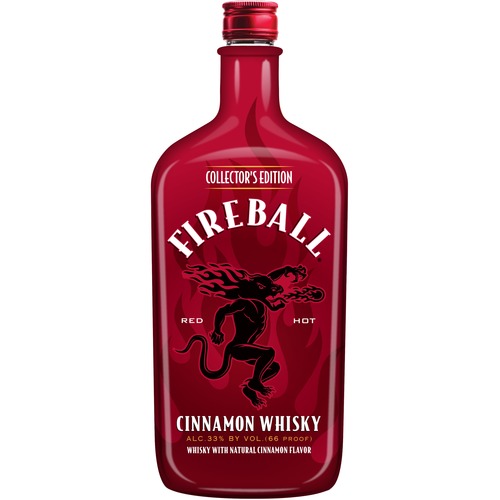
The Fireball visual identity is built around a visceral, aggressive, yet approachable aesthetic. The label features a fire-breathing dragon-man, rendered in a style that evokes mid-century comic books and vintage circus posters. This design choice is a strategic departure from the gold-leaf, script-heavy labels of traditional whiskey brands. It signals to the consumer that this product is not about age statements, charred oak barrels, or sipping in a library. It is about heat, intensity, and immediate gratification. The brand identity effectively lowers the “barrier to entry” for consumers who find traditional whiskey intimidating.
Tone of Voice: Embodying the “Party” Archetype
In brand archetyping, Fireball leans heavily into “The Jester” and “The Outlaw.” Its marketing communications are rarely formal. Instead, they focus on the “burn”—a physical sensation that becomes a shared social experience. By positioning the brand as a catalyst for a good time rather than a luxury good, Sazerac built a community around the product. The tone is irreverent, slightly rebellious, and relentlessly social. This clarity of voice ensures that whether a consumer sees a Fireball ad on Instagram or a neon sign in a dive bar, the message is the same: “Tastes like heaven, burns like hell.”
The Strategic “Proof”: Redefining the Shot Category
In the spirits industry, the “proof” of a product is a technical specification, but for Fireball, it is a strategic advantage. At 66 proof (33% ABV), Fireball sits lower than the standard 80 proof (40% ABV) required for many spirit classifications in the United States. This distinction is a vital component of its brand strategy.
The Psychology of Lower ABV in the Shot Market
By maintaining a 66-proof profile, Fireball achieved two things. First, it made the product significantly more “sessionable” and easier to consume as a shot. The sugar content and the lower alcohol burn make it palatable to those who might recoil at the harshness of a standard rye or bourbon. Second, from a brand positioning standpoint, this allowed Fireball to bridge the gap between liqueurs and hard spirits. It effectively “stole” market share from Jägermeister, which previously dominated the “ice-cold shot” category. Fireball proved that by slightly lowering the alcohol content, a brand could exponentially increase the frequency of consumption.
Competitive Positioning against Traditional Whiskeys
Fireball’s branding strategy intentionally blurs the lines. While purists argue whether a 33% ABV flavored product can truly be called “whisky” (a debate that has led to several legal discussions), the brand uses this ambiguity to its advantage. It occupies the “Whiskey-Lite” space, capturing consumers who want the cultural “cool” of drinking whiskey without the intense flavor profile that often requires an acquired taste. This strategic positioning has allowed Fireball to maintain its status as one of the top-selling spirits in the world, often outperforming heritage brands that have been on the market for over a century.
Marketing Heat: Grassroots Tactics and Viral Momentum

Unlike competitors who spend hundreds of millions on Super Bowl ads and celebrity endorsements, Fireball’s brand equity was built in the trenches. The brand’s strategy is a textbook example of “pull” marketing versus “push” marketing.
The Power of On-Premise Brand Ambassadors
Sazerac’s strategy for Fireball involved a massive, multi-year grassroots campaign focusing on bartenders and “on-premise” environments. They understood that in the spirits world, the bartender is the ultimate influencer. By making Fireball the “go-to” recommendation for a quick, affordable, and flavorful shot, they created a self-sustaining cycle of demand. This wasn’t about top-down corporate messaging; it was about bottom-up cultural adoption. The brand became synonymous with the “shift drink” or the “rounds for the house,” embedding itself into the fabric of nightlife culture before it ever hit the mainstream radar.
Social Media and the “Meme-ification” of the Brand
Fireball arrived at the perfect time to capitalize on the rise of social media. The “Fireball Face”—the involuntary reaction to the spicy cinnamon heat—became a proto-meme. The brand encouraged fans to share their experiences, effectively turning every consumer into a content creator. This user-generated content provided “social proof” that the brand was the life of the party. By focusing on the experience of drinking the product rather than the quality of the liquid itself, Fireball built a digital presence that felt organic and authentic, rather than manufactured by a marketing agency.
Brand Resilience: Navigating Controversy and Evolution
A significant part of brand strategy is how a company handles crises and market shifts. Fireball has faced its share of challenges, from regulatory hurdles regarding ingredients to confusion over product variations.
Navigating the Grocery Store Shelf: Malt vs. Spirit
One of the most complex chapters in the Fireball brand story is the introduction of “Fireball Cinnamon.” In many U.S. states, spirits can only be sold in liquor stores, while beer and wine (or malt-based products) can be sold in grocery stores and gas stations. Sazerac launched a malt-based version of Fireball, which looks nearly identical to the 66-proof whiskey-based version but contains no actual whiskey and has a lower ABV.
This move was a brilliant—albeit controversial—brand extension. It allowed the “Fireball” name to penetrate thousands of new retail touchpoints where spirits were previously banned. While it led to some consumer confusion and legal scrutiny regarding labeling, it demonstrated the brand’s commitment to “Total Market Penetration.” It prioritized brand visibility and accessibility over the rigid definitions of spirit categories.
Maintaining Brand Equity During Legal and Regulatory Challenges
When news broke years ago regarding the use of propylene glycol (a common food-grade additive) in its European formulation, many predicted the brand would suffer. However, Fireball’s brand loyalty was so strong that it barely felt a ripple in its sales figures. This is the ultimate proof of a strong brand: when the emotional connection with the consumer is so powerful that technical or regulatory hurdles become mere footnotes. The brand leaned into transparency, corrected the formulation to meet different international standards, and continued its aggressive expansion.

Conclusion: The Future of the Fireball Brand
The story of Fireball Cinnamon Whiskey is not just about a 66-proof spirit; it is about the evolution of modern branding. It proves that a brand does not need to be the “best” in a traditional sense to be the market leader. Instead, it needs to be the most consistent, the most relatable, and the most strategically positioned.
By focusing on the “shot” occasion, leveraging grassroots influence, and maintaining a defiant, high-energy identity, Fireball transformed from a forgotten Canadian schnapps into a global powerhouse. As the brand continues to evolve, its biggest challenge will be maintaining its “rebel” status as it becomes a corporate titan. However, if its history of market disruption is any indication, Fireball will continue to stay “hot” by staying true to its core promise: providing a bold, shared experience that burns just enough to be remembered. For marketers and business leaders, the “proof” is undeniable: Fireball didn’t just join the whiskey category—it set it on fire.
aViewFromTheCave is a participant in the Amazon Services LLC Associates Program, an affiliate advertising program designed to provide a means for sites to earn advertising fees by advertising and linking to Amazon.com. Amazon, the Amazon logo, AmazonSupply, and the AmazonSupply logo are trademarks of Amazon.com, Inc. or its affiliates. As an Amazon Associate we earn affiliate commissions from qualifying purchases.