
The ubiquitous twenty-dollar bill, a cornerstone of daily commerce, often passes through our hands without a second thought to the figure it bears. For decades, the stern visage of Andrew Jackson, the seventh President of the United States, has graced the front of this denomination. Yet, this seemingly simple fact opens a rich tapestry of financial history, economic impact, and ongoing debates about what, and who, our money truly represents. Delving into the $20 bill is more than a historical exercise; it’s an exploration of the fundamental role of currency in an economy, the financial decisions that shape it, and the societal values it reflects.
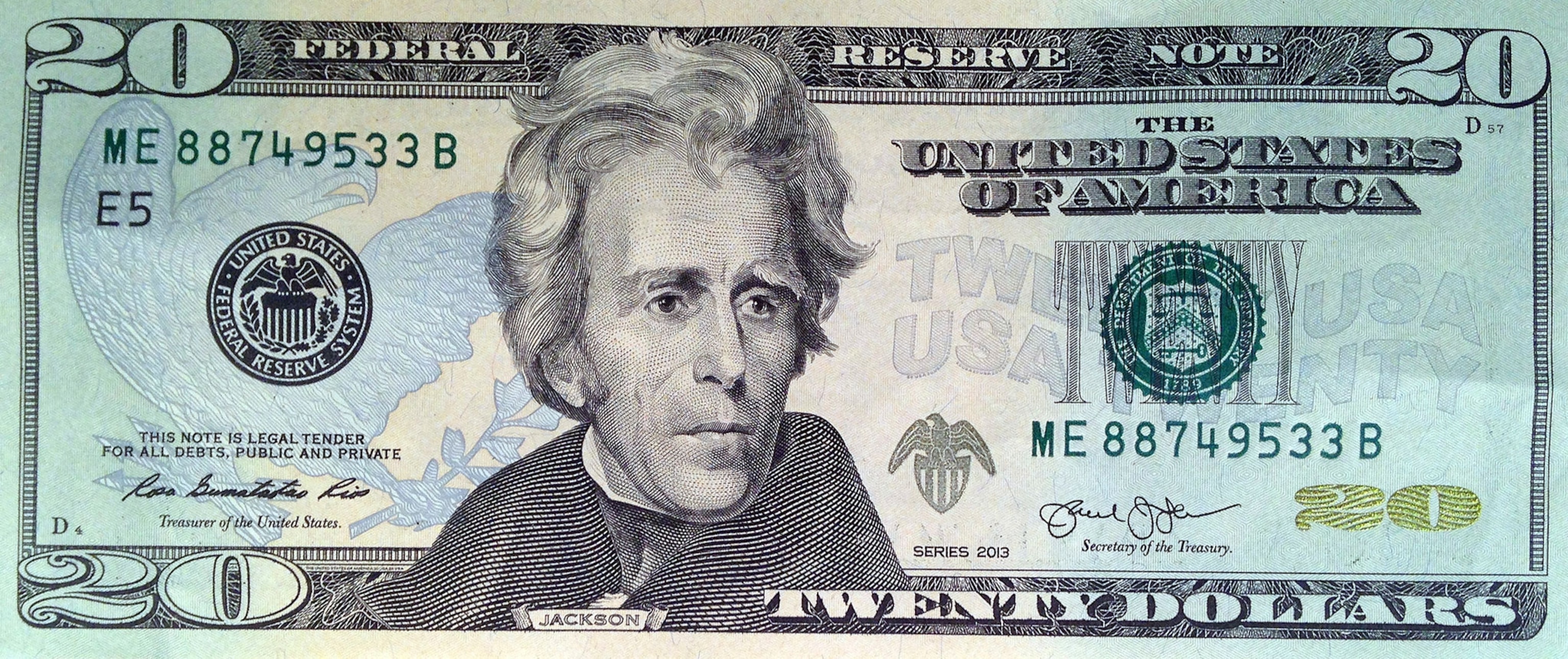
The Icon on the Twenty-Dollar Bill: Andrew Jackson’s Enduring (and Contentious) Legacy
At the heart of the twenty-dollar bill’s identity lies the portrait of Andrew Jackson. His presence on this particular denomination is a fascinating historical artifact, given his complex relationship with the very concept of central banking and paper money during his presidency. Understanding why Jackson, a figure often associated with distrust of financial elites and a preference for hard currency, ended up on one of the most widely circulated paper bills requires a journey back through the annals of U.S. financial history.
Andrew Jackson: A Controversial Figure in Financial History
Born into relative poverty and rising to become a successful lawyer, military hero, and eventually president, Jackson embodied the spirit of the common man, a stark contrast to the aristocratic figures who often dominated early American politics. His most significant financial legacy is undoubtedly his ardent opposition to the Second Bank of the United States. Jackson viewed the Bank as an unconstitutional, monopolistic entity that concentrated economic power in the hands of a few wealthy elites, detrimental to the agrarian interests and individual liberties he championed.
His dramatic veto of the Bank’s re-charter bill in 1832, followed by his administration’s withdrawal of federal funds from the Bank, effectively dismantled the institution. This “Bank War” was a pivotal moment, shaping the course of American finance for decades and leading to a period of decentralized banking and often unstable currency issuance by state banks. Ironically, the man who fought against a powerful central bank and favored specie (gold and silver) over paper money now finds himself prominently featured on a key denomination of modern fiat currency, issued by a powerful central banking system he likely would have abhorred.
The Evolution of U.S. Currency Design and Jackson’s Placement
Jackson first appeared on the twenty-dollar bill in 1914, shortly after the creation of the Federal Reserve System, which aimed to bring stability and uniformity to the nation’s currency. Before this, U.S. currency was far less standardized, with various designs and figures. The decision to place Jackson on the twenty-dollar bill was not without historical context. Prior to 1914, Jackson had already been featured on various other denominations, including the $5, $10, and $50 notes at different times.
The specific choice for the $20 bill under the Federal Reserve system was likely a combination of factors: his historical prominence, his strong recognition among the public, and perhaps a subtle nod to the populist sentiment he represented, even as the new Federal Reserve sought to centralize financial power. The back of the current $20 bill features the White House, a symbol of American presidential power and democracy, creating a thematic link with the front. These design choices are not arbitrary; they aim to reinforce national identity, historical values, and public trust in the currency itself.
Beyond the Portrait: The Economic Utility and Security of the $20 Bill
While its historical context is rich, the primary function of the $20 bill is its economic utility. It is one of the most frequently used denominations in day-to-day transactions, bridging the gap between smaller purchases and larger cash exchanges. Its value, security features, and role in the broader economy are critical aspects of financial infrastructure.
The Twenty-Dollar Bill in Daily Commerce and Its Purchasing Power
The $20 bill occupies a unique niche in the cash economy. It’s substantial enough to cover many everyday expenses—a meal out, a tank of gas, a few groceries—without being cumbersome like higher denominations, nor too small for significant transactions like a $5 or $1 bill. This makes it a popular choice for ATMs and a common amount to carry in wallets.
However, the purchasing power of the $20 bill, like all currency, is not static. It is constantly eroded by inflation, a fundamental economic concept. What a twenty-dollar bill could buy in 1914, when Jackson first appeared on it, is vastly different from what it can purchase today. This continuous decline in purchasing power is a testament to the dynamic nature of economics and the importance of understanding inflation when managing personal finances. For example, an item costing $20 in 1914 would cost approximately $600-$700 today, demonstrating the dramatic effect of inflation over time. This underscores why financial planning often emphasizes investing to outpace inflation, ensuring that one’s savings maintain or grow their real value.

Counterfeiting Challenges and State-of-the-Art Security Features
The widespread use of the $20 bill also makes it a prime target for counterfeiters. To combat this threat and maintain public confidence in the currency, the U.S. Treasury and the Bureau of Engraving and Printing (BEP) have continually invested in and implemented sophisticated security features. These features are a critical component of financial security, protecting individuals and businesses from losses due to fraudulent money.
Modern $20 bills boast an array of security measures:
- Security Thread: A thin embedded strip that glows green under UV light and has “USA 20” printed along it.
- Color-Shifting Ink: The numeral “20” in the lower right corner shifts from copper to green when tilted.
- Watermark: A faint image of Andrew Jackson visible when held to light.
- Microprinting: Tiny printed words on various parts of the bill that are difficult for copiers to replicate.
- Raised Printing: The distinctive feel of genuine currency, resulting from an intaglio printing process.
- Serial Numbers: Unique combinations of letters and numbers on each bill, used for tracking.
These features, often invisible to the naked eye or requiring specific inspection, serve as the frontline defense against economic fraud. Educating the public on how to identify these features is a vital aspect of financial literacy, empowering individuals to protect themselves and the integrity of the currency system.
The Debate Over Currency Representation: Values, Symbolism, and Inclusivity
While Jackson’s presence on the $20 bill has been a constant for over a century, it has recently become the subject of intense debate, highlighting deeper questions about national identity, historical accountability, and the symbolism inherent in our money. This discourse touches upon financial inclusion, representation, and the evolving values of a diverse society.
Calls for Change: Harriet Tubman and the Future of the $20
The most prominent challenge to Jackson’s place on the $20 bill comes from the proposal to replace him with Harriet Tubman, the iconic abolitionist and conductor on the Underground Railroad. The movement to feature Tubman gained significant momentum, driven by a desire to honor a figure who fought for freedom and equality, and to place a woman, particularly a Black woman, on U.S. paper currency for the first time.
This proposed change is not merely cosmetic; it is deeply symbolic. It represents a re-evaluation of historical narratives and a push to include figures who better reflect the diversity and aspirations of modern America. Tubman’s story—one of immense courage, self-sacrifice, and unwavering commitment to justice—offers a powerful counter-narrative to the more controversial aspects of Jackson’s legacy, particularly his role in the forced removal of Native American tribes via the Indian Removal Act and the Trail of Tears. The debate highlights how currency can serve as a canvas for national values, and how the figures we choose to immortalize on our money speak volumes about who we are and what we cherish.
The Symbolism of Figures on Currency: Beyond Historical Fact
The figures chosen for currency are never arbitrary; they are deliberate choices that imbue money with cultural and historical symbolism. They serve as miniature history lessons, celebrating individuals deemed pivotal to the nation’s founding, growth, or identity. George Washington on the $1 bill, Abraham Lincoln on the $5, and Benjamin Franklin on the $100 all represent different facets of American ideals and achievements.
However, as societies evolve, so too do their understandings of history and the moral compass by which historical figures are judged. What was once celebrated without question may now be viewed through a more critical lens, leading to calls for reconsideration. This ongoing dialogue underscores that currency is not just a medium of exchange; it is a powerful tool for cultural transmission and a reflection of collective memory. The discussion around Tubman and Jackson is a prime example of how financial artifacts become arenas for broader societal and ethical debates.

Connecting Historical Decisions to Modern Financial Understanding
The decisions made decades or centuries ago about who appears on our money continue to resonate today, shaping perceptions and contributing to ongoing conversations about financial justice and inclusion. Understanding the historical context of currency design helps us appreciate that money is not just numbers and metal; it’s a social construct imbued with meaning and history.
For individuals, this broader perspective on currency encourages a deeper engagement with financial literacy. It moves beyond simply counting money to understanding its origins, its changing value, and its role as a symbolic representation of national identity. As the financial landscape continues to evolve with digital currencies and new payment systems, the physical dollar bill, with its historical figures and embedded narratives, remains a tangible link to our economic past and a focal point for our financial future. The twenty-dollar bill, featuring Andrew Jackson, serves as a powerful reminder that even the most commonplace objects in our financial lives carry layers of history, economic significance, and cultural meaning, constantly inviting us to look deeper than the surface value.
aViewFromTheCave is a participant in the Amazon Services LLC Associates Program, an affiliate advertising program designed to provide a means for sites to earn advertising fees by advertising and linking to Amazon.com. Amazon, the Amazon logo, AmazonSupply, and the AmazonSupply logo are trademarks of Amazon.com, Inc. or its affiliates. As an Amazon Associate we earn affiliate commissions from qualifying purchases.