
In the rapidly evolving world of social media architecture, few features have maintained the staying power—or the enigmatic charm—of the Facebook Poke. Originally introduced during the platform’s infancy in 2004, the “Poke” was a minimalist interaction tool that defined the early user experience of the social web. While many critics dismissed it as a relic of a bygone era of Web 2.0, the feature has recently undergone a technical and cultural resurgence. In early 2024, Meta reported a staggering thirteen-fold increase in poking activity following a series of UI updates designed to make the feature more discoverable for a new generation of users.
To understand what “poked” means in the context of modern Facebook, one must look beyond the surface-level interaction. It is a study in low-friction communication, algorithmic design, and the evolution of user interface (UI) philosophy.
The Evolution of the Facebook Poke: From Legacy Feature to Modern Resurgence
The Poke began as a software experiment. When Mark Zuckerberg and the original Facebook development team launched the feature, it was intentionally left undefined. Unlike a “Like,” which signifies approval, or a “Comment,” which requires textual input, a Poke was a content-less notification. Its primary function was to alert another user of your presence without the cognitive load of a formal message.
The Origins of Minimalist Interaction
In the mid-2000s, digital bandwidth and mobile processing power were limited. The Poke was an elegant solution to a technical problem: how do you facilitate “social presence” without requiring high-data uploads or complex interactions? From a software engineering perspective, the Poke is one of the “cheapest” interactions a platform can host. It triggers a simple notification hook and updates a database entry without needing to store rich media, sentiment analysis, or complex metadata. This simplicity allowed it to survive through various iterations of the Facebook code base, even as more complex features like “Reactions” and “Live Video” were integrated.
How the Poke Algorithm Changed in 2024
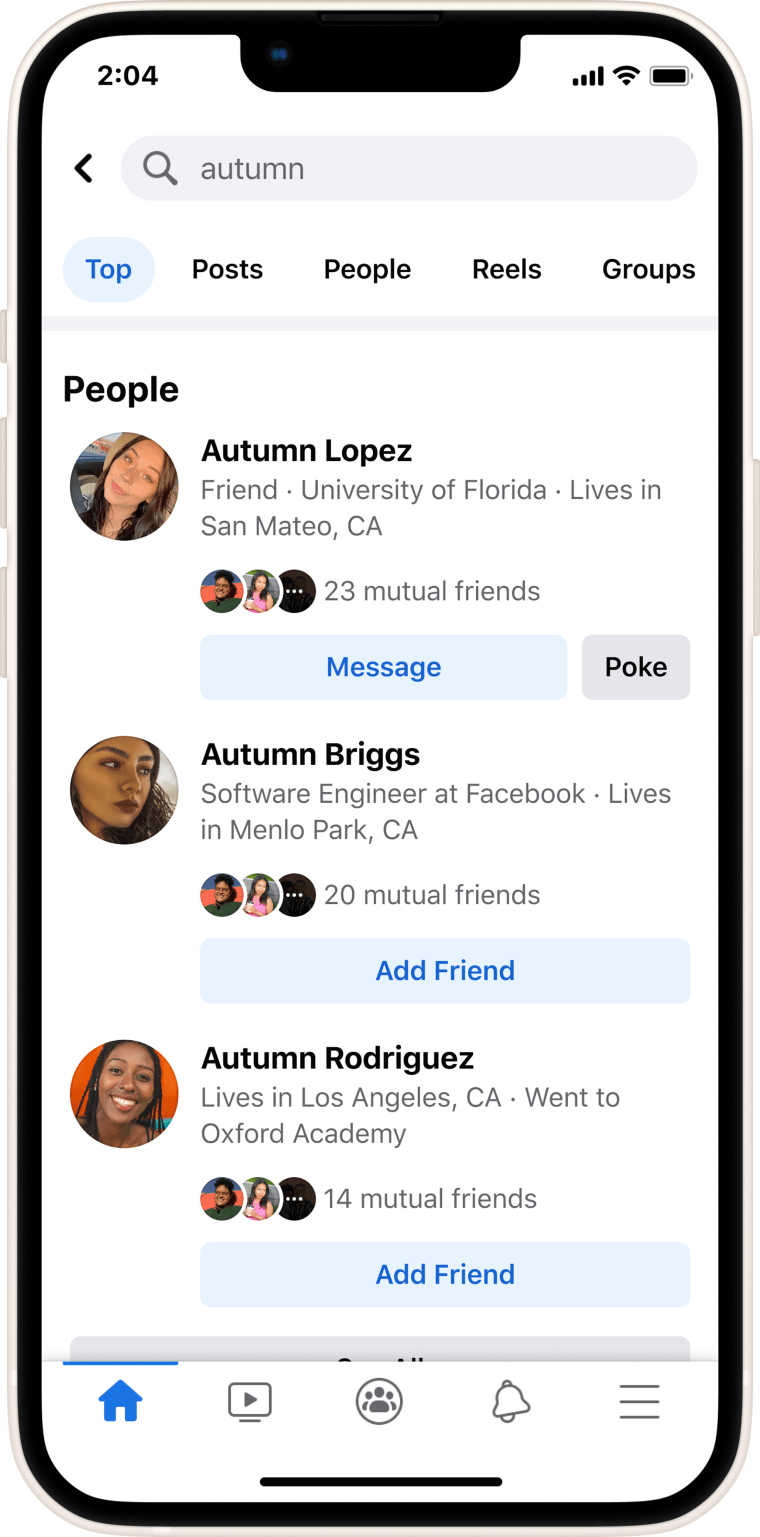
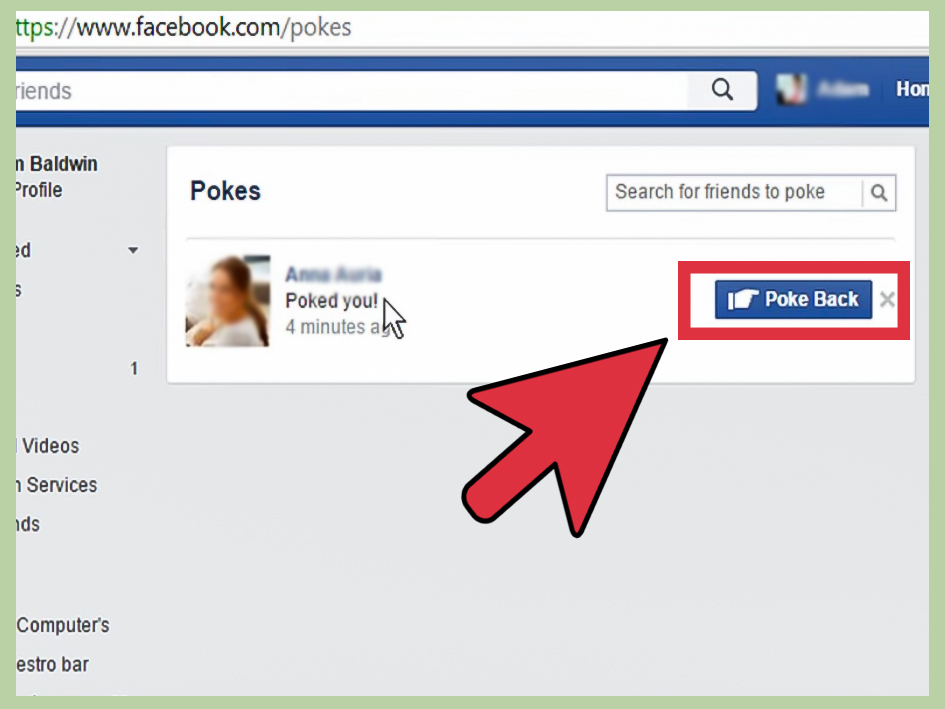
For years, the Poke was buried deep within Facebook’s “Help” or “Settings” menus, effectively making it a hidden feature for legacy users. However, in 2024, Meta’s engineering team redesigned the interface to bring the Poke back into the spotlight. By integrating “Poke” suggestions into the search bar and enhancing the visibility of the “Poke Back” button within the notification center, the platform saw a massive spike in engagement. This resurgence wasn’t accidental; it was a calculated UX (User Experience) shift intended to decrease “interaction friction” for Gen Z users who are increasingly moving away from high-pressure public posting toward low-stakes private nudges.
The Mechanics of the Poke: A Technical Perspective on UI/UX Design
From a technical standpoint, the Facebook Poke is a “nudge”—a design pattern intended to alter user behavior without forbidding any options or significantly changing their economic incentives. In the hierarchy of social media interactions, the Poke occupies the lowest rung of effort, which is precisely why it remains a powerful tool for retention.
Notification Systems and User Engagement
When you poke a friend, you are interacting with Facebook’s real-time notification engine. This system must balance immediate delivery with server load management. The “Poke” generates a specific type of push notification that bypasses some of the traditional filtering algorithms used for group posts or page updates. Because a Poke is a direct, one-to-one interaction, the system prioritizes it as a “high-relevance” signal. This ensures that the recipient sees the notification almost instantly, fostering a sense of immediate digital proximity.
Privacy Settings and Poke Restrictions
The technical architecture of the Poke also includes robust privacy guardrails. You cannot poke someone who has blocked you, nor can you poke someone with whom you have no mutual connection (depending on their privacy settings). Furthermore, the “Poke Back” loop is a binary state: you cannot poke someone again until they have poked you back or cleared the initial notification. This prevents the feature from being weaponized for digital harassment. From a development perspective, these “logic gates” are essential for maintaining a healthy user ecosystem, ensuring that the feature facilitates connection rather than annoyance.

Beyond the Tap: The Role of “Nudging” in Social Software Architecture
The Poke is more than just a button; it represents a specific philosophy in software architecture known as “micro-interactions.” These are the small, functional moments that accomplish a single task. In the context of Facebook, these interactions serve to keep the “social graph” warm—maintaining connections between users who might not have talked in years.
Micro-Interactions and Digital Communication Trends
Modern tech trends are moving toward “ambient intimacy”—the ability to feel close to others through digital signals without active conversation. The Poke is the progenitor of this trend. In today’s tech landscape, we see variations of the Poke everywhere: the “Nudge” in Google Workspace, the “Hoot” in various gaming platforms, and even the “React” feature on Slack. These features allow users to acknowledge a colleague’s presence or a friend’s status without the time-consuming process of typing a reply. By studying the Poke, developers can learn how to build features that provide maximum social value with minimum user effort.
Comparing Pokes to Modern “Reactions” and “Nudges”
While “Likes” and “Reactions” (Heart, Wow, Sad, Angry) provide emotional context, the Poke remains uniquely neutral. This neutrality is its greatest technical strength. It is a “context-free” signal that adapts to the relationship between the two users. To a family member, it might mean “thinking of you”; to an old college friend, it might mean “I see you’re still on here.” By not hard-coding a specific meaning into the UI, Facebook allows the users’ personal history to provide the context, a sophisticated example of “emergent gameplay” within a social software framework.
How to Use the Poke Feature: A Step-by-Step Technical Guide
Despite its 2024 update, many users are still unsure where the Poke feature lives within the current Facebook ecosystem. Because the Facebook app is a complex “super-app” with hundreds of nested menus, finding the Poke page requires a specific path.
Accessing the Pokes Page on Desktop and Mobile
The most direct way to access the feature is through the search function. By typing “Pokes” into the Facebook search bar, users are directed to a dedicated “Pokes” page. This page is a dedicated sub-directory within the Facebook application that aggregates all incoming pokes and suggests friends to poke.
- Search Method: Type “Pokes” in the search bar on the Facebook app or website.
- Direct Link: Users can navigate to
facebook.com/pokesin a web browser. - Friend Profiles: On some versions of the mobile app, tapping the three dots (…) on a friend’s profile will reveal the “Poke” option, though Meta has been consolidating this into the central Pokes page to streamline the UX.
Managing Poke Notifications and Settings
For users who find the influx of pokes overwhelming, Facebook provides granular control within the notification settings. Under the “Notifications” tab in “Settings & Privacy,” users can toggle pokes on or off for mobile push, email, or SMS. From a digital security and wellness perspective, this level of control is vital. It allows users to define their “digital personal space,” deciding whether they want to be reachable by these low-friction nudges or if they prefer to stick to more formal communication channels like Messenger.
The Future of Minimalist Social Signals
The enduring legacy of the Facebook Poke suggests that as our digital lives become more cluttered with AI-generated content and complex media feeds, there is an increasing demand for simplicity. The Poke is a reminder that sometimes the most effective technology is the one that gets out of the way.
As Meta continues to integrate AI and more immersive VR/AR experiences through the Metaverse, the concept of the Poke is likely to evolve once again. We may see “spatial pokes” in haptic environments or AI-prompted “smart pokes” that suggest reaching out to a friend on their birthday or after a long period of inactivity. Regardless of the medium, the technical core of the Poke—a simple, low-data, high-relevance signal—will remain a fundamental building block of social technology. It is a testament to the idea that in a world of complex algorithms, a simple digital tap can still be the most powerful way to stay connected.
aViewFromTheCave is a participant in the Amazon Services LLC Associates Program, an affiliate advertising program designed to provide a means for sites to earn advertising fees by advertising and linking to Amazon.com. Amazon, the Amazon logo, AmazonSupply, and the AmazonSupply logo are trademarks of Amazon.com, Inc. or its affiliates. As an Amazon Associate we earn affiliate commissions from qualifying purchases.