
While the title “What Playing Card Represents Death?” might initially conjure images of occult rituals and fortune-telling parlors, its true resonance lies not in supernatural predictions, but in the deeper currents of human psychology, societal interpretation, and historical evolution of symbolism, particularly within the realm of Brand and Design. The playing card, a ubiquitous tool for games and entertainment, has evolved into a potent visual language, capable of evoking powerful emotions and signifying profound concepts. This exploration delves into the specific card most often associated with death, not as a literal harbinger, but as a complex symbol that has been interpreted and reinterpreted throughout history, influencing design, marketing, and our collective understanding of mortality.
The discussion is not about foretelling doom, but about understanding how a simple piece of cardboard, through its design and cultural osmosis, can become a powerful archetype. We will examine the chosen card’s visual characteristics, its historical context, and how its symbolic meaning has been leveraged and adapted across various cultural and commercial landscapes. By dissecting this iconic imagery, we gain insights into the power of visual communication and the enduring human fascination with themes of transformation, endings, and new beginnings.
The Ace of Spades: A Card of Ominous Significance
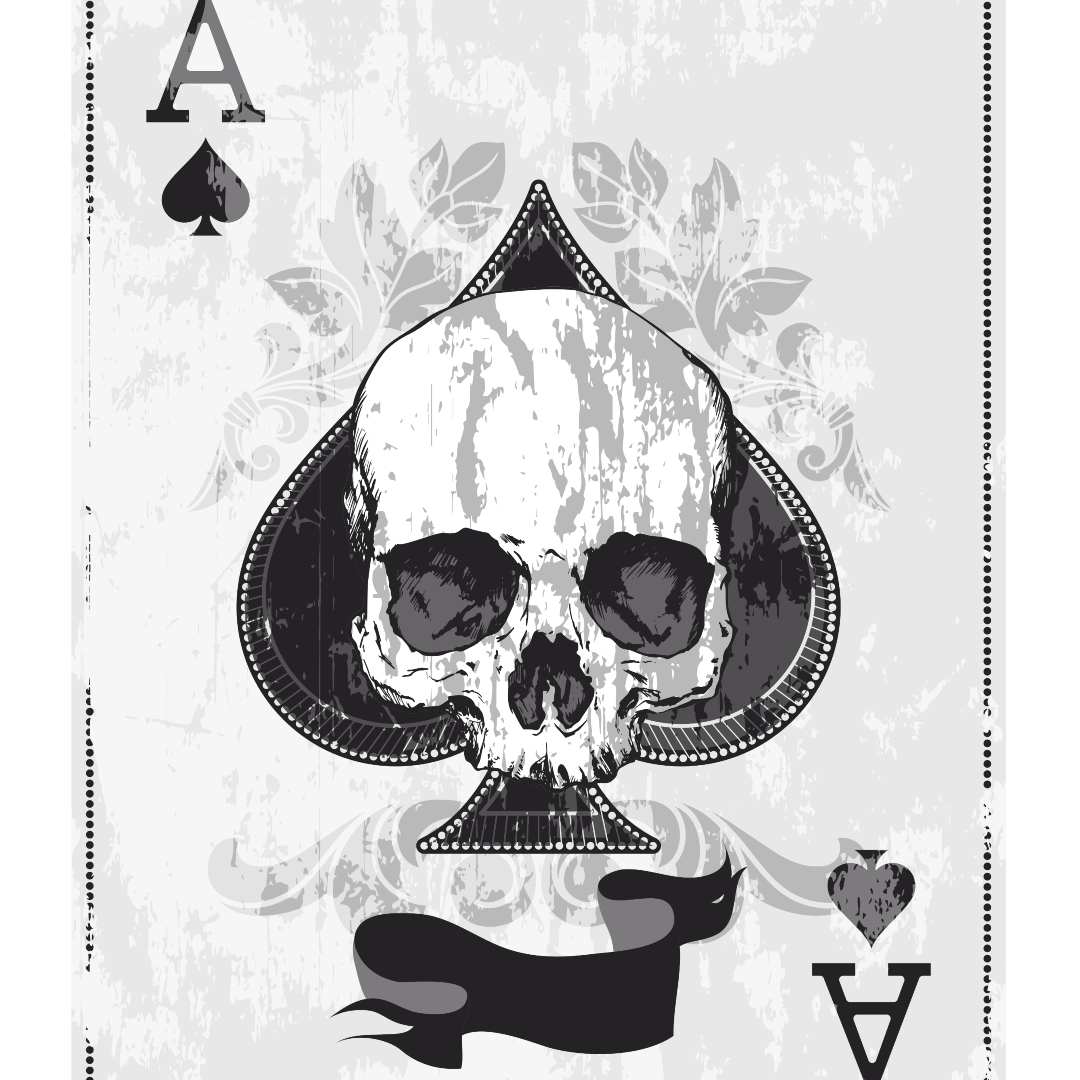
The playing card most consistently and widely associated with death is the Ace of Spades. This isn’t a coincidence of random chance, but rather a culmination of historical events, visual design elements, and the psychological impact of its stark imagery. Understanding its journey from a simple game piece to a symbol of mortality requires a multi-faceted approach, considering its visual evolution and the cultural narratives that have attached themselves to it.
Visual Anatomy of the Ace of Spades
The Ace of Spades, across most standard decks, possesses a distinct and often dominant design. Unlike other aces which might feature a simpler iteration of their suit’s symbol, the Ace of Spades typically boasts an elaborate, intricate, and often oversized spade. This design is not merely aesthetic; it carries a visual weight that sets it apart. The dark, pointed shape of the spade itself can be interpreted as sharp, penetrating, and inherently somber. This visual prominence, combined with the card’s position as the highest-ranking card in many games, contributes to its elevated status and, consequently, its potential for deeper symbolic meaning. The simplicity of its color palette – often just black and white – further enhances its starkness and lends itself to interpretations of finality and seriousness.
Historical Roots and Shifting Meanings
The association of the Ace of Spades with death is not a monolithic entity but has evolved over time and across cultures. One significant contributing factor is its perceived resemblance to a tombstone or a scythe, tools directly associated with mortality. The very shape of the spade, a pointed downward-pointing glyph, can evoke the image of a grave marker. Furthermore, in some historical contexts, particularly during times of war, the Ace of Spades was used as a psychological weapon. Soldiers would leave these cards on the bodies of fallen enemies as a chilling declaration of their demise and a symbol of their dominance. This practice, though perhaps apocryphal in its widespread impact, cemented the card’s association with death in popular imagination, particularly within military and wartime narratives.
Beyond military symbolism, the card’s inherent rank in many card games also lends itself to interpretations of finality. As the highest card, it signifies an ultimate conclusion, an end to the game. This concept of ending, when amplified by its visually somber design, can easily bleed into broader interpretations of life’s ultimate end. The Ace of Spades became a potent symbol not just of a game’s conclusion, but of the profound and irreversible conclusion of life itself.
The Ace of Spades in Popular Culture and Brand Narratives
The Ace of Spades’ potent symbolism has been consistently leveraged and amplified within popular culture, further solidifying its connection to themes of death, power, and finality. This transcends mere superstition and enters the domain of effective branding and storytelling, where potent archetypes are used to convey complex ideas concisely.
A Recurring Motif in Media and Art
From literature to film, the Ace of Spades has appeared as a recurring motif, often signaling a significant turning point, a perilous situation, or the imminent demise of a character. Its presence in a narrative can instantly imbue a scene with a sense of dread, mystery, or an impending confrontation with fate. Artists and designers have also frequently incorporated the Ace of Spades into their work, using its iconic imagery to explore themes of mortality, destiny, and the darker aspects of human experience. This consistent reappearance in various media reinforces its symbolic weight and makes it instantly recognizable as a signifier of potent, often grim, outcomes.
Strategic Use in Brand Identity and Marketing
Savvy brands have recognized the inherent power of the Ace of Spades and have strategically employed it within their brand identities and marketing campaigns. This is not about directly associating a product with death, but rather about tapping into the card’s inherent connotations of power, prestige, and perhaps a touch of rebellious edge. For instance, a brand aiming for an image of ultimate authority or supreme quality might subtly allude to the Ace of Spades through its logo design, color palette, or campaign imagery. It can signify a commitment to being the “best in class,” the ultimate choice, or a definitive statement in its industry.
Consider how a luxury automotive brand might use deep blacks and sharp, angular design elements in its advertising, echoing the visual cues of the Ace of Spades to convey a sense of sleek power and unparalleled performance. Similarly, a high-stakes gaming platform or an exclusive club might adopt imagery that subtly references the card to evoke a sense of exclusivity, risk, and the thrill of achieving the ultimate victory. The effectiveness lies in the indirect association, allowing the brand to borrow the card’s gravitas and potent symbolism without overtly courting negative connotations. It’s a sophisticated use of an archetype to communicate a desired brand perception.
Beyond the Ace: Other Cards and Their Symbolic Resonance

While the Ace of Spades undeniably holds the most prominent position in the pantheon of death-associated playing cards, it is not the sole contender. The rich tapestry of playing card symbolism includes other cards that, through their visual elements and historical interpretations, can evoke similar themes of endings, transition, and the cyclical nature of existence. Examining these broader connections offers a more nuanced understanding of how playing cards have become vessels for deeper human contemplation.
The Queen of Spades: A Figure of Authority and Potential Melancholy
The Queen of Spades, while often associated with a powerful, intelligent, and sometimes formidable female figure, also carries a darker undertone that can be linked to mortality and sorrow. Unlike the direct, stark finality of the Ace of Spades, the Queen’s connection is more nuanced, often tied to themes of loss, grief, and the emotional toll of life’s inevitable challenges. Her regal bearing can be interpreted as a stoic acceptance of fate, even in the face of hardship. In some divinatory traditions, she can represent a widow or a woman experiencing profound sadness, aligning her with the emotional aspects of loss that accompany death.
The Ten of Swords: The Ultimate End of Suffering
The Ten of Swords is a card that, even outside the context of playing cards, often signifies a definitive ending, particularly an end to suffering or a prolonged period of difficulty. Visually, it depicts a figure impaled by ten swords, an image of complete and utter defeat. In many interpretations, this card doesn’t represent a violent, unexpected death, but rather the cessation of pain, the conclusion of a difficult chapter, or a situation so bad that the only way forward is a complete restart. This “rock bottom” scenario, while grim, also carries the potential for subsequent rebirth and a new beginning. It’s an ending that, paradoxically, opens the door for something new, a concept closely related to the cyclical nature of life and death.
Suits as Metaphors for Life’s Cycles
The four suits themselves – Hearts, Diamonds, Clubs, and Spades – can be viewed as metaphors for different aspects of life and its transitions, including the concept of endings. Hearts often represent emotions and relationships, Diamonds represent material wealth and worldly possessions, and Clubs can symbolize growth and ambition. The Spades, with their sharp, pointed forms, are frequently associated with intellect, action, and, as we’ve seen, the more challenging or transformative aspects of life. In this framework, the suit of Spades can be seen as representing the forces that lead to change, endings, and ultimately, the necessary shedding of the old to make way for the new. This cyclical interpretation further broadens the symbolic reach of individual cards within the suit.
The Psychology of Symbolism: Why Cards Resonate with Death
The enduring association of certain playing cards with death is not merely a matter of historical anecdote or visual resemblance; it taps into fundamental aspects of human psychology and our innate drive to find meaning and order in the face of uncertainty. The power of these symbols lies in their ability to externalize abstract concepts and provide a tangible representation for complex emotional and existential themes.
Archetypes and the Collective Unconscious
Carl Jung’s concept of the collective unconscious suggests that humanity shares a reservoir of universal symbols and archetypes that are deeply ingrained in our psyche. The Ace of Spades, with its potent imagery of finality and power, can be seen as embodying archetypes related to death, transformation, and the ultimate authority. These archetypes are not learned but are inherent, making their resonance with concepts like death feel almost instinctual. When we encounter such a symbol, it taps into these pre-existing psychological structures, evoking a profound and often immediate emotional response. This shared psychological foundation explains why the symbol can hold similar weight across diverse individuals and cultures.
The Human Need for Narrative and Meaning
Humans are storytelling creatures. We seek to understand the world around us by constructing narratives and assigning meaning to events and symbols. Playing cards, particularly those with striking visual designs, provide a ready-made vocabulary for these narratives. The Ace of Spades, in its starkness and perceived power, offers a compelling element for stories that involve risk, consequence, and the ultimate fate. Its use in games also reinforces its role as a determinant of outcomes, mirroring how we often view death as the ultimate determinant of life’s narrative. This narrative function allows us to process complex ideas about mortality in a structured and often ritualistic way.
The Role of Design in Evoking Emotion
The visual design of playing cards plays a critical role in their symbolic interpretation. The sharp angles and dark color palette of the Ace of Spades are inherently more evocative of solemnity and finality than, say, the rounded, warmer tones of a Heart. Designers, whether consciously or unconsciously, imbue their creations with emotional weight. The intricate detail on the Ace of Spades, for example, can suggest a complexity and gravity that aligns with the profound nature of death. This deliberate or inherent emotional resonance of design makes certain cards more susceptible to being associated with profound and impactful concepts like mortality. The aesthetic choices are not arbitrary; they are integral to how the symbol is perceived and the meanings it accrues.

Conclusion: The Playing Card as a Mirror to Human Experience
The question “What Playing Card Represents Death?” is far more than a trivia query; it’s an invitation to explore the intricate interplay between design, history, psychology, and culture. The Ace of Spades, as the most prominent symbol, serves as a powerful case study. Its stark visual design, historical usage as a marker of consequence, and its adoption in narratives have cemented its association with death, not as a literal prediction, but as a potent archetype of endings, transformation, and the inevitable cycles of life.
Understanding this symbolism allows us to appreciate the enduring power of visual communication. Brands, in particular, can learn from how such deeply ingrained symbols can be leveraged to convey complex messages and evoke specific emotions. Whether it’s through the subtle allusions in a logo or the impactful imagery in an advertising campaign, the principles of evocative design and symbolic resonance remain central to effective branding. The playing card, a humble object of leisure, reveals itself to be a surprisingly sophisticated tool, capable of reflecting and shaping our understanding of life’s most profound themes. The Ace of Spades, in its iconic and somewhat chilling presence, reminds us that even in the simplest of forms, profound meaning can reside, waiting to be interpreted and reinterpreted across the canvas of human experience.
aViewFromTheCave is a participant in the Amazon Services LLC Associates Program, an affiliate advertising program designed to provide a means for sites to earn advertising fees by advertising and linking to Amazon.com. Amazon, the Amazon logo, AmazonSupply, and the AmazonSupply logo are trademarks of Amazon.com, Inc. or its affiliates. As an Amazon Associate we earn affiliate commissions from qualifying purchases.