
For millennia, humanity has gazed at the night sky, a celestial tapestry dotted with twinkling stars and intriguing wanderers. Among these celestial travelers, planets hold a special fascination. Their discernible movement across the starscape, distinct from the fixed constellations, has captivated observers and fueled scientific inquiry. The question, “What planets can we see from Earth?” is more than just a curious query; it’s an invitation to explore the intersection of our naked eye perception, the power of technological innovation, and the fundamental principles of astronomy. While the universe is vast and filled with countless worlds, our terrestrial vantage point, enhanced by ingenious scientific tools, allows us to witness a select, yet remarkable, group of our planetary neighbors. This exploration delves into the planets visible to us, the historical and technological leaps that have enabled these observations, and the tools that continue to expand our cosmic horizons.
The Naked-Eye Visitors: Our Immediate Celestial Neighbors
Even without the aid of modern instruments, Earth’s sky offers a glimpse into our solar system’s planetary family. These are the celestial bodies whose brightness and proximity make them perceptible to the human eye, a testament to both their inherent luminosity and our planet’s unique perspective. Understanding these visible planets requires a grasp of their orbital mechanics and how their positions relative to Earth and the Sun influence their appearance.
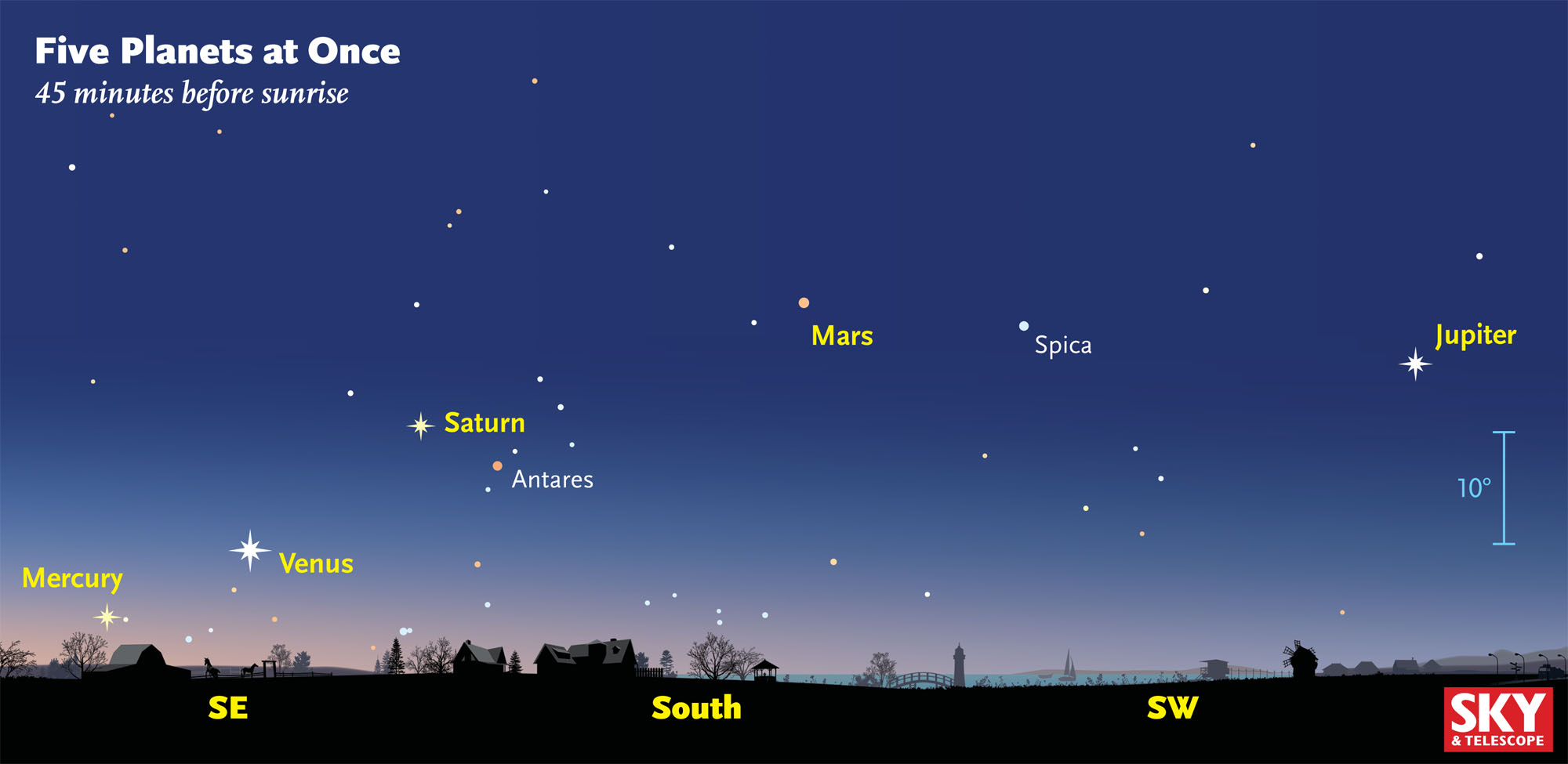
The Five Wandering Stars: Mercury, Venus, Mars, Jupiter, and Saturn
Historically, these five planets were recognized as distinct from the fixed stars due to their observable motion. Their visibility is not constant; it depends on their orbital positions, Earth’s position in its own orbit, and the time of year and night.
-
Mercury: The innermost planet, Mercury, is notoriously difficult to spot. It orbits the Sun very closely, meaning it appears only shortly before sunrise or after sunset, often lost in the Sun’s glare. Its swift movement across the sky also contributes to its elusive nature. Observing Mercury often requires knowing precisely when and where to look, usually very low on the horizon. Its visibility is often described as a brief, bright “star” near the Sun.
-
Venus: Often referred to as the “Morning Star” or “Evening Star,” Venus is the brightest planet in our sky, second only to the Moon. Its thick atmosphere reflects a significant amount of sunlight, making it a brilliant beacon. Venus’s orbit is closer to the Sun than Earth’s, so it always appears in the direction of the Sun from our perspective. This means we see it either in the eastern sky before dawn or in the western sky after dusk, never directly overhead or in the middle of the night. Its phases, similar to those of the Moon, were a crucial discovery for early astronomers using telescopes, providing early evidence for the heliocentric model of the solar system.
-
Mars: The “Red Planet” is easily identifiable by its distinctive reddish hue, caused by iron oxide on its surface. Mars’s orbit is outside Earth’s, meaning we can see it at various times throughout the night, depending on its position in its orbit relative to Earth. Its brightness varies considerably depending on how close it is to Earth during its orbital journey. When Earth “overtakes” Mars in their respective orbits, Mars appears at its brightest and largest in our sky, an event known as an opposition.
-
Jupiter: The largest planet in our solar system, Jupiter is another prominent naked-eye object. It is bright enough to be seen even when it’s not at its closest approach to Earth. Its characteristic bright, steady light makes it easily distinguishable. Observing Jupiter with the naked eye reveals it as a luminous “star.” However, even small telescopes can reveal its four largest moons – Io, Europa, Ganymede, and Callisto – a groundbreaking observation made by Galileo Galilei that fundamentally challenged existing cosmological views.
-
Saturn: The ringed planet, Saturn, is the outermost planet traditionally visible to the naked eye. It appears as a bright, yellowish star, though less brilliant than Venus or Jupiter. Like Mars and Jupiter, its visibility varies with its orbital position. While its magnificent rings are not visible without optical aid, Saturn itself is a rewarding sight for the unaided eye, representing a significant achievement in ancient astronomical observation.
These five planets, visible through sheer brightness and relative proximity, represent the vanguard of our accessible solar system, a celestial panorama observable with the most basic of human tools: our eyes.
The Technological Leap: From Naked Eye to Powerful Telescopes
The journey from merely identifying planets as wandering stars to understanding their true nature and observing their intricate details is a story of technological advancement. The invention and continuous refinement of optical instruments have revolutionized our ability to perceive the cosmos, transforming our understanding of the planets and our place within the solar system.

The Birth of Observational Astronomy: The Telescope’s Impact
The invention of the telescope in the early 17th century marked a profound turning point in astronomy. Suddenly, the limitations of human vision were overcome, opening up vistas of the universe previously unimaginable.
-
Galileo Galilei and the Refracting Telescope: Galileo’s pioneering use of the refracting telescope in 1609 allowed him to make revolutionary observations. He was the first to resolve Jupiter into a disc and, crucially, to discover its four largest moons. This observation, along with his findings regarding Venus’s phases (which clearly demonstrated it orbited the Sun), provided strong empirical evidence supporting the heliocentric model, which placed the Sun, not the Earth, at the center of the solar system. His work demonstrated that telescopes could reveal details beyond what the naked eye could perceive, fundamentally changing astronomy from a philosophical pursuit to an empirical science.
-
Newton and the Reflecting Telescope: Isaac Newton’s development of the reflecting telescope in the mid-17th century addressed some of the chromatic aberration issues inherent in early refracting telescopes. By using mirrors instead of lenses to gather and focus light, reflecting telescopes allowed for clearer and sharper images, paving the way for larger and more powerful instruments. This technological innovation further enhanced our ability to observe faint and distant objects, including planets, with greater detail.
-
Advancements in Optics and Engineering: Over centuries, the science of optics and telescope engineering has progressed dramatically. From simple refracting and reflecting designs, astronomers moved to compound telescopes, incorporating multiple lenses and mirrors. The development of larger and more precise mirrors, improved grinding techniques, and the introduction of new materials have led to telescopes with unprecedented light-gathering power and resolving capabilities. This continuous technological evolution has enabled us to observe fainter planets, resolve surface features, and even study their atmospheres.
The telescope, in its myriad forms, has been the single most transformative technology in our quest to see planets from Earth. It has taken us from recognizing distant points of light to discerning their distinct characteristics, from identifying the five wanderers to discovering and studying worlds beyond our immediate celestial neighbors.
Expanding the Planetary View: Beyond the Naked Eye and Early Telescopes
While the naked eye and early telescopes revealed the most prominent planets, further technological progress has allowed us to observe and study planets that are invisible to the unaided eye, and to gain unprecedented insights into those we can see. This expansion of our observable planetary landscape is a direct result of sophisticated modern technologies.

The Era of Modern Astronomy: Imaging, Spectroscopy, and Space-Based Observatories
The 20th and 21st centuries have witnessed an explosion of technological innovation that has dramatically expanded our ability to observe and understand planets.
-
Advanced Imaging Techniques and CCD Cameras: The development of Charge-Coupled Devices (CCDs) and later CMOS sensors has revolutionized astronomical imaging. These digital sensors are far more sensitive to light than photographic plates and can capture images with incredible detail and dynamic range. This has allowed astronomers to photograph much fainter objects, including the ice giants Uranus and Neptune, which are not visible to the naked eye. Furthermore, sophisticated image processing techniques can enhance these digital captures, revealing subtle atmospheric details, surface features, and even the presence of rings around planets like Uranus and Neptune that were previously only suspected.
-
Spectroscopy: Unveiling Planetary Composition: Beyond just seeing a planet’s shape and brightness, spectroscopy allows us to analyze the light reflected or emitted by celestial bodies. By splitting light into its constituent wavelengths, spectroscopes reveal the chemical fingerprints of elements and molecules present in a planet’s atmosphere and on its surface. This technology has been instrumental in determining the atmospheric composition of all the planets in our solar system, identifying gases like methane on Uranus and Neptune, carbon dioxide on Venus, and water vapor on Mars. It has also helped us understand the geological makeup of rocky planets and the atmospheric conditions that drive their weather systems.
-
Space-Based Observatories: Eliminating Atmospheric Distortion: Earth’s atmosphere, while essential for life, acts as a significant impediment to clear astronomical observation. It blurs light, absorbs certain wavelengths, and is affected by turbulence. Space-based telescopes, such as the Hubble Space Telescope and the James Webb Space Telescope, are placed above the atmosphere, providing an unobstructed view of the universe. These observatories, equipped with advanced imaging and spectroscopic instruments, have provided breathtakingly detailed images of planets in our solar system and beyond. They allow us to study atmospheric dynamics, search for moons, and even characterize exoplanets with remarkable precision, pushing the boundaries of what we can observe from our home planet.
-
Radio and Infrared Telescopes: Not all planetary information is contained within visible light. Radio telescopes can detect emissions from planets that are invisible in optical wavelengths, such as thermal radiation or synchrotron radiation from Jupiter’s magnetosphere. Infrared telescopes are crucial for studying cooler objects and the composition of planetary atmospheres, as many molecules absorb or emit strongly in the infrared spectrum. Technologies like the Spitzer Space Telescope and the Herschel Space Observatory have provided invaluable data on planetary temperatures and atmospheric constituents.
The technological cascade, from the initial lens to sophisticated orbital observatories, has transformed our view of the planets. We can now not only see planets that are invisible to the naked eye but also understand their chemical makeup, atmospheric processes, and even search for signs of life, all through the lens of ever-advancing technology. The question of “what planets can we see from Earth?” has evolved from a simple observation of bright dots to a complex, technologically mediated exploration of our solar system.
aViewFromTheCave is a participant in the Amazon Services LLC Associates Program, an affiliate advertising program designed to provide a means for sites to earn advertising fees by advertising and linking to Amazon.com. Amazon, the Amazon logo, AmazonSupply, and the AmazonSupply logo are trademarks of Amazon.com, Inc. or its affiliates. As an Amazon Associate we earn affiliate commissions from qualifying purchases.