
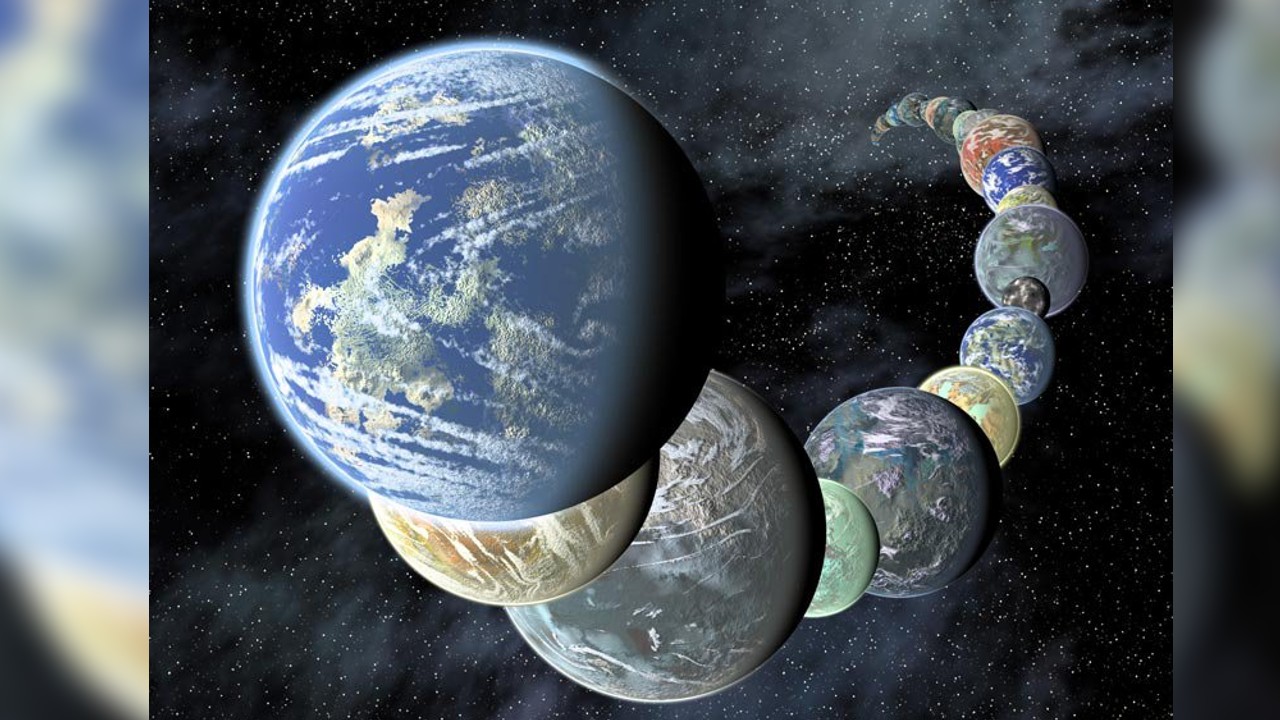
The cosmos is a tapestry woven with countless celestial bodies, each unique in its formation and characteristics. Among these, a special class of planets holds particular fascination: the terrestrial planets. These are the rocky worlds, the solid ground beneath our feet, starkly contrasting with the gas giants that dominate the outer reaches of many solar systems. In our own solar system, Mercury, Venus, Earth, and Mars stand as the archetypal terrestrial planets, each offering a window into planetary evolution and the conditions necessary for life – or its absence.

Beyond their astronomical significance, the terrestrial planets, particularly our own Earth, serve as a crucible for human ingenuity, driving advancements in technology, shaping global brands, and influencing vast economies. From the cutting-edge tech enabling us to explore distant Martian landscapes to the powerful branding of space agencies and the multi-billion-dollar investments in space exploration, these rocky worlds are far more than just celestial bodies; they are catalysts for human progress. This article delves into the fundamental nature of terrestrial planets and explores their profound, multi-faceted impact across technology, branding, and finance.
The Core Characteristics of Terrestrial Planets: Earth’s Kin in the Cosmos
Terrestrial planets, often referred to as rocky planets or telluric planets, are fundamentally different from their gas giant counterparts. Their defining features revolve around their composition, density, and size, all of which contribute to their unique geological and atmospheric profiles. Understanding these characteristics is crucial to appreciating why these worlds are so important for scientific study and human ambition.
Defining Features: Rock, Metal, and Atmosphere
At the heart of every terrestrial planet lies a dense core, primarily composed of iron and nickel. This metallic core is surrounded by a silicate mantle, which in turn is capped by a solid, rocky crust. This layered structure, similar to an onion, is a hallmark of terrestrial worlds. Their average densities are significantly higher than those of gas giants, reflecting their solid composition. While gas giants like Jupiter and Saturn are hundreds of times more massive than Earth, they are far less dense, essentially massive balls of hydrogen and helium with relatively small rocky cores. Terrestrial planets, by contrast, are compact and dense, capable of supporting solid landforms.
In terms of size, terrestrial planets are generally much smaller than gas giants. Earth, the largest of the terrestrial planets in our solar system, is still dwarfed by Jupiter, which could contain over 1,300 Earths within its volume. This smaller scale, however, allows for distinct geological processes such as volcanism, plate tectonics (on Earth), and the formation of canyons and craters, all shaping their surfaces in dynamic ways.
Another critical characteristic is the presence of an atmosphere, albeit one that varies dramatically in composition and density from planet to planet. Earth’s nitrogen-oxygen atmosphere is unique in its ability to support complex life, regulate temperature, and provide a protective shield. Venus boasts a thick, scorching carbon dioxide atmosphere, trapping heat in a runaway greenhouse effect. Mars has a thin, cold CO2 atmosphere, barely clinging to the planet, while Mercury is virtually airless. These atmospheric variations profoundly influence surface conditions, from temperature extremes to the presence of liquid water – a key ingredient for life as we know it.
Meet the Terrestrial Four: Mercury, Venus, Earth, and Mars
Our solar system hosts four definitive terrestrial planets, each offering a distinct case study in planetary evolution:
- Mercury: The smallest and innermost planet, Mercury is a world of extremes. Its lack of a substantial atmosphere means colossal temperature swings between scorching days (over 400°C) and frigid nights (-170°C). Its surface is heavily cratered, resembling Earth’s moon, bearing testament to billions of years of impacts. Despite its proximity to the Sun, radar observations have even hinted at the presence of water ice in permanently shadowed craters at its poles.
- Venus: Often dubbed Earth’s “sister planet” due to its similar size and mass, Venus is anything but hospitable. Cloaked in a thick, toxic atmosphere of carbon dioxide and sulfuric acid clouds, it experiences a runaway greenhouse effect that makes its surface the hottest in the solar system, hot enough to melt lead. Its surface, mapped by radar, reveals vast volcanic plains and elevated regions, suggesting past geological activity.
- Earth: Our home planet stands as the undisputed champion of habitability among the terrestrial worlds. Its unique combination of liquid water on its surface, a protective magnetic field, an active geological system (plate tectonics), and a life-sustaining nitrogen-oxygen atmosphere has fostered an explosion of biodiversity. Earth serves as the ultimate benchmark for understanding the conditions required for life.
- Mars: The “Red Planet” has long captured human imagination as the most plausible candidate for extraterrestrial life within our solar system. Smaller and colder than Earth, Mars possesses polar ice caps, vast canyons (Valles Marineris), and evidence of ancient riverbeds and lakebeds, strongly suggesting that liquid water once flowed across its surface. Its thin atmosphere and extreme temperatures make current surface conditions harsh, but ongoing robotic missions continue to uncover its intriguing history and potential for future human exploration.
These four worlds, while sharing common terrestrial traits, highlight the incredible diversity that can arise from subtle differences in formation, distance from the sun, and atmospheric evolution. Their study provides critical insights into the formation of planets, the conditions for life, and the potential pathways for planetary development – both good and bad.
The Technological Frontier: Exploring and Leveraging Terrestrial Worlds
The quest to understand terrestrial planets has been a primary driver of technological innovation, pushing the boundaries of engineering, computing, and materials science. From the probes venturing across the cosmos to the conceptualization of future off-world settlements, technology is the backbone of humanity’s engagement with these rocky worlds.
Pushing the Boundaries of Space Exploration Technology
Our ability to study terrestrial planets in detail stems directly from remarkable advancements in space exploration technology. Robotic probes and rovers have revolutionized our understanding, providing unprecedented close-up views and in-situ analysis. Missions like NASA’s Mars rovers – Spirit, Opportunity, Curiosity, and Perseverance – are pinnacles of engineering. These mobile laboratories carry sophisticated instruments for geological analysis, atmospheric sensing, and even the search for biosignatures. Their onboard AI systems enable autonomous navigation, scientific decision-making, and intelligent data transmission, operating millions of miles from Earth with minimal human intervention.
Beyond individual probes, advanced telescopes like the Hubble Space Telescope and the James Webb Space Telescope provide crucial data, not only on our own solar system but also on exoplanets. While JWST primarily focuses on exoplanet atmospheres and origins, the technological leaps it represents – in optics, cryogenic cooling, and data processing – are directly applicable to understanding the formation and characteristics of distant terrestrial worlds orbiting other stars. Moreover, propulsion technologies are continuously evolving, from traditional chemical rockets to ion thrusters and theoretical concepts like nuclear thermal propulsion, all aimed at making journeys to Mars and beyond faster and more efficient.
Envisioning Future Terrestrial Living and Resource Utilization
Looking further into the future, terrestrial planets, especially Mars, represent potential expansion frontiers for humanity. This vision is entirely dependent on breakthrough technologies. Concepts for Martian habitats include inflatable structures, lava tubes adapted for shelter, and structures 3D-printed from regolith (Martian soil). These require innovations in closed-loop life support systems, radiation shielding, and sustainable energy generation (solar, nuclear). The ability to grow food in controlled environments and recycle water and air will be paramount for long-term self-sufficiency.
Resource utilization, or In-Situ Resource Utilization (ISRU), is another critical technological area. On Mars, this involves extracting water ice for drinking, oxygen production (for breathing and rocket propellant), and perhaps even hydrogen for fuel. MOXIE (Mars Oxygen In-Situ Resource Utilization Experiment) on the Perseverance rover is a prime example, successfully demonstrating the conversion of Martian atmospheric carbon dioxide into oxygen. Beyond Mars, the prospect of asteroid mining – targeting terrestrial-like bodies rich in precious metals and water – represents another monumental technological challenge and a potential game-changer for space commerce, enabling humanity to access resources without lifting them from Earth’s deep gravity well.
Digital Security and Productivity in Space Missions
Even seemingly mundane aspects of modern technology, like digital security and productivity tools, play a critical role in space exploration. Protecting mission data from cyber threats is paramount. A single breach could compromise sensitive scientific findings, control systems for spacecraft, or even endanger astronaut lives. Sophisticated encryption, secure communication protocols, and robust cybersecurity measures are integrated into every layer of space mission architecture.
Furthermore, the complexity of orchestrating multi-year, multi-billion-dollar missions to terrestrial planets demands exceptional productivity and project management. Advanced software suites facilitate everything from mission planning and trajectory calculations to hardware design, simulation, and real-time operational control. Teams of thousands across continents collaborate using high-tech communication platforms, ensuring seamless coordination and efficient problem-solving. These tools, while perhaps less glamorous than a Mars rover, are indispensable for turning ambitious planetary exploration goals into reality.
Branding the Cosmos: Identity, Marketing, and Influence in Planetary Exploration
Space exploration, especially the pursuit of understanding and reaching terrestrial planets, isn’t just a scientific endeavor; it’s a profound cultural narrative. This narrative is meticulously crafted and communicated through powerful branding strategies, influencing public perception, attracting talent, and securing funding.
The Power of Brand in Space Agencies and Private Ventures
The institutions driving terrestrial planet exploration, whether government agencies or private companies, rely heavily on their brand identity. NASA, for instance, has cultivated a global brand synonymous with pioneering spirit, scientific excellence, and awe-inspiring achievement. Its iconic “worm” and “meatball” logos are instantly recognizable, evoking a legacy of lunar landings, Mars rovers, and breathtaking images from the cosmos. This brand equity helps secure public funding, inspire future generations, and attract top scientific and engineering talent.
Similarly, private space companies like SpaceX and Blue Origin have leveraged strong personal and corporate branding to disrupt the industry. Elon Musk’s personal brand is inextricably linked to SpaceX’s audacious goals of colonizing Mars. Their branding emphasizes innovation, rapid iteration, and a bold future, attracting massive investment and a passionate following. These brands don’t just sell rockets; they sell a vision of humanity’s future among the terrestrial planets, shaping our collective imagination and driving competition in the burgeoning space sector.
Marketing the Journey: Inspiring Humanity Through Terrestrial Discovery
Marketing plays a crucial role in bringing the wonder of terrestrial planet exploration to the public. Campaigns around missions to Mars, for example, are carefully designed to engage, educate, and inspire. High-definition images and videos from rovers, often presented with compelling narratives, transform distant scientific endeavors into relatable human stories of discovery. Educational outreach programs, social media campaigns, and documentary films translate complex scientific data into accessible content, making space exploration relevant to everyday life.
The concept of a “Journey to Mars” or “Artemis Program: Returning Humanity to the Moon” are powerful marketing phrases that capture public imagination and garner support. They transform abstract scientific goals into tangible human quests, aligning the exploration of terrestrial bodies with humanity’s innate drive to explore and achieve. This strategic communication is vital for maintaining public and political will for long-term, expensive space projects.
Personal Branding for the Space Age
Beyond institutional brands, individuals involved in terrestrial planet exploration also cultivate powerful personal brands. Astronauts, planetary scientists, engineers, and even space entrepreneurs become ambassadors for their field. Astronauts like Chris Hadfield or Peggy Whitson leverage social media and public appearances to share their unique experiences, demystify spaceflight, and inspire millions. Their personal stories and insights provide a human connection to the vastness of space, making the pursuit of knowledge about terrestrial planets more relatable and engaging.
Scientists and engineers, through their research publications, public lectures, and media appearances, build reputations as leading experts. Their personal brands contribute to the credibility and visibility of their institutions and the broader scientific community. In the increasingly interconnected digital age, strong personal branding amplifies their impact, fostering public understanding and passion for the exploration of our solar system’s rocky worlds.
The Economics of the Exoplanetary: Money, Investment, and the Space Economy
While terrestrial planets are sources of scientific inquiry and inspiration, they also represent a significant economic frontier. The pursuit of understanding and accessing these worlds is intertwined with massive financial investments, a growing space economy, and potential new markets that could reshape global commerce.
Investing in the Final Frontier: Capitalizing on Terrestrial Ambitions
The exploration of terrestrial planets is an incredibly capital-intensive endeavor, funded by a mix of government budgets and, increasingly, private investment. National space agencies like NASA, ESA, and JAXA receive multi-billion-dollar annual appropriations, much of which is directed towards planetary science missions and human exploration programs targeting the Moon and Mars. This government funding acts as a foundational investment, driving basic research and developing foundational technologies.
In recent decades, however, private capital has flooded into the space sector, recognizing the potential for commercial returns. Venture capital firms and individual investors are pouring billions into companies developing reusable rockets, satellite constellations, space tourism infrastructure, and even nascent asteroid mining technologies. The “New Space” movement is transforming the economics of space, moving beyond pure scientific exploration towards a commercially viable ecosystem, driven by the lure of resources, new markets, and the ultimate expansion of human civilization to other terrestrial bodies.
From Terrestrial Research to Earthly Gains: Economic Spill-overs
The money invested in exploring terrestrial planets isn’t just spent in space; it creates significant economic spill-overs back on Earth. Technologies developed for space missions often find unexpected applications in terrestrial industries, a phenomenon known as “spin-offs.” For example, satellite technology, initially driven by scientific and military needs, now powers GPS, weather forecasting, telecommunications, and Earth observation, creating multi-trillion-dollar industries.
Materials science advancements, miniature sensors, advanced robotics, sophisticated software algorithms, and medical technologies developed for astronauts and spacecraft have been adapted for use in everything from improved medical imaging and water purification systems to better insulation and fire-resistant materials. The economic returns from these terrestrial spin-offs often far outweigh the initial investment in space exploration, making the pursuit of knowledge about terrestrial planets a net positive for global economies and human well-being.
The Future Space Economy: Resources, Tourism, and Beyond
The long-term economic potential of terrestrial planets and their surrounding environments is immense. Asteroid mining, for example, targets resource-rich terrestrial-like bodies containing vast quantities of precious metals (platinum, gold) and water ice. If technologically feasible and economically viable, this could dramatically alter global commodity markets and provide essential resources for in-space manufacturing and habitation.
Space tourism, particularly suborbital and orbital flights, is already a burgeoning industry, and the prospect of lunar tourism or even a journey around Mars holds significant future potential. Beyond tourism, the development of manufacturing facilities in microgravity or on the Moon could unlock entirely new industrial processes, producing specialized materials or components that are difficult or impossible to create on Earth. The vision of a multi-planetary economy, extending to our terrestrial neighbors, is no longer purely science fiction but an increasingly plausible economic frontier.
Financial Tools and Strategic Planning for Multi-Planetary Endeavors
Managing the finances of multi-planetary endeavors requires sophisticated financial tools and strategic planning. These are not just scientific projects but complex businesses. Space agencies and private companies utilize advanced financial modeling software to project costs, assess risks, and secure funding for missions spanning decades. Budgeting for launch vehicles, spacecraft development, ground support, and personnel salaries demands meticulous planning and foresight.
Risk management, particularly financial risk, is critical. Failures in space missions can be incredibly expensive, representing billions of dollars lost. Therefore, comprehensive insurance, contingency planning, and diversified investment strategies are paramount. As the space economy matures, specialized financial instruments, investment funds, and regulatory frameworks will continue to evolve, supporting humanity’s ambitious journey beyond our home planet and into the vast economic potential of the terrestrial cosmos.

Conclusion
The terrestrial planets of our solar system – Mercury, Venus, Earth, and Mars – are far more than just objects of astronomical curiosity. They are fundamental pillars of scientific understanding, profound drivers of human innovation, and emerging arenas for economic growth. From the basic scientific definition of their rocky composition to the cutting-edge technology propelling probes across billions of miles, these worlds push the boundaries of what is possible.
Their exploration galvanizes global brands, from the revered legacy of NASA to the ambitious visions of private space companies, inspiring generations and shaping humanity’s collective narrative. Simultaneously, the vast financial investments and emerging economic opportunities in space highlight the profound monetary impact of reaching beyond Earth. The pursuit of knowledge about terrestrial planets fosters a cycle of technological advancement, strategic branding, and economic development that resonates far beyond the confines of our atmosphere. As we continue to unravel their mysteries and dream of living amongst them, the terrestrial planets remain a testament to humanity’s unyielding spirit of exploration, innovation, and ambition, charting a course towards a multi-planetary future that intertwines science, commerce, and human destiny.
aViewFromTheCave is a participant in the Amazon Services LLC Associates Program, an affiliate advertising program designed to provide a means for sites to earn advertising fees by advertising and linking to Amazon.com. Amazon, the Amazon logo, AmazonSupply, and the AmazonSupply logo are trademarks of Amazon.com, Inc. or its affiliates. As an Amazon Associate we earn affiliate commissions from qualifying purchases.