
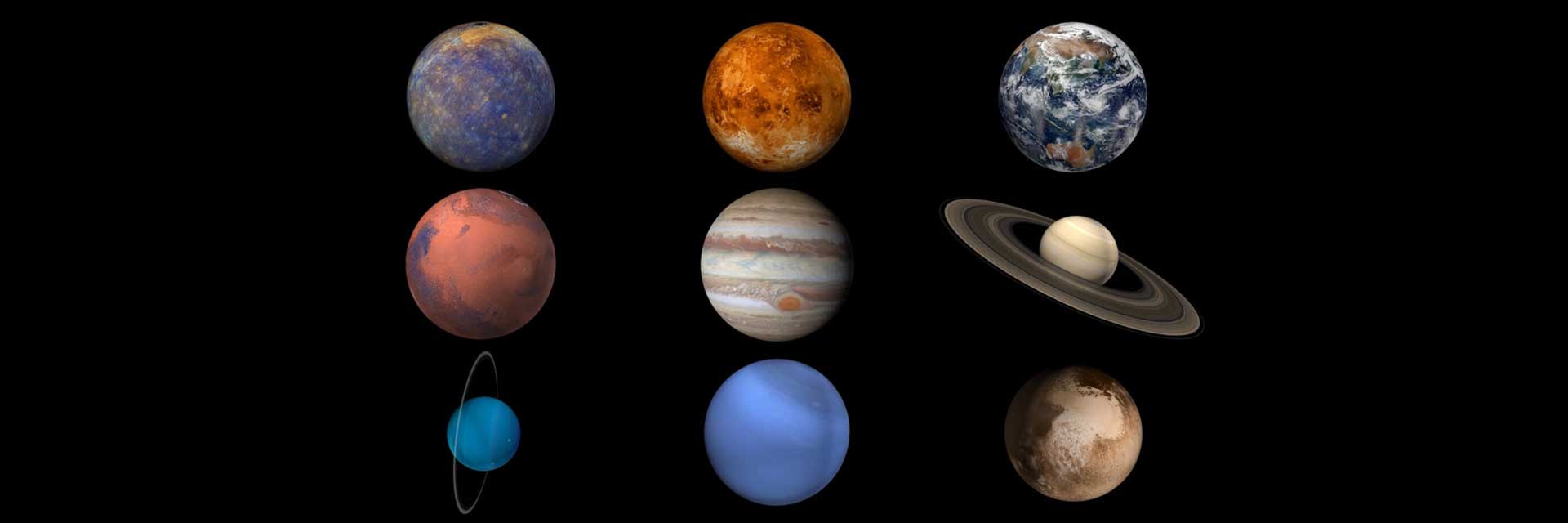
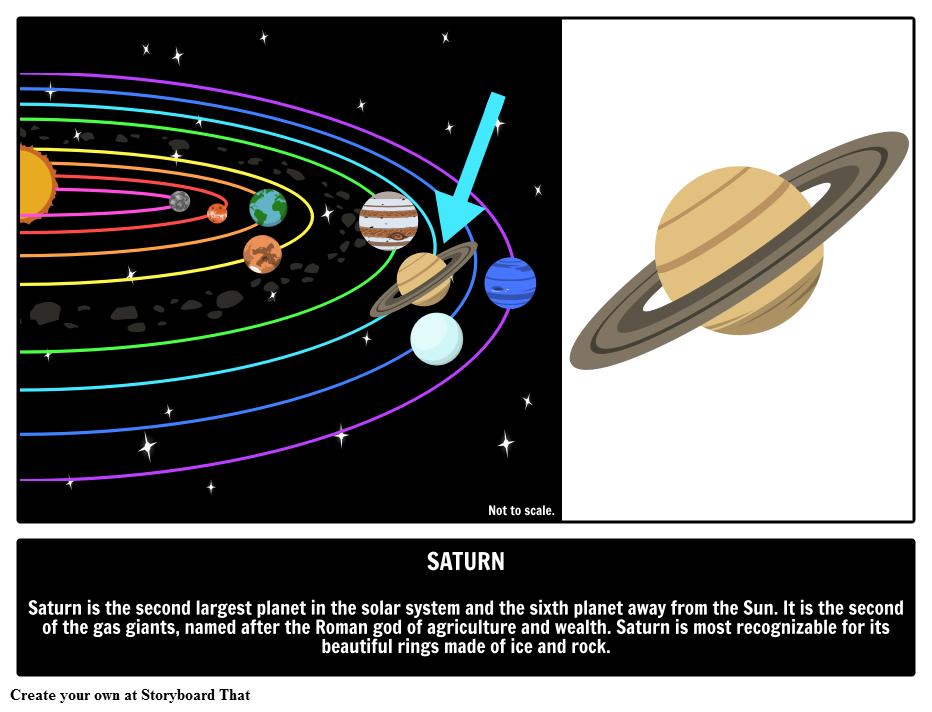
While Jupiter claims the title of the largest planet in our solar system, Saturn—the second-largest planet—occupies a unique position in the technological and scientific imagination. Known for its complex ring system and a vast retinue of moons, Saturn is not merely a celestial body but a massive laboratory for human ingenuity. Understanding a gas giant of this scale requires more than just curiosity; it demands the most sophisticated hardware, software, and engineering strategies ever devised.
From the early days of the Pioneer and Voyager flybys to the decade-long Cassini-Huygens mission and the upcoming Dragonfly rotocraft, the “second-largest planet” has served as a primary driver for innovation in deep-space communication, autonomous navigation, and specialized materials science. This article explores the technological landscape that allows humanity to bridge the billion-mile gap to Saturn and why the tech developed for this gas giant is shaping the future of exploration on Earth and beyond.
1. The Cassini-Huygens Legacy: A Masterclass in Space Engineering
The most significant technological leap in our understanding of the second-largest planet came via the Cassini-Huygens mission. Launched in 1997, this joint venture between NASA, the ESA, and ASI represented one of the most complex automated systems ever sent into deep space.
Precision Navigation in Deep Space
Navigating a spacecraft to a planet nearly 900 million miles away requires more than just a powerful rocket; it requires a revolutionary approach to orbital mechanics and onboard computing. Cassini utilized a technique known as “gravity assist” or “slingshotting,” using the gravitational pull of Venus, Earth, and Jupiter to gain the velocity needed to reach Saturn.
The onboard software had to be incredibly robust, capable of making micro-adjustments to its trajectory with minimal intervention from Earth, where signals take over an hour to travel one way. This led to the development of advanced autonomous navigation algorithms that allow spacecraft to “see” stars and calculate their position in real-time—a precursor to the autonomous systems now being used in terrestrial robotics and self-driving vehicles.
The Huygens Probe and Extreme Environment Instrumentation
While Cassini orbited Saturn, it carried a passenger: the Huygens probe, designed to land on the moon Titan. This presented a unique technological challenge: building a machine that could survive a descent through a thick, nitrogen-rich atmosphere and land on a surface that might be liquid, solid, or slushy.
The probe was equipped with a suite of sensors, including the Gas Chromatograph Mass Spectrometer (GCMS) and the Descent Imager/Spectral Radiometer (DISR). These instruments had to be miniaturized to fit within a tight mass budget while being rugged enough to withstand extreme cold and high pressure. The thermal protection systems developed for Huygens—using specialized ablative shields—have since informed the heat-shield designs for modern re-entry vehicles and planetary landers.
2. Remote Sensing and the Next Generation of Telescopic Tech
We do not always need to send a physical probe to Saturn to study it. The technology used to observe the second-largest planet from Earth and near-Earth orbit has seen a paradigm shift in the last decade, moving from simple optical imaging to complex multi-spectral analysis.
James Webb Space Telescope (JWST) and Infrared Imaging
The James Webb Space Telescope has revolutionized how we view Saturn. Unlike traditional optical telescopes, JWST operates primarily in the infrared spectrum. This is critical for studying a gas giant because infrared light can penetrate the thick layers of haze and dust that shroud the planet’s atmosphere.
The tech behind JWST’s Near-Infrared Camera (NIRCam) and Mid-Infrared Instrument (MIRI) allows scientists to map temperature variations, cloud structures, and chemical compositions with unprecedented clarity. The detectors in these instruments are so sensitive they must be kept at temperatures near absolute zero. The cryogenic cooling technology developed for these missions has direct applications in quantum computing, where maintaining stable, ultra-low temperatures is essential for qubit coherence.
Adaptive Optics and Ground-Based Observations
On Earth, the atmosphere usually blurs our view of distant planets. However, the development of “Adaptive Optics” (AO) has allowed ground-based telescopes to rival the clarity of those in space. AO technology uses deformable mirrors that change shape hundreds of times per second to cancel out the distortion caused by Earth’s atmosphere.
By using AO, astronomers can monitor Saturn’s massive seasonal storms and the intricate dynamics of its rings from the ground. This tech—specifically the wavefront sensors and high-speed actuators—has migrated into the medical field, particularly in ophthalmology for high-resolution imaging of the human retina.
3. Future Tech: Dragonflies and Autonomous Exploration
The next chapter in the exploration of the second-largest planet involves a move from orbiting to active, mobile exploration. The upcoming “Dragonfly” mission to Titan (Saturn’s largest moon) represents a radical departure from traditional rover technology.
The Dragonfly Mission: Nuclear-Powered Rotocraft
Because Titan has an atmosphere four times denser than Earth’s and low gravity, it is the ideal environment for flight. Dragonfly is a “dual-quadcopter” that will hop from location to location. The technology required for this is staggering. Unlike a drone on Earth, Dragonfly must be entirely autonomous; it cannot be “piloted” in real-time due to the communication delay.
The craft utilizes Multi-Mission Radioisotope Thermoelectric Generators (MMRTGs). This tech converts the heat from the natural decay of plutonium-238 into electricity. This provides a steady power source in an environment where solar panels would be useless due to the distance from the sun and Titan’s thick clouds. The development of high-density, cold-resistant batteries to store this power for flight segments is a frontier of current energy research.
AI and Machine Learning in Planetary Data Processing
With the massive influx of data from missions like Cassini and the high-resolution imagery from JWST, the bottleneck is no longer data collection—it is data analysis. NASA and various tech partners are now employing AI and machine learning (ML) to sift through petabytes of information.
ML algorithms are trained to identify specific features in Saturn’s rings or anomalies in the magnetic field data that a human eye might miss. These “computer vision” tools are the same technologies used in facial recognition and medical diagnostic software. In the context of Saturn, these AI tools allow for the “automated discovery” of new moons and the tracking of hexagonal polar vortices, proving that software is just as vital as hardware in modern space tech.
4. The Role of Private Tech and the New Space Economy
The exploration of the second-largest planet is no longer the sole domain of government agencies. The rise of the “New Space” economy, driven by private tech firms, is drastically lowering the cost of reaching the outer solar system.
Cost-Reduction via Reusable Launch Systems
The most significant barrier to exploring Saturn has always been the cost of the launch. Heavy-lift launch vehicles are required to send heavy payloads on a multi-year journey. Private companies like SpaceX, with the development of the Starship, are aiming to provide the lift capacity needed for massive missions to Saturn at a fraction of the traditional cost.
The “tech” here is not just the rocket itself, but the sophisticated flight control software and grid-fin actuators that allow boosters to land vertically. As these launch costs plummet, we can expect a surge in “CubeSat” missions—miniaturized, modular satellites that can be sent in swarms to study Saturn’s rings or its numerous moons simultaneously.
Deep Space Communications Infrastructure
As we send more advanced tech to Saturn, the need for high-bandwidth communication grows. Traditional radio-frequency (RF) communication is limited in the amount of data it can carry over long distances. The tech industry is currently pivoting toward “Laser Communications Relay” or optical communications.
By using lasers instead of radio waves, spacecraft can transmit data at rates 10 to 100 times higher than current systems. This would allow for high-definition video feeds from the surface of Titan or the rings of Saturn. The engineering required to point a laser beam with the necessary precision over a billion miles is one of the most daunting—yet promising—frontiers in telecommunications tech today.

Conclusion
Saturn, the second-largest planet, remains a beacon for technological advancement. It challenges our engineers to build tougher materials, our programmers to write smarter code, and our scientists to imagine more efficient power sources. The journey to understand this gas giant is, in many ways, a journey to refine the technologies that define our modern world.
From the autonomous algorithms that guide probes through the void to the AI that deciphers cosmic data, the tech developed for Saturn is a testament to human persistence. As we look toward the launch of the Dragonfly mission and the continued observations of the JWST, it is clear that our relationship with the second-largest planet will continue to be a primary catalyst for the next generation of technological breakthroughs. Through the lens of technology, Saturn is not just a distant dot in the sky; it is the ultimate proving ground for what humanity can achieve.
aViewFromTheCave is a participant in the Amazon Services LLC Associates Program, an affiliate advertising program designed to provide a means for sites to earn advertising fees by advertising and linking to Amazon.com. Amazon, the Amazon logo, AmazonSupply, and the AmazonSupply logo are trademarks of Amazon.com, Inc. or its affiliates. As an Amazon Associate we earn affiliate commissions from qualifying purchases.